


4 months 1 day ago
Nature forms us for ourselves, not for others; to be, not to seem.
▼
Source
source
Book II, Ch. 37. Of the Resemblance of Children to their Brothers

3 months 3 weeks ago
The animals are much more content with mere existence than we are; the plants are wholly so; and man is so according to how dull and insensitive he is. The animal's life consequently contains less suffering but also less pleasure than the human's, the direct reason being that on the one hand it is free from care and anxiety and the torments that attend them, but on the other is without hope and therefore has no share in that anticipation of a happy future which, together with the enchanting products of the imagination which accompany it, is the source of most of our greatest joys and pleasures. The animal lacks both anxiety and hope because its consciousness is restricted to what is clearly evident and thus to the present moment: the animal is the present incarnate.
▼
Source
source
Vol. 2 "On the Suffering of the World" as translated in Essays and Aphorisms (1970), as translated by R. J. Hollingdale
2 weeks 6 days ago
The strengthening of behavior which results from reinforcement is appropriately called "conditioning". In operant conditioning we "strengthen" an operant in the sense of making a response more probable or, in actual fact, more frequent.
▼
Source
source
Science and Human Behavior

1 month 1 week ago
If Man be separated by no greater structural barrier from the brutes than they are from one another-then it seems to follow that if any process of physical causation can be discovered by which the genera and families of ordinary animals have been produced, that process of causation is amply sufficient to account for the origin of Man.
▼
Source
source
Ch.2, p. 125




3 months 3 weeks ago
It is forbidden to kill; therefore all murderers are punished unless they kill in large numbers and to the sound of trumpets.
▼
Source
source
"Rights", 1771

2 months 1 week ago
When I was in my teens, I invented a term to describe them. I call it 'holiday consciousness' . . . because I often experienced this sense of optimism and wide-awakeness when setting out on a journey or a holiday. It was always the feeling that the world is self-evidently complex and beautiful, and that life is so obviously good that man's boredom and defeat is an absurdity . . . And then I used to ask: Why do men forget this so easily? And the answer seemed obvious: because the human will is so flabby and weak. Instead of being self-controlled, self-driven creatures, most men are little more than leaves on a stream, they drift along hoping for the best. I once wrote that men are like grandfather clocks driven by watchsprings.
▼
Source
source
p. 75

2 months 3 weeks ago
If insistence on them tends to unsettle established systems ... self-evident truths are by most people silently passed over; or else there is a tacit refusal to draw from them the most obvious inferences.
▼
Source
source
Ethics (New York:1915), § 14, pp. 38-39

4 months 1 week ago
If you believe what you like in the gospels, and reject what you don't like, it is not the gospel you believe, but yourself.
▼
Source
source
Earliest attribution found in Who Said That?: More than 2,500 Usable Quotes and Illustrations (1995) by George Sweeting. Online sources always attribute the quote to Augustine, but never specify in which of his works it is to be found.

1 month 2 weeks ago
I'm not clever enough to be a physicist. When asked about why he chose to become a biologist.
▼
Source
source
UR Samtiden - Verklighetens magi 27 October 2012.

3 months 3 weeks ago
The unconsciousness of man is the consciousness of God.

3 months 3 weeks ago
Government by majorities can be made less oppressive by devolution, by placing the decision of questions primarily affecting only a section of the community in the hands of that section, rather than of a Central Chamber. In this way, men are no longer forced to submit to decisions made in a hurry by people mostly ignorant of the matter in hand and not personally interested.
▼
Source
source
Ch VIII: The World As It Could Be Made

2 months 3 weeks ago
Because half-a-dozen grasshoppers under a fern make the field ring with their importunate chink, whilst thousands of great cattle, reposed beneath the shadow of the British oak, chew the cud and are silent, pray do not imagine that those who make the noise are the only inhabitants of the field; that of course they are many in number; or that, after all, they are other than the little shrivelled, meagre, hopping, though loud and troublesome insects of the hour.
▼
Source
source
Volume iii, p. 344
3 months 2 weeks ago
All affected can accept the consequences and the side effects that [the norm's] general observance can be anticipated to have for the satisfaction of everyone's interests, and the consequences are preferred to those of known alternative possibilities for regulation.
▼
Source
source
p. 65
3 months 1 week ago
He is not poor who has enough of things to use. If it is well with your belly, chest and feet, the wealth of kings can give you nothing more.
▼
Source
source
Book I, epistle xii, line 4
4 months 3 weeks ago
Then the case is the same in all the other arts for the orator and his rhetoric; there is no need to know the truth of the actual matters, but one merely needs to have discovered some device of persuasion which will make one appear to those who do not know to know better than those who know.
1 month 1 week ago
Most of us, shrinking from the difficulties and dangers which beset the seeker after original answers to these riddles, are contented to ignore them altogether, or to smother the investigating spirit under the featherbed of respected and respectable tradition. But, in every age, one or two restless spirits, blessed with that constructive genius, which can only build on a secure foundation, or cursed with the mere spirit of scepticism, are unable to follow in the well-worn and comfortable track of their forefathers and contemporaries, and unmindful of thorns and stumbling-blocks, strike out into paths of their own.
▼
Source
source
Ch.2, p. 71

2 months 1 week ago
Ninety percent of our lives is governed by emotion. Our brains merely register and act upon what is telegraphed to them by our bodily experience. Intellect is to emotion as our clothes are to our bodies; we could not very well have civilized life without clothes, but we would be in a poor way if we had only clothes without bodies.
▼
Source
source
Ch. 29, June 10, 1943.

2 months 1 week ago
The vanity of the passing world and love are the two fundamental and heart-penetrating notes of true poetry. And they are two notes of which neither can be sounded without causing the other to vibrate. The feeling of the vanity of the passing world kindles love in us, the only thing that triumphs over the vain and transitory, the only thing that fills life again and eternalizes it.
2 weeks 4 days ago
To apply oneself to great inventions, starting from the smallest beginnings, is no task for ordinary minds; to divine that wonderful arts lie hid behind trivial and childish things is a conception for superhuman talents.

2 months 6 days ago
Its first ethical precept is the identity of means used and aims sought. The ultimate end of all revolutionary social change is to establish the sanctity of human life, the dignity of man, the right of every human being to liberty and wellbeing. Unless this be the essential aim of revolution, violent social changes would have no justification. For external social alterations can be, and have been, accomplished by the normal processes of evolution. Revolution, on the contrary, signifies not mere external change, but internal, basic, fundamental change. That internal change of concepts and ideas, permeating ever-larger social strata, finally culminates in the violent upheaval known as revolution.
3 months 5 days ago
All things are full of gods.
▼
Source
source
As quoted in Aristotle, De Anima, 411a

3 months 4 weeks ago
Now as we call every thing custom, which proceeds from a past repetition, without any new reasoning or conclusion, we may establish it as a certain truth, that all the belief, which follows upon any present impression, is deriv'd solely from that origin.
▼
Source
source
Part 3, Section 8

2 months 2 weeks ago
When all these things are lacking there is no culture; there is in the strictest sense of the word, barbarism. And let us not deceive ourselves, this is what is beginning to appear in Europe under the progressive rebellion of the masses. The traveller who arrives in a barbarous country knows that in that territory there are no ruling principles to which it is possible to appeal. Properly speaking, there are no barbarian standards. Barbarism is the absence of standards to which appeal can be made.
▼
Source
source
Chap. VIII: The Masses Intervene In Everything, And Why Their Intervention Is Solely By Violence
3 months 3 weeks ago
In wildness is the preservation of the world. Every tree sends its fibers forth in search of the Wild. The city imports it at any price. Men plow and sail for it. From the forest and wilderness come the tonics and barks which brace mankind.

2 months 2 weeks ago
Loren von Stein thus turned the dialectic into an ensemble of objective laws calling for social reform as the adequate solution of all contradictions and neutralized the critical elements of the dialectic.
▼
Source
source
P. 388
2 months 1 week ago
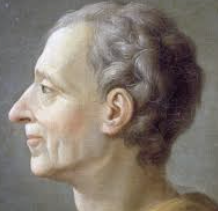
No tyranny is more cruel than the one practiced in the shadow of the laws and under color of justice - when, so to speak, one proceeds to drown the unfortunate on the very plank by which they had saved themselves.
▼
Source
source
See Chap. XIV of Considérations sur les causes de la grandeur des Romains et de leur décadence. Considerations on the Causes of the Greatness of the Romans and their Decline (1734), p. 89.

3 months 3 weeks ago
These effects of mescalin are the sort of effects you could expect to follow the administration of a drug having the power to impair the efficiency of the cerebral reducing valve. When the brain runs out of sugar, the undernourished ego grows weak, can't be bothered to undertake the necessary chores, and loses all interest in those spatial and temporal relationships which mean so much to an organism bent on getting on in the world. As Mind at Large seeps past the no longer watertight valve, all kinds of biologically useless things start to happen. ... Other persons discover a world of visionary beauty. To others again is revealed the glory, the infinite value and meaningfulness of naked existence, of the given, unconceptualized event.
▼
Source
source
describing his experiment with mescaline, p. 26

2 weeks 1 day ago
And so in City after City, street-barricades are piled, and truculent, more or less murderous insurrection begins; populace after populace rises, King after King capitulates or absconds; and from end to end of Europe Democracy has blazed up explosive, much higher, more irresistible and less resisted than ever before; testifying too sadly on what a bottomless volcano, or universal powder-mine of most inflammable mutinous chaotic elements, separated from us by a thin earth-rind, Society with all its arrangements and acquirements everywhere, in the present epoch, rests! The kind of persons who excite or give signal to such revolutions-students, young men of letters, advocates, editors, hot inexperienced enthusiasts, or fierce and justly bankrupt desperadoes, acting everywhere on the discontent of the millions and blowing it into flame,-might give rise to reflections as to the character of our epoch. Never till now did young men, and almost children, take such a command in human affairs.

3 months 2 weeks ago
There are two godheads: the world and my independent I. I am either happy or unhappy, that is all. It can be said: good or evil do not exist. A man who is happy must have no fear. Not even in the face of death. Only a man who lives not in time but in the present is happy.
▼
Source
source
Journal entry (8 July 1916), p. 74e
2 months 2 weeks ago
Ideas, aspirations, and objectives that, by their content, transcend the established universe of discourse and action are either repelled or reduced to terms of this universe.
▼
Source
source
p. 12

4 months 2 days ago
To turn one's eyes away from Jesus means to turn them to the Law.
▼
Source
source
Chapter 2

3 months ago
Heroic love is the property of those superior natures who are called insane not because they do not know, but because they over-know.
▼
Source
source
As quoted in The Tragic Sense of Life (1913), by Miguel de Unamuno, as translated by J. E. Crawford

1 week 2 days ago
All the Good of mortals is mortal.

3 months 5 days ago
When the wise man opens his mouth, the beauties of his soul present themselves to the view, like the statues in a temple.
▼
Source
source
Pythagorean Ethical Sentences From Stobæus

2 months 2 weeks ago
Are ye come out as against a thief with swords and staves for to take me? I sat daily with you teaching in the temple, and ye laid no hold on me. But all this was done, that the scriptures of the prophets might be fulfilled.
▼
Source
source
26:55-56 (KJV)
3 months 2 weeks ago
Our language can be seen as an ancient city: a maze of little streets and squares, of old and new houses, and of houses with additions from various periods; and this surrounded by a multitude of new boroughs with straight regular streets and uniform houses.
▼
Source
source
§ 18
1 month 2 weeks ago
The fact that life evolved out of nearly nothing, some 10 billion years after the universe evolved out of literally nothing, is a fact so staggering that I would be mad to attempt words to do it justice.
▼
Source
source
From tail to tale on the path of pilgrims in life, The Scotsman
2 weeks 2 days ago
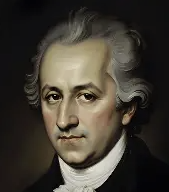
The artist may be well advised to keep his work to himself till it is completed, because no one can readily help him or advise him with it...but the scientist is wiser not to withhold a single finding or a single conjecture from publicity.
▼
Source
source
Essay on Experimentation

3 months 2 weeks ago
Of course, the aim of a constitutional democracy is to safeguard the rights of the minority and avoid the tyranny of the majority. Yet the concrete practice of the US legal system from 1883 to 1964 promoted a tyranny of the white majority much more than a safeguarding of the rights of black Americans.
▼
Source
source
(p. 102-3)

2 weeks 5 days ago
So today... red and blue voters rely on a completely different set of facts. ...Polls ...suggest that a substantial... majority of Republican voters believe that the Democrats... stole the election, and that Joe Biden is not the legitimate president... When you don't have a common factual basis, you... reinforce the kinds of filter bubbles that people have started to move into.
3 months 3 weeks ago
Freedom is the greatest of political goods. I do not say freedom is the greatest of all goods: the best things come from within-they are such things as creative art, and love, and thought. Such things can be helped or hindered by political conditions, but not actually produced by them; and freedom is, both in itself and in its relation to these other goods the best thing that political and economic conditions can secure.
▼
Source
source
Ch. V: Government and Law, p. 75
2 months 1 week ago
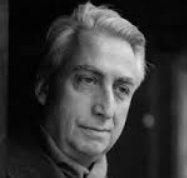
Myth deprives the object of which it speaks of all history. In it, history evaporates.
▼
Source
source
p. 151

3 months 3 weeks ago
The louder he talked of his honor, the faster we counted our spoons.
▼
Source
source
Worship

3 months 3 weeks ago
In the course of instruction which I have partially retraced, the point most superficially apparent is the great effort to give, during the years of childhood an amount of knowledge in what are considered the higher branches of education, which is seldom acquired (if acquired at all) until the age of manhood.
▼
Source
source
(p. 30)
2 months 2 weeks ago
Everything ideal has a natural basis and everything natural an ideal development.
CivilSimian.com created by AxiomaticPanic, CivilSimian, Kalokagathia