


2 months 4 weeks ago
Envy has been, is, and shall be, the destruction of many. What is there, that Envy hath not defamed, or Malice left undefiled? Truly, no good thing.
1 month 4 weeks ago
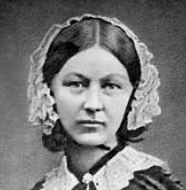
Suffering, sad "female humanity!" What are these feelings which they are taught to consider as disgraceful, to deny to themselves? What form do the Chinese feet assume when denied their proper development? If the young girls of the "higher classes," who never commit a false step, whose justly earned reputations were never sullied even by the stain which the fruit of mere "knowledge of good and evil" leaves behind, were to speak, and say what are their thoughts employed upon, their thoughts, which alone are free, what would they say?
2 months 2 days ago
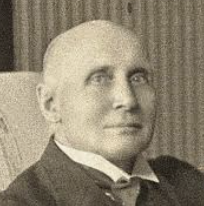
Every human being is the natural guardian of his own importance.
▼
Source
source
Ch. 9: "Science and Philosophy", p. 195
1 week 4 days ago
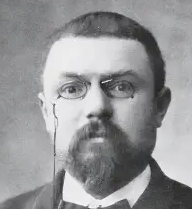
What we call objective reality is, in the last analysis, what is common to many thinking beings, and could be common to all; this common part, we shall see, can only be the harmony expressed by mathematical laws. It is this harmony... which is the sole objective reality, the only truth we can attain; and when I add that the universal harmony of the world is the source of all beauty, it will be understood what price we should attach to the slow and difficult progress which little by little enables us to know it better.


2 months 1 week ago
Saints live in flames; wise men, next to them.
1 month 6 days ago
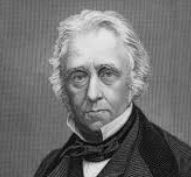
To have been a Sovereign, yet the champion of liberty,-a revolutionary leader, yet the supporter of social order, is the peculiar glory of William. Till his accession the British Constitution was in its Chaos. It had contained, from a very remote period, the simple elements of an harmonious government. But they were in a state not of amalgamation, but of conflict,-not of equilibrium but of alternate elevation and depression. The tyranny of Charles the first produced civil war and anarchy. Tyranny had now again produced resistance and revolution. And, but for the wisdom of the new King, it seems probable that the same cycle of misery would have been again described.
▼
Source
source
'Essay on the Life and Character of King William III' (1822), written for the Greaves Historical Prize at Cambridge, quoted in The Times Literary Supplement (1 May 1969), p. 469

4 months 2 weeks ago
The various languages placed side by side show that with words it is never a question of truth, never a question of adequate expression; otherwise, there would not be so many languages. The "thing in itself" (which is precisely what the pure truth, apart from any of its consequences, would be) is likewise something quite incomprehensible to the creator of language and something not in the least worth striving for. This creator only designates the relations of things to men, and for expressing these relations he lays hold of the boldest metaphors.' To begin with, a nerve stimulus is transferred into an image: first metaphor. The image, in turn, is imitated in a sound: second metaphor. And each time there is a complete overleaping of one sphere, right into the middle of an entirely new and different one.
3 months 2 weeks ago
Men of learning are those who have read the contents of books. Thinkers, geniuses, and those who have enlightened the world and furthered the race of men, are those who have made direct use of the book of the world.
▼
Source
source
"Thinking for Oneself"
1 month 6 days ago
I shall not be satisfied unless I produce something which shall for a few days supersede the last fashionable novel on the tables of young ladies.
▼
Source
source
Letter to Macvey Napier
4 months 2 weeks ago
Lord Jesus Christ, our foolish minds are weak; they are more than willing to be drawn-and there is so much that wants to draw us to itself. There is pleasure with its seductive power, the multiplicity with its bewildering distractions, the moment with its infatuating importance and the conceited laboriousness of busyness and the careless time-wasting of light-mindedness and the gloomy brooding of heavy-mindedness-all this will draw us away from ourselves to itself in order to deceive us. But you, who are truth, only you, our Savior and Redeemer, can truly draw a person to yourself, which you have promised to do-that you will draw all to yourself. Then may God grant that by repenting we may come to ourselves, so that you, according to your Word, can draw us to yourself-from on high, but through lowliness and abasement.

1 month 2 weeks ago
The universal hypocrisy has so entered into the flesh and blood of all classes of our modern society, it has reached such a pitch that nothing in that way can rouse indignation. Hypocrisy in the Greek means "acting," and acting-playing a part-is always possible. Chapter XII, Conclusion-Repent Ye, for the Kingdom of Heaven is at Hand Variant Translation: Hypocrisy with good reason means the same as acting, and anybody can pretend - act a part.

3 months 2 weeks ago
An honest man nearly always thinks justly.
▼
Source
source
As quoted in A Dictionary of Thoughts: Being a Cyclopedia of Laconic Quotations from the Best Authors of the World, Both Ancient and Modern (1908) by Tryon Edwards, p. 277.

3 months 2 weeks ago
Every sensible man, every honorable man, must hold the Christian sect in horror.
▼
Source
source
Examen important de milord Bolingbroke (1736): Conclusion
2 months 3 weeks ago
The first promise exchanged by two beings of flesh was at the foot of a rock that was crumbling into dust; they took as witness for their constancy a sky that is not the same for a single instant; everything changed in them and around them, and they believed their hearts free of vicissitudes. O children! always children!
2 months 1 week ago
So long as man is protected by madness he functions and flourishes, but when he frees himself from the fruitful tyranny of fixed ideas, he is lost, ruined.
4 months 3 days ago
For if a thing is not diminished by being shared with others, it is not rightly owned if it is only owned and not shared.
▼
Source
source
1:1:1 English Latin Latin: Omnis enim res quae dando non deficit, dum habetur et non datur, nondum habetur quomodo habenda est.

1 week 1 day ago
The suffering man ought really 'to consume his own smoke'; there is no good in emitting smoke till you have made it into fire, - which, in the metaphorical sense too, all smoke is capable of becoming!
3 weeks 5 days ago
We are passengers, comprehended and displaced by metaphor.
▼
Source
source
Chapter 8, Performative Reflexivity, p. 137

3 months 1 week ago
In the ceremonies of the public execution, the main character was the people, whose real and immediate presence was required for the performance.
▼
Source
source
Chapter One, pp. 56
2 months 3 days ago
The blessing that the market does not ask about birth is paid for in the exchange society by the fact that the possibilities conferred by birth are molded to fit the production of goods that can be bought on the market.
▼
Source
source
E. Jephcott, trans., p. 9

2 months 3 weeks ago
Despotism may govern without faith, but liberty cannot. How is it possible that society should escape destruction if the moral tie is not strengthened in proportion as the political tie is relaxed? And what can be done with a people who are their own masters if they are not submissive to the Deity?
▼
Source
source
Chapter XVII.
2 months 1 week ago
To those who hold abstractly to Hegel's political philosophy, Hobhouse replies that the very fact of class society, the patent influence of class interests on the state, renders it impossible to designate the state as expressive of the real will of individuals as a whole. 'Wherever a community is governed by one class or one race, the remaining class or race is permanently in the position of having to take what it can get.'
▼
Source
source
P. 396

3 months 2 weeks ago
Politics is, as it were, the gizzard of society, full of grit and gravel, and the two political parties are its two opposite halves, - sometimes split into quarters, it may be, which grind on each other. Not only individuals, but States, have thus a confirmed dyspepsia, which expresses itself, you can imagine by what sort of eloquence. Thus our life is not altogether a forgetting, but also, alas! to a great extent, a remembering of that which we should never have been conscious of, certainly not in our waking hours. Why should we not meet, not always as dyspeptics, to tell our bad dreams, but sometimes as eupeptics, to congratulate each other on the ever glorious morning? I do not make an exorbitant demand, surely.
▼
Source
source
p. 495
4 months ago
All who say the same things do not possess them in the same manner; and hence the incomparable author of the Art of Conversation pauses with so much care to make it understood that we must not judge of the capacity of a man by the excellence of a happy remark that we heard him make. ...let us penetrate, says he, the mind from which it proceeds... it will oftenest be seen that he will be made to disavow it on the spot, and will be drawn very far from this better thought in which he does not believe, to plunge himself into another, quite base and ridiculous.
▼
Source
source
Montaigne, Essais, liv. III, chap. viii.-Faugère

2 months 2 weeks ago
The unbought grace of life, the cheap defence of nations, the nurse of manly sentiment and heroic enterprise, is gone!
▼
Source
source
Volume iii, p. 331
1 month 1 week ago
If we want to postulate a deity capable of engineering all the organized complexity in the world, either instantaneously or by guiding evolution, that deity must have been vastly complex in the first place. The creationist, whether a naive Bible-thumper or an educated bishop, simply postulates an already existing being of prodigious intelligence and complexity. If we are going to allow ourselves the luxury of postulating organized complexity without offering an explanation, we might as well make a job of it and simply postulate the existence of life as we know it!
▼
Source
source
Chapter 11 "Doomed Rivals" (p. 316)
1 week 1 day ago
I will remark again, however, as a fact not unimportant to be understood, that the different sphere constitutes the grand origin of such distinction; that the Hero can be Poet, Prophet, King, Priest or what you will, according to the kind of world he finds himself born into. I confess, I have no notion of a truly great man that could not be all sorts of men.
3 months 1 week ago
Between the fine point of the brush and the steely gaze, the scene is about to yield up its volume.
▼
Source
source
Las Meninas

3 months 3 weeks ago
Marriage is encouraged in China, not by the profitableness of children, but by the liberty of destroying them.
▼
Source
source
Chapter VIII, p. 87.
3 months 1 week ago
I am not bound over to swear allegiance to any master; where the storm drives me I turn in for shelter.
▼
Source
source
Book I, epistle i, line 14
3 months 3 weeks ago
When you see a person squirming in the clutches of the Law, say to him: "Brother, get things straight. You let the Law talk to your conscience. Make it talk to your flesh.
▼
Source
source
Chapter 2, Verse 19
3 months 2 weeks ago
Talent works for money and fame; the motive which moves genius to productivity is, on the other hand, less easy to determine. It isn't money, for genius seldom gets any. It isn't fame: fame is too uncertain and, more closely considered, of too little worth. Nor is it strictly for its own pleasure, for the great exertion involved almost outweighs the pleasure. It is rather an instinct of a unique sort by virtue of which the individual possessed of genius is impelled to express what he has seen and felt in enduring works without being conscious of any further motivation. It takes place, by and large, with the same sort of necessity as a tree brings forth fruit, and demands of the world no more than a soil on which the individual can flourish.
▼
Source
source
Vol. 2 "On Philosophy and the Intellect" as translated in Essays and Aphorisms (1970), as translated by R. J. Hollingdale

2 months ago
Jung believed that alchemy is about the transmutation of the mind and the discovery of the self. Inevitably, he saw the male and female elements of the prima materia -- the king and queen of alchemy -- as the animus and anima; this seemed to indicate the (sic) alchemy is about psychological processes.
▼
Source
source
p. 103
3 months 5 days ago
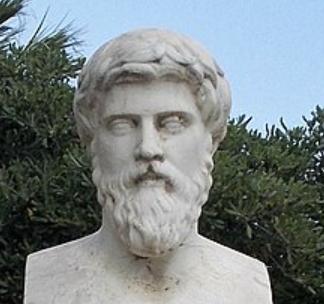
Agesilaus was very fond of his children; and it is reported that once toying with them he got astride upon a reed as upon a horse, and rode about the room; and being seen by one of his friends, he desired him not to speak of it till he had children of his own.
▼
Source
source
Of Agesilaus the Great
1 month 2 weeks ago
Lives matter in the sense that they assume physical form within the sphere of appearance; lives matter because they are to be valued equally.
▼
Source
source
p. 12
2 months ago
In refusing to face evil, Sinclair has gained nothing and lost a great deal; the Buddhist scripture expenses it: those who refuse to discriminate might as well be dead.
▼
Source
source
Chapter Three, The Romantic Outsider

3 months 2 weeks ago
Of all evils of war the greatest is the purely spiritual evil: the hatred, the injustice, the repudiation of truth, the artificial conflict.
▼
Source
source
Justice in War-Time (1916), p. 27
2 months 1 week ago
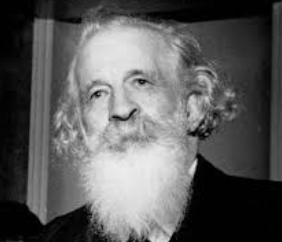
The mollusk's motto would be: one must live to build one's house, and not build one's house to live in.
3 months 3 weeks ago
Merit is a work for the sake of which Christ gives rewards. But no such work is to be found, for Christ gives by promise. Just as if a prince should say to me, "Come to me in my castle, and I will give you a hundred florins." I do a work, certainly, in going to the castle, but the gift is not given me as the reward of my work in going, but because the prince promised it to me.
▼
Source
source
p. 409
1 week ago
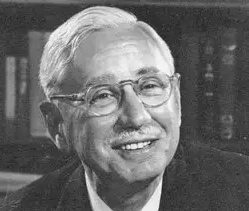
Philosophy is a hypothetical interpretation of the unknown (as in metaphysics), or of the inexactly known (as in ethics or political philosophy); it is the front trench in the siege of truth.
2 months 1 week ago
No longer ask me for my program: isn't breathing one?

2 months 2 weeks ago
...the relatively unconscious man driven by his natural impulses because, imprisoned in his familiar world, he clings to the commonplace, the obvious, the probable, the collectively valid, using for his motto: 'Thinking is difficult. Therefore, let the herd pronounce judgement.'
▼
Source
source
Frequently misquoted as "Thinking is difficult, that's why most people judge" and close variants. Flying Saucers: A Modern Myth of Things Seen in the Sky. (1959), C.G. Jung, R.F.C. Hull (translator) (Princeton Press, 1979, ISBN 9780691018225
1 month 2 weeks ago
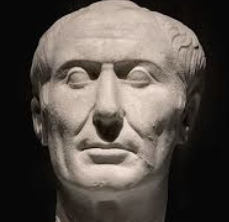
He is a despicable sage whose wisdom does not profit himself.
▼
Source
source
Maxim 629
1 month 1 week ago
Gravity is not a version of the truth. It is the truth. Anybody who doubts it is invited to jump out of a tenth-floor window.
▼
Source
source
The Genius of Charles Darwin
3 months 2 weeks ago
The church is a sort of hospital for men's souls, and as full of quackery as the hospital for their bodies. Those who are taken into it live like pensioners in their Retreat or Sailors' Snug Harbor, where you may see a row of religious cripples sitting outside in sunny weather.
▼
Source
source
Pearls of Thought (1881) p. 43
3 months 2 weeks ago
We are and irrefutable arbiters of value, and in the world of value Nature is only a part. Thus in this world we are greater than Nature. In the world of values, Nature in itself is neutral, neither good nor bad deserving of neither admiration nor censure. It is we who create value and our desires which confer value. In this realm we are kings, and we debase our kingship if we bow down to Nature. It is for us to determine our good life, not for Nature - not even for Nature personified as God.
3 months 2 weeks ago
Let's go dance under the elms:
Step lively, young lassies.
Let's go dance under the elms:
Gallants, take up your pipes.
▼
Source
source
Le devin du village, 1752
CivilSimian.com created by AxiomaticPanic, CivilSimian, Kalokagathia