


2 months 2 weeks ago
The fact of the religious vision, and its history of persistent expansion, is our one ground for optimism. Apart from it, human life is a flash of occasional enjoyments lighting up a mass of pain and misery, a bagatelle of transient experience.
▼
Source
source
Ch. 12: "Religion and Science", p. 268
1 day ago
He who lives in harmony with himself lives in harmony with the universe.
▼
Source
source
Attributed in The Life You Were Born to Live : Finding Your Life Purpose (1995) by Dan Millman, Pt. 2, Ch. 2 : Cooperation and Balance

4 months 5 days ago
It is not enough to be industrious; so are the ants. What are you industrious about?
▼
Source
source
Letter to Harrison Blake, November 16, 1857

2 months 2 days ago
Faced with information overload, we have no alternative but pattern-recognition.
▼
Source
source
(p. 132)

5 days ago
There can be no safer deposit on earth than the Treasury of the United States.
▼
Source
source
Letter to Gilbert du Motier, marquis de Lafayette (1825) ME 19:281

2 months 3 weeks ago
It is precisely the essential feature of egoism that it does not apprehend the full value of the isolated self. The egoist sees himself only with regard to the others, as a member of society who wishes to possess and acquire more than the others. Self-directedness or other-directedness have no essential bearing on the specific quality of love or hatred. These acts are different in themselves, quite independently of their direction.
▼
Source
source
L. Coser, trans. (1961), p. 96

2 months 2 weeks ago
With Puritanism as the constant check upon American life, neither truth nor sincerity is possible. Nothing but gloom and mediocrity to dictate human conduct, curtail natural expression, and stifle our best impulses.

8 months 1 week ago
If we merely wait for the appropriate moment we will never live to see it, because this [appropriate moment] cannot arrive without the subjective conditions of the maturity of the revolutionary force being fulfilled - it can only arrive after a series of failed attempts.
3 months 2 days ago
Where children are, there is a golden age.
▼
Source
source
Fragment No. 97

2 months 4 days ago
The oppression of a majority by a minority, and the demoralization inevitably resulting from it, is a phenomenon that has always occupied me and has done so most particularly of late.
▼
Source
source
I
4 months ago
Form displays the relation itself as the state of original comportment toward beings, the festive state in which the being itself in its essence is celebrated and thus for the first time placed in the open.
▼
Source
source
p. 119

4 months 6 days ago
Monotheistic religions alone furnish the spectacle of religious wars, religious persecutions, heretical tribunals, that breaking of idols and destruction of images of the gods, that razing of Indian temples and Egyptian colossi, which had looked on the sun 3,000 years: just because a jealous god had said, 'Thou shalt make no graven image.'
3 months 5 days ago
Whoever does not philosophize for the sake of philosophy, but rather uses philosophy as a means, is a sophist.
▼
Source
source
"Selected Aphorisms from the Athenaeum (1798)", Dialogue on Poetry and Literary Aphorisms, Ernst Behler and Roman Struc, trans. (Pennsylvania University Press:1968) #96

4 months 1 week ago
Tis only from the selfishness and confin'd generosity of men, along with the scanty provision nature has made for his wants, that justice derives its origin.
▼
Source
source
Part 2, Section 2
2 months 3 weeks ago
In all ranges of experience, externality of means defines the mechanical.
▼
Source
source
p. 206

3 months 5 days ago
These principles it is necessary strictly to attend to, because they will serve much to explain the whole course both of government and real property, wherever the German nations obtained a settlement; the whole of their government depending for the most part upon two principles in our nature,-ambition, that makes one man desirous, at any hazard or expense, of taking the lead amongst others; and admiration, which makes others equally desirous of following him from the mere pleasure of admiration, and a sort of secondary ambition, one of the most universal passions among men. These two principles, strong both of them in our nature, create a voluntary inequality and dependence.
▼
Source
source
An Essay towards an Abridgment of English History (1757-c. 1763), quoted in The Works of the Right Honourable Edmund Burke, Vol. VI (1856), p. 282
4 months 1 week ago
Women are the most charitable creatures, and the most troublesome. He who shuns women passes up the trouble, but also the benefits. He who puts up with them gains the benefits, but also the trouble. As the saying goes, there's no honey without bees.
▼
Source
source
Act III, scene iv

5 months 2 days ago
The vicious lover is the follower of earthly Love who desires the body rather than the soul; his heart is set on what is mutable and must therefore be inconstant. And as soon as the body he loves begins to pass the first flower of its beauty, he "spreads his wings and flies away," giving the lie to all his pretty speeches and dishonoring his vows, whereas the lover whose heart is touched by moral beauties is constant all his life, for he has become one with what will never fade.
3 months 4 weeks ago
A utopia of judicial reticence: take away life, but prevent the patient from feeling it; deprive the prisoner of all rights, but do not inflict pain; impose penalties free of all pain. Recourse to psycho-pharmacology and to various physiological 'disconnectors', even if it is temporary, is a logical consequence of this 'non-corporal' penalty.
▼
Source
source
Chapter One, The Spectacle of the Scaffold

4 months 4 days ago
I have known only one person in my life who claimed to have seen a ghost. It was a woman; and the interesting thing is that she disbelieved in the immortality of the soul before seeing the ghost and still disbelieves after having seen it. She thinks it was a hallucination. In other words, seeing is not believing. This is the first thing to get clear in talking about miracles.
▼
Source
source
"Miracles" (1942), p. 25
4 months 5 days ago
The goal to be reached is the mind's insight into what knowing is. Impatience asks for the impossible, wants to reach the goal without the means of getting there. The length of the journey has to be borne with, for every moment is necessary, ... because by nothing less could that all-pervading mind ever manage to become conscious of what itself is - for that reason, the individual mind, in the nature of the case, cannot expect by less toil to grasp what its own substance contains.
▼
Source
source
Preface (J. B. Baillie translation), § 29

4 months 5 days ago
England's genius filled all measure Of heart and soul, of strength and pleasure, Gave to the mind its emperor, And life was larger than before: Nor sequent centuries could hit Orbit and sum of Shakespeare's wit. The men who lived with him became Poets, for the air was fame.
▼
Source
source
Solution, ll. 35-42

3 months 2 weeks ago
By the air which I breathe, and by the water which I drink, I will not endure to be blamed on account of this discourse.
▼
Source
source
As reported by Heraclides Ponticus (c. 360 BC), and Diogenes Laërtius, in Lives and Opinions of Eminent Philosophers, "Pythagoras", Sect. 6, in the translation of C. D. Yonge
4 days ago
The rule, acknowledged or not, seems to be that if we have great power we must use it. We would use a steam shovel to pick up a dime. We have experts who can prove there is no other way to do it.
▼
Source
source
The Loss of the Future

4 months 4 days ago
Keep the faculty of effort alive in you by a little gratuitous exercise every day. That is, be systematically ascetic or heroic in little unnecessary points, do every day or two something for no other reason than that you would rather not do it, so that when the hour of dire need draws nigh, it may find you not unnerved and untrained to stand the test. So with the man who has daily inured himself to habits of concentrated attention, energetic volition, and self-denial in unnecessary things. He will stand like a tower when everything rocks around him, and when his softer fellow-mortals are winnowed like chaff in the blast.
▼
Source
source
Ch. 4
4 months 1 week ago
Generally speaking, the errors in religion are dangerous; those in philosophy only ridiculous.
▼
Source
source
Part 4, Section 7
4 months 1 week ago
A prudent man should always follow in the path trodden by great men and imitate those who are most excellent.
▼
Source
source
The Prince (1513), Ch. 6; translated by Luigi Ricci


5 months 1 week ago
Whereas the man of action binds his life to reason and its concepts so that he will not be swept away and lost, the scientific investigator builds his hut right next to the tower of science so that he will be able to work on it and to find shelter for himself beneath those bulwarks which presently exist. And he requires shelter, for there are frightful powers which continuously break in upon him, powers which oppose scientific "truth" with completely different kinds of "truths" which bear on their shields the most varied sorts of emblems.
5 days ago
Sometimes it is said that man can not be trusted with the government of himself. Can he, then, be trusted with the government of others? Or have we found angels in the forms of kings to govern him? Let history answer this question.
1 day ago
The things... which are proper to the understanding no other man is used to impede, for neither fire, nor iron, nor tyrant, nor abuse, touches it in any way. When it has been made a sphere, it continues a sphere.
▼
Source
source
VIII, 41

3 months 1 day ago
Isn't history ultimately the result of our fear of boredom?

5 months 1 day ago
Great feelings take with them their own universe, splendid or abject. They light up with their passion an exclusive world in which they recognize their climate. There is a universe of jealousy, of ambition, of selfishness or generosity. A universe in other words a metaphysic and an attitude of mind.

1 month 1 week ago
As Malaparte saw it, Naples was a pagan city with an ancient sense of time. Christianity taught those who were converted to it to think of history as the unfolding of a single plot - a moral drama of sin and redemption. In the ancient world there was no such plot - only a multitude of stories that were forever being repeated. Inhabiting that ancient world, the Neapolitans did not expect any fundamental alteration in human affairs. Not having accepted the Christian story of redemption, they had not been seduced by the myth of progress. Never having believed civilization to be permanent, they were not surprised when it foundered.
▼
Source
source
An Old Chaos: Frozen Horses and Deserts of Brick (p. 22)

2 months 2 weeks ago
Nowadays three witty turns of phrase and a lie make a writer.
▼
Source
source
D 25

3 months 1 week ago
The purpose of an encyclopedia is to collect knowledge disseminated around the globe; to set forth its general system to the men with whom we live, and transmit it to those who will come after us, so that the work of preceding centuries will not become useless to the centuries to come; and so that our offspring, becoming better instructed, will at the same time become more virtuous and happy, and that we should not die without having rendered a service to the human race in the future years to come.
▼
Source
source
Encyclopédie
4 months 6 days ago
Thus, because Christian morals leave animals out of consideration ... therefore in philosophical morals they are of course at once outlawed; they are merely "things," simply means to ends of any sort; and so they are good for vivisection, for deer-stalking, bull-fights, horse-races, etc., and they may be whipped to death as they struggle along with heavy quarry carts. Shame on such a morality ... which fails to recognize the Eternal Reality immanent in everything that has life, and shining forth with inscrutable significance from all eyes that see the sun!
▼
Source
source
Part II, Ch. VI, pp. 94-95

4 months 1 week ago
What defects women have, we must check them for in private, gently by word of mouth, for woman is a frail vessel.
▼
Source
source
Table Talk, quoted in Luther On "Woman"

2 months 3 weeks ago
The man of flesh and bone; the man who is born, suffers, and dies-above all, who dies; the man who eats and drinks and plays and sleeps and thinks and wills; the man who is seen and heard; the brother, the real brother.
4 weeks 1 day ago
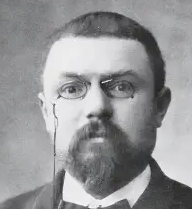
If all the parts of the universe are interchained in a certain measure, any one phenomenon will not be the effect of a single cause, but the resultant of causes infinitely numerous; it is, one often says, the consequence of the state of the universe the moment before.
4 months 4 days ago
I have often thought that the best way to define a man's character would be to seek out the particular mental or moral attitude in which, when it came upon him, he felt himself most deeply and intensely active and alive. At such moments there is a voice inside which speaks and says: "This is the real me!"
▼
Source
source
To his wife, Alice Gibbons James, 1878
2 months 2 days ago
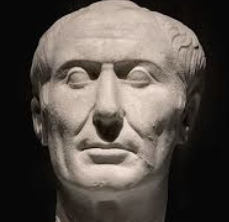
A fair exterior is a silent recommendation.
▼
Source
source
Maxin 267
1 month 2 weeks ago
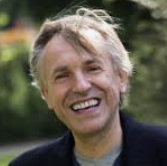
The functional regions of the brain which subserve physical agony, the "pain centres", and the mainly limbic substrates of emotion, appear in phylogenetic terms to be remarkably constant in the vertebrate line. The neural pathways involving serotonin, the periaquaductal grey matter, bradykinin, dynorphin, ATP receptors, the major opioid families, substance P etc all existed long before hominids walked the earth. Not merely is the biochemistry of suffering disturbingly similar where not effectively type-identical across a wide spectrum of vertebrate (and even some invertebrate) species. It is at least possible that members of any species whose members have more pain cells exhibiting greater synaptic density than humans sometimes suffer more atrociously than we do, whatever their notional "intelligence".
▼
Source
source
1.9 The Taste of Depravity

3 months 1 week ago
I entirely agree with you, as to the ill tendency of the affected doubts of some philosophers, and fantastical conceit of others. I am even so far gone of late in this way of think, that I have quitted several of the sublime notions I had got in their schools for vulgar opinions. And I give it you on my word, since this revolt from metaphysical notions to the plain dictates of nature and common sense, I find my understanding strangely enlightened, so that I can now easily comprehend a great many thing which before were all mystery and riddle.
▼
Source
source
Said by Philonous (Berkeley) to Hylas in the opening of dialog 1 with reference to the recent surge philosophic endeavors (Locke, Newton, et al) that seemed to lead to skepticism about the existence of the world.
2 months 2 weeks ago
A book is a mirror: if an ape looks into it an apostle is hardly likely to look out. We have no words for speaking of wisdom to the stupid. He who understands the wise is wise already.
▼
Source
source
E 49
4 days ago
We have become blind to the alternatives to violence. This involves us in a sort of official madness, in which, while following what seems to be a perfect logic of self-defense and deterrence, we commit one absurdity after another: We seek to preserve peace by fighting a war, or to advance freedom by subsidizing dictatorships, or to "win the hearts and minds of the people" by poisoning their crops and burning their villages and confining them in concentration camps; we seek to uphold the "truth" of our cause with lies, or to answer conscientious dissent with threats and slurs and intimidations. ... I have come to the realization that I can no longer imagine a war that I would believe to be either useful or necessary. I would be against any war.
▼
Source
source
A Statement Against the War in Vietnam an address at the University of Kentucky
4 months 1 week ago
Tis from the resemblance of the external actions of animals to those we ourselves perform, that we judge their internal likewise to resemble ours; and the same principle of reasoning, carry'd one step farther, will make us conclude that since our internal actions resemble each other, the causes, from which they are deriv'd, must also be resembling.
▼
Source
source
Part 3, Section 16

5 months 5 days ago
Man is a synthesis of psyche and body, but he is also a synthesis of the temporal and the eternal. In the former, the two factors are psyche and body, and spirit is the third, yet in such a way that one can speak of a synthesis only when the spirit is posited. The latter synthesis has only two factors, the temporal and the eternal. Where is the third factor? And if there is no third factor, there really is no synthesis, for a synthesis that is a contradiction cannot be completed as a synthesis without a third factor, because the fact that the synthesis is a contradiction asserts that it is not. What, then, is the temporal?
CivilSimian.com created by AxiomaticPanic, CivilSimian, Kalokagathia