

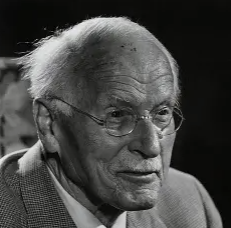
2 months 2 weeks ago
The woman is increasingly aware that love alone can give her full stature, just as the man begins to discern that spirit alone can endow his life with its highest meaning. Fundamentally, therefore, both seek a psychic relation to the other, because love needs the spirit, and the spirit love, for their fulfillment.
▼
Source
source
p. 185

2 months 2 weeks ago
Since it is difficult to approve the reasons people invoke, each time we leave one of our 'fellow men', the question which comes to mind is invariably the same: how does he keep from killing himself?
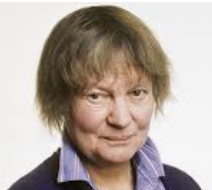
2 months 2 weeks ago
Almost anything that consoles us is a fake.
▼
Source
source
The Sovereignty of Good (1970) p. 59.
4 months 5 days ago
All the excesses, all the violence, and all the vanity of great men, come from the fact that they know not what they are: it being difficult for those who regard themselves at heart as equal with all men... For this it is necessary for one to forget himself, and to believe that he has some real excellence above them, in which consists this illusion that I am endeavoring to discover to you.
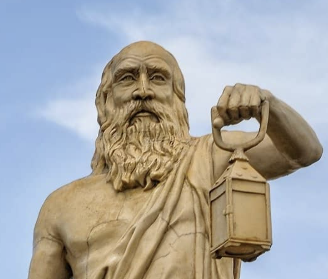
3 months 1 week ago
To Xeniades, who had purchased Diogenes at the slave market, he said, "Come, see that you obey orders."
▼
Source
source
Diogenes Laërtius, vi. 36

3 months 2 weeks ago
The aspects of things that are most important for us are hidden because of their simplicity and familiarity. (One is unable to notice something - because it is always before one's eyes.) The real foundations of his enquiry do not strike a man at all. Unless that fact has at some time struck him. - And this means: we fail to be struck by what, once seen, is most striking and most powerful.
▼
Source
source
§ 129
1 month 2 weeks ago
It is a very helpful insight to say we are vehicles for our DNA, we are hosts for DNA parasites which are our genes. Those are insights which help us to understand an aspect of life. But it's emotive to say, that's all there is to it, we might as well give up going to Shakespeare plays and give up listening to music and things, because that's got nothing to do with it. That's an entirely different subject.
1 week 1 day ago
No one ever saw Cato change, no matter how often the state changed: he kept himself the same in all circumstances-in the praetorship, in defeat, under accusation, in his province, on the platform, in the army, in death.
1 month 5 days ago
Only in growth, reform, and change, paradoxically enough, is true security to be found.
▼
Source
source
The Wave of the Future


1 day ago
All too often people forget that spirituality is essentially a way of life and that its measure does not consist of notions, theories, and ideas that have been stored in one's head. Spirituality is actually what has been successfully actualized and translated into a sense of superiority which is experienced inside by the soul, and a noble demeanor, which is expressed in the body.
▼
Source
source
Meditations on the Peaks: Mountain Climbing as Metaphor for the Spiritual Quest

4 months 2 days ago
The human understanding when it has once adopted an opinion (either as being the received opinion or as being agreeable to itself) draws all things else to support and agree with it. And though there be a greater number and weight of instances to be found on the other side, yet these it either neglects and despises, or else by some distinction sets aside and rejects, in order that by this great and pernicious predetermination the authority of its former conclusions may remain inviolate.
▼
Source
source
Aphorism 46

4 months 2 weeks ago
Beholding beauty with the eye of the mind, he will be enabled to bring forth, not images of beauty, but realities (for he has hold not of an image but of a reality), and bringing forth and nourishing true virtue to become the friend of God and be immortal, if mortal man may.

3 months 3 weeks ago
Why? Surely they can find other men. Russell's reply when asked "if it wasn't unkind of him to love and leave so many women";
▼
Source
source
as quoted in My Father - Bertrand Russell (1975) by Katharine Tait, p. 106
3 months 1 week ago
Animals no doubt have different interests from humans, and may experience different pleasures and pains, but the principle of equal consideration for similar interests still holds, and pleasures and pains of similar intensity and duration should be given equal weight, whether they are experienced by humans or by animals.
▼
Source
source
p. 342
3 months 2 weeks ago
We are observing ourselves being observed by the painter, and made visible to his eyes by the same light that enables us to see him. And just as we are about to apprehend ourselves, transcribed by his hand as though in a mirror, we find that we can in fact apprehend nothing of that mirror but its lusterless back. The other side of a psyche.
▼
Source
source
Las Menias
3 months 1 week ago
Complaints about the social irresponsibility of the intellectual typically concern the intellectual's tendency to marginalize herself, to move out from one community by interior identification of herself with some other community-for example, another country or historical period. ... It is not clear that those who thus marginalize themselves can be criticized for social irresponsibility. One cannot be irresponsible toward a community of which one does not think of oneself as a member. Otherwise runaway slaves and tunnelers under the Berlin Wall would be irresponsible.
▼
Source
source
"Postmodernist bourgeois liberalism," Objectivity, Relativism and Truth (Cambridge: 1991), p. 197
2 months 3 weeks ago
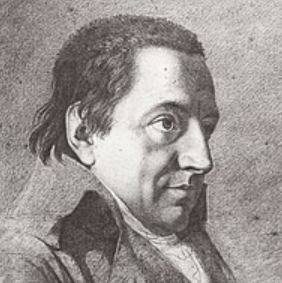
Each citizen of a state promises, in the original compact, that he will promote, as far as lies in his power, all the conditions of the possibility of the state ; hence, also, the condition just mentioned. This he can best do by educating children who may grow up to realize various ends of reason. The state has the right to make this education of children a condition of the state-compact, and thus education becomes an external, legal obligation, which the parents owe to the state.
▼
Source
source
P. 459

2 months 5 days ago
Everywhere and always, since its very inception, Christianity has turned the earth into a vale of tears; always it has made of life a weak, diseased thing, always it has instilled fear in man, turning him into a dual being, whose life energies are spent in the struggle between body and soul. In decrying the body as something evil, the flesh as the tempter to everything that is sinful, man has mutilated his being in the vain attempt to keep his soul pure, while his body rotted away from the injuries and tortures inflicted upon it.The Christian religion and morality extols the glory of the Hereafter, and therefore remains indifferent to the horrors of the earth. Indeed, the idea of self-denial and of all that makes for pain and sorrow is its test of human worth, its passport to the entry into heaven.
2 weeks 5 days ago
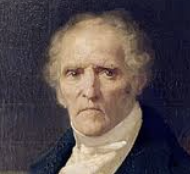
Marriage and dependent children are a trap for the people! Morality carefully hides this distressing truth from us because it knows no remedy for the evil. But I , who bring a remedy must not dissimulate the woes from fathers, and I must not dissimulate from society its radical vice of pushing seven-eighths of all families into evil practices through poverty.
4 months 2 weeks ago
Then the case is the same in all the other arts for the orator and his rhetoric; there is no need to know the truth of the actual matters, but one merely needs to have discovered some device of persuasion which will make one appear to those who do not know to know better than those who know.
3 months 3 weeks ago
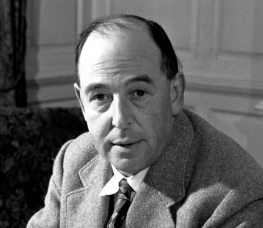
We are not necessarily doubting that God will do the best for us; we are wondering how painful the best will turn out to be.
▼
Source
source
Letters of C. S. Lewis (29 April 1959), para. 1, p. 285 - as reported in The Quotable Lewis (1989), p. 469

2 weeks ago
A spontaneous, passionate, yet just, true-meaning man! Full of wild faculty, fire and light; of wild worth, all uncultured; working out his life-task in the depths of the Desert there.

3 months 3 weeks ago
The book written against fame and learning has the author's name on the title-page.
▼
Source
source
1857
2 months 3 weeks ago
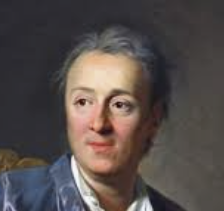
Scepticism is the first step towards truth. Variant: A thing is not proved just because no one has ever questioned it. What has never been gone into impartially has never been properly gone into. Hence skepticism is the first step toward truth. It must be applied generally, because it is the touchstone.
▼
Source
source
As quoted in The Anchor Book of French Quotations with English Translations (1963) by Norbert Gutermam
3 months 3 weeks ago
Truly, if the preservation of all mankind, as much as in him lies, were every one's persuasion, as indeed it is every one's duty, and the true principle to regulate our religion, politicks and morality by, the world would be much quieter, and better natur'd than it is.
▼
Source
source
Sec. 116
1 month 5 days ago
Now civilizations, I believe, come to birth and proceed to grow by successfully responding to successive challenges. They break down and go to pieces if and when a challenge confronts them which they fail to meet.
▼
Source
source
Ch. 8: Civilization on Trial
2 months 1 week ago
Creativity is the universal of universals characterizing ultimate matter of fact. It is that ultimate principle by which the many, which are the universe disjunctively, become the one actual occasion, which is the universe conjunctively. It lies in the nature of things that the many enter into complex unity.
▼
Source
source
Pt. I, ch. 2, sec. 2.
2 months 1 day ago
We distinguish diagrammatic from sentential paper-and-pencil representations of information by developing alternative models of information-processing systems that are informationally equivalent and that can be characterized as sentential or diagrammatic. Sentential representations are sequential, like the propositions in a text. Diagrammatic representations are indexed by location in a plane. Diagrammatic representations also typically display information that is only implicit in sentential representations and that therefore has to be computed, sometimes at great cost, to make it explicit for use. We then contrast the computational efficiency of these representations for solving several.illustrative problems in mathematics and physics.
▼
Source
source
p. 65
2 months 1 week ago
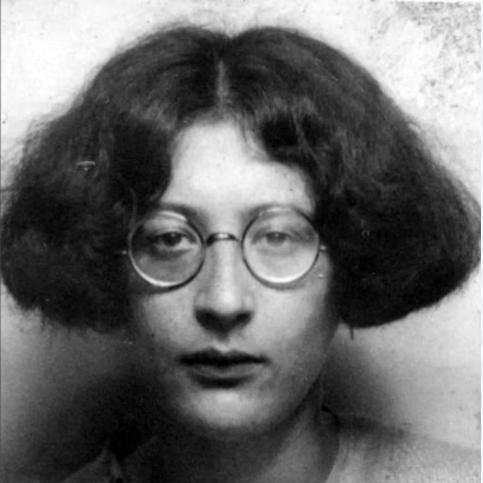
It is not in a person's nature to desire what he already has. Desire is a tendency, the start of a movement toward something, toward a point from which one is absent. If, at the very outset, this movement doubles back on itself toward its point of departure, a person turns round and round like a squirrel in a cage or a prisoner in a condemned cell. Constant turning soon produces revulsion. All workers, especially though not exclusively those who work under inhumane conditions, are easily the victims of revulsion, exhaustion and disgust and the strongest are often the worst affected.
▼
Source
source
p. 245
2 months 1 week ago
The miser deprives himself of his treasure because of his desire for it.
▼
Source
source
p. 260
3 months 3 weeks ago
The wise through excess of wisdom is made a fool.
▼
Source
source
Experience
4 days ago
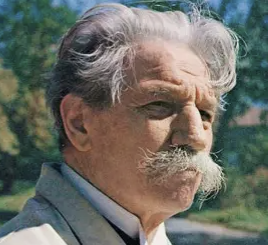
Anyone who proposes to do good must not expect people to roll stones out of his way, but must accept his lot calmly if they even roll a few more upon it. A strength which becomes clearer and stronger through its experience of such obstacles is the only strength that can conquer them. Resistance is only a waste of strength.
▼
Source
source
p. 164
3 months 3 weeks ago
Respect the child. Be not too much his parent. Trespass not on his solitude.
▼
Source
source
Education
3 months 3 weeks ago
Slavery is disheartening; but Nature is not so helpless but it can rid itself of every last wrong. But the spasms of nature are centuries and ages and will tax the faith of short-lived men. Slowly, slowly the Avenger comes, but comes surely. The proverbs of the nations affirm these delays, but affirm the arrival. They say, "God may consent, but not forever." The delay of the Divine Justice - this was the meaning and soul of the Greek Tragedy, - this was the soul of their religion.
▼
Source
source
The Fugitive Slave Law, a lecture in NYC, March 7, 1854
3 months 1 week ago
Nowadays, to say that we are clever animals is not to say something philosophical and pessimistic but something political and hopeful - namely, if we can work together, we can make ourselves into whatever we are clever and courageous enough to imagine ourselves becoming. This is to set aside Kant's question "What is man?" and to substitute the question "What sort of world can we prepare for our great grandchildren?"
▼
Source
source
"Human Rights, Rationality, and Sentimentality." Truth and Progress: Philosophical Papers, Volume 3 (1998).

1 month ago
Terror is not now, if it ever was, something that comes to us from outside. It is a part of the society in which we live. Both liberals and neoconservatives believe terrorism can be dealt with by removing its causes. The truth is less reassuring. Al-Qaeda has mutated into a decentralised, often locally based type of apocalyptic terrorism and, in this new guise, seems to be acquiring a formidable momentum.
▼
Source
source
"Look out for the enemy within," The Observer
2 weeks 5 days ago
All achievement should be measured in human happiness.
▼
Source
source
Ch. IV: "The Golden Rule and After", p. 90
2 months 1 week ago
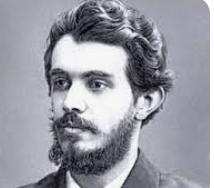
Morally, it is wrong to suppose the source of evil is outside oneself, that one is a vessel of holiness running over with virtue. Such a disposition is the best soil for a hateful and cruel fanaticism. It is as wrong to impute every wickedness to Jews, Freemasons, "intellectuals," as it is to blame all crimes on the bourgeoisie, the nobility, and the powers that were. No; the root of evil is in me as well, and I must take my share of the responsibility and the blame. That was true before the revolution and it is true still.
▼
Source
source
p. 128

3 months 3 weeks ago
It is the necessary, though very slow and gradual, consequence of a certain propensity in human nature which has in view no such extensive utility; the propensity to truck, barter, and exchange one thing for another.
▼
Source
source
Chapter II

3 months 1 week ago
Tomorrow we will be back on the vast ocean.
▼
Source
source
The Routledge Dictionary of Latin Quotations: The Illiterati's Guide to Latin Maxims, Mottoes, Proverbs and Sayings

1 month 2 days ago
Skills are called hidden treasure as they save like a mother in a foreign country.
3 months 3 weeks ago
I believe Buddhism to be a simplification of Hinduism and Islam to be a simplification of Xianity.
▼
Source
source
Letter to Sheldon Vanauken (14 December 1950), quoted in Sleuthing C. S. Lewis (2001) by Kathryn Ann Lindskoog, p. 393
4 months 2 days ago
For man seeketh in society comfort, use, and protection: and they be three wisdoms of divers natures, which do often sever: wisdom of the behaviour, wisdom of business, and wisdom of state.
▼
Source
source
Book II, xxiii
2 months 2 days ago
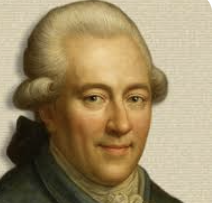
I have remarked very clearly that I am often of one opinion when I am lying down and of another when I am standing up.
▼
Source
source
F 73

3 months 3 weeks ago
I asked my guide how it was possible the judicious part of them could suffer such incoherent prating? "We are obliged," said he, "to suffer it, because no one knows, when a brother rises up to hold forth, whether he will be moved by the spirit or by folly. In this uncertainty, we listen patiently to every one. We even allow our women to speak in public; two or three of them are often inspired at the same time, and then a most charming noise is heard in the Lord's house." "You have no priests, then?" said I. "No, no, friend," replied the Quaker; "heaven make us thankful!" Then opening one of the books of their sect, he read the following words in an emphatic tone: "'God forbid we should presume to ordain any one to receive the Holy Spirit on the Lord's day, in exclusion to the rest of the faithful!'
▼
Source
source
Further account of his conversations with Andrew Pit
2 months 2 weeks ago
The poor maidservant who used to say that she only believed in God when she had a toothache puts all theologians to shame.
3 months 3 weeks ago
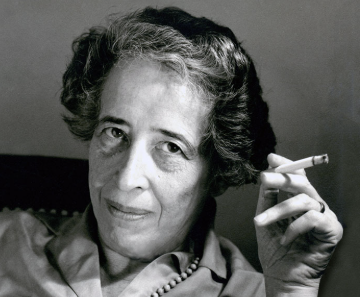
Man's urge for change and his need for stability have always balanced and checked each other, and our current vocabulary, which distinguishes between two factions, the progressives and the conservatives, indicates a state of affairs in which this balance has been thrown out of order. No civilization - the man-made artifact to house successive generations - would ever have been possible without a framework of stability, to provide the wherein for the flux of change. Foremost among the stabilizing factors, more enduring than customs, manners and traditions, are the legal systems that regulate our life in the world and our daily affairs with each other.
▼
Source
source
"Civil Disobedience"
1 month 6 days ago
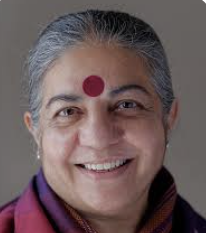
The WTO-related events in Seattle created the first experience of a rainbow politics-a successful pluralistic politics, without the working of a master mind, but with the currents and beauty that come out of free thinking. In the new politics, people have different ways of talking, but I feel the core will be living democracy and living economies, and that it will include both taking personal responsibility to make change and being part of national and international movements for change.
CivilSimian.com created by AxiomaticPanic, CivilSimian, Kalokagathia