


3 months 3 days ago
The man that does not know himself not to be at the mercy of other men, that does not feel that he is invulnerable to all the vicissitudes of fortune, is incapable of a constant and inflexible virtue.
▼
Source
source
Book V, "Of Education"

4 months 1 week ago
I moreover affirm that our wisdom itself, and wisest consultations, for the most part commit themselves to the conduct of chance.
▼
Source
source
Book III, Ch. 8. Of the Art of Conversation

6 days ago
There is an error into which most of the speculators on government have fallen, and which the well-known state of society of our Indians ought, before now, to have corrected. In their hypothesis of the origin of government, they suppose it to have commenced in the patriarchal or monarchical form. Our Indians are evidently in that state of nature which has passed the association of a single family... The Cherokees, the only tribe I know to be contemplating the establishment of regular laws, magistrates, and government, propose a government of representatives, elected from every town. But of all things, they least think of subjecting themselves to the will of one man.
▼
Source
source
Letter to Francis W. Gilmer

3 months 1 week ago
We carry with us the wonders, we seek without us: There is all Africa, and her prodigies in us; we are that bold and adventurous piece of nature, which he that studies, wisely learns in a compendium, what others labour at in a divided piece and endless volume.
▼
Source
source
Section 15

4 months 3 weeks ago
When your father is alive, observe his will. When your father is dead observe his former actions. If, for three years after the death of your father you do not change from the ways of your father, you can be called a 'real son'.

2 months 1 week ago
Every body continues in its state of rest, or of uniform motion in a right line, unless it is compelled to change that state by forces impressed upon it.
▼
Source
source
Laws of Motion, I
4 months 1 week ago
Only a male intellect clouded by the sexual drive could call the stunted, narrow-shouldered, broad-hipped and short-legged sex the fair sex.
▼
Source
source
Vol. 2, Ch. 27, § 369
4 months 3 weeks ago
All things are nourished together without their injuring one another. The courses of the seasons, and of the sun and moon, are pursued without any collision among them. The smaller energies are like river currents; the greater energies are seen in mighty transformations. It is this which makes heaven and earth so great.

3 months 2 weeks ago
Cut not fire with a sword. Symbol 9 Variant translation: Poke not the fire with a sword.
▼
Source
source
As quoted in Short Sayings of Great Men: With Historical and Explanatory Notes (1882) by Samuel Arthur Bent, p. 455
1 month 4 weeks ago
Tocqueville predicted that in democratic countries the public would demand larger and larger doses of excitement and increasingly stronger stimulants from its writers. He probably did not expect that public to dramatize itself so extensively, to make the world scene everybody's theatre, or, in the developed countries, to take to alcohol and drugs in order to get relief from the horrors of ceaseless intensity, the torment of thrills and distractions. A great many writers have done little more than meet the mounting demand for thrills. I think that this demand has, in the language of marketing, peaked.
▼
Source
source
The Distracted Public
6 days ago
Good wine is a necessity of life for me.
▼
Source
source
As quoted in The Man from Monticello : An Intimate Life of Thomas Jefferson (1969) by Thomas J. Fleming, p. 250

2 months 4 weeks ago
The ontological concept of truth is in the centre of a logic which may serve as a model of pre- technological rationality. It is the rationality of a two-dimensional universe of discourse which, contrasts with the of thought and behavior that develop in the execution of the technological project.
▼
Source
source
p. 130

4 months 6 days ago
Whatever games are played with us, we must play no games with ourselves, but deal in our privacy with the last honesty and truth.
▼
Source
source
Illusions

2 months 5 days ago
The recognition that love represents the highest morality was nowhere denied or contradicted, but this truth was so interwoven everywhere with all kinds of falsehoods which distorted it, that finally nothing of it remained but words. It was taught that this highest morality was only applicable to private life - for home use, as it were - but that in public life all forms of violence - such as imprisonment, executions, and wars - might be used for the protection of the majority against a minority of evildoers, though such means were diametrically opposed to any vestige of love.
▼
Source
source
III

2 months 3 weeks ago
In books of psychology written from the spiritualist point of view, it is customary to begin the discussion of the existence of the soul as a simple substance, separable from the body, after this style: There is in me a principle which thinks, wills and feels... Now this implies a begging of the question. For it is far from being an immediate truth that there is in me such a principle; the immediate truth is that I think, will and feel. And I - the I that thinks, wills and feels - am immediately my living body with the states of consciousness which it sustains. It is my living body that thinks, wills and feels.
2 months 2 weeks ago
Nature is a structure of evolving processes. The reality is the process.
▼
Source
source
Ch. 4: "The Eighteenth Century", p. 102
4 months 1 week ago
The way of the world is to make laws, but follow custom.
4 months 3 weeks ago
See a person's means (of getting things). Observe his motives. Examine that in which he rests. How can a person conceal his character? See a person's "being", observe his motive, notice his result. How can a person conceal his character?
3 months 2 days ago
Consider what effects that might conceivably have practical bearings you conceive the objects of your conception to have. Then, your conception of those effects is the whole of your conception of the object.
▼
Source
source
Vol. V, par. 438


5 months 6 days ago
Take a book, the poorest one written, but read it with the passion that it is the only book you will read-ultimately you will read everything out of it, that is, as much as there was in yourself, and you could never get more out of reading, even if you read the best of books.
4 months 1 week ago
It is truly a marvelous thing to consider to what greatness Athens arrived in the space of one hundred years after she freed herself from the tyranny of Pisistratus; but, above all, it is even more marvelous to consider the greatness Rome reached when she freed herself from her kings. The reason is easy to understand, for it is the common good and not private gain that makes cities great. Yet, without a doubt, this common good is observed only in republics, for in them everything that promotes it is practised, and however much damage it does to this or that private individual, those who benefit from the said common good are so numerous that they are able to advance in spite of the inclination of the few citizens who are oppressed by it.
▼
Source
source
Book 2, Chapter 2

4 months 6 days ago
It seems to me that the god that is commonly worshipped in civilized countries is not at all divine, though he bears a divine name, but is the overwhelming authority and respectability of mankind combined. Men reverence one another, not yet God. If I thought that I could speak with discrimination and impartiality of the nations of Christendom, I should praise them, but it tasks me too much. They seem to be the most civil and humane, but I may be mistaken.
2 months 1 week ago
The best and safest method of philosophizing seems to be, first to enquire diligently into the properties of things, and to establish these properties by experiment, and then to proceed more slowly to hypothesis for the explanation of them. For hypotheses should be employed only in explaining the properties of things, but not assumed in determining them, unless so far as they may furnish experiments.
▼
Source
source
Letter to Ignatius Pardies (1672) Philosophical Transactions of the Royal Society (Feb. 1671/2) as quoted by William L. Harper
2 months 3 weeks ago
The surrealist thinks he has outstripped the whole of literary history when he has written (here a word that there is no need to write) where others have written "jasmines, swans and fauns." But what he has really done has been simply to bring to light another form of rhetoric which hitherto lay hidden in the latrines.
▼
Source
source
Chapter XI: The Self-Satisfied Age

3 months 6 days ago
Even there, in the mines, underground, I may find a human heart in another convict and murderer by my side, and I may make friends with him, for even there one may live and love and suffer. One may thaw and revive a frozen heart in that convict, one may wait upon him for years, and at last bring up from the dark depths a lofty soul, a feeling, suffering creature; one may bring forth an angel, create a hero! There are so many of them, hundreds of them, and we are to blame for them.
3 months 3 weeks ago
Then take, good sir, your pleasure while you may; With life so short 'twere wrong to lose a day.
▼
Source
source
Book II, satire viii, line 96 (trans. Conington)
6 days ago
Pride costs us more than hunger, thirst and cold.
5 days ago
All law is "situational law." The sovereign produces and guarantees the situation in its totality. He has the monopoly over this last decision.
▼
Source
source
p.13
4 months 3 weeks ago
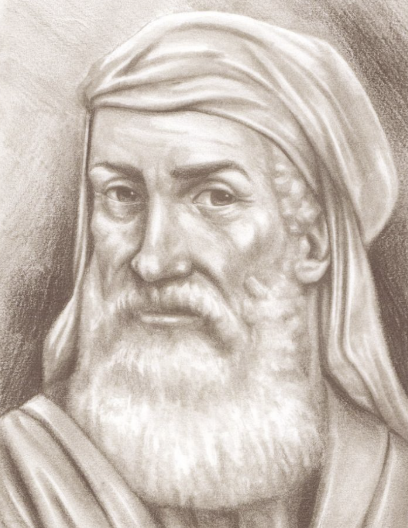
To master this instrument the religious thinker must make a preliminary study of logic, just as the lawyer must study legal reasoning. This is no more heretical in the one case than in the other. And logic must be learned from the ancient masters, regardless of the fact that they were not Muslims.

3 months 2 days ago
The multiplication of our kind borders on the obscene; the duty to love them, on the preposterous.

3 weeks ago
Our luxuries have condemned us to weakness; we have ceased to be able to do that which we have long declined to do.

4 months 4 days ago
It is freedom, it is particularity, it is solitude that we are aiming at, and not Evil for its own sake.
▼
Source
source
p. 179

4 months 5 days ago
He the devil always sends errors into the world in pairs-pairs of opposites. And he always encourages us to spend a lot of time thinking which is the worse. You see why, of course? He relies on your extra dislike of the one error to draw you gradually into the opposite one. But do not let us be fooled. We have to keep our eyes on the goal and go straight through between both errors. We have no other concern than that with either of them.
▼
Source
source
Book IV, chapter 6, "Two Notes"
2 months 2 weeks ago
There is something between the gross specialised values of the mere practical man, and the thin specialised values of the mere scholar. Both types have missed something; and if you add together the two sets of values, you do not obtain the missing elements.
▼
Source
source
Ch. 13: "Requisites for Social Progress", p. 279
3 months 3 days ago
Ministers become a sort of miniature kings in their turn. Though they have the greatest opportunity of observing the impotence and unmeaningness of the character, they envy it. It is their trade perpetually to extol the dignity and importance of the master they serve; and men cannot long anxiously endeavor to convince others of the truth of any proposition without becoming half convinced themselves.
▼
Source
source
Book V, Ch. 5

1 month 3 weeks ago
Only two suppositions seem to be open to us - Either each species of crocodile has been specially created, or it has arisen out of some pre-existing form by the operation of natural causes. Choose your hypothesis; I have chosen mine. I can find no warranty for believing in the distinct creation of a score of successive species of crocodiles in the course of countless ages of time.
6 days ago
Where are we going? Do not ask! Ascend, descend. There is no beginning and no end. Only this present moment exists, full of bitterness, full of sweetness, and I rejoice in it all.
3 weeks ago
Friendship is always helpful, but love sometimes even does harm
4 months 6 days ago
The measure of a master is his success in bringing all men round to his opinion twenty years later.
▼
Source
source
Culture
4 months 4 days ago
The consciousness of being betrayed is to the collective consciousness of a sacred group what a certain form of schizophrenia is to the individual...it is a form of madness.
▼
Source
source
p. 193

2 months 3 days ago
The space of early Greek cosmology was structured by logos - resonant utterance or word.
▼
Source
source
p. 35
6 days ago
Compulsion in religion is distinguished peculiarly from compulsion in every other thing. I may grow rich by art I am compelled to follow, I may recover health by medicines I am compelled to take against my own judgment, but I cannot be saved by a worship I disbelieve & abhor.
▼
Source
source
Notes on Religion (October 1776), published in The Works of Thomas Jefferson in Twelve Volumes, Federal Edition, Paul Leicester Ford, ed., New York: G. P. Putnam's Sons, 1904, Vol. 2, p. 266
2 days ago
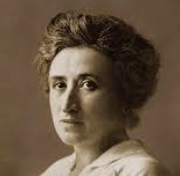
Every legal constitution is the product of a revolution. In the history of classes, revolution is the act of political creation, while legislation is the political expression of the life of a society that has already come into being. Work for reform does not contain its own force independent from revolution. During every historic period, work for reforms is carried on only in the direction given to it by the impetus of the last revolution and continues as long as the impulsion from the last revolution continues to make itself felt. Or, to put it more concretely, in each historic period work for reforms is carried on only in the framework of the social form created by the last revolution. Here is the kernel of the problem.
▼
Source
source
Ch. 8
4 months 4 days ago
If you are not already dead, forgive. Rancor is heavy, it is worldly; leave it on earth: die light.
▼
Source
source
Act 1
2 months 2 weeks ago
The sure conviction that we could if we wanted to is the reason so many good minds are idle.
▼
Source
source
K 27
CivilSimian.com created by AxiomaticPanic, CivilSimian, Kalokagathia