


2 months 3 weeks ago
Women are systematically degraded by receiving the trivial attentions which men think it manly to pay to the sex, when, in fact, men are insultingly supporting their own superiority.
▼
Source
source
Ch. 4


2 weeks 4 days ago
The idea of universal human dignity ultimately comes out of Christianity... the view that all human beings are equal in the sight of God because they have the capacity for moral choice. As Western thought developed in the 17th-18th centuries, this took on a secular form under thinkers like Jean-Jacques Rousseau or Immanuel Kant or Georg Hegel, who argued that human equality is... based on human autonomy.
▼
Source
source
11:12

1 month 3 weeks ago
The problem posed by indirect speech acts is the problem of how it is possible for the speaker to say one thing and mean that but also to mean something else.
▼
Source
source
Expression and Meaning, p. 31, Cambridge University Press (1979).
2 weeks 3 days ago
To doubt everything or to believe everything are two equally convenient solutions; both dispense with the necessity of reflection.
▼
Source
source
Preface, Dover abridged edition (1952), p. xxii
1 day ago
The greatest ideal that man can aspire to is not to be a show-case of virtue, but just to be a genial, likable and reasonable human being.
▼
Source
source
p. 242

4 months 1 day ago
The mad mob does not ask how it could be better, only that it be different. And when it then becomes worse, it must change again. Thus they get bees for flies, and at last hornets for bees. Whether Soldiers Can Also Be in a State of Grace
▼
Source
source
1526

2 months 2 weeks ago
The people are led to find in the productive apparatus the effective agent of thought and action to which their personal thought and action can and must be surrendered. And in this transfer, the apparatus also assumes the role of a moral agent.
▼
Source
source
Conscience is absolved by reification. p. 79

2 months 2 weeks ago
Basically-I speak of life as it is and not of abstract philosophical constructs-life is only bearable because one does not go to the end; doing something is only possible when one has particular illusions and that holds also for friendships, for everything.
2 weeks 3 days ago
The mathematician is born, not made.

3 months 3 weeks ago
He blamed as severely what he thought a bad action, when the motive was a feeling of duty, as if the agents had been consciously evil doers. He would not have accepted as a plea in mitigation for inquisitors, that they sincerely believed burning heretics to be an obligation of conscience. But though he did not allow honesty of purpose to soften his disapprobation of actions, it had its full effect on his estimation of characters. No one prized conscientiousness and rectitude of intention more highly, or was more incapable of valuing any person in whom he did not feel assurance of it.
▼
Source
source
(pp. 49-50)

4 months 1 week ago
Whatever moral rules you have deliberately proposed to yourself abide by them as they were laws, and as if you would be guilty of impiety by violating any of them. Don't regard what anyone says of you, for this, after all, is no concern of yours. How long, then, will you put off thinking yourself worthy of the highest improvements and follow the distinctions of reason? You have received the philosophical theorems, with which you ought to be familiar, and you have been familiar with them. What other master, then, do you wait for, to throw upon that the delay of reforming yourself?... Let whatever appears to be the best be to you an inviolable law.
▼
Source
source
(50).

2 months 6 days ago
Once we can see how this question of freedom of the will has been vitiated by post-romantic philosophy, with its inbuilt tendency to laziness and boredom, we can also see how it came about that existentialism found itself in a hole of its own digging, and how the philosophical developments since then have amounted to walking in circles round that hole.
▼
Source
source
p. 214
1 month 2 weeks ago
Believe me, my friends, you are yet very deficient with regard to the best modes of training your children, or of arranging your domestic concerns.

4 months 3 weeks ago
There can never be a man so lost as one who is lost in the vast and intricate corrdiors of his own lonely mind, where none may reach and none may save. There never was a man so helpless as one who cannot remember.

3 months 3 weeks ago
There is a freemasonry among the dull by which they recognize and are sociable with the dull, as surely as a correspondent tact in men of genius.
▼
Source
source
1827

3 months 3 weeks ago
What does not exist must be something, or it would be meaningless to deny its existence; and hence we need the concept of being, as that which belongs even to the non-existent.
▼
Source
source
Principles of Mathematics (1903), p. 450

2 months 3 weeks ago
Philosophy can bake no bread; but she can procure for us God, Freedom, Immortality. Which, then, is more practical, Philosophy or Economy?
▼
Source
source
The first sentence of this was used by William Torrey Harris for the motto of the Journal of Speculative Philosophy
2 days ago
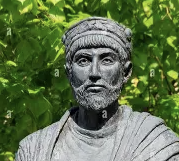
I make known unto thee how He hath provided for the bodily health of us all, by having produced Æsculapius, the Preserver of the universe; and how he hath communicated to us virtue of every kind, by sending down Aphrodite in company with Athene for our guardian; having made it all but a law that no one should use copulation except for the end of generating his like. For this reason truly, according to his revolutions and seasons, do the various vegetable and animal races feel themselves stirred towards the generation of their kind. What need is there to magnify the glory of his rays, and of his light? A night without moon, and without stars, how terrible is it! Let anyone reflect on this, in order that he may estimate how great a blessing is the light we derive from the Sun!
2 months 2 weeks ago
Whenever I happen to be in a city of any size, I marvel that riots do not break out everyday: Massacres, unspeakable carnage, a doomsday chaos. How can so many human beings coexist in a space so confined without hating each other to death?

4 months 1 week ago
It is quite clear to you that all the people see that lower kinds of creation could have been made in a different way from that in which they really are, and as they see this lower degree in many things they think that they must have been made by chance.
1 month 2 weeks ago
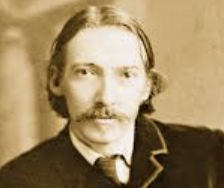
I confess I have no great notion of the use of books, except to amuse a railway journey; although, I believe, there are some very exact treatises on astronomy, the use of the globes, agriculture, and the art of making paper flowers. Upon the less apparent provinces of life I fear you will find nothing truthful.
▼
Source
source
The Rajah's Diamond, Story of the Young Man in Holy Orders.


3 months 1 week ago
He who does wrong is more unhappy than he who suffers wrong.

4 months 3 weeks ago
In an age as agitated as ours, it no longer suffices just to be advertised in the newspaper. To be advertised in this way is the same thing as being consigned to oblivion. If one is to be noticed, once must as least appear on the first page under a hand that points to and, as it were, announces or advertises the advertisement.
2 months 1 week ago
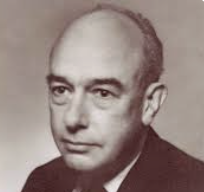
Logic chases truth up the tree of grammar.
▼
Source
source
Philosophy of Logic

4 months 2 days ago
Hurl your calumnies boldly; something is sure to stick.
▼
Source
source
De Augmentis Scientiarum
2 months 2 weeks ago
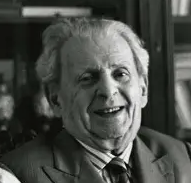
To ignore the true God is in fact only half an evil; atheism is worth more than the piety bestowed on mythical gods.
▼
Source
source
A Religion for Adults
3 months 1 week ago
And when the physician said, "Sir, you are an old man," "That happens," replied Pausanias, "because you never were my doctor."
▼
Source
source
Of Pausanias the Son of Phistoanax

3 months 3 weeks ago
What do we mean by saying that existence precedes essence? We mean that man first of all exists, encounters himself, surges up in the world-and defines himself afterwards. If man as the existentialist see him is not definable, it is because to begin with he is nothing. He will not be anything until later, and then he will be what he makes of himself. Thus, there is no human nature, because there is no God to have a conception of it. Man simply is. Not that he is simply what he conceives himself to be, but he is what he wills, and as he conceives himself after already existing - as he wills to be after that leap towards existence. Man is nothing else but that which he makes of himself. That is the first principle of existentialism.
▼
Source
source
p. 28
4 days ago
There are two threats to reason, the opinion that one knows the truth about the most important things and the opinion that there is no truth about them. Both of these opinions are fatal to philosophy; the first asserts that the quest for truth is unnecessary, while the second asserts that it is impossible. The Socratic knowledge of ignorance, which I take to be the beginning point of all philosophy, defines the sensible middle ground between two extremes.
▼
Source
source
"Western Civ," p. 18.

2 months 2 weeks ago
Master, we saw one casting out devils in thy name; and we forbad him, because he followeth not with us. And Jesus said unto him, Forbid him not: for he that is not against us is for us.
▼
Source
source
Luke 9:49-50 (KJV)

1 month 1 week ago
I think we have reached a stage now where we need to find solutions to economic injustice in the same place and in the same ways that we find solutions to sustainability. Sustainability on environmental grounds and justice in terms of everyone having a place in the production and consumption system - these are two aspects of the same issue. They have been artificially separated and have to be put back again in the Western way of thinking.
▼
Source
source
1998

2 weeks ago
We are firm believers in the maxim that for all right judgment of any man or thing it is useful, nay, essential, to see his good qualities before pronouncing on his bad.
▼
Source
source
Goethe.

3 months 3 weeks ago
It often happens that reforms merely have the effect of transferring the undesirable tendencies of individuals from one channel to another channel. An old outlet for some particular wickedness is closed; but a new outlet is opened. The wickedness is not abolished; it is merely provided with a different set of opportunities for self-expression.
▼
Source
source
Ch. 3, p. 20 [2012 reprint]
2 months 2 weeks ago
How many disappointments are conducive to bitterness? One or a thousand, depending on the subject.

3 months 5 days ago
Step not beyond the beam of the balance.
▼
Source
source
Symbol 14
3 months 2 weeks ago
The evidence of our own eyes makes it more plausible to believe that the world was not created by any god at all. If, however, we insist on believing in divine creation, we are forced to admit that the god who made the world cannot be all-powerful and all good. He must be either evil or a bungler.
▼
Source
source
The God of Suffering? Project Syndicate, 2008
2 months 2 weeks ago
Let a man once overcome his selfish terror at his own finitude, and his finitude is, in one sense, overcome.
3 months 3 weeks ago
I am sorry to say that at the moment I am so busy as to be convinced that life has no meaning whatever... I do not see that we can judge what would be the result of the discovery of truth, since none has hitherto been discovered.
▼
Source
source
Letter to Will Durant, 20 June, 1931
3 months 3 weeks ago
I conceive that the description so often given of a Benthamite, as a mere reasoning machine, though extremely inapplicable to most of those who have been designated by that title, was during two or three years of my life not altogether untrue of me. ...There is nothing very extraordinary in this fact: no youth of the age I then was, can be expected to be more than one thing, and this was the thing I happened to be. Ambition and desire of distinction, I had in abundance; and zeal for what I thought the good of mankind was my strongest sentiment, mixing with and colouring all others. But my zeal was as yet little else, at that period of my life, than zeal for speculative opinions. It had not its root in genuine benevolence, or sympathy with mankind; though these qualities held their due place in my ethical standard. Nor was it connected with any high enthusiasm for ideal nobleness.
▼
Source
source
(pp. 109-110)
3 months 3 weeks ago
Similarly, individual acts of aristocratic generosity do not eliminate pauperism; they perpetuate it.
▼
Source
source
p. 219

3 months 3 weeks ago
Since men in their endeavors behave, on the whole, not just instinctively, like the brutes, nor yet like rational citizens of the world according to some agreed-on plan, no history of man conceived according to a plan seems to be possible, as it might be possible to have such a history of bees or beavers. One cannot suppress a certain indignation when one sees men's actions on the great world-stage and finds, beside the wisdom that appears here and there among individuals, everything in the large woven together from folly, childish vanity, even from childish malice and destructiveness. In the end, one does not know what to think of the human race, so conceited in its gifts.
▼
Source
source
Introduction
2 weeks 3 days ago
When navigators... determine a longitude... they must... calculate Paris time…with a chronometer set for Paris. The qualitative problem of simultaneity is made to depend upon the quantitative problem of the measurement of time.
3 months 5 days ago
Write in the sand the flaws of your friend.
▼
Source
source
As quoted in Geary's Guide to the World's Great Aphorists (2007) by James Geary
1 month 2 days ago
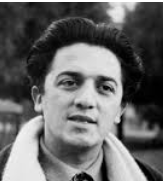
The young watch television twenty-four hours a day, they don't read and they rarely listen. This incessant bombardment of images has developed a hypertrophied eye condition that's turning them into a race of mutants. They should pass a law for a total reeducation of the young, making children visit the Galleria Borghese on a daily basis.
▼
Source
source
"Younger Generation"

2 months 3 weeks ago
The science of government being, therefore, so practical in itself, and intended for such practical purposes, a matter which requires experience, and even more experience than any person can gain in his whole life, however sagacious and observing he may be, it is with infinite caution that any man ought to venture upon pulling down an edifice which has answered in any tolerable degree for ages the common purposes of society, or on building it up again without having models and patterns of approved utility before his eyes.
4 months 3 weeks ago
There is a cult of ignorance in the United States, and there always has been. The strain of anti-intellectualism has been a constant thread winding its way through our political and cultural life, nurtured by the false notion that democracy means that "my ignorance is just as good as your knowledge."

1 month 3 weeks ago
People in new environments always produce the new preceptual modality without any difficulty or awareness of change. It is later that the psychic and social realignments baffle societies.
▼
Source
source
ARTnews annual, Volume 31, Art Foundation, 1966, p. 56

2 months 3 weeks ago
Music must take rank as the highest of the fine arts - as the one which, more than any other, ministers to human welfare.
▼
Source
source
On the Origin and Function of Music
CivilSimian.com created by AxiomaticPanic, CivilSimian, Kalokagathia