
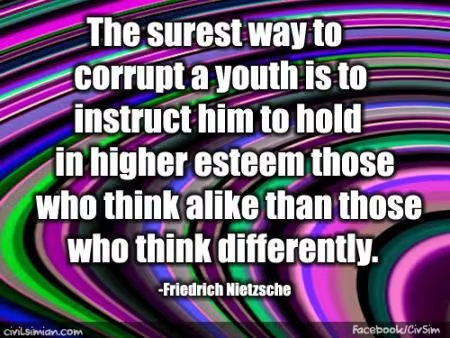
Think differently, but know when it's your duty to think the same...


Our questions and answers are in part determined by the historical tradition in which we find ourselves. We apprehend truth from our own source within the historical tradition. The content of our truth depends upon our appropriating the historical foundation. Our own power of generation lies in the rebirth of what has been handed down to us. If we do not wish to slip back, nothing must be forgotten; but if philosophising is to be genuine our thoughts must arise from our own source. Hence all appropriation of tradition proceeds from the intentness of our own life. The more determinedly I exist, as myself, within the conditions of the time, the more clearly I shall hear the language of the past, the nearer I shall feel the glow of its life.

The youth gets together his materials to build a bridge to the moon, or, perchance, a palace or temple on the earth, and, at length, the middle-aged man concludes to build a woodshed with them.

Wilt thou seal up the avenues of ill? Pay every debt as if God wrote the bill.
Like computer viruses, successful mind viruses will tend to be hard for their victims to detect. If you are the victim of one, the chances are that you won't know it, and may even vigorously deny it. Accepting that a virus might be difficult to detect in your own mind, what tell-tale signs might you look out for? I shall answer by imaging how a medical textbook might describe the typical symptoms of a sufferer (arbitrarily assumed to be male).
Kripke tries to sober us up by denying that meaning determines reference. Rather, we name things by confronting them and baptising them, not by creating them out of a list of qualities. Names are not, pace Russell, shorthand for such lists. They are not abbreviations for descriptions, but (in Kripke's coinage) 'rigid designators' - that is, they would name the same things in any possible world, including worlds in which their bearers did not have the properties we, in this world, use to identify them.

Contemporary capitalist production is characterized by a series of passages that name different faces of the same shift: from the hegemony of industrial labor to that of immaterial labor, from Fordism to post-Fordism, and from the modern to the postmodern.
In actions of enthusiasm, this drawback appears: but in those lower activities, which have no higher aim than to make us more comfortable and more cowardly, in actions of cunning, actions that steal and lie, actions that divorce the speculative from the practical faculty, and put a ban on reason and sentiment, there is nothing else but drawback and negation.
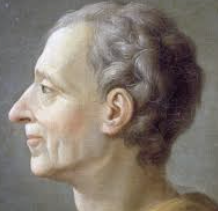
The Ottoman Empire whose sick body was not supported by a mild and regular diet, but by a powerful treatment, which continually exhausted it.

Something that is merely negative creates nothing.

Lands for the purposes of pleasure and magnificence, parks, gardens, public walks, &c. possessions which are every where considered as causes of expence, not as sources of revenue, seem to be the only lands which, in a great and civilized monarchy, ought to belong the crown.
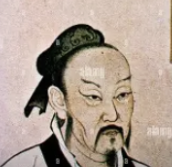
The principles of great men illuminate the universe.

But he, with these burthens on him, planned, commenced, and completed, the History of India; and this in the course of about ten years, a shorter time than has been occupied (even by writers who had no other employment) in the production of almost any other historical work of equal bulk, and of anything approaching to the same amount of reading and research. And to this is to be added, that during the whole period, a considerable part of almost every day was employed in the instruction of his children: in the case of one of whom, myself, he exerted an amount of labour, care, and perseverance rarely, if ever, employed for a similar purpose, in endeavouring to give, according to his own conception, the highest order of intellectual education.

A distant enemy is always preferable to one at the gate.

We must consider both the ultimate end and all clear sensory evidence, to which we refer our opinions; for otherwise everything will be full of uncertainty and confusion.

Pain will force even the truthful to speak falsely.

If literature isn't everything, it's not worth a single hour of someone's trouble.
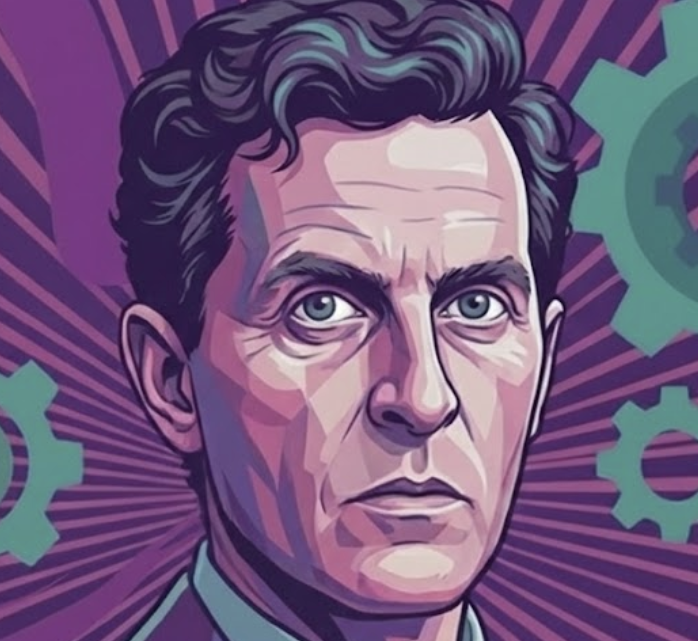
The less somebody knows and understands himself the less great he is, however great may be his talent. For this reason our scientists are not great.

The old often envy the young; when they do, they are apt to treat them cruelly.

I don't believe in an afterlife, so I don't have to spend my whole life fearing hell, or fearing heaven even more. For whatever the tortures of hell, I think the boredom of heaven would be even worse.

Wisdom: The first error is that of the southern people, and it consists in holding that these eastern and western places are real places. ... give no quarter to that thought, whether it threatens you with fear, or tempts you with hopes. For this is Superstition and all who believe it will come in the end to the swamps to the south and the jungles to the far south.
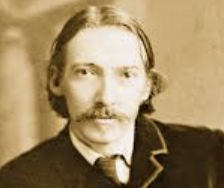
It is as natural and as right for a young man to be imprudent and exaggerated, to live in swoops and circles, and beat about his cage like any other wild thing newly captured, as it is for old men to turn gray, or mothers to love their offspring, or heroes to die for something worthier than their lives.
We do not live for idle amusement. I would not run round a corner to see the world blow up.
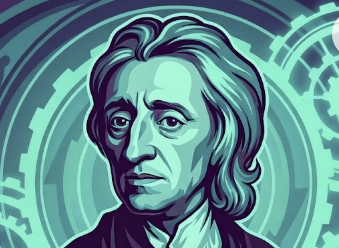
The boundaries of the species, whereby men sort them, are made by men.

Thought is led, by the situation of its objects, to measure their truth in terms of another logic, another universe of discourse. And this logic projects another mode of existence: the realization of the truth in the words and deeds of man. And inasmuch as this project involves man as societal animal," the polis, the movement of thought has a political content. Thus, the Socratic discourse is political discourse inasmuch as it contradicts the established political institutions. The search for the correct definition, for the "concept" of virtue, justice, piety, and knowledge becomes a subversive undertaking, for the concept intends a new polis.
More generally it is completely unrealistic to claim, as Gould and many others do, that religion keeps itself away from science's turf, restricting itself to morals and values. A universe with a supernatural presence would be a fundamentally and qualitatively different kind of universe from one without. The difference is, inescapably, a scientific difference. Religions make existence claims, and this means scientific claims.
Living organisms had existed on earth, without ever knowing why, for over three thousand million years before the truth finally dawned on one of them. His name was Charles Darwin. To be fair, others had had inklings of the truth, but it was Darwin who first put together a coherent and tenable account of why we exist.
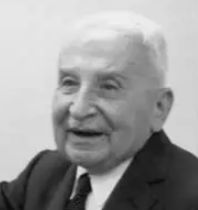
From a correct Marxian point of view ... all measures designed to restrain, to regulate and to improve capitalism were simply "petty-bourgeois" nonsense ... True socialists should not place any obstacles in the way of capitalist evolution. For only the full maturity of capitalism could bring about socialism. It is not only vain, but harmful to the interests of the proletarians to resort to such measures.

The necessity of faith as an ingredient in our mental attitude is strongly insisted on by the scientific philosophers of the present day; but by a singularly arbitrary caprice they say that it is only legitimate when used in the interests of one particular proposition, - the proposition, namely, that the course of nature is uniform. That nature will follow to-morrow the same laws that she follows to-day is, they all admit, a truth which no man can know; but in the interests of cognition as well as of action we must postulate or assume it.
What is called politics is comparatively something so superficial and inhuman, that, practically, I have never fairly recognized that it concerns me at all. The newspapers, I perceive, devote some of their columns specially to politics or government without charge; and this, one would say, is all that saves it; but, as I love literature, and, to some extent, the truth also, I never read those columns at any rate. I do not wish to blunt my sense of right so much.

However hard they try, men cannot create a social organism, they can only create an organization. In the process of trying to create an organism they will merely create a totalitarian despotism.

Again, and again, we say, the great, the creative and enduring is ever a secret to itself; only the small, the barren and transient is otherwise.
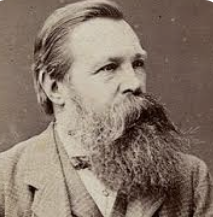
History has proved us, and all who thought like us, wrong. It has made it clear that the state of economic development on the Continent at that time was not, by a long way, ripe for the removal of capitalist production.
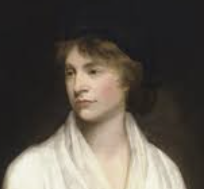
It appears to me impossible that I should cease to exist, or that this active, restless spirit, equally alive to joy and sorrow, should only be organised dust - ready to fly abroad the moment the spring snaps, or the spark goes out which kept it together. Surely something resides in this heart that is not perishable, and life is more than a dream.
A fair exterior is a silent recommendation.

The third argument, enclosing and defending the other two, consists in the development of those principles of logic according to which the humble argument is the first stage of a scientific inquiry into the origin of the three Universes, but of an inquiry which produces, not merely scientific belief, which is always provisional, but also a living, practical belief, logically justified in crossing the Rubicon with all the freightage of eternity.
Some communities will be abandoned, others will struggle along, others will split, others will flourish, gain members, and be duplicated elsewhere. Each community must win and hold the voluntary adherence of its members. No pattern is imposed on everyone, and the result will be one pattern if and only if everyone voluntarily chooses to live in accordance with that pattern of community.
The happiness which forms the utilitarian standard of what is right in conduct, is not the agent's own happiness, but that of all concerned. As between his own happiness and that of others, utilitarianism requires him to be as strictly impartial as a disinterested and benevolent spectator. In the golden rule of Jesus of Nazareth, we read the complete spirit of the ethics of utility. To do as one would be done by, and to love one's neighbour as oneself, constitute the ideal perfection of utilitarian morality.

To free a man from error is to give, not to take away. Knowledge that a thing is false is a truth. Error always does harm; sooner or later it will bring mischief to the man who harbors it. Then give up deceiving people; confess ignorance of what you don't know, and leave everyone to form his own articles of faith for himself. Perhaps they won't turn out so bad, especially as they'll rub one another's corners down, and mutually rectify mistakes. The existence of many views will at any rate lay a foundation of tolerance. Those who possess knowledge and capacity may betake themselves to the study of philosophy, or even in their own persons carry the history of philosophy a step further.
[T]hings are impressed better by active than by passive repetition. ...[I]t pays better to wait and recollect by an effort from within, than to look at the book again.
Where is the prince sufficiently educated to know that for seventeen hundred years the Christian sect has done nothing but harm?
A few years ago I had occasion to visit Peru, and I got to know a fine philosopher and a truly wonderful human being-Francisco Miro Casada. Miro Casada has been an idealist all his life, while being, at the same time, a man of great experience (a former member of several governments and a former Ambassador to France). I found him a man who represents the social democratic vision in its purest form. Talking to him, and to my other friends in Peru (who represented quite a spectrum of political opinion), I heard something that was summed up in a remark he, Miro Casada, made to me, "Whenever you have a Republican president, we get a wave of military dictatorships in Latin America".

True science teaches, above all, to doubt and be ignorant.

Habit... makes the endurance of evil easy (which, under the name of patience, is falsely honored as a virtue), because sensations of the same type, when continued without alteration for a long time, draw our attention away from the senses so that we are scarcely conscious of them at all. On the other hand, habit also makes the consciousness and the remembrance of good that has been received more difficult, which then gradually leads to ingratitude (a real vice). [...] Acquired habit deprives good actions of their moral value because it undermines mental freedom and, moreover, it leads to thoughtless repetitions of the same acts (monotony), and thus becomes ridiculous.
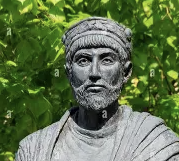
Let us not admit discourses by Epicureans or Pyrrhonists - though indeed the gods have already in their wisdom destroyed their works, so that most of their books are no longer available. Nevertheless, there is no reason why I should not, by way of example, mention these works too, to show what sort of discourses priests must especially avoid; and if such discourses, then much more must they avoid such thoughts.

Now, obviously, the human race is on the point of an extremely interesting evolutionary development. The first step towards escape from this vicious circle is to recognize that the apparent "ordinariness" of the world is a delusion. If we could become deeply and permanently convinced that the world "out there" is endlessly exciting, we would never again allow ourselves to become trapped in the swamp of "taken-for-grantedness". And we would become practically unkillable. Shaw says of his "Ancients" in Back to Methuselah "Even in the moment of death, their life does not fail them". "Life failure" is that feeling that there is nothing new under the sun, and that we all have to accept defeat in the end. If we could learn the mental trick of causing the dynamo to accelerate, this illusion would never again be able to exert its power over us.
You are never too old to set another goal, or to dream a new dream. Unknown, but also attributed to Les Brown, a motivational speaker. Commonly attributed to C.S. Lewis, but never with a primary source listed.
If wine is to withdraw its most poetic countenance, the sun of the white dinner-cloth, a deity to be invoked by two or three, all fervent, hushing their talk, degusting tenderly, and storing reminiscences-for a bottle of good wine, like a good act, shines ever in the retrospect-if wine is to desert us, go thy ways, old Jack!
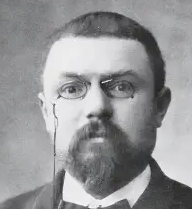
Thought must never submit, neither to a dogma, nor to a party, nor to a passion, nor to an interest, nor to a preconceived idea, nor to whatever it may be, save to the facts themselves, because, for thought, submission would mean ceasing to be.
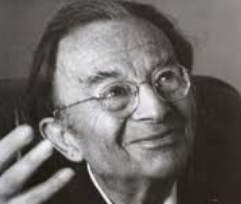
The sadistic person is as dependent on the submissive person as the latter is on the former; neither can live without the other. The difference is only that the sadistic person commands, exploits, hurts, humiliates, and that the masochistic person is commanded, exploited, hurt, humiliated. This is a considerable difference in a realistic sense; in a deeper emotional sense, the difference is not so great as that which they both have in common: fusion without integrity.
CivilSimian.com created by AxiomaticPanic, CivilSimian, Kalokagathia