


3 months 3 weeks ago
...it [is] possible to suppose that, if Russia is allowed to have peace, an amazing industrial development may take place, making Russia a rival of the United States.
▼
Source
source
Part I, Ch. 5: Communism and the Soviet Constitution
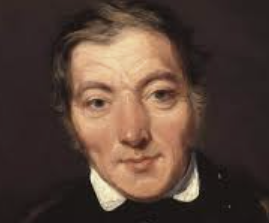
1 month 2 weeks ago
Happily for poor traduced and degraded human nature, the principle for which we now content will speedily divest it of all the ridiculous and absurd mystery with which it has been hitherto enveloped by the ignorance of preceding times: and all the ''complicated'' and ''counteracting'' motives for good conduct, which have been multiplied almost to infinity, will be reduced to ''one single principle of action'', which, by its evident operation and sufficiency, shall render this intricate system ''unnecessary'', and ultimately supersede it in all parts of the earth. That principle is THE HAPPINESS OF SELF CLEARLY UNDERSTOOD AND UNIFORMLY PRACTICED; WHICH CAN ONLY BE ATTAINED BY CONDUCT THAT MUST PROMOTE THE HAPPINESS OF THE COMMUNITY.
▼
Source
source
Essay First, The Formation of Human Character.
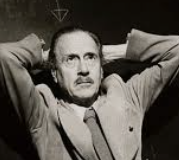
1 month 2 weeks ago
The future masters of technology will have to be lighthearted and intelligent. The machine easily masters the grim and the dumb.
▼
Source
source
(p. 55)
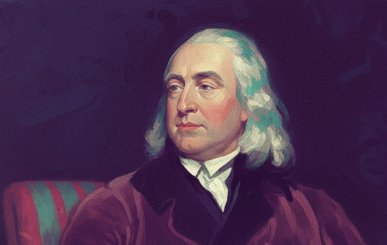
3 months 3 weeks ago
All poetry is misrepresentation.
▼
Source
source
An Aphorism attributed to him according to John Stuart Mill (see Mill's essay On Bentham and Coleridge in Utilitarianism edt. by Mary Warnock p. 123).
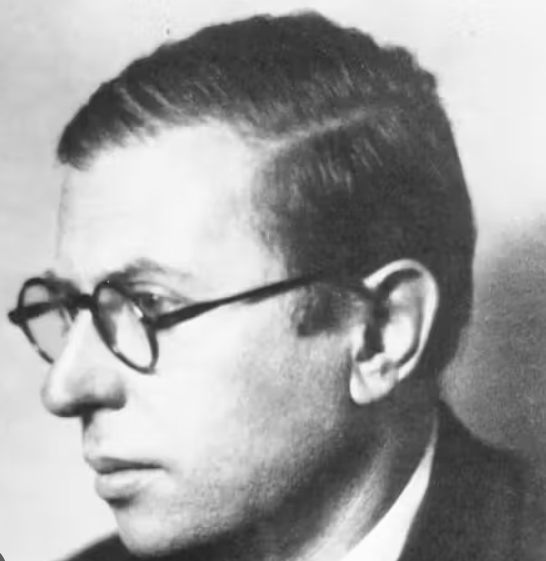
3 months 3 weeks ago
Existentialism is nothing else but an attempt to draw the full conclusions from a consistently atheistic position. Its intention is not in the least that of plunging men into despair. And if by despair one means as the Christians do - any attitude of unbelief, the despair of the existentialists is something different. Existentialism is not atheist in the sense that it would exhaust itself in demonstrations of the non-existence of God. It declares, rather, that even if God existed that would make no difference from its point of view. Not that we believe God does exist, but we think that the real problem is not that of His existence; what man needs is to find himself again and to understand that nothing can save him from himself, not even a valid proof of the existence of God. In this sense existentialism is optimistic. It is a doctrine of action, and it is only by self-deception, by confining their own despair with ours that Christians can describe us as without hope.
▼
Source
source
p. 56
1 month 5 days ago
Now who are the individuals who are the greatest benefactors of the living generation of mankind? I should say: Confucius and Lao-Tse; the Buddha; the Prophets of Israel and Judah; Zoroaster, Jesus, Muhammad; and Socrates.
▼
Source
source
Ch. 8: Civilization on Trial
1 month 3 weeks ago
"If he is this good at acting crazy, it's because he is." Nor is military psychology mistaken in this regard: in this sense, all crazy people simulate, and this lack of distinction is the worst kind of subversion. It is against this lack of distinction that classical reason armed itself in all its categories. But it is what today again outflanks them, submerging the principle of truth.
▼
Source
source
"The Precession of Simulacra," p. 4

4 months 1 day ago
...it is the peculiar and perpetual error of the human understanding to be more moved and excited by affirmatives than by negatives...
▼
Source
source
Aphorism 46

2 months 5 days ago
A young delicate tree, that is being clipped and cut by the gardener in order to give it an artificial form, will never reach the majestic height and the beauty as when allowed to grow in nature and freedom.
4 months 3 weeks ago
Nature does not do anything in vain.
2 months 3 weeks ago
"War," says Machiavel, "ought to be the only study of a prince;" and by a prince he means every sort of state, however constituted. "He ought," says this great political doctor, "to consider peace only as a breathing-time, which gives him leisure to contrive, and furnishes ability to execute military plans." A meditation on the conduct of political societies made old Hobbes imagine that war was the state of nature.
2 days ago
A new development began for relativity theory after 1925 with its absorption into quantum physics. The first great success was scored by Dirac's quantum mechanical equations of the electron, which introduced a new sort of quantities, the spinors, besides the vectors and tensors into our physical theories. ...But difficulties of the gravest kind turned up when one passed from one electron or photon to the interaction among an indeterminate number of such particles. In spite of several advances a final solution of this problem is not yet in sight and may well require a deep modification of the foundation of quantum mechanics, such as would account in the same basic manner for the elementary electric charge e as relativity theory and our present quantum mechanics account for c and h.
▼
Source
source
Preface to the First American Printing (1950) Note: see Paul Dirac, The Principles of Quantum Mechanics
3 months 3 weeks ago
He was often, and much beyond reason, provoked by my failures in cases where success could not have been expected; but in the main his method was right, and it succeeded. I do not believe that any scientific teaching ever was more thorough, or better fitted for training the faculties, than the mode in which logic and political economy were taught to me by my father. Striving, even in an exaggerated degree, to call forth the activity of my faculties, by making me find out everything for myself, he gave his explanations not before, but after, I had felt the full force of the difficulties; and not only gave me an accurate knowledge of these two great subjects, as far as they were then understood, but made me a thinker on both.
▼
Source
source
(pp. 28-29)
3 months 3 weeks ago
The worst of misfortunes is still a stroke of luck, since one feels oneself living when one experiences it.
▼
Source
source
p. 275
2 months 2 weeks ago
In the philosophy of Mach a world without matter is unthinkable. Matter in Mach's philosophy is not merely required as a test body to display properties of something already there ...it is an essential feature in causing those properties which it able to display, Inertia, for example, would not appear by the insertion of one test body in the world; in some way the presence of other matter is a necessary condition. It will be seen how welcome to such a philosophy is the theory that space and the inertial frame come into being with matter, and grow as it grows.
▼
Source
source
Arthur Eddington, Space, Time and Gravitation
2 months 2 weeks ago
Only the dead have seen the end of war.
▼
Source
source
"Tipperary"

2 months 2 weeks ago
With success and a literary career one becomes an unquestioning part of the mechanism, whereas the only truly important years are those in which one is unknown.

1 week 6 days ago
A well-written Life is almost as rare as a well-spent one.
▼
Source
source
Richter (1827).

3 months 3 weeks ago
Through laziness and cowardice a large part of mankind, even after nature has freed them from alien guidance, gladly remain immature. It is because of laziness and cowardice that it is so easy for others to usurp the role of guardians. It is so comfortable to be a minor!

3 months 3 weeks ago
If anything is certain, it is that I myself am not a Marxist
▼
Source
source
Marx quoted and translated by Engels (in an 1882 letter to Eduard Bernstein) about the peculiar Marxism which arose in France 1882.

2 months 6 days ago
To counter the fixation on a rhetoric of victimhood, black folks must engage in a discourse of self-determination.
1 month 2 weeks ago
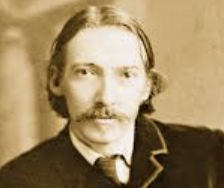
A happy man or woman is a better thing to find than a five-pound note. He or she is a radiating focus of goodwill; and their entrance into a room is as though another candle had been lighted. We need not care whether they could prove the forty-seventh proposition; they do a better thing than that, they practically demonstrate the great Theorem of the Liveableness of Life.
▼
Source
source
An Apology for Idlers.
2 months 3 weeks ago
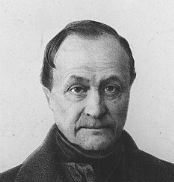
There are three successive states of morality answering to the three principal stages of human life; the personal, the domestic, and the social stage.
▼
Source
source
p. 104

3 months 3 weeks ago
In a word, human life is more governed by fortune than by reason; is to be regarded more as a dull pastime than as a serious occupation; and is more influenced by particular humour, than by general principles. Shall we engage ourselves in it with passion and anxiety? It is not worthy of so much concern. Shall we be indifferent about what happens? We lose all the pleasure of the game by our phlegm and carelessness. While we are reasoning concerning life, life is gone; and death, though perhaps they receive him differently, yet treats alike the fool and the philosopher.
▼
Source
source
Part I, Essay 18: The Sceptic

4 months ago
Apollo said that every one's true worship was that which he found in use in the place where he chanced to be.
▼
Source
source
Book II, Ch. 12. Apology for Raimond Sebond
3 months 3 weeks ago
To acquire immunity to eloquence is of the utmost importance to the citizens of a democracy.
▼
Source
source
Ch. 18: The Taming of Power
2 months 5 days ago
The most disheartening tendency common among readers is to tear out one sentence from a work, as a criterion of the writer's ideas or personality.

1 month 3 weeks ago
When an individual passes from one period of life to another a time comes when he cannot go on in senseless activity and excitement as before, but has to understand that although he has out-grown what before used to direct him, this does not mean that he must live without any reasonable guidance, but rather that he must formulate for himself an understanding of life corresponding to his age, and having elucidated it must be guided by it. And in the same way a similar time must come in the growth and development of humanity.
▼
Source
source
VI

2 months 1 week ago
Whenever one tries to suppress doubt, there is tyranny.
▼
Source
source
Lectures in philosophy [Leçons de philosophie] (1959) as translated by Hugh Price p. 103
3 months 3 weeks ago
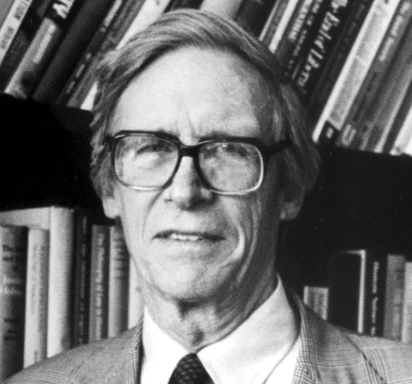
The concept of justice I take to be defined, then, by the role of its principles in assigning rights and duties and in defining the appropriate division of social advantages. A conception of justice is an interpretation of this role.
▼
Source
source
Chapter I, Section 2, pg. 10


4 months 2 weeks ago
Great novelists are philosopher novelists, that is, the contrary of thesis-writers.

2 months 4 days ago
It is thought pretty to say that "Women have no passion." If passion is excitement in the daily social intercourse with men, women think about marriage much more than men do; it is the only event of their lives. It ought to be a sacred event, but surely not the only event of a woman's life, as it is now. Many women spend their lives in asking men to marry them, in a refined way. Yet it is true that women are seldom in love. How can they be?
4 months 1 day ago
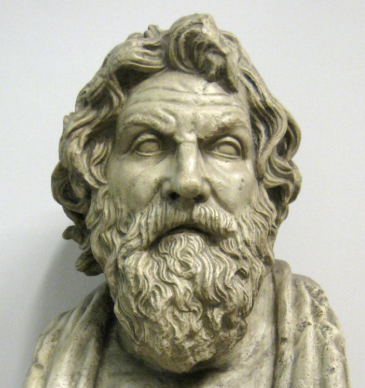
The monuments of wit survive the monuments of power.
▼
Source
source
Essex's Device
3 months 1 week ago
There is no work so mean, but it would amply serve me to furnish me with sustenance.
▼
Source
source
iv. 35

2 months 1 week ago
Do you think that God will punish them for not practicing a religion which he did not reveal to them?
▼
Source
source
No. 35. (Usbek writing to Gemchid)

4 months 1 week ago
I too have sworn heedlessly and all the time, I have had this most repulsive and death-dealing habit. I'm telling your graces; from the moment I began to serve God, and saw what evil there is in forswearing oneself, I grew very afraid indeed, and out of fear I applied the brakes to this old, old, habit.
▼
Source
source
180:10:1

3 months 3 weeks ago
The secret of being a bore is to tell everything.
▼
Source
source
"Sixième discours: sur la nature de l'homme," Sept Discours en Vers sur l'Homme, 1738

2 months 3 weeks ago
I know of no country in which there is so little independence of mind and real freedom of discussion as in America.
▼
Source
source
Chapter XV.
2 months 5 days ago
"Why do you not say how things will be operated under Anarchism?" is a question I have had to meet thousands of times. Because I believe that Anarchism can not consistently impose an iron-clad program or method on the future. The things every new generation has to fight, and which it can least overcome, are the burdens of the past, which holds us all as in a net. Anarchism, at least as I understand it, leaves posterity free to develop its own particular systems, in harmony with its needs. Our most vivid imagination can not foresee the potentialities of a race set free from external restraints. How, then, can any one assume to map out a line of conduct for those to come? We, who pay dearly for every breath of pure, fresh air, must guard against the tendency to fetter the future. If we succeed in clearing the soil from the rubbish of the past and present, we will leave to posterity the greatest and safest heritage of all ages.

3 months 3 weeks ago
The emotions I feel are no more meant to be shown in their unadulterated state than the inner organs by which we live.
▼
Source
source
pp. 31-32
3 months 1 week ago
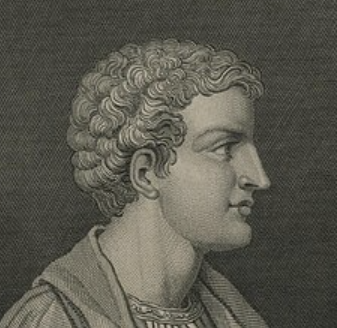
Tis not sufficient to combine well-chosen words in a well-ordered line.
▼
Source
source
Book I, satire iv, line 54 (translated by John Conington)

4 months 1 week ago
Pleasure, or pain, is not only good, or evil, in itself, but the measure of what is good or evil, in every object of desire or aversion; for the ultimate reason why we pursue one thing, and avoid another, is because we expect pleasure from the former, and apprehend pain from the latter. If we sometimes decline a present pleasure, it is not because we are averse to pleasure itself, but because we conceive, that in the present instance, it will be necessarily connected with a greater pain. In like manner, if we sometimes voluntarily submit to a present pain, it is because we judge that it is necessarily connected with a greater pleasure.
2 months 1 week ago
In order to be able to go on living it is possible that the bankrupt peoples will have to enter on a new path of self-denial, by curbing their covetousness and putting a check on the indefinite expansion of their wants, and by having smaller families.
▼
Source
source
p. 94

4 months 3 weeks ago
I do not know, my listener, what your crime, your guilt, your sins are, but surely we are all more or less of the guilt of loving only little. Take comfort, then, in these words just as I take comfort in them.

4 months ago
Furthermore, how will you endure [the Romanists'] terrible idolatries? It was not enough that they venerated the saints and praised God in them, but they actually made them into gods. They put that noble child, the mother Mary, right into the place of Christ. They fashioned Christ into a judge and thus devised a tyrant for anguished consciences, so that all comfort and confidence was transferred from Christ to Mary, and then everyone turned from Christ to his particular saint. Can anyone deny this? Is it not true?
▼
Source
source
Luther's Works, 47:45; cf. also Anderson, Stafford & Burgess (1992), p. 29

3 months 2 weeks ago
A pupil and a teacher. The pupil will not let anything be explained to him, for he continually interrupts with doubts, for instance as to the existence of things, the meaning for words, etc. The teacher says "Stop interrupting me and do as I tell you. So far your doubts don't make sense at all."
4 months ago
I have seen no more evident monstrosity and miracle in the world than myself.
▼
Source
source
Ch. 11
2 months 2 weeks ago
Perhaps the only true dignity of man is his capacity to despise himself.
1 week 6 days ago
The inventive genius of great England will not forever sit patient with mere wheels and pinions, bobbins, straps and billy-rollers whirring in the head of it. The inventive genius of England is not a Beaver's, or a Spinner's or Spider's genius: it is a Man's genius, I hope, with a God over him!
CivilSimian.com created by AxiomaticPanic, CivilSimian, Kalokagathia