


2 months 2 weeks ago
As long as I live I shall not allow myself to forget that I shall die; I am waiting for death so that I can forget about it.
2 months 1 week ago
You do not attain to knowledge by remaining on the shore and watching the foaming waves, you must make the venture and cast yourself in, you must swim, alert and with all your force, even if a moment comes when you think you are losing consciousness; in this way, and in no other, do you reach anthropological insight.
▼
Source
source
p. 148

1 week 6 days ago
Complete, at the same time, was his confidence in his own judgment when it spoke to him decisively. He was one of those few that could believe and know as well as inquire and be of opinion. When I remember how much he admired intellectual force, how much he had of it himself, and yet how unconsciously and contentedly he gave others credit for superiority, I again see the healthy spirit of the genuine man.
2 months 2 weeks ago
Tell me how you want to die, and I'll tell you who you are.
3 months 3 weeks ago
Great minds are related to the brief span of time during which they live as great buildings are to a little square in which they stand: you cannot see them in all their magnitude because you are standing too close to them.
▼
Source
source
Vol. 2, Ch. 20, § 242
2 months 3 weeks ago
Thus then does the Doctrine of Knowledge, which in its substance is the realisation of the absolute Power of intelligising which has now been defined, end with the recognition of itself as a mere Schema in a Doctrine of Wisdom, although indeed a necessary and indispensable means to such a Doctrine: - a Schema, the sole aim of which is, with the knowledge thus acquired, - by which knowledge alone a Will, clear and intelligible to itself and reposing upon itself without wavering or perplexity, is possible, - to return wholly into Actual Life; - not into the Life of blind and irrational Instinct which we have laid bare in all its nothingness, but into the Divine Life which shall become visible to us.

3 months 3 weeks ago
It's a bit embarrassing to have been concerned with the human problem all one's life and find at the end that one has no more to offer by way of advice than 'Try to be a little kinder.'
▼
Source
source
As quoted in Huston Smith, "Aldous Huxley--A Tribute," The Psychedelic Review, (1964) Vol I, No.3, (Aldous Huxley Memorial Issue), p. 264-5

4 months 1 day ago
Man, being the servant and interpreter of Nature, can do and understand so much and so much only as he has observed in fact or in thought of the course of nature. Beyond this he neither knows anything nor can do anything.
▼
Source
source
Aphorism 1
2 months 2 weeks ago
When men and women agree, it is only in their conclusions; their reasons are always different.
▼
Source
source
Ch. VI: Free Society

3 months 6 days ago
The mathematician speculates the causes of a certain sensible effect, without considering its actual existence; for the contemplation of universals excludes the knowledge of particulars; and he whose intellectual eye is fixed on that which is general and comprehensive, will think but little of that which is sensible and singular.
▼
Source
source
A Dissertation on the Doctrine of Ideas, &c.
1 month 1 week ago
These examples... show that, in whatever proportion of its limbs the Gorilla differs from Man, the other Apes depart still more widely from the Gorilla and that, consequently, such differences of proportion can have no ordinal value.
▼
Source
source
Ch.2, p. 89

4 months 1 week ago
In all things success depends on previous preparation, and without such previous preparation there is sure to be failure. If what is to be spoken be previously determined, there will be no stumbling. If affairs be previously determined, there will be no difficulty with them. If one's actions have been previously determined, there will be no sorrow in connection with them. If principles of conduct have been previously determined, the practice of them will be inexhaustible.

1 month 1 week ago
French schoolchildren can be proud to become citizens of the country that gave the world the Declaration of the Rights of Man; need they be told that it was disregarded a few years after it inspired the revolution in Haiti, whose leader, Toussaint Louverture, was consigned to death in a French prison?
2 months 2 weeks ago
In all probability, the proletarian revolution will transform existing society gradually and will be able to abolish private property only when the means of production are available in sufficient quantity. What will be the course of this revolution? Above all, it will establish a democratic constitution, and through this, the direct or indirect dominance of the proletariat.

3 months 3 weeks ago
I construct my memories with my present. I am lost, abandoned in the present. I try in vain to rejoin the past: I cannot escape.

3 months 3 weeks ago
Born for success he seemed, With grace to win, with heart to hold, With shining gifts that took all eyes.
▼
Source
source
In Memoriam E. B. E.
1 week 6 days ago
In the learned professions as in the unlearned, and in human things throughout, in every place and in every time, the true function of intellect is not that of talking, but of understanding and discerning with a view to performing!

2 months 5 days ago
With the conception that the Revolution was only a means of securing political power, it was inevitable that all revolutionary values should be subordinated to the needs of the Socialist State; indeed, exploited to further the security of the newly acquired governmental power.
2 months 2 weeks ago
If I were to be totally sincere, I would say that I do not know why I live and why I do not stop living. The answer probably lies in the irrational character of life which maintains itself without reason.

4 months 3 weeks ago
Consciousness presupposes itself, and asking about its origin is an idle and just as sophistical a question as that old one, "What came first, the fruit-tree or the stone? Wasn't there a stone out of which came the first fruit-tree? Wasn't there a fruit-tree from which came the first stone?

3 months 1 week ago
Fortune is lavish with her favors, but not to be depended on. Nature on the other hand is self-sufficing, and therefore with her feebler but trustworthy [resources] she wins the greater [meed] of hope.

3 months 3 weeks ago
The question here is not, "How conscience ought to be guided? For Conscience is its own General and Leader; it is therefore enough that each man have one. What we want to know is, how conscience can be her own Ariadne, and disentangle herself from the mazes even of the most raveled and complicated casuistical theology. Here is an ethical proposition that stands in need of no proof: No Action May At Any Time Be Hazarded On The Uncertainty That Perchance It May Not Be Wrong (Quod dubitas, ne feceris! Pliny - which you doubt, then neither do) Hence the Consciousness, that Any Action I am about to perform is Right, is in itself a most immediate and imperative duty. What actions are right, - what wrong - is a matter for the understanding, not for conscience.
▼
Source
source
p. 251 Book IV, Part 2, Section 4
1 week 6 days ago
The true University of these days is a Collection of Books.
3 months 1 week ago
If things emerged from a spaceship which we could not be sure were machines or conscious beings, what we were wondering about would have an answer even if the things were so different from anything we were familiar with that we could never discover it. It would depend on whether there was something it was like to be them, not on whether behavioral similarities warranted our saying so. ... [W]e need ... to ask whether experience is present in [the] alien thing[s], ... whether there is something it is like to be them, and ... the answer to that question is what determines whether they are conscious.
▼
Source
source
"Panpsychism" (1979), pp. 191-193.



2 months 2 weeks ago
Can the children of the bridechamber mourn, as long as the bridegroom is with them? but the days will come, when the bridegroom shall be taken from them, and then shall they fast. No man putteth a piece of new cloth unto an old garment, for that which is put in to fill it up taketh from the garment, and the rent is made worse. Neither do men put new wine into old bottles: else the bottles break, and the wine runneth out, and the bottles perish: but they put new wine into new bottles, and both are preserved.
▼
Source
source
9:15-17 (KJV)

3 months 3 weeks ago
The love of God consists in an ardent desire to procure the general welfare, and reason teaches me that there is nothing which contributes more to the general welfare of mankind than the perfection of reason.
▼
Source
source
Closing sentence of the Preface to the general science (1677) (in P. Wiener (ed.), Leibniz Selections, Macmilland Press Ltd, 1951).
2 months 1 week ago
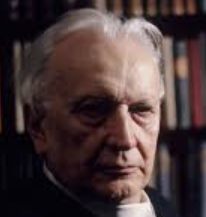
The would-be climber must be able to make himself liked ... please his superiors - avoid showing independence except in those matters wherein independence is expected of him by his chiefs... the winners in the race have qualities which disincline them to allow others to be their true selves. Hence the winners snub all those who aim at adequate self-expression, speaking of them as pretentious, eccentric, biased, unpractical, and measuring their achievements by insincere standards.

3 months 3 weeks ago
An army of principles will penetrate where an army of soldiers cannot; it will succeed where diplomatic management would fall: it is neither the Rhine, the Channel, nor the ocean that can arrest its progress: it will march on the horizon of the world, and it will conquer.
▼
Source
source
Means by Which the Fund Is to Be Created

4 months ago
Faith ever says, "If Thou wilt," not "If Thou canst."
▼
Source
source
p. 241

3 months 3 weeks ago
Perhaps the best hope for the future of mankind is that ways will be found of increasing the scope and intensity of sympathy.

3 months 3 weeks ago
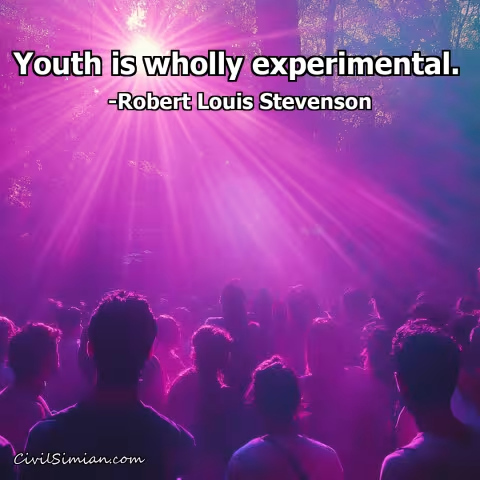
As for the commercial business, I can no longer make head or tail of it. At one moment crisis seems imminent and the City prostrated, the next everything is set fair. I know that none of this will have any impact on the catastrophe.
▼
Source
source
Letter to Friedrich Engels (4 February 1852), quoted in The Collected Works of Karl Marx and Friedrich Engels: Volume 39. Letters 1852-55 (2010), p. 32
3 months 3 weeks ago
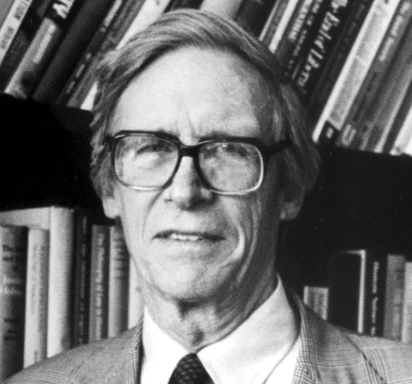
Justice as fairness provides what we want.
▼
Source
source
Chapter III, Section 30, pg. 190
2 months 3 weeks ago
He who must still exhort himself, and be exhorted, to will the good, has as yet no firm and ever-ready will, but wills a will anew every time he needs it. But he who has such a stable will, wills what he wills for ever, and cannot under any circumstances will otherwise than he always wills. For him freedom of the will is destroyed and swallowed up in necessity.
▼
Source
source
General Nature of New Eduction p 21
2 months 1 week ago
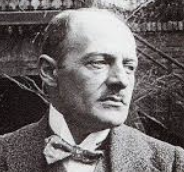
Ressentiment is always to some degree a determinant of the romantic type of mind. At least this is so when the romantic nostalgia for some past era (Hellas, the Middle Ages, etc.) is not primarily based on the values of that period, but on the wish to escape from the present. Then all praise of the "past" has the implied purpose of downgrading present-day reality.
▼
Source
source
L. Coser, trans. (1973), p. 68
2 weeks 1 day ago
I do not know what postmodern is and how it differs from the premodern, nor do I feel that I ought to know.
▼
Source
source
"Modernity on Endless Trial"
3 months 3 weeks ago
It is certain that we cannot escape anguish, for we are anguish.

4 months 2 weeks ago
Since those who rule in the city do so because they own a lot, I suppose they're unwilling to enact laws to prevent young people who've had no discipline from spending and wasting their wealth, so that by making loans to them, secured by the young people's property, and then calling those loans in, they themselves become even richer and more honored.
2 months 2 weeks ago
Some minds will jump here jump to the conclusion that a past idea cannot in any sense be present. But that is hasty and illogical. How extravagant too, to pronounce our whole knowledge of the past to be mere delusion! Yet it would seem that the past is completely beyond the bounds of possible experience as a Kantian thing-in-itself.
2 months 2 weeks ago
Now to Some it appears not at all worth while to follow out the endless divisions of Nature; and moreover a dangerous undertaking, without fruit and issue. As we can never reach, say they, the absolutely smallest grain of material bodies, never find their simplest compartments, since all magnitude loses itself, forwards and backwards, in infinitude; so likewise is it with the species of bodies and powers; here too one comes on new species, new combinations, new appearances, even to infinitude. These seem only to stop, continue they, when our diligence tires; and so it is spending precious time with idle contemplations and tedious enumerations; and this becomes at last a true delirium, a real vertigo over the horrid Deep.
3 months 1 week ago
Strength of body is nobility in beasts of burden, strength of character is nobility in men.

2 months 5 days ago
The heart, oddly enough, seems to be the essential organ concerned. When we are in a hurry or doing something we dislike, we clench the heart, exactly like clenching a fist, and nothing can get in. When we are filled with a sense of multiplicity and excitement we somehow 'open' the heart and allow reality to flow in. But in that state we only need to entertain the shadow of some unpleasant thought for it to close again. And human beings are so naturally prone to mistrust that it is hard to maintain the openness for very long. Children on the other hand find it easy to slip into states of wonder and delight when the heart finally opens so wide that the whole world seems magical. the 'trick' of the peak experience lies in this ability to relax out of our usual defensive posture and to 'open the heart'.
▼
Source
source
p. 360

3 months 3 weeks ago
There is only one man who gets his own way-he who can get it single-handed; therefore freedom, not power, is the greatest good. That man is truly free who desires what he is able to perform, and does what he desires. This is my fundamental maxim. Apply it to childhood, and all the rules of education spring from it. Society has enfeebled man, not merely by robbing him of the right to his own strength, but still more by making his strength insufficient for his needs. This is why his desires increase in proportion to his weakness; and this is why the child is weaker than the man. If a man is strong and a child is weak it is not because the strength of the one is absolutely greater than the strength of the other, but because the one can naturally provide for himself and the other cannot. Thus the man will have more desires and the child more caprices, a word which means, I take it, desires which are not true needs, desires which can only be satisfied with the help of others.

2 months 1 week ago
We never know, believe me, when we have succeeded best.
▼
Source
source
Essays and Soliloquies
3 months 3 weeks ago
The history of all hitherto existing society is the history of class struggles.
▼
Source
source
Section 1, paragraph 1, lines 1-2.

3 months 3 weeks ago
In the state of nature, wrong-doing is impossible ; or, if anyone does wrong, it is to himself, not to another. For no one by the law of nature is bound to please another, unless he chooses, nor to hold anything to be good or evil, but what he himself, according to his own temperament, pronounces to be so ; and, to speak generally, nothing is forbidden by the law of nature, except what is beyond everyone's power.
▼
Source
source
Ch. 2, Of Natural Right

3 months 3 weeks ago
Wisdom: The first error is that of the southern people, and it consists in holding that these eastern and western places are real places. ... give no quarter to that thought, whether it threatens you with fear, or tempts you with hopes. For this is Superstition and all who believe it will come in the end to the swamps to the south and the jungles to the far south.
▼
Source
source
Part of the same error is to think that the Landlord is a real man: Pilgrim's Regress 117

3 months 3 weeks ago
What is prudence in the conduct of every private family, can scarce be folly in that of a great kingdom.
▼
Source
source
Chapter II, p. 490.
CivilSimian.com created by AxiomaticPanic, CivilSimian, Kalokagathia