


3 months 3 weeks ago
Many of these were not prisoners of war, and redeemed from savage conquerors, as some plead; and they who were such prisoners, the English, who promote the war for that very end, are the guilty authors of their being so; and if they were redeemed, as is alleged, they would owe nothing to the redeemer but what he paid for them.

3 months 2 weeks ago
I am sorry that my convictions do not allow me to repeat my friend's offer, said one of the others. But I have had to abandon the humanitarian and egalitarian fancies. His name was Mr. Neo-Classical.
▼
Source
source
Pilgrim's Regress 89

2 months 4 days ago
I feel sure that the police are helping us more than I could do in ten years. They are making more anarchists than the most prominent people connected with the anarchist cause could make in ten years. If they will only continue I shall be very grateful; they will save me lots of work.
▼
Source
source
As quoted in "Arrest in Chicago of Emma Goldman, Preacher of Anarchy", The San Francisco Call
2 months 3 weeks ago
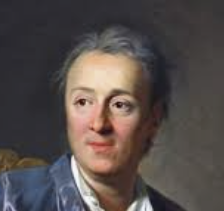
All abstract sciences are nothing but the study of relations between signs.
▼
Source
source
Dr. Théophile de Bordeu, in "Conversation Between D'Alembert and Diderot"
3 months 1 week ago
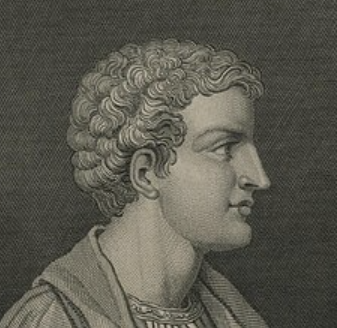
To have a great man for an intimate friend seems pleasant to those who have never tried it; those who have, fear it.
▼
Source
source
Book I, epistle xviii, line 86

4 weeks ago
As the Genesis story teaches, knowledge cannot save us from ourselves. If we know more than before, it means only that we have greater scope to enact our fantasies. But - as the Genesis myth also teaches - there is no way we can rid ourselves of what we know. If we try to regain a state of innocence, the result can only be a worse madness. The message of Genesis is that in the most vital areas of human life there can be no progress, only an unending struggle with our own nature.
▼
Source
source
An Old Chaos: Humanism and Flying Saucers (pp. 79-80)

3 months 3 weeks ago
Most kings and priests have been despotic, and all religions have been riddled with superstition.
▼
Source
source
Chapter 6 (pp. 52-53)
3 months 3 weeks ago
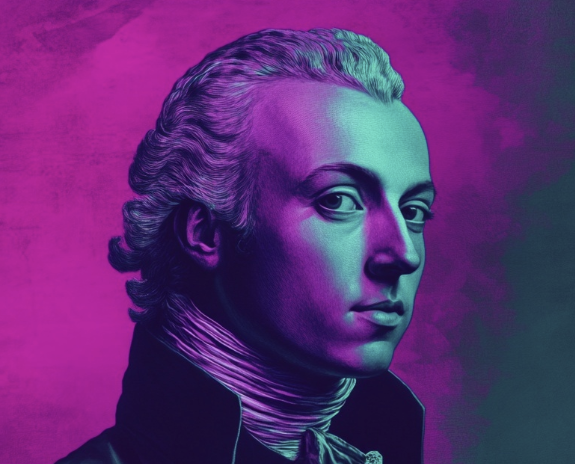
Religion should be .... successively freed from all statutes based on history, and one purely moral religion rule over all, in order that God might be all in all. The veil must fall. The leading-string of sacred tradition with all its appendices becomes by degrees useless, and at last a fetter ... The humiliating difference between laymen and clergymen must disappear, and equality spring from true liberty. All this, however, must not be expected from an exterior revolution, which acts violently, and depends upon fortune In the principle of pure moral religion, which is a sort of divine revelation constantly taking place in the soul of man, must be sought the ground for a passage to the new order of things, which will be accomplished by slow and successive reforms.
▼
Source
source
As quoted in German Thought, From The Seven Years' War To Goethe's Death : Six Lectures (1880) by Karl Hillebrand, p. 208

2 months 1 week ago
Feeling does not succeed in converting consolation into truth, nor does reason succeed in converting truth into consolation.
4 months 3 weeks ago
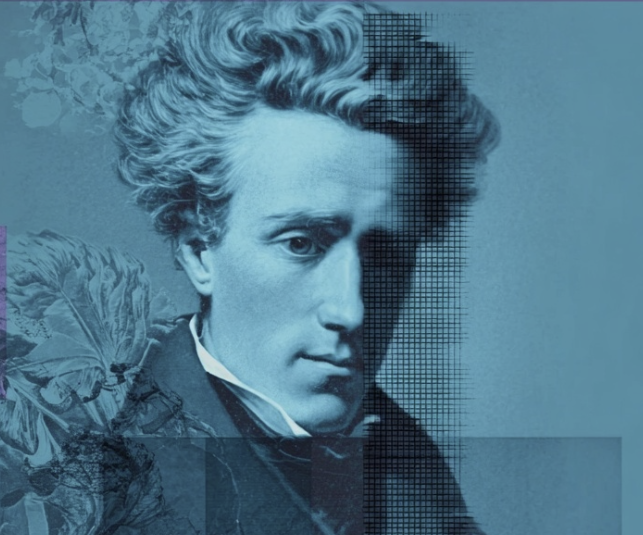
You wanted God's ideas about what was best for you to coincide with your ideas, but you also wanted him to be the almighty Creator of heaven and earth so that he could properly fulfill your wish. And yet, if he were to share your ideas, he would cease to be the almighty Father.

4 months 2 weeks ago
Art, at least, teaches us that man cannot be explained by history alone and that he also finds a reason for his existence in the order of nature.

1 month 3 weeks ago
I have not been able to discover the cause of those properties of gravity from phenomena, and I frame no hypotheses; for whatever is not deduced from the phenomena is to be called a hypothesis, and hypotheses, whether metaphysical or physical, whether of occult qualities or mechanical, have no place in experimental philosophy.
▼
Source
source
Letter to Robert Hooke (15 February 1676) [5 February 1676 (O.S.)]
1 month 1 week ago
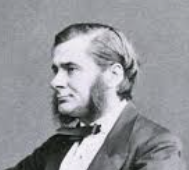
Life is too short to occupy oneself with the slaying of the slain more than once. One of a series of exchanges when Richard Owen repeated generally repudiated claims about the Gorilla brain in a Royal Institution lecture.
▼
Source
source
Athenaeum (13 April 1861) p. 498; Browne Vol 2, p. 159
3 months 1 week ago
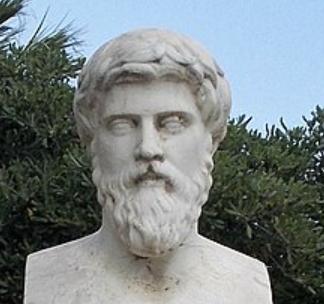
The mind is not a vessel that needs filling, but wood that needs igniting.
▼
Source
source
On Listening to Lectures (Tr. Waterfield)
1 month 2 weeks ago
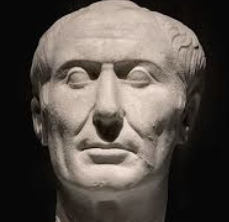
Patience is a remedy for every sorrow.
▼
Source
source
Maxim 170

3 months 3 weeks ago
Essentially, this war...is a great race-conflict, a conflict of Teuton and Slav, in which certain other nations, England, France and Belgium, have been led into cooperation with the Slav. ... The conflict of Germany and Russia has been produced not by this or that diplomatic incident, but by primitive passions expressing themselves in the temper of the two races.
▼
Source
source
War: The Offspring of Fear (1914), quoted in Ray Monk, Bertrand Russell: The Spirit of Solitude, 1872-1921 (1996), p. 373

4 months 6 days ago
So far as it goes, a small thing may give an analogy of great things, and show the tracks of knowledge.
▼
Source
source
Book II, lines 123-124 (tr. Rouse)
3 months 3 weeks ago
I saw the Emperor-this world-soul-riding out of the city on reconnaissance. It is indeed a wonderful sensation to see such an individual, who, concentrated here at a single point, astride a horse, reaches out over the world and masters it.
▼
Source
source
Hegel to Niethammer, October 13, 1806, in Hegel: the Letters (1998) translated by Clark Butler and Christiane Seiler, p. 114. Hegel: the Letters
3 months 3 weeks ago
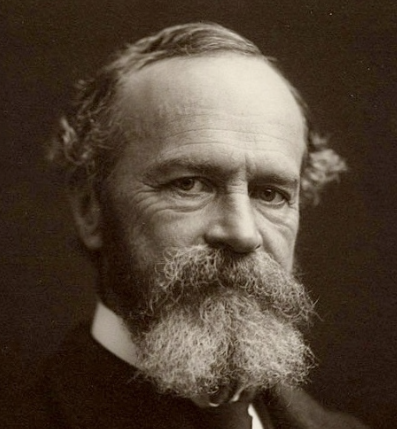
One mode of emotional excitability is exceedingly important in the composition of the energetic character, from its peculiarly destructive power over inhibitions. I mean what in its lower form is mere irascibility, susceptibility to wrath, the fighting temper; and what in subtler ways manifests itself as impatience, grimness, earnestness, severity of character. Earnestness means willingness to live with energy, though energy bring pain. The pain may be pain to other people or pain to one's self - it makes little difference; for when the strenuous mood is on one, the aim is to break something, no matter whose or what. Nothing annihilates an inhibition as irresistibly as anger does it; for, as Moltke says of war, destruction pure and simple is its essence.

3 months 1 week ago
Hearken with your ears to these best counsels,Reflect upon them with illumined judgment.Let each one choose his creed with that freedom of choice each must have at great events.
▼
Source
source
Ahunuvaiti Gatha; Yasna 30, 2.
3 months 2 weeks ago
No text in the tradition seems as lucid concerning the way in which the political is becoming worldwide. concerning the irreducibility of the technical and the media in the current of the most thinking thought-and this goes beyond the railroad and the newspapers of the time whose powers were analyzed in such an incomparable way in the Manifesto. And few texts have shed so much light on law. international law. and nationalism.
▼
Source
source
Injunctions of Marx

3 months 3 weeks ago
We suffer not only from the development of capitalist production, but also from the incompleteness of that development. Alongside the modern evils, we are oppressed by a whole series of inherited evils, arising from the passive survival of archaic and outmoded modes of production, with their accompanying train of anachronistic social and political relations. We suffer not only from the living, but from the dead.
▼
Source
source
Preface to the First Edition, Capital Volume 1, Peinguin Classics edition 1976.
3 months 1 week ago
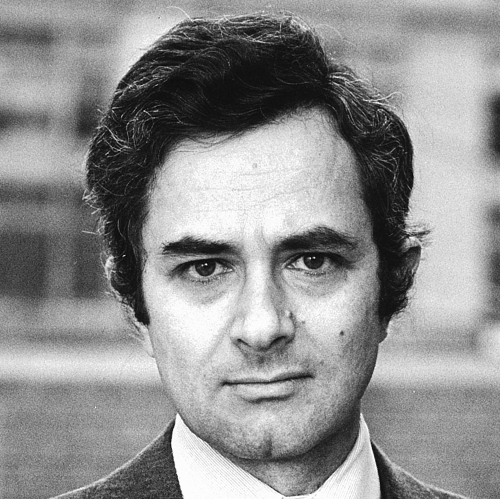
If we tried to rely entirely on reason, and pressed it hard, our lives and beliefs would collapse - a form of madness that may actually occur if the inertial force of taking the world and life for granted is somehow lost. If we lose our grip on that, reason will not give it back to us.
▼
Source
source
"The Absurd" (1971), p. 20.

1 month 2 weeks ago
World War III is a guerrilla information war with no division between military and civilian participation.
▼
Source
source
(p.66)

3 months 3 weeks ago
Deep in the man sits fast his fate To mould his fortunes, mean or great.
▼
Source
source
Fate
3 months 2 weeks ago
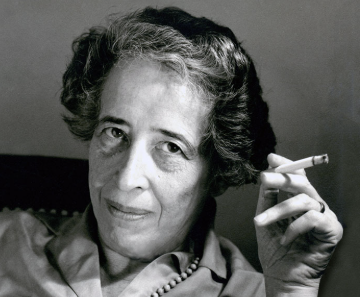
The main characteristic of any event is that it has not been foreseen. We don't know the future but everybody acts into the future. Nobody knows what he is doing because the future is being done, action is being done by a "we" and not an "I." Only if I were the only one acting could I foretell the consequences of what I'm doing. What actually happens is entirely contingent, and contingency is indeed one of the biggest factors in all history.

2 months 3 weeks ago
Reflect how you are to govern a people who think they ought to be free, and think they are not. Your scheme yields no revenue; it yields nothing but discontent, disorder, disobedience; and such is the state of America, that after wading up to your eyes in blood, you could only end just where you begun; that is, to tax where no revenue is to be found, to - my voice fails me; my inclination indeed carries me no farther - all is confusion beyond it.


Just now
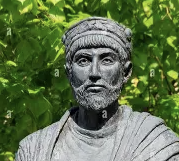
My own belief is, if philosophers be entitled to any credit, that the Sun is the common parent of all men, to use a comprehensive term. It is a true proverb, "Man begets man, and so does the Sun:" but souls that luminary showers down upon earth, both out of himself, and out of the other gods: which souls show to what end they were propagated by the kind of life that they pursue. But well is it for that man who, from the third generation backwards, and a long succession of years, has been dedicated to the service of this god; yet neither is that person's condition to be despised who, feeling in his own nature that he is a servant of this deity, alone, or with few on his side, shall have devoted himself to his worship.
3 months 4 weeks ago
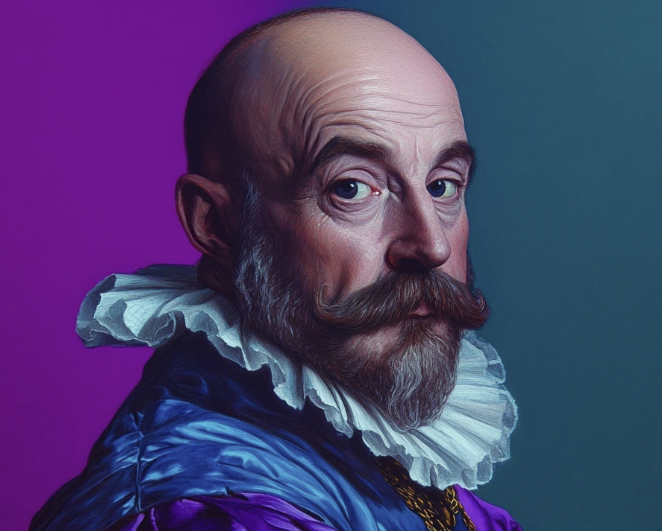
I have seen no more evident monstrosity and miracle in the world than myself.
▼
Source
source
Ch. 11
2 months 2 weeks ago
Man is a thinking being. His reason enables him to recognize his own potentialities and those of his world. He is thus not at the mercy of the facts that surround him, but is capable of subjecting them to a higher standard, that of reason.
▼
Source
source
P. 6

1 week 5 days ago
Our true Deity is Mechanism. It has subdued external Nature for us, and we think it will do all other things. We are Giants in physical power: in a deeper than metaphorical sense, we are Titans, that strive, by heaping mountain on mountain, to conquer Heaven also.
3 months 2 weeks ago
We have two bits of evidence about the Somebody. One is the universe He has made. If we used that as our only clue, I think we should have to conclude that He was a great artist (for the universe is a very beautiful place), but also that He is quite merciless and no friend to man (for the universe is a very dangerous and terrifying place.) ...The other bit of evidence is that Moral Law which He has put in our minds. And this is a better bit of evidence than the other, because it is inside information. You find out more about God from the Moral Law than from the universe in general just as you find out more about a man by listening to his conversation than by looking at a house he has built.
▼
Source
source
Book I, Chapter 5, "We Have Cause to Be Uneasy"
3 months 4 weeks ago
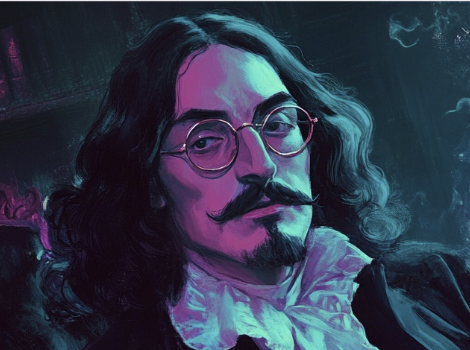
I should like you to consider that these functions (including passion, memory, and imagination) follow from the mere arrangement of the machine's organs every bit as naturally as the movements of a clock or other automaton follow from the arrangement of its counter-weights and wheels.
▼
Source
source
Descartes, Rene, L'Homme (The Treatise on Man) (1662) p. 108
1 week 5 days ago
And wonderful it is to see how the Ideal or Soul, place it in what ugliest Body you may, will irradiate said Body with its own nobleness; will gradually, incessantly, mould, modify, new-form or reform said ugliest Body, and make it at last beautiful, and to a certain degree divine!

4 months 1 week ago
Now, justification in this life is given to us according to these three things: first by the laver of regeneration by which all sins are forgiven; then, by a struggle with the faults from whose guilt we have been absolved; the third, when our prayer is heard, in which we say: Forgive us our debts, because however bravely we fight against our faults, we are men; but the grace of God so aids as we fight in this corruptible body that there is reason for His hearing us as we ask forgiveness.
▼
Source
source
Against Julian, Book II, ch. 8, 22. In The Fathers of the Church, Matthew A. Schumacher, tr., 1957, ISBN 0813214009 ISBN 9780813214009 pp. 83-84.
3 months 2 weeks ago
At the end of Being and Nothingness, ... Being in-itself and Being for-itself were of Being; and this totality of beings, in which they were effected, itself was linked up to itself, relating and appearing to itself, by means of the essential project of human-reality. What was named in this way, in an allegedly neutral and undetermined way, was nothing other than the metaphysical unity of man and God, the relation of man to God, the project of becoming God as the project constituting human-reality. Atheism changes nothing in this fundamental structure.
▼
Source
source
Chicago, 1982. (original French published in Paris, 1972, as Marges de la philosophie). p. 116
3 months 3 weeks ago
How can he [today's writer] be honored, when he does not honor himself; when he loses himself in the crowd; when he is no longer the lawgiver, but the sycophant, ducking to the giddy opinion of a reckless public.
▼
Source
source
Goethe; or, The Writer
3 months 3 weeks ago
We tend to believe the premises because we can see that their consequences are true, instead of believing the consequences because we know the premises to be true. But the inferring of premises from consequences is the essence of induction; thus the method in investigating the principles of mathematics is really an inductive method, and is substantially the same as the method of discovering general laws in any other science.
▼
Source
source
"The Regressive Method of Discovering the Premises of Mathematics" (1907), in Essays in Analysis (1973), pp. 273-274
3 months 3 weeks ago
The Theophilanthropists do not call themselves the disciples of such or such a man. They avail themselves of the wise precepts that have been transmitted by writers of all countries and in all ages.
▼
Source
source
Introduction


2 months 3 weeks ago
To be nameless in worthy deeds exceeds an infamous history.But the iniquity of oblivion blindly scattereth her poppy, and deals with the memory of men without distinction to merit of perpetuity. Who can but pity the founder of the Pyramids? Herostratus lives that burnt the Temple of Diana, he is almost lost that built it.
▼
Source
source
Chapter V

3 months 3 weeks ago
The slaving Poor are incapable of any Principles: Gentlemen may be converted to true Principles, by Time and Experience. The middling Rank of Men have Curiosity and Knowledge enough to form Principles, but not enough to form true ones, or correct any Prejudices that they may have imbib'd: And 'tis among the middling Rank, that Tory Principles do at present prevail most in England.
▼
Source
source
Part I, Essay 9: Of The Parties of Great Britain; final lines of this essay in the 1741 and 1742 editions of Essays, Moral and Political, they were not included in later editions.
3 months 3 weeks ago
In my individual heart I fully believe my faith is as robust as yours. The trouble with your robust and full bodied faiths, however, is, that they begin to cut each others throats too soon, and for getting on in the world and establishing a modus vivendi these pestilential refinements and reasonablenesses and moderations have to creep in.
▼
Source
source
Letter to John Jay Chapman, 5 April 1897

3 months 3 weeks ago
Every tax, however, is to the person who pays it a badge, not of slavery but of liberty. It denotes that he is a subject to government, indeed, but that, as he has some property, he cannot himself be the property of a master.
▼
Source
source
Chapter II, Part II, p. 927.

4 months 2 weeks ago
Scientists have pushed back the horizon of time from the biblical 6,000 years to 4,600,000,000 years for the age of Earth a 760,000-fold increase.

1 month ago
All moral tradeoffs are messy. However, on some fairly modest ethical assumptions, when a severe and irreconcilable conflict of interests occurs, then the interests of the more sentient take precedence over the less sentient. This rule of thumb holds regardless of the age, race or species of the victim. Reply to "Why is David Pearce a vegan and a negative utilitarian given industrial agriculture's decimation of insect populations and, therefore, suffering the greater number of insects than farm animals? Shouldn't insects outweigh farm animals?
▼
Source
source
, Quora, 3 Sept. 2019
2 months 3 weeks ago
Superstition is more injurious to God than atheism.

3 months 3 weeks ago
This bird sees the white man come and the Indian withdraw, but it withdraws not. Its untamed voice is still heard above the tinkling of the forge... It remains to remind us of aboriginal nature.
▼
Source
source
March 23, 1856; of the crow
3 months 2 weeks ago
[N]o matter how abstract our theories may sound or how consistent our arguments may appear, there are incidents and stories behind them which, at least for ourselves, contain as in a nutshell the full meaning of whatever we have to say.
▼
Source
source
Thinking Without a Banister: Essays in Understanding, 1953-1975
CivilSimian.com created by AxiomaticPanic, CivilSimian, Kalokagathia