

2 months 3 weeks ago
Thought must be judged by something that is not thought, by its effect on production or its impact on social conduct, as art today is being ultimately gauged in every detail by something that is not art, be it box-office or propaganda value.
▼
Source
source
describing the pragmatist view, p. 51.
3 months 1 day ago
As one of our Swiss friends put it: "Now every German tailor living in Japan, China, or Moscow feels that he has the German navy and all of Germany's power behind him. This proud consciousness sends him into an insane rapture: the German has finally lived to see the day when he can say with pride, relying on his own state, like an Englishman or an American, 'I am a German.' True, when the Englishman or American says 'I am an Englishman,' or 'I am an American,' he is saying 'I am a free man.' The German, however, is saying 'I am a slave, but my emperor is stronger than all other princes, and the German soldier who is strangling me will strangle all of you.'"

2 months 2 weeks ago
The real issue is not whether two and two make four or whether two and two make five, but whether life advances by men who love words or men who love living.
▼
Source
source
Chapter Nine, Breaking the Circuit

4 months 2 days ago
Enough had been thought, and said, and felt, and imagined. It was about time that something should be done.

3 months 1 week ago
To make an end of all things on Earth, and our Planetical System of the World, he (God) need but put out the Sun.

4 months 3 weeks ago
They hate not to make use of their abilities... they do not necessarily work for their own self-interest.
2 months 3 weeks ago
Every moment celebrates obsequies over the virtues of its predecessor.
▼
Source
source
Ch. XIV

4 months 1 week ago
When we run over libraries, persuaded of these principles, what havoc must we make? If we take in our hand any volume; of divinity or school metaphysics, for instance; let us ask, Does it contain any abstract reasoning concerning quantity or number? No. Does it contain any experimental reasoning concerning matter of fact and existence? No. Commit it then to the flames: For it can contain nothing but sophistry and illusion.
▼
Source
source
Section 12 : Of the Academical or Sceptical Philosophy Pt. 3
2 weeks ago
There slowly grew up in me an unshakable conviction that we have no right to inflict suffering and death on another living creature unless there is some unavoidable necessity for it, and that we ought all of us to feel what a horrible thing it is to cause suffering and death out of mere thoughtlessness. And this conviction has influenced me only more and more strongly with time. I have grown more and more certain that at the bottom of our heart we all think this, and that we fail to acknowledge it because we are afraid of being laughed at by other people as sentimentalists, though partly also because we allow our best feelings to get blunted. But I vowed that I would never let my feelings get blunted, and that I would never be afraid of the reproach of sentimentalism.
▼
Source
source
p. 275

2 months 2 weeks ago
Nothing would prove more disastrous to our ideas, we contended, than to neglect the effect of the internal upon the external, of the psychological motives and needs upon existing institutions.
▼
Source
source
(p. 402)

4 months 6 days ago
Natural science is throughout either a pure or an applied doctrine of motion.
▼
Source
source
Preface, Tr. Bax, 1883
4 months 2 days ago
If we cut up beasts simply because they cannot prevent us and because we are backing our own side in the struggle for existence, it is only logical to cut up imbeciles, criminals, enemies, or capitalists for the same reasons.
▼
Source
source
"Vivisection" (1947), p. 227

4 months 5 days ago
Men use thought only to justify their wrongdoings, and speech only to conceal their thoughts.
▼
Source
source
Dialogue 14, Le Chapon et la Poularde (1766); reported in Bartlett's Familiar Quotations, 10th ed., 1919

4 months 3 days ago
Never give children a chance of imagining that anything exists in isolation. Make it plain from the very beginning that all living is relationship. Show them relationships in the woods, in the fields, in the ponds and streams, in the village and in the country around it. Rub it in.

2 months 4 weeks ago
Since the only things we remember are humiliations and defeats, what is the use of all the rest?
4 months 2 weeks ago
Let not that which in the case of another is contrary to nature become an evil for you; for you are born not to be humiliated along with others, nor to share in their misfortunes, but to share in their good fortune. If, however, someone is unfortunate, remember that his misfortune concerns himself. For God made all mankind to be happy, to be serene.
▼
Source
source
Book III, ch. 24, 1
4 days ago
The rosy mountain peaks laughed like high lustrous thoughts,and Helen, speechless, raised her pale hands toward the sunand joyed to feel its warm rays falling on her frozen palms.
▼
Source
source
Book IV, line 1361
3 months 4 weeks ago
It is also the becoming-space of the spoken chain - which has been called temporal or linear; a becoming-space which makes possible both writing and every correspondence between speech and writing, every passage from one to the other.The activity or productivity connoted by the a of différance refers to the generative movement in the play of differences. The latter are neither fallen from the sky nor inscribed once and for all in a closed system, a static structure that a synchronic and taxonomic operation could exhaust. Differences are the effects of transformations, and from this vantage the theme of différance is incompatible with the static, synchronic, taxonomic, ahistoric motifs in the concept of structure.
▼
Source
source
p. 28


4 months 2 days ago
I exist, that is all, and I find it nauseating.

2 months 3 weeks ago
The capabilities (intellectual and material) of contemporary society are immeasurably greater than ever before-which means that the scope of society's domination over the individual is immeasurably greater than ever before. Our society distinguishes itself by conquering the centrifugal social forces with Technology rather than Terror, on the dual basis of an overwhelming efficiency and an increasing standard of living.
▼
Source
source
p. xliii

5 months 1 day ago
Since those who rule in the city do so because they own a lot, I suppose they're unwilling to enact laws to prevent young people who've had no discipline from spending and wasting their wealth, so that by making loans to them, secured by the young people's property, and then calling those loans in, they themselves become even richer and more honored.

5 months 1 day ago
We face eternity now. We have no universe left, no outside phenomena, no emotions, no passions. Nothing but ourselves and thought. We face an eternity of introspection, when all through history we have never known what to do with ourselves on a rainy Sunday.
4 months 2 weeks ago
One of the principal reasons that diverts those who are entering upon this knowledge so much from the true path which they should follow, is the fancy that they take at the outset that good things are inaccessible, giving them the name great, lofty, elevated, sublime. This destroys everything. I would call them low, common, familiar: these names suit it better; I hate such inflated expressions.
2 weeks ago
Camus said there is only really one serious philosophical question, which is whether or not to commit suicide. I think there are four or five serious philosophical questions: The first one is: Who started it? The second is: Are we going to make it? The third is: Where are we going to put it? The fourth is: Who's going to clean up? And the fifth: Is it serious?
▼
Source
source
Out Of Your Mind (2004), Audio lecture 1: The Nature of Consciousness: A Game That's Worth The Candle

2 months 3 days ago
People continued - regardless of all that leads man forward - to try to unite the incompatibles : the virtue of love, and what is opposed to love, namely, the restraining of evil by violence. And such a teaching, despite its inner contradiction, was so firmly established that the very people who recognize love as a virtue accept as lawful at the same time an order of life based on violence and allowing men not merely to torture but even to kill one another.
▼
Source
source
III
1 month 3 weeks ago
Writers are greatly respected. The intelligent public is wonderfully patient with them, continues to read them, and endures disappointment after disappointment, waiting to hear from art what it does not hear from theology, philosophy, social theory, and what it cannot hear from pure science. Out of the struggle at the center has come an immense, painful longing for a broader, more flexible, fuller, more coherent, more comprehensive account of what we human beings are, who we are and what this life is for.
▼
Source
source
Nobel Prize lecture
2 months 1 week ago
Philosophers today are as fond as ever of apriori arguments with ethical conclusions. One reason such arguments are always unsatisfying is that they always prove too much; when a philosopher 'solves' an ethical problem for one, one feels as if one had asked for a subway token and been given a passenger ticket valid for the first interplanetary passenger-carrying space ship instead.
▼
Source
source
How Not to Solve Ethical Problems

1 day ago
Nothing great has great beginnings.
▼
Source
source
XXIII, p. 73

4 months 4 days ago
There is a further advantage [to hydrogen bombs]: the supply of uranium in the planet is very limited, and it might be feared that it would be used up before the human race was exterminated, but now that the practically unlimited supply of hydrogen can be utilized, there is considerable reason to hope that homo sapiens may put an end to himself, to the great advantage of such less ferocious animals as may survive. But it is time to return to less cheerful topics.
▼
Source
source
Human Knowledge: Its Scope and Limits (1948), part I, "The World of Science", chapter 3, "The World of Physics", p. 41
1 month 4 weeks ago
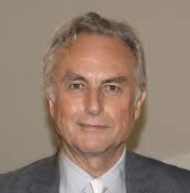
The successful scientist and the raving crank are separated by the quality of their inspirations. But I suspect that this amounts, in practice, to a difference, not so much in ability to notice analogies as in ability to reject foolish analogies and pursue helpful ones.
▼
Source
source
Chapter 8 "Explosions and Spirals" (pp. 195-196)
4 months 4 days ago
Consider MacArthur and his Republican supporters. So limited is his intelligence and his imagination that he is never puzzled for one moment. All we have to do is to go back to the days of the Opium War. After we have killed a sufficient number of millions of Chinese, the survivors among them will perceive our moral superiority and hail MacArthur as a saviour. But let us not be one-sided. Stalin, I should say, is equally simple- minded and equally out of date. He, too, believes that if his armies could occupy Britain and reduce us all to the economic level of Soviet peasants and the political level of convicts, we should hail him as a great deliverer and bless the day when we were freed from the shackles of democracy. One of the painful things about our time is that those who feel certainty are stupid, and those with any imagination and understanding are filled with doubt and indecision.
▼
Source
source
Part I: Man and Nature, Ch. 1: Current Perplexities, pp. 4-5

2 weeks 4 days ago
No man can have a peaceful life who thinks too much about lengthening it.
▼
Source
source
Line 4.

2 weeks 4 days ago
What we should be after death, we have to attain in life, i.e. holiness and bliss. Here on earth the Kingdom of God begins.

4 months 1 week ago
The Mass is the greatest blasphemy of God, and the highest idolatry upon earth, an abomination the like of which has never been in Christendom since the time of the Apostles.
▼
Source
source
171

4 months 3 days ago
The most violent revolutions in an individual's beliefs leave most of his old order standing. Time and space, cause and effect, nature and history, and one's own biography remain untouched. New truth is always a go-between, a smoother-over of transitions. It marries old opinion to new fact so as ever to show a minimum of jolt, a maximum of continuity.
▼
Source
source
"What Pragmatism Means," Pragmatism, pp. 60-61 (1931); lectures delivered at the Lowell Institute, Boston, Massachusetts
1 week 6 days ago
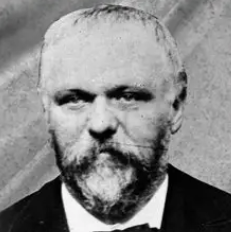
I have no reason to suppose that Lenin gained his ideas from my books; but if that were true, I should be not a little proud of having contribute to the intellectual development of a man who seems to me to be at once the greatest theoretician of socialism since Marx and a statesman whose genius recalls that of Peter the Great.
▼
Source
source
For Lenin, Soviet Russia, Official Organ of The Russian Soviet Government Bureau, Vol. II, New York: NY, January-June 1920 (April 10, 1920), p. 356
2 months 4 weeks ago
There was a time when time did not yet exist. ... The rejection of birth is nothing but the nostalgia for this time before time.
2 weeks ago
The startling truth is that our best efforts for civil rights, international peace, population control, conservation of natural resources, and assistance to the starving of the earth-urgent as they are-will destroy rather than help if made in the [current] spirit. For, as things stand, we have nothing to give. If our own riches and our own way of life are not enjoyed here, they will not be enjoyed anywhere else. Certainly they will supply the immediate jolt of energy and hope that methedrine, and similar drugs, give in extreme fatigue. But peace can be made only by those who are peaceful, and love can be shown only by those who love. No work of love will flourish out of guilt, fear, or hollowness of heart, just as no valid plans for the future can be made by those who have no capacity for living now.
▼
Source
source
p. 83

Just now
Disturbance comes only from within-from our own perceptions.
▼
Source
source
(Hays translation) IV, 4
4 months 2 days ago
You have stolen my face from me: you know it and I no longer do.
▼
Source
source
Act 1, sc. 5
3 months 3 weeks ago
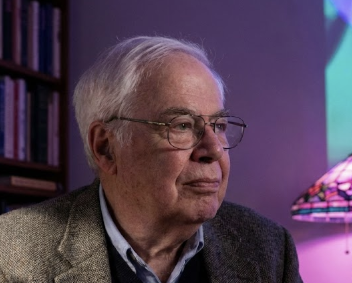
... our maturation has consisted in the gradual realization that, if we can rely on one another, we need not rely on anything else. In religious terms, this is the Feuerbachian thesis that God is just a projection of the best, and sometimes the worst, of humanity. In philosophical terms, it is the thesis that anything that talk of objectivity can do to make our practices intelligible can be done equally well by talk of intersubjectivity.
▼
Source
source
"John Searle on Realism and Relativism." Truth and Progress: Philosophical Papers, Volume 3 (1998).
1 month 1 week ago
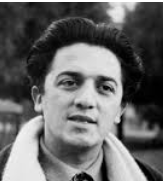
I don't believe in total freedom for the artist. Left on his own, free to do anything he likes, the artist ends up doing nothing at all. If there's one thing that's dangerous for an artist, it's precisely this question of total freedom, waiting for inspiration and the rest of it.
▼
Source
source
Artistic Freedom

3 months 2 weeks ago
Above all things reverence thy Self.
▼
Source
source
Variant translations: Respect yourself above all. As quoted in Divine Harmony: The Life and Teachings of Pythagoras by John Strohmeier and Peter Westbrook. (1999) ISBN 0-9653774-5-8
4 months 1 week ago
[S]he became the Mother of God, in which work so many and such great good things are bestowed on her as pass man's understanding. For on this there follows all honor, all blessedness, and her unique place in the whole of mankind, among which she has no equal, namely, that she had a child by the Father in heaven, and such a Child.... Hence men have crowded all her glory into a single word, calling her the Mother of God.... None can say of her nor announce to her greater things, even though he had as many tongues as the earth possesses flowers and blades of grass: the sky, stars; and the sea, grains of sand. It needs to be pondered in the heart what it means to be the Mother of God.
▼
Source
source
Luther's Works, 21:326, cf. 21:346

5 months 4 days ago
Forgetting when God does it in relation to sin, is the opposite of creating, since to create is to bring forth from nothing and to forget is to take back into nothing. What is hidden from my eyes, that I have never seen; but what is hidden behind my back, that I have seen. The one who loves forgives in this way; he forgives, he forgets, he blots out the sin, in love he turns toward the one he forgives; but when he turns toward him, he of course, cannot see what is lying behind his back.

3 months 4 days ago
It is the love of the people; it is their attachment to their government, from the sense of the deep stake they have in such a glorious institution, which gives you both your army and your navy, and infuses into both that liberal obedience, without which your army would be a base rabble, and your navy nothing but rotten timber.
3 months 4 weeks ago
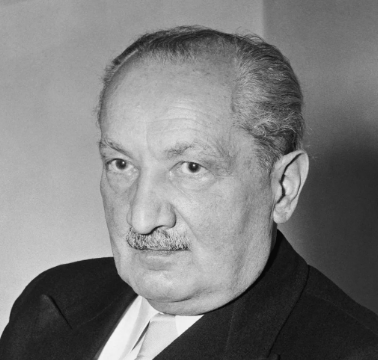
The word "art" does not designate the concept of a mere eventuality; it is a concept of rank.
▼
Source
source
p. 125

4 months 1 week ago
Another argument of hope may be drawn from this - that some of the inventions already known are such as before they were discovered it could hardly have entered any man's head to think of; they would have been simply set aside as impossible. For in conjecturing what may be men set before them the example of what has been, and divine of the new with an imagination preoccupied and colored by the old; which way of forming opinions is very fallacious, for streams that are drawn from the springheads of nature do not always run in the old channels.
▼
Source
source
Aphorism 109
3 months 3 weeks ago
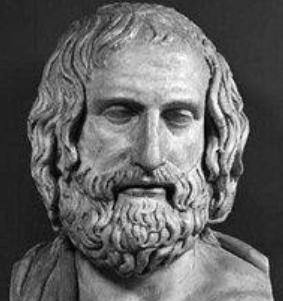
Mind is infinite and self-ruled, and is mixed with nothing, but is alone itself by itself.
▼
Source
source
Frag. B 12, quoted in John Burnet's Early Greek Philosophy, (1920), Chapter 6.
CivilSimian.com created by AxiomaticPanic, CivilSimian, Kalokagathia