


3 months 2 weeks ago
Perfect humility dispenses with modesty.

2 months 2 weeks ago
We have lost, being born, as much as we shall lose, dying. Everything.
2 months 2 weeks ago
There is no problem in all mathematics that cannot be solved by direct counting. But with the present implements of mathematics many operations can be performed in a few minutes which without mathematical methods would take a lifetime.
▼
Source
source
p. 197; On mathematics and counting.

3 months 4 weeks ago
There is no passion so contagious as that of fear.

2 months 1 week ago
I am he that liveth, and was dead; and, behold, I am alive for evermore, Amen; and have the keys of hell and of death. Write the things which thou hast seen, and the things which are, and the things which shall be hereafter.
▼
Source
source
Revelation 1:18-19

3 months 2 weeks ago
The gesture that divides madness is the constitutive one, not the science that grows up in the calm that returns after the division has been made.
▼
Source
source
Preface to 1961 edition
1 month 1 week ago
I cannot say that I am in the slightest degree impressed by your bigness, or your material resources, as such. Size is not grandeur, and territory does not make a nation. The great issue, about which hangs true sublimity, and the terror of overhanging fate, is what are you going to do with all these things?
▼
Source
source
"Address on University Education" (1876), delivered at the formal opening of Johns Hopkins University, Baltimore, Maryland, September 12, 1876. Huxley, American Addresses (1877), p. 125.
3 months 3 weeks ago
"How then shall they have the play-games you allow them, if none must be bought for them?" I answer, they should make them themselves, or at least endeavour it, and set themselves about it. ...And if you help them where they are at a stand, it will more endear you to them than any chargeable toys that you shall buy for them.
▼
Source
source
Sec. 130

3 months 3 weeks ago
And as every present state of a simple substance is naturally a consequence of its preceding state, so its present is pregnant with its future.
▼
Source
source
La monadologie (22).
1 month 3 weeks ago
To challenge and to cope with this paradoxical state of things, we need a paradoxical way of thinking; since the world drifts into delirium, we must adopt a delirious point of view. We must no longer assume any principle of truth, of causality, or any discursive norm. Instead, we must grant both the poetic singularity of events and the radical uncertainty of events. It is not easy. We usually think that holding to the protocols of experimentation and verification is the most difficult thing. But in fact the most difficult thing is to renounce the truth and the possibility of verification, to remain as long as possible on the enigmatic, ambivalent, and reversible side of thought.
▼
Source
source
The Vital Illusion (2000) "The Murder of the Real". Wellek Library Lectures given May 1999 at the University of California, Irvine
2 months 2 weeks ago
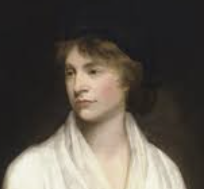
It may be confidently asserted that no man chooses evil because it is evil; he only mistakes it for happiness, the good he seeks. And the desire of rectifying these mistakes, is the noble ambition of an enlightened understanding, the impulse of feelings that Philosophy invigorates.
▼
Source
source
A Vindication of the Rights of Men
2 months 1 week ago
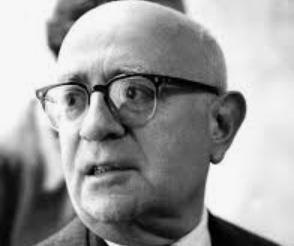
Regressive listeners behave like children. Again and again and with stubborn malice, they demand the one dish they have once been served.
▼
Source
source
p. 290

1 week 5 days ago
Wonder, indeed, is, on all hands, dying out: it is the sign of uncultivation to wonder.

3 months 4 weeks ago
To say that the cross emblazoned with the papal coat of arms, and set up by the indulgence preachers, is equal in worth to the cross of Christ is blasphemy.
▼
Source
source
Thesis 79

3 months 2 days ago
In this theater of man's life it is reserved only for God and angels to be lookers on.
▼
Source
source
Francis Bacon, in The Advancement of Learning (1605) Book II, xx, 8.

2 months 4 weeks ago
Heroic love is the property of those superior natures who are called insane not because they do not know, but because they over-know.
▼
Source
source
As quoted in The Tragic Sense of Life (1913), by Miguel de Unamuno, as translated by J. E. Crawford

2 months 4 days ago
The "passion for incredulity" can produce as much self-deception as the uncritical will to believe.
▼
Source
source
p. 209
2 months 1 week ago
If you have money, don't lend it at interest. Rather, give it to someone from whom you won't get it back.

2 months 3 weeks ago
Superstition is more injurious to God than atheism.
2 days ago
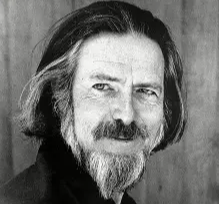
We have, as a result of two thousand years of Christianity, sex on the brain. Which isn't always the best place for it.

3 months 3 weeks ago
I would say to the readers of the Scriptures, if they wish for a good book, read the Bhagavad-Gita...translated by Charles Wilkins. It deserves to be read with reverence even by yankees...Besides the Bhagvat-Geeta, our Shakespeare seems sometimes youthfully green...Ex oriente lux may still be the motto of scholars, for the Western world has not yet derived from the East all the light it is destined to derive thence.
▼
Source
source
Quoted in Sushama Londhe, A Tribute to Hinduism (New Delhi: Pragun Publication, 2008) p. 26
3 months 1 week ago
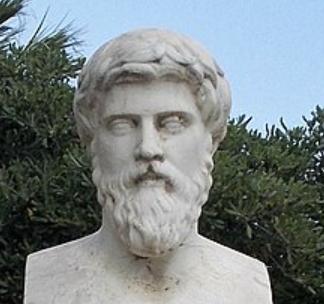
When Demaratus was asked whether he held his tongue because he was a fool or for want of words, he replied, "A fool cannot hold his tongue."
▼
Source
source
Of Demaratus
4 months 2 weeks ago
Doing what is for the good of the people, this must be the truest criterion of right government, in accordance with which the wise and good man will govern the affairs of his subjects. Just as the captain of a ship keeps watch for what is at any moment for the good of the vessel and the sailors, not by writing rules, but by making his science his law, and thus preserves his fellow voyagers, so may not a right government be established in the same way by men who could rule by this principle, making science more powerful than the laws? And whatever the wise rulers do, they can commit no error, so long as they maintain one great principle and by always dispensing absolute justice to them with wisdom and science are able to preserve the citizens and make them better than they were, so far as that is possible.
2 months 2 weeks ago
In order to conceive, and to steep ourselves in, unreality, we must have it constantly present to our minds. The day we feel it, see it, everything becomes unreal, except that unreality which alone makes existence tolerable.
1 month 3 weeks ago
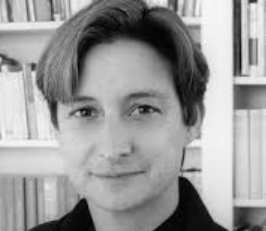
There was a brief moment after 9/11 when Colin Powell said "we should not rush to satisfy the desire for revenge." It was a great moment, an extraordinary moment, because what he was actually asking people to do was to stay with a sense of grief, mournfulness, and vulnerability.
▼
Source
source
Interview with Judith Butler. in: The Believer. May 2003

3 months 3 weeks ago
Without risks or prizes for the darer, history would be insipid indeed; and there is a type of military character which every one feels that the race should never cease to breed, for everyone is sensitive to its superiority. The duty is incumbent on mankind, of keeping military character in stock - if keeping them, if not for use, then as ends in themselves and as pure pieces of perfection, - so that Roosevelt's weaklings and mollycoddles may not end by making everything else disappear from the face of nature.

3 months 3 weeks ago
It is said that God is always on the side of the big battalions.
▼
Source
source
Letter to François-Louis-Henri Leriche (6 February 1770) Note: In his Notebooks (c.1735-c.1750)
4 months 3 weeks ago
[B]ecause that which is finite is always bounded with reference to something... it is necessary that there should be no end... [N]umber also appears to be infinite, and mathematical magnitudes, and that which is beyond the heavens. And since that which is beyond is infinite, body also appears to be infinite, and it would seem that there are infinite worlds; for why is there rather void here than there? ...If also there is a vacuum, and an infinite place, it is necessary that there should be an infinite body: for in things which have a perpetual subsistence, capacity differs nothing from being. The speculation of the infinite is, however, attended with doubt: for many impossibilities happen both to those who do not admit that it has a subsistence, and to those who do. ...It is ...especially the province of a natural philosopher to consider if there be a sensible infinite magnitude.

3 months 3 weeks ago
Some of your hurts you have cured, And the sharpest you still have survived, But what torments of grief you endured From evils which never arrived!
▼
Source
source
Borrowing From the French
3 months 1 week ago
In forming a store of good works thou shouldst be diligent, so that it may come to thy assistance among the spirits.
1 month ago
Humans already massively intervene in Nature, whether through habitat destruction, captive breeding programs for big cats, "rewilding", etc. So the question is not whether humans should "interfere", but rather what ethical principles should govern our interventions.
▼
Source
source
The Antispeciesist Revolution, Institute for Ethics and Emerging Technologies, 26 Jul. 2013
3 months 3 weeks ago
Deep in the man sits fast his fate To mould his fortunes, mean or great.
▼
Source
source
Fate
3 months 2 days ago
All things are full of gods.
▼
Source
source
As quoted in Aristotle, De Anima, 411a
2 months 2 weeks ago
Wherever big industries displaced manufacture, the bourgeoisie developed in wealth and power to the utmost and made itself the first class of the country. The result was that wherever this happened, the bourgeoisie took political power into its own hands and displaced the hitherto ruling classes, the aristocracy, the guildmasters, and their representative, the absolute monarchy. The bourgeoisie annihilated the power of the aristocracy, the nobility, by abolishing the entailment of estates - in other words, by making landed property subject to purchase and sale, and by doing away with the special privileges of the nobility. It destroyed the power of the guildmasters by abolishing guilds and handicraft privileges. In their place, it put competition - that is, a state of society in which everyone has the right to enter into any branch of industry, the only obstacle being a lack of the necessary capital.

3 months 1 week ago
Strength of body is nobility in beasts of burden, strength of character is nobility in men.

2 months 1 week ago
Warmth, warmth, more warmth! for we are dying of cold and not of darkness. It is not the night that kills, but the frost.
3 months 3 weeks ago
In different hours, a man represents each of several of his ancestors, as if there were seven or eight of us rolled up in each man's skin, - seven or eight ancestors at least, - and they constitute the variety of notes for that new piece of music which his life is.
▼
Source
source
Fate

3 months 3 weeks ago
Our merchants and master-manufacturers complain much of the bad effects of high wages in raising the price, and thereby lessening the sale of their goods both at home and abroad. They say nothing concerning the bad effects of high profits. They are silent with regard to the pernicious effects of their own gains. They complain only of those of other people.
▼
Source
source
Chapter IX, p. 117.
3 months 3 weeks ago
Good and evil, reward and punishment, are the only motives to a rational creature: these are the spur and reins whereby all mankind are set on work, and guided.
▼
Source
source
Sec. 54

2 months 3 weeks ago
Above all, avoid falsehood, every kind of falsehood, especially falseness to yourself. Watch over your own deceitfulness and look into it every hour, every minute.
▼
Source
source
Book II, ch. 4 (trans. Constance Garnett) The Elder Zossima, speaking to Mrs. Khoklakov

6 days ago
If you would not have a man flinch when the crisis comes, train him before it comes.
6 days ago
No man has ever been so far advanced by Fortune that she did not threaten him as greatly as she had previously indulged him.
3 months 3 weeks ago
Abbot Terrasson tells us that if the size of a book were measured not by the number of its pages but by the time required to understand it, then we could say about many books that they would be much shorter were they not so short.
▼
Source
source
A xix

1 month 3 weeks ago
It will be said, "Patriotism has welded mankind into states, and maintains the unity of states." But men are now united in states; that work is done; why now maintain exclusive devotion to one's own state, when this produces terrible evils for all states and nations? For this same patriotism which welded mankind into states is now destroying those same states. If there were but one patriotism say of the English only then it were possible to regard that as conciliatory, or beneficent. But when, as now, there is American patriotism, English, German, French, Russian, all opposed to one another, in this event, patriotism no longer unites, but disunites.
▼
Source
source
Patriotism and Government

3 months 3 weeks ago
To Americans. That some desperate wretches should be willing to steal and enslave men by violence and murder for gain, is rather lamentable than strange. But that many civilized, nay, christianized people should approve, and be concerned in the savage practice, is surprising; and still persist, though it has been so often proved contrary to the light of nature, to every principle of Justice and Humanity, and even good policy, by a succession of eminent men, and several late publications.
2 months 2 weeks ago
Late at night. I feel like falling into a frenzy, doing some unprecedented thing to release myself, but I don't see against whom, against what...
3 months 1 week ago
We rarely find anyone who can say he has lived a happy life, and who, content with his life, can retire from the world like a satisfied guest.
▼
Source
source
Book I, satire i, line 117
4 months 2 weeks ago
Earth is a ball that is over 12,000 kilometres in diameter, and if it were modelled into an object the size of a billiard ball, with all its surface unevenness reproduced exactly to scale, the model would be smoother than an ordinary billiard ball and the ocean would be an all but unnoticeable mist of dampness over 70 percent of its surface.

3 months 3 weeks ago
I have resolved to demonstrate by a certain and undoubted course of argument, or to deduce from the very condition of human nature, not what is new and unheard of, but only such things as agree best with practice.
▼
Source
source
Ch. 1, Introduction

4 months 3 weeks ago
Freedom's possibility is not the ability to choose the good or the evil. The possibility is to be able. In a logical system, it is convenient to say that possibility passes over into actuality. However, in actuality it is not so convenient, and an intermediate term is required. The intermediate term is anxiety, but it no more explains the qualitative leap than it can justify it ethically. Anxiety is neither a category of necessity nor a category of freedom; it is entangled freedom, where freedom is not free in itself but entangled, not by necessity, but in itself.
CivilSimian.com created by AxiomaticPanic, CivilSimian, Kalokagathia