


1 month 2 weeks ago
By words one transmits thoughts to another, by means of art, one transmits feelings.
1 month 2 weeks ago
There is no doubt in my mind that, from the third-person point of view, monarchy is the most reasonable form of government. By embodying the state in a fragile human person, it captures the arbitrariness and the givenness of political allegiance, and so transforms allegiance into affection.
▼
Source
source
The Meaning of Conservatism: Third Edition (2001), p. 193
2 months 2 weeks ago
The study of Ethics would, no doubt, be far more simple, and its results far more "systematic," if, for instance, pain were an evil of exactly the same magnitude as pleasure is a good; but we have no reason whatever to assume that the Universe is such that ethical truths must display this kind of symmetry ... .
▼
Source
source
Principia Ethica (1903), ch. VI.

2 months 3 weeks ago
Education has for its object the formation of character. To curb restive propensities, to awaken dormant sentiments, to strengthen the perceptions, and cultivate the tastes, to encourage this feeling and repress that, so as finally to develop the child into a man of well proportioned and harmonious nature - this is alike the aim of parent and teacher.
▼
Source
source
Pt. II, Ch. 17 : The Rights of Children

2 months 2 weeks ago
What are you waiting for in order to give up?

2 months 5 days ago
Another response to racism has been the establishment of unlearning racism workshops, which are often led by white women. These workshops are important, yet they tend to focus primarily on cathartic individual psychological personal prejudice without stressing the need for corresponding change in political commitment and action. A woman who attends an unlearning racism workshop and learns to acknowledge that she is racist is no less a threat than one who does not. Acknowledgment of racism is significant when it leads to transformation.

1 month 2 weeks ago
Until writing was invented, man lived in acoustic space: boundless, directionless, horizonless, in the dark of the mind, in the world of emotion, by primordial intuition, terror. Speech is a social chart of this bog.
▼
Source
source
(p. 48)

4 weeks ago
With other beliefs crumbling, many seek to return to what they piously describe as "Enlightenment values". But these values were not as unambiguously benign as is nowadays commonly supposed.
▼
Source
source
2015

1 week 5 days ago
There is endless merit in a man's knowing when to have done.
▼
Source
source
Dr. Francia (1845).

3 months 1 week ago
The enmity of one's kindred is far more bitter than the enmity of strangers.

2 months 1 week ago
One must give one power a ballast, so to speak, to put it in a position to resist another.
▼
Source
source
Book V, Chapter 14.

3 months 3 weeks ago
After experience had taught me that all the usual surroundings of social life are vain and futile; seeing that none of the objects of my fears contained in themselves anything either good or bad, except in so far as the mind is affected by them, I finally resolved to inquire whether there might be some real good having power to communicate itself, which would affect the mind singly, to the exclusion of all else: whether, in fact, there might be anything of which the discovery and attainment would enable me to enjoy continuous, supreme, and unending happiness.
▼
Source
source
I, 1

2 months 2 weeks ago
Wherever ideas come together they tend to weld into general ideas; and whenever they are generally connected, general ideas govern the connection; and these general ideas are living feelings spread out.

3 months 2 weeks ago
In the days before machinery men and women who wanted to amuse themselves were compelled, in their humble way, to be artists. Now they sit still and permit professionals to entertain them by the aid of machinery. It is difficult to believe that general artistic culture can flourish in this atmosphere of passivity.

3 months 3 weeks ago
The people who are regarded as moral luminaries are those who forego ordinary pleasures themselves and find compensation in interfering with the pleasures of others.
▼
Source
source
Ch. 8: Eastern and Western Ideals of Happiness

1 month 2 weeks ago
Amid a multitude of projects, no plan is devised.
▼
Source
source
Maxim 319
2 months 1 week ago
To look at a work of art in order to see how well certain rules are observed and canons conformed to impoverished perception. But to strive to note the ways in which certain conditions are fulfilled, such as the organic means by which the media is made to express and carry definite parts, or how the problem of adequate individualization is solved, sharpens esthetic perception and enriches its content.
▼
Source
source
p. 213
1 month 2 weeks ago
The positivist philosophy of Comte and the I doctrine deduced from it that humanity is an organism, and Darwin's doctrine of a law of the struggle for existence that is supposed to govern life, with the differentiation of various breeds of people which follows from it, and the anthropology, biology, and sociology of which people are now so fond-all have the same aim. These have all become favourite sciences because they serve to justify the way in which people free themselves from the human obligation to labour, while consuming the fruits of other people's labour.
2 months 3 weeks ago
A subject interests me and holds my attention only so long as it presents me with difficulties, only so long as I am at odds with it and have, as it were, to struggle with it; but once I have mastered it I hurry on to something else, to a new subject; for my interest is not confined to any particular field or subject; it extends to everything human. This does not mean that I am an intellectual miser or egoist, who amasses knowledge for himself alone; by no means! What I do and think for myself, I must also think and do for others. But I feel the need of instructing others in a subject only so long as, while instructing others, I am also instructing myself.
▼
Source
source
Lecture I, , R. Manheim, trans. (1967), p. 2

3 months 2 weeks ago
All that I know about my life, it seems, I have learned in books.

2 months 4 days ago
It is not enough to accept a concept of order and live by it; that is cowardice, and such cowardice cannot result from freedom. Chaos must be faced. Real order must be preceded by a descent into chaos.
▼
Source
source
Chapter Three, The Romantic Outsider

3 months 3 weeks ago
There are men who astonish and delight, men who instruct and guide. Some men's words I remember so well that I must often use them to express my thought. Yes, because I perceive that we have heard the same truth, but they have heard it better.
▼
Source
source
Character

2 months 1 week ago
Our life is a hope which is continually converting itself into memory and memory in its turn begets hope. Give us leave to live! The eternity that is like an eternal present, without memory and without hope, is death. Thus do ideas exist in the God-Idea, but not thus do men live in the living God, in the God-Man.
1 month 2 weeks ago
Yes, I am in favor of censorship, but it has to be conducted by people like me. And that's the difficulty (laughs). I'm in favor of encouraging every possible form of self-restraint and parental control. And I certainly don't think that pornography should be protected under the American Constitution.
▼
Source
source
Interview with Salon.com, 1998

2 months 3 weeks ago
Go further, and require each of them to make a contribution: you will see how many things are still missing, and you will be obliged to get the assistance of a large number of men who belong to different classes, priceless men, but to whom the gates of the academies are nonetheless closed because of their social station. All the members of these learned societies are more than is needed for a single object of human science; all the societies together are not sufficient for a science of man in general.
▼
Source
source
Article on Encyclopedia

3 months 4 weeks ago
Nothing prints more lively in our minds than something we wish to forget.
▼
Source
source
Book II, Ch. 12
3 months 2 weeks ago
No punishment has ever possessed enough power of deterrence to prevent the commission of crimes. On the contrary, whatever the punishment, once a specific crime has appeared for the first time, its reappearance is more likely than its initial emergence could ever have been.
▼
Source
source
Epilogue

1 month ago
Lakshmi, the Goddess of wealth, comes of Her own accord where fools are not respected, grain is well stored up, and the husband and wife do not quarrel.

3 months 3 weeks ago
Scott does this still better than Wordsworth, and a very second-rate landscape does it more effectually than any poet. What made Wordsworth's poems a medicine for my state of mind, was that they expressed, not mere outward beauty, but states of feeling, and of thought coloured by feeling, under the excitement of beauty. They seemed to be the very culture of the feelings, which I was in quest of. In them I seemed to draw from a Source of inward joy, of sympathetic and imaginative pleasure, which could be shared in by all human beings; which had no connexion with struggle or imperfection, but would be made richer by every improvement in the physical or social condition of mankind. From them I seemed to learn what would be the perennial sources of happiness, when all the greater evils of life shall have been removed. And I felt myself at once better and happier as I came under their influence.
▼
Source
source
(pp. 147-148)

3 months 2 weeks ago
Imagine yourself as a living house. God comes in to rebuild that house. At first, perhaps, you can understand what He is doing. He is getting the drains right and stopping the leaks in the roof and so on: you knew that those jobs needed doing and so you are not surprised. But presently he starts knocking the house about in a way that hurts abominably and does not seem to make sense. What on earth is He up to? The explanation is that He is building quite a different house from the one you thought of-throwing out a new wing here, putting on an extra floor there, running up towers, making courtyards. You thought you were going to be made into a decent little cottage: but He is building a palace. He intends to come and live in it Himself.
▼
Source
source
Book IV, Chapter 9, "Counting the Cost"

2 months 1 week ago
Positive philosophy made its counter-attack against critical rationalism on two fronts. Comte fought against the French form of negative philosophy, against the heritage of Descartes and the Enlightenment. In Germany, the struggle was directed against Hegel's system. Schelling received an express commission from Frederick William IV 'to destroy the dragon seed' of Hegelianism, while Stahl, another anti-Hegelian, became the philosophical spokesman of the Prussian monarchy in 1840.
▼
Source
source
P. 326
2 months 1 week ago
My path was not the normal one of professors of philosophy. I did not intend to become a doctor of philosophy by studying philosophy (I am in fact a doctor of medicine) nor did I by any means, intend originally to qualify for a professorship by a dissertation on philosophy. To decide to become a philosopher seemed as foolish to me as to decide to become a poet. Since my schooldays, however, I was guided by philosophical questions. Philosophy seemed to me the supreme, even the sole, concern of man. Yet a certain awe kept me from making it my profession.
2 months 2 weeks ago
Freedom can be manifested only in the void of beliefs, in the absence of axioms, and only where the laws have no more authority than a hypothesis.

1 month 2 weeks ago
The fact that life evolved out of nearly nothing, some 10 billion years after the universe evolved out of literally nothing, is a fact so staggering that I would be mad to attempt words to do it justice.
▼
Source
source
From tail to tale on the path of pilgrims in life, The Scotsman
1 month 3 weeks ago
There are only a few images that are not forced to provide meaning, or have to go through the filter of a specific idea.
2 months 1 week ago
No one is guiltless...But no one is beyond the pale of human existence, provided he pays for his guilt.

4 months 3 weeks ago
With all great deceivers there is a noteworthy occurrence to which they owe their power. In the actual act of deception... they are overcome by belief in themselves. It is this which then speaks so miraculously and compellingly to those who surround them.
2 months 1 week ago
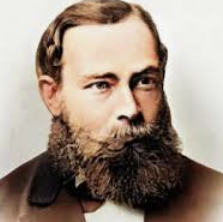
Gottlob Frege created modern logic including "for all," "there exists," and rules of proof. Leibniz and Boole had dealt only with what we now call "propositional logic" (that is, no "for all" or "there exists"). They also did not concern themselves with rules of proof, since their aim was to reach truth by pure calculation with symbols for the propositions. Frege took the opposite track: instead of trying to reduce logic to calculation, he tried to reduce mathematics to logic, including the concept of number.
▼
Source
source
Michael J. Beeson, "The Mechanization of Mathematics," in Alan Turing: Life and Legacy of a Great Thinker2004
2 months 2 weeks ago
There is nothing to say about anything. So there can be no limit to the number of books.
2 months 5 days ago
Popular escapist fiction enchants adult readers without challenging them to be educated for critical consciousness.

3 months 3 weeks ago
Even in those cities which seem to enjoy the blessings of peace, and where the arts florish, the inhabitants are devoured by envy, cares and anxieties, which are greater plagues than any experienced in a town when it is under siege.
4 weeks ago
Tyranny offers relief from the burden of sanity and a licence to enact forbidden impulses of hatred and violence. By acting on these impulses and releasing them in their subjects tyrants give people a kind of happiness, which as individuals they may be incapable of achieving.
▼
Source
source
An Old Chaos: What a Tyrant Can Do For You (p. 57)
3 months 3 weeks ago
My desire and wish is that the things I start with should be so obvious that you wonder why I spend my time stating them. This is what I aim at because the point of philosophy is to start with something so simple as not to seem worth stating, and to end with something so paradoxical that no one will believe it.
5 days ago
The English, generally remarkable for doing very good things in a very bad manner, seem to have reserved the maturity and plenitude of their awkwardness for the pulpit.
▼
Source
source
Vol. I, ch. 3, p. 83

4 months 2 weeks ago
Private profit is often hidden under a careful coating of great patriotism.
3 months 2 weeks ago
Propaganda in favor of action that is consonant with enlightened self-interest appeals to reason by means of logical arguments based upon the best available evidence fully and honestly set forth. Propaganda in favor of action dictated by the impulses that are below self-interest offers false, garbled or incomplete evidence, avoids logical argument and seeks to influence its victims by the mere repetition of catchwords, by the furious denunciation of foreign or domestic scapegoats, and by cunningly associating the lower passions with the highest ideals, so that atrocities come to be perpetrated in the name of God and the most cynical kind of Realpolitik is treated as a matter of religious principle and patriotic duty.
▼
Source
source
Chapter 4 (p. 33)
2 months 1 week ago
Whenever convictions are not arrived at by direct contact with the world and the objects themselves, but indirectly through a critique of the opinions of others, the processes of thinking are impregnated with ressentiment. The establishment of "criteria" for testing the correctness of opinions then becomes the most important task. Genuine and fruitful criticism judges all opinions with reference to the object itself. Ressentiment criticism, on the contrary, accepts no "object" that has not stood the test of criticism.
▼
Source
source
L. Coser, trans. (1973), pp. 67-68

2 months ago
Just as the performance of the vilest and most wicked deeds requires spirit and talent, so even the greatest demand a certain insensitivity which under other circumstances we would call stupidity.
▼
Source
source
F 87
3 months 1 week ago
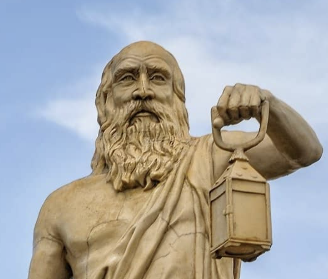
He once begged alms of a statue, and, when asked why he did so, replied, "To get practice in being refused."
▼
Source
source
Diogenes Laërtius, vi. 49
CivilSimian.com created by AxiomaticPanic, CivilSimian, Kalokagathia