

2 months 1 week ago
Torn in this way from its normal connection with contemplation, with being within one's self, pure action permits and produces only a chain of stupidities which we might better call "stupidity unchained." So we see today that an absurd attitude justifies the appearance of an opposing attitude no more reasonable; at least, reasonable enough, and so on indefinitely. Such is the extreme to which political affairs in the West have come!
▼
Source
source
p. 34

3 months 3 weeks ago
He thought human life a poor thing at best, after the freshness of youth and of unsatisfied curiosity had gone by. This was a topic on which he did not often speak, especially, it may be supposed, in the presence of young persons: but when he did, it was with an air of settled and profound conviction. He would sometimes say, that if life were made what it might be, by good government and good education, it would be worth having: but he never spoke with anything like enthusiasm even of that possibility.
▼
Source
source
(p. 48)
2 months 3 weeks ago
From fanaticism to barbarism is only one step.
▼
Source
source
Essai sur le Mérite de la Vertu (1745)

4 months 5 days ago
The steady drip of water causes stone to hollow and yield.
▼
Source
source
Book I, line 313 (tr. Stallings) Variant translation: Continual dropping wears away a stone. Compare: "The soft droppes of rain pierce the hard marble; many strokes overthrow the tallest oaks", John Lyly, Euphues, 1579 (Arber's reprint), p. 81
2 months 3 weeks ago
Whoever hasn't yet arrived at the clear realization that there might be a greatness existing entirely outside his own sphere and for which he might have absolutely no feeling; whoever hasn't at least felt obscure intimations concerning the approximate location of this greatness in the geography of the human spirit: that person either has no genius in his own sphere, or else he hasn't been educated to the level of the classic.
▼
Source
source
Lucinde and the Fragments, P. Firchow, trans. (1991), "Critical Fragments," § 36
2 weeks ago
One need only open the eyes to see that the conquests of industry which have enriched so many practical men would never have seen the light, if these practical men alone had existed and if they had not been preceded by unselfish devotees who died poor, who never thought of utility, and yet had a guide far other than caprice.As Mach says, these devotees have spared their successors the trouble of thinking.
▼
Source
source
Author's Essay Prefatory to the Translation: "The Choice of Facts," p.4

3 months 3 weeks ago
No man who believes that all is for the best in this suffering world can keep his ethical values unimpaired, since he is always having to find excuses for pain and misery.
▼
Source
source
The Collected Papers of Bertrand Russell: A fresh look at empiricism, 1927-42 (G. Allen & Unwin, 1996), p. 217
4 weeks 1 day ago
No critic writing about a film could say more than the film itself, although they do their best to make us think the opposite.
▼
Source
source
"Film Critics"
2 months 1 week ago
Even the eye that is artificially trained to see color as color, apart from things that colors qualify, cannot shut out the resonances and transfers of value.
▼
Source
source
p. 126
4 months 1 week ago
The world is divided into men who have wit and no religion and men who have religion and no wit.

4 months 2 weeks ago
If the love of money is the root of all evil, the need of money is most certainly the root of all despair.

1 month 2 weeks ago
In historical events great men - so-called - are but labels serving to give a name to the event, and like labels they have the least possible connection with the event itself. Every action of theirs, that seems to them an act of their own free will, is in an historical sense not free at all, but in bondage to the whole course of previous history, and predestined from all eternity.
▼
Source
source
Bk. IX, ch. 1

3 months 3 weeks ago
Actions may be laudable or blameable; but they cannot be reasonable: Laudable or blameable, therefore, are not the same with reasonable or unreasonable. The merit and demerit of actions frequently contradict, and sometimes controul our natural propensities. But reason has no such influence. Moral distinctions, therefore, are not the offspring of reason. Reason is wholly inactive, and can never be the source of so active a principle as conscience, or a sense of morals.
▼
Source
source
Part 1, Section 1

2 months 2 weeks ago
Men have superior strength of body; but were it not for mistaken notions of beauty, women would acquire sufficient to enable them to earn their own subsistence, the true definitions of independence; and to bear those bodily inconveniences and exertions that are requisite to strengthen the mind. Let us then, by being allowed to take the same exercise as boys, not only during infancy, but youth, arrive at perfection of body, that we may know how far the nation superiority of man extends . For what reason or virtue can be expected from a creature when the seed-time of life is neglected? None; did not the winds of heaven casually scatter many useful seeds in fallow ground.
▼
Source
source
Ch.5

2 months 2 weeks ago
The only thing the young should be taught is that there is virtually nothing to be hoped for from life. One dreams of a Catalogue of Disappointments which would include all the disillusionments reserved for each and every one of us, to be posted in the schools.

2 months 3 days ago
There is in Shaw, as in Gurdjieff and Nietzsche, a recognition of the immense effort of Will that is necessary to express even a little freedom, that places them beside Pascal and St. Augustine as religious thinkers. Their view is saved from pessimism only by its mystical recognition of the possibilities of pure Will, freed from the entanglements of automatism.
▼
Source
source
p. 292
1 day ago
To have faith is to trust yourself to the water. When you swim you don't grab hold of the water, because if you do you will sink and drown. Instead you relax, and float.
▼
Source
source
The Essence of Alan Watts

4 months 1 week ago
Justice respects man as living in society, and is the common bond without which no society can subsist.
2 months 1 week ago
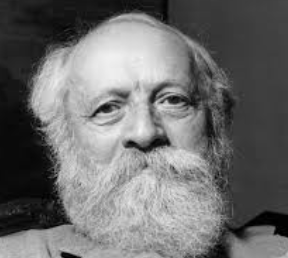
You do not attain to knowledge by remaining on the shore and watching the foaming waves, you must make the venture and cast yourself in, you must swim, alert and with all your force, even if a moment comes when you think you are losing consciousness; in this way, and in no other, do you reach anthropological insight.
▼
Source
source
p. 148

3 months 2 weeks ago
Of all tyrannies, a tyranny sincerely exercised for the good of its victims may be the most oppressive. It would be better to live under robber barons than under omnipotent moral busybodies. The robber baron's cruelty may sometimes sleep, his cupidity may at some point be satiated; but those who torment us for our own good will torment us without end for they do so with the approval of their own conscience. They may be more likely to go to Heaven yet at the same time likelier to make a Hell of earth. This very kindness stings with intolerable insult. To be "cured" against one's will and cured of states which we may not regard as disease is to be put on a level of those who have not yet reached the age of reason or those who never will; to be classed with infants, imbeciles, and domestic animals.
▼
Source
source
God in the Dock: Essays on Theology (Making of Modern Theology)
3 months 2 weeks ago
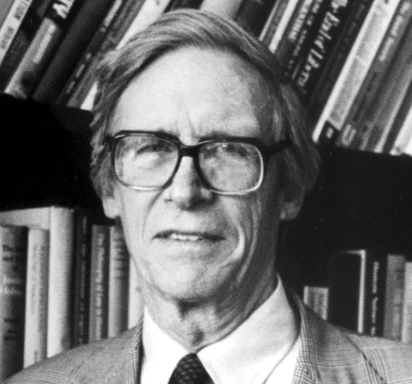
There are infinitely many variations of the initial situation and therefore no doubt indefinitely many theorems of moral geometry.
▼
Source
source
Chapter III, Section 21, pg. 126
3 months 3 weeks ago
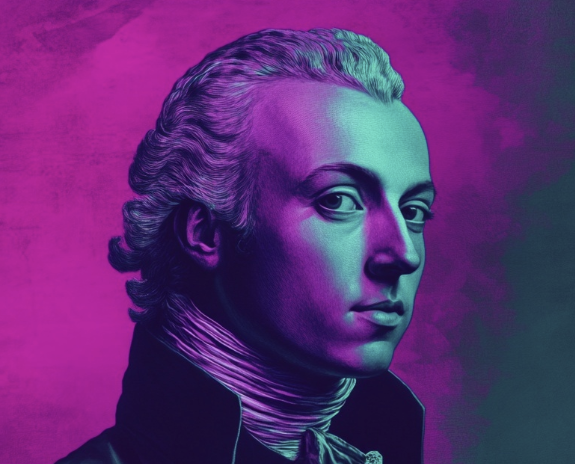
I maintain that in every special natural doctrine only so much science proper is to be met with as mathematics; for... science proper, especially of nature, requires a pure portion, lying at the foundation of the empirical, and based upon à priori knowledge of natural things. ...the conception should be constructed. But the cognition of the reason through construction of conceptions is mathematical. A pure philosophy of nature in general, namely, one that only investigates what constitutes a nature in general, may thus be possible without mathematics; but a pure doctrine of nature respecting determinate natural things (corporeal doctrine and mental doctrine), is only possible by means of mathematics; and as in every natural doctrine only so much science proper is to be met with therein as there is cognition à priori, a doctrine of nature can only contain so much science proper as there is in it of applied mathematics.
▼
Source
source
Preface, Tr. Ernest Belfort Bax, 1883

1 month 2 weeks ago
Manuscript culture is conversational if only because the writer and his audience are physically related by the form of publication as performance.
▼
Source
source
(p. 96)

2 weeks 1 day ago
The United States has been in a long term decline, with its political institutions decaying. ...The single source of that decline is ...the pervasive polarization ...within American society that has made the United States unable to meet some of the basic governance challenges that it has faced. The most recent example... has been the COVID pandemic... Wearing a mask, instead of becoming a health measure that people take to protect themselves and their loved ones, becomes as political statement... You don't wear a mask if you're a Trump supporter, and you do... if you're a Democrat. This is... not the way that... coherent nations... meet systemic challenges like a global pandemic.
▼
Source
source
21:57
4 weeks 1 day ago
It's easier to be faithful to a restaurant than it is to a woman.
▼
Source
source
Fidelity

3 months 3 weeks ago
The consequences of beliefs that go against the providence of a perfectly good, wise, and just God, or against that immortality of souls which lays them open to the operations of justice.... I even find that somewhat similar opinions, by stealing gradually into the minds of men of high station who rule the rest and on whom affairs depend, and by slithering into fashionable books, are inclining everything toward the universal revolution with which Europe is threatened, and are completing the destruction of what still remains in the world of the generous Greeks and Romans who placed love of country and of the public good, and the welfare of future generations before fortune and even before life.
▼
Source
source
Nouveaux essais sur l'entendement humain, 1704
3 weeks 6 days ago
Knowledge grows, but human beings remain much the same.Belief in progress is a relic of the Christian view of history as a universal narrative, and an intellectually rigorous atheism would start by questioning it.
3 months 1 week ago
In speaking of the fear of religion, I don't mean to refer to the entirely reasonable hostility toward certain established religions and religious institutions, in virtue of their objectionable moral doctrines, social policies, and political influence. Nor am I referring to the association of many religious beliefs with superstition and the acceptance of evident empirical falsehoods. I am talking about something much deeper-namely, the fear of religion itself. I speak from experience, being strongly subject to this fear myself: I want atheism to be true and am made uneasy by the fact that some of the most intelligent and well-informed people I know are religious believers. It isn't just that I don't believe in God and, naturally, hope that I'm right in my belief. It's that I hope there is no God! I don't want there to be a God; I don't want the universe to be like that.
▼
Source
source
The Last Word, Oxford University Press, 1997, pp. 130-131.
1 month 4 weeks ago
We are organization watchers in our role as citizens. Increasing attention has been fixed in recent years upon the functioning of society's organizations: its large corporations and its governments. Hence this could also be described as a book for Everyman-for it proposes a way of thinking about organizational issues that concern us all.
▼
Source
source
Simon (1975, p. ix); As cited in Stefano Franchi(2006) "Herbert simon, anti-philosopher." Computing and Philosophy. p. 34.



3 months 2 days ago
Above and before all things, worship GOD!
▼
Source
source
As quoted in The Sayings of the Wise: Or, Food for Thought: A Book of Moral Wisdom, Gathered from the Ancient Philosophers (1555) by William Baldwin [1908 edition]

3 months 2 weeks ago
The film concludes with ... the most nauseatingly luscious, the most penetratingly vulgar mammy song that it has ever been my lot to hear. My flesh crept as the loud speaker poured out those sodden words, the greasy, sagging melody. I felt ashamed of myself for listening to such things, for even being a member of the species to which such things are addressed.
▼
Source
source
"Silence is Golden," p. 62

2 months 3 weeks ago
I thanke God for my happy Dreams|dreames, as I doe for my good rest, for there is a satisfaction in them unto reasonable desires, and such as can be content with a fit of happinesse; and surely it is not a melancholy conceite to thinke we are all asleepe in this world, and that the conceits of this life are as meare dreames to those of the next, as the Phantasmes of the night, to the conceit of the day. There is an equall delusion in both, and the one doth but seeme to bee the embleme or picture of the other;
▼
Source
source
Section 12
1 day ago
Adeimantus, in what amounts to an accusation of Socrates, asserts that the philosophers appear to be either useless or vicious. Plato, as I have suggested, teaches that ultimately this is an appearance that cannot be reversed, and this insures the philosophers' permanent marginality. They appear as useless because they are. They are neither artisans, nor statesmen, nor rhetoricians. They are idlers who contribute nothing to security or posterity. Their peculiar contemplative pleasures are not accessible to the majority of mankind, and they do not provide for the popular pleasures as do the poets.
▼
Source
source
Commerce and Culture, p. 285.
3 months 2 days ago
A solitary man is a God, or a beast.

2 months 4 days ago
To be in touch with senses and emotions beyond conquest is to enter the realm of the mysterious.
▼
Source
source
Chapter 2, Altars of Sacrifice
3 months 3 weeks ago
I never turned recreant to intellectual culture, or ceased to consider the power and practice of analysis as an essential condition both of individual and of social improvement. But I thought that it had consequences which required to be corrected, by joining other kinds of cultivation with it. The maintenance of a due balance among the faculties, now seemed to me of primary importance. The cultivation of the feelings became one of the cardinal points in my ethical and philosophical creed.
▼
Source
source
(pp. 143-144)
2 months 3 days ago
Rituals are also symbolic practices... in the sense that they bring people together to create an alliance, a wholeness, a community.

4 months 1 week ago
When the Great Dao (Tao, perfect order) prevails, the world is like a Commonwealth State shared by all, not a dictatorship.

2 months 3 weeks ago
Indeed, the drunken man while in that condition does not know the definition of drunkenness nor the scientific account of it; he has not the very least scientific knowledge of it. The sober man, on the other hand, knows the definition of drunkenness and its basis, yet he is not drunk in the very least. Again the doctor, when he is himself ill, knows the definition and causes of health and the remedies which restore it, and yet is lacking in health. Similarly there is a difference between knowing the true nature and causes and conditions of the ascetic life and actually leading such a life and forsaking the world.
▼
Source
source
III. The Classes of Seekers, p. 47.
1 month 6 days ago
We have always thought that Mr. Darwin has unnecessarily hampered himself by adhering so strictly to his favourite "Natura non facit saltum." We greatly suspect that she does make considerable jumps in the way of variation now and then, and that these saltations give rise to some of the gaps which appear to exist in the series of known forms.
1 week 5 days ago
Tsze-Kung asked Confucius, saying, "Master, are you a sage?" Confucius answered him: "A sage is what I cannot rise to. I learn without satiety, and teach without being tired." Tsze-Kung said: "You learn without satiety: that shows your wisdom. You teach without being tired: that shows your benevolence. Benevolent and wise:- Master, you are a sage."
▼
Source
source
"Humility", no. 139
1 month 1 week ago
I would not give up the keys to the granary, because I know that, by doing so, I should turn scarcity into a famine.
▼
Source
source
Sullivan, p. 266

2 months 5 days ago
Epochs do not rise from the dead.... [W]hereas you can make a replica of an ancient statue, there is no possible replica of an ancient state of mind. There can be no nearer approximation than that which a masquerade bears to real life. There may be understanding of the past, but there is a difference between the modern and the ancient reactions to the same stimuli.
▼
Source
source
Ch. 9: "Science and Philosophy", p. 194
3 months 3 weeks ago
We have, in fact, two kinds of morality side by side; one which we preach but do not practise, and another which we practise but seldom preach.
▼
Source
source
Ch. 8: Eastern and Western Ideals of Happiness

4 months 1 week ago
Reason in man is rather like God in the world.
▼
Source
source
Opuscule II, De Regno On Kingship, c. 1267
1 week 4 days ago
Scientific revolutions are inaugurated by a growing sense... that an existing paradigm has ceased to function adequately in the exploration of an aspect of nature to which that paradigm itself had previously led the way. p. 91
▼
Source
source
2012 ed.
1 month 2 weeks ago
The assertion that art may be good art and at the same time incomprehensible to a great number of people is extremely unjust, and its consequences are ruinous to art itself...it is the same as saying some kind of food is good but most people can't eat it.
CivilSimian.com created by AxiomaticPanic, CivilSimian, Kalokagathia