


4 months 4 days ago
The law of faith, being a covenant of free grace, God alone can appoint what shall be necessarily believed by everyone whom He will justify. What is the faith which He will accept and account for righteousness, depends wholly on his good pleasure. For it is of grace, and not of right, that this faith is accepted. And therefore He alone can set the measures of it: and what he has so appointed and declared is alone necessary. No-body can add to these fundamental articles of faith; nor make any other necessary, but what God himself hath made, and declared to be so. And what these are which God requires of those who will enter into, and receive the benefits of the new covenant, has already been shown. An explicit belief of these is absolutely required of all those to whom the gospel of Jesus Christ is preached, and salvation through his name proposed.
▼
Source
source
§ 156
3 weeks 1 day ago
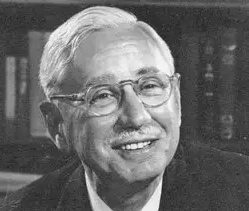
Rooted in freedom, bonded in the fellowship of danger, sharing everywhere a common human blood, we declare again that all men are brothers, and that mutual tolerance is the price of liberty.
3 weeks 4 days ago
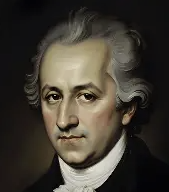
The artist may be well advised to keep his work to himself till it is completed, because no one can readily help him or advise him with it...but the scientist is wiser not to withhold a single finding or a single conjecture from publicity.
▼
Source
source
Essay on Experimentation
2 months 4 weeks ago
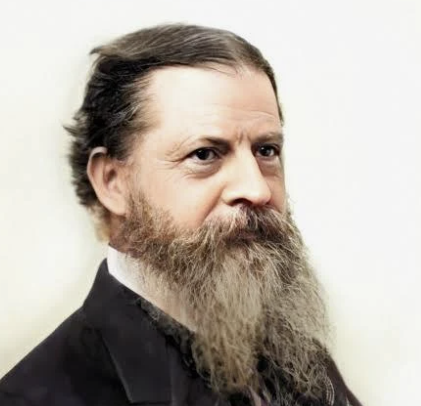
Since space is continuous, it follows that there must be an immediate community of feeling between parts of mind infinitesimally close together. Without this, I believe it would have been impossible for any co-ordination to be established in the action of the nerve-matter of one brain.

4 months 1 day ago
You could send your soul after the good you had expected, instead of turning it to the good you had got. You could refuse the real good; you could make the real fruit taste insipid by thinking of the other.
2 months 3 weeks ago
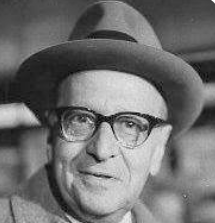
In the subjectivist view, when 'reason' is used to connote a thing or idea rather than an act, it refers exclusively to the relation of such an object or concept to a purpose, not to the object or concept itself. It means that the thing or the idea is good for something else. There is no reasonable aim as such, and to discuss the superiority of one aim over another in terms of reason becomes meaningless. From the subjective approach, such a discussion is possible only if both aims serve a third and higher one, that is, if they are means, not ends.
▼
Source
source
p. 6.

4 months 1 week ago
There are and can be only two ways of searching into and discovering truth. The one flies from the senses and particulars to the most general axioms, and from these principles, the truth of which it takes for settled and immovable, proceeds to judgment and to the discovery of middle axioms. And this way is now in fashion. The other derives axioms from the senses and particulars, rising by a gradual and unbroken ascent, so that it arrives at the most general axioms last of all. This is the true way, but as yet untried.
▼
Source
source
Aphorism 19

4 months 1 week ago
It was truly very good reason that we should be beholden to God only, and to the favour of his grace, for the truth of so noble a belief, since from his sole bounty we receive the fruit of immortality, which consists in the enjoyment of eternal beatitude.... The more we give and confess to owe and render to God, we do it with the greater Christianity.
▼
Source
source
Ch. 12

3 months 1 week ago
As for me, I am deeply a democrat; this is why I am in no way a socialist. Democracy and socialism cannot go together. You can't have it both ways.
▼
Source
source
Notes for a Speech on Socialism (1848).

4 months 3 days ago
I well knew that to propose something which would be called extreme, was the true way not to impede but to facilitate a more moderate experiment.
▼
Source
source
(p. 294)

4 months 2 days ago
The survival of democracy depends on the ability of large numbers of people to make realistic choices in the light of adequate information.
▼
Source
source
Chapter 6 (p. 47)

3 weeks 6 days ago
Any American ally will welcome Biden as president, will be happy that he was elected, but will be a little... distrustful because the Republicans could make a come-back in 2022. They could win the presidency again in 2024. ...There's is still a good third of the American public that remain very strong Trump voters. They're very angry and... are not going to go away... Therefore the ability of the United States to resume its role as the chief defender of the liberal order... is going to be contested, both domestically and... by American friends. If this leads to more self-reliance on their part, that may not be the worst thing in the world, but it is going to mean a very different kind of world order than the one I grew up arguing with Owen Harries about.
▼
Source
source
30:41:00

1 month 3 weeks ago
What concerns me most here are the ways in which contemporary voices considered to be leftist have abandoned the philosophical ideas that are central to any left-wing standpoint: a commitment to universalism over tribalism, a firm distinction between justice and power, and a belief in the possibility of progress.
▼
Source
source
Polity (2023), p. 5

1 month 4 weeks ago
When things fall out opportunely for the person concerned, he is not apt to be critical about the how or why, his own immediate personal convenience seeming a sufficient reason for the strangest oddities and revolutions in our sublunary things.
▼
Source
source
The Sire de Maletroit's Door.
2 weeks 4 days ago
Just as the schoolmen philosophized only inside the belief of the church, ... without ever throwing a doubt upon this belief; as authors fill whole folios on the State without calling in question the fixed idea of the State itself; as our newspapers are crammed with politics because they are conjured into the fancy that man was created to be a zoon politicon,-so also subjects vegetate in subjection, virtuous people in virtue, liberals in humanity, etc., without ever putting to these fixed ideas of theirs the searching knife of criticism. Undislodgeable, like a madman's delusion, those thoughts stand on a firm footing, and he who doubts them-lays hands on the sacred!
▼
Source
source
Cambridge 1995, p. 44

4 months 6 days ago
In a word, human life is more governed by fortune than by reason; is to be regarded more as a dull pastime than as a serious occupation; and is more influenced by particular humour, than by general principles. Shall we engage ourselves in it with passion and anxiety? It is not worthy of so much concern. Shall we be indifferent about what happens? We lose all the pleasure of the game by our phlegm and carelessness. While we are reasoning concerning life, life is gone; and death, though perhaps they receive him differently, yet treats alike the fool and the philosopher.
▼
Source
source
Part I, Essay 18: The Sceptic

4 months 1 day ago
Only a neutral, who is indifferent to the stake and perhaps to all stakes, can appreciate aesthetically the grandeur of a fine disaster
▼
Source
source
p. 212

3 months 1 week ago
Even to have come forth is something, since I see that being able to conquer is placed in the hands of fate. However, there was in me, whatever I was able to do, that which no future century will deny to be mine, that which a victor could have for his own: Not to have feared to die, not to have yielded to any equal in firmness of nature, and to have preferred a courageous death to a noncombatant life.

2 days ago
On eroding, ecologically degraded, increasingly toxic landscapes, worked by failing or subsidy-dependent farmers and by the cheap labor of migrants, we have erected the tottering tower of "agribusiness," which prospers and "feeds the world" (incompletely and temporarily) by undermining its own foundations.
4 months 6 days ago
What would become of history, had we not a dependence on the veracity of the historian, according to the experience, what we have had of mankind?
▼
Source
source
§ 8.18
8 months 1 week ago
In the Critique of Cynical Reasoning, a great bestseller in Germany (Sloterdijk, 1983), Peter Sloterdijk puts forward the thesis that ideology's dominant mode of functioning is cynical which renders impossible - or, more precisely, vain - the classical critical-ideological procedure. The cynical subject is quite aware of the distance between the ideological mask and the social reality, but he none the less still insists upon the mask.
2 months 3 weeks ago
A word is a bud attempting to become a twig. How can one not dream while writing? It is the pen which dreams. The blank page gives the right to dream.
▼
Source
source
Introduction, sect. 6
1 month 3 weeks ago
There is no need to make an inventory of the times. It is demoralizing to describe ourselves to ourselves yet again. It is especially hard on us since we believe (as we have been educated to believe) that history has formed us and that we are all mini-summaries of the present age.
▼
Source
source
Mozart: An Overture (1992), pp. 13-14

5 months ago
A robot must obey the orders given it by human beings except where such orders would conflict with the First Law.

2 months 4 weeks ago
There is nothing to say about anything. So there can be no limit to the number of books.
2 months 4 weeks ago
How many disappointments are conducive to bitterness? One or a thousand, depending on the subject.
3 months 3 weeks ago
Our own experience provides the basic material for our imagination, whose range is therefore limited. It will not help to try to imagine that one has webbing on one's arms, which enables one to fly around at dusk and dawn catching insects in one's mouth; that one has very poor vision, and perceives the surrounding world by a system of reflected high-frequency sound signals; and that one spends the day hanging upside down by one's feet in an attic. Insofar as I can imagine this (which is not very far), it tells me only what it would be like for me to behave as a bat behaves. But that is not the question. I want to know what it is like for a bat to be a bat. Yet if I try to imagine this, I am restricted to the resources of my own mind, and those resources are inadequate to the task.
▼
Source
source
p. 169.

4 months 2 days ago
To see ourselves as others see us is a most salutary gift. Hardly less important is the capacity to see others as they see themselves.

3 days ago
I felt that human partitions - bodies, brains, and souls - were capable of being demolished, and that humanity might return again, after frightfully bloody wandering, to its primeval, divine oneness. In this condition, there is no such thing as "me", "you", and "he"; everything is a unity and this unity is a profound mystic intoxication in which death loses its scythe and ceases to exist. Separately, we die one by one, but all together we are immortal. Like prodigal sons, after so much hunger, thirst, and rebellion, we spread our arms and embrace our two parents: heaven and earth.
▼
Source
source
Liberty, Ch. 12, p. 105
1 month 3 weeks ago
A good American makes propaganda for whatever existence has forced him to become.
▼
Source
source
"Cousins," from Him With His Foot in His Mouth and Other Stories (1984), p. 263
4 months 3 days ago
The question was, whether, if the reformers of society and government could succeed in their objects, and every person in the community were free and in a state of physical comfort, the pleasures of life, being no longer kept up by struggle and privation, would cease to be pleasures.
▼
Source
source
(pp. 145-146)
4 months 4 days ago
How much education may reconcile young people to pain and sufference, the examples of Sparta do sufficiently shew; and they who have once brought themselves not to think bodily pain the greatest of evils, or that which they ought to stand most in fear of, have made no small advance toward virtue.
▼
Source
source
Sec. 115

3 months 3 days ago
Mere parsimony is not economy. Expense, and great expense, may be an essential part in true economy.
3 months 1 week ago
In America, conscription is unknown; men are enlisted for payment. Compulsory recruitment is so alien to the ideas and so foreign to the customs of the people of the United States that I doubt whether they would ever dare to introduce it into their law.
▼
Source
source
Chapter XIII.
2 days ago
The most alarming sign of the state of our society now is that our leaders have the courage to sacrifice the lives of young people in war, but have not the courage to tell us that we must be less greedy and less wasteful.
▼
Source
source
Peaceableness Toward Enemies
3 days ago
The entire Earth, with her trees and her waters, with her animals, with her men and her gods, calls from within your breast. Earth rises up in your brains and sees her entire body for the first time.
2 months 4 days ago
There are plenty of good reasons for fighting," I said, "but no good reason ever to hate without reservation, to imagine that God Almighty Himself hates with you, too. Where's evil? It's that large part of every man that wants to hate without limit, that wants to hate with God on its side. It's that part of every man that finds all kinds of ugliness so attractive.
4 months 2 days ago
The poet is, etymologically, the maker. Like all makers, he requires a stock of raw materials - in his case, experience. Now experience is not a matter of having actually swum the Hellespont, or danced with the dervishes, or slept in a doss-house. It is a matter of sensibility and intuition, of seeing and hearing the significant things, of paying attention at the right moments, of understanding and co-ordinating. Experience is not what happens to a man; it is what a man does with what happens to him. It is a gift for dealing with the accidents of existence, not the accidents themselves. By a happy dispensation of nature, the poet generally possesses the gift of experience in conjunction with that of expression. What he says so well is therefore intrinsically of value.
▼
Source
source
p. 5
3 months 3 days ago
The power of discretionary disqualification by one law of Parliament, and the necessity of paying every debt of the Civil List by another law of Parliament, if suffered to pass unnoticed, must establish such a fund of rewards and terrors as will make Parliament the best appendage and support of arbitrary power that ever was invented by the wit of man. This is felt. The quarrel is begun between the Representatives and the People. The Court Faction have at length committed them. In such a strait the wisest may well be perplexed, and the boldest staggered. The circumstances are in a great measure new. We have hardly any land-marks from the wisdom of our ancestors, to guide us. At best we can only follow the spirit of their proceeding in other cases.
▼
Source
source
Volume i, p. 516

4 months 4 days ago
All religions promise a reward for excellences of the will or heart, but none for excellences of the head or understanding.
▼
Source
source
E. Payne, trans., vol. 2, p. 230
2 weeks 4 days ago
He who is infatuated with Man leaves persons out of account so far as that infatuation extends, and floats in an ideal, sacred interest. Man, you see, is not a person, but an ideal, a spook.
▼
Source
source
Dover 2005, p. 79
4 months 2 days ago
"If a nation expects to be ignorant and free," said Jefferson, "it expects what never was and never will be."
▼
Source
source
Chapter 4 (p. 34)

4 months 3 days ago
First of all: what is work? Work is of two kinds: first, altering the position of matter at or near the earth's surface relatively to other such matter; second, telling other people to do so. The first kind is unpleasant and ill paid; the second is pleasant and highly paid.
▼
Source
source
Ch. 1: In Praise of Idleness
3 weeks 6 days ago
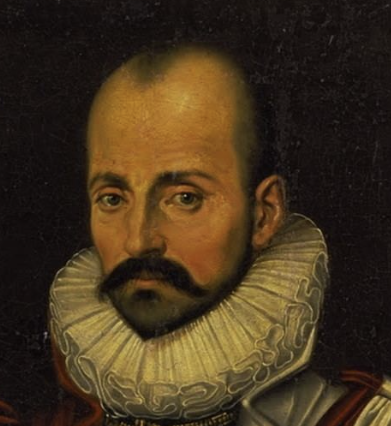
Do not imagine that there is any bird more easily caught by decoy, nor any fish sooner fixed on the hook by wormy bait, than are all these poor fools neatly tricked into servitude by the slightest feather passed, so to speak, before their mouths. Truly it is a marvelous thing that they let themselves be caught so quickly at the slightest tickling of their fancy. Plays, farces, spectacles, gladiators, strange beasts, medals, pictures, and other such opiates, these were for ancient peoples the bait toward slavery, the price of their liberty, the instruments of tyranny. By these practices and enticements the ancient dictators so successfully lulled their subjects under the yoke, that the stupefied peoples, fascinated by the pastimes and vain pleasures flashed before their eyes, learned subservience as naïvely, but not so creditably, as little children learn to read by looking at bright picture books.
▼
Source
source
Part 2

4 months 6 days ago
The natural effort of every individual to better his own condition, when suffered to exert itself with freedom and security is so powerful a principle that it is alone, and without any assistance, not only capable of carrying on the society to wealth and prosperity, but of surmounting a hundred impertinent obstructions with which the folly of human laws too often incumbers its operations; though the effect of these obstructions is always more or less either to encroach upon its freedom, or to diminish its security.
▼
Source
source
Chapter V, paragraph 82.
4 months 3 days ago
The goal to be reached is the mind's insight into what knowing is. Impatience asks for the impossible, wants to reach the goal without the means of getting there. The length of the journey has to be borne with, for every moment is necessary, ... because by nothing less could that all-pervading mind ever manage to become conscious of what itself is - for that reason, the individual mind, in the nature of the case, cannot expect by less toil to grasp what its own substance contains.
▼
Source
source
Preface (J. B. Baillie translation), § 29
3 weeks 5 days ago
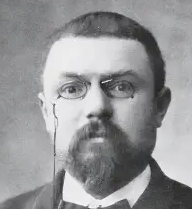
When navigators... determine a longitude... they must... calculate Paris time…with a chronometer set for Paris. The qualitative problem of simultaneity is made to depend upon the quantitative problem of the measurement of time.

4 months 1 week ago
A faithful and good servant is a real godsend; but truly 'tis a rare bird in the land.
▼
Source
source
156
CivilSimian.com created by AxiomaticPanic, CivilSimian, Kalokagathia