

1 week ago
War prosperity is like the prosperity that an earthquake or a plague brings.
▼
Source
source
p 186

3 months 3 weeks ago
Money often costs too much.
▼
Source
source
Wealth

2 months 2 weeks ago
The world of immediate experience-the world in which we find ourselves living-must be comprehended, transformed, even subverted in order to become that which it really is.
▼
Source
source
p. 123
2 months 2 weeks ago
The first revolt is against the supreme tyranny of theology, of the phantom of God. As long as we have a master in heaven, we will be slaves on earth.

3 months 3 weeks ago
Obstinacy is the result of the will forcing itself into the place of the intellect.
▼
Source
source
Vol. 2, Ch. 26, § 321
3 months 3 weeks ago
Make yourself necessary to somebody. Do not make life hard to any.
▼
Source
source
Considerations by the Way
3 months 3 weeks ago
My basis is supported by the authority of the greatest moralist of modern times; for such, undoubtedly, J. J. Rousseau is,-that profound reader of the human heart, who drew his wisdom not from books, but from life, and intended his doctrine not for the professorial chair, but for humanity; he, the foe of all prejudice, the foster-child of nature, whom alone she endowed with the gift of being able to moralise without tediousness, because he hit the truth and stirred the heart.
▼
Source
source
Part III, Ch. VIII, 9, p. 230
2 months 3 weeks ago
The first philosophers were astronomers. The heavens remind man ... that he is destined not merely to act, but also to contemplate.
▼
Source
source
Introduction, Z. Hanfi, trans., in The Fiery Brook (1972), pp. 101-102

3 months 2 weeks ago
As for the square at Meknes, where I used to go every day, it's even simpler: I do not see it at all anymore. All that remains is the vague feeling that it was charming, and these five words that are indivisibly bound together: a charming square at Meknes. ... I don't see anything any more: I can search the past in vain, I can only find these scraps of images and I am not sure what they represent, whether they are memories or just fiction.
▼
Source
source
Diary entry of Friday 3:00pm (9 February?)
1 month 2 weeks ago
Darwin's 'survival of the fittest' is really a special case of a more general law of survival of the stable. The universe is populated by stable things. The universe is populated by stable things. A stable thing is a collection of atoms that is permanent enough or common enough to deserve a name. It may be a unique collection of atoms, such as the Matterhorn, that lasts long enough to be worth naming. Or it may be a class of entities, such as rain drops, that come into existence at a sufficiently high rate to deserve a collective name, even if any one of them is short-lived.
▼
Source
source
Ch. 2. The replicators
3 months 1 week ago
I will begin to speak when I am not going to say what were better left unsaid.
▼
Source
source
Quoted by Plutarch, Life of Cato the Younger, 4 Bernadotte Perrin, ed. Plutarch's Lives, Vol. 8, LCL 100 (1919), pp. 247, 361

3 months 3 weeks ago
The Ideal Man of the eighteenth century was the Rationalist; of the seventeenth, the Christian Stoic; of the Renaissance, the Free Individual; of the Middle Ages, the Contemplative Saint. And what is our Ideal Man? On what grand and luminous mythological figure does contemporary humanity attempt to model itself? The question is embarrassing. Nobody knows. And, in spite of all the laudable efforts of the Institute for Intellectual Co-operation to fabricate an acceptable Ideal Man for the use of Ministers of Education, nobody, I suspect, will know until such time as a major poet appears upon the scene with the unmistakable revelation. Meanwhile, one must be content to go on piping up for reason and realism and a certain decency.
▼
Source
source
p. 5

1 week 5 days ago
Alas, our noble men of genius, Heaven's real messengers to us, they also rendered nearly futile by the wasteful time;-preappointed they everywhere, and assiduously trained by all their pedagogues and monitors, to "rise in Parliament," to compose orations, write books, or in short speak words, for the approval of reviewers; instead of doing real kingly work to be approved of by the gods!

3 months 2 weeks ago
... the attempt to make heaven on earth invariably produces hell. It leads to intolerance. It leads to religious wars, and to the saving of souls through the inquisition. And it is, I believe, based on a complete misunderstanding of our moral duties. It is our duty to help those who need help; but it cannot be our duty to make others happy, since this does not depend on us, and since it would only too often mean intruding on the privacy of those towards whom we have such amiable intentions.
▼
Source
source
Vol. 2, Ch. 24 "Oracular Philosophy and the Revolt against Reason"
4 months 1 week ago
On the whole, a man who denies the existence of the effects arranged according to the causes in the question of arts, or whose wisdom cannot understand it, then he has no knowledge of the art of its Maker.
1 week ago
Do I write out of love to men? No, I write because I want to procure for my thoughts an existence in the world; and, even if I foresaw that these thoughts would deprive you of your rest and your peace, even if I saw the bloodiest wars and the fall of many generations springing up from this seed of thought - I would nevertheless scatter it. Do with it what you will and can, that is your affair and does not trouble me.
▼
Source
source
Cambridge 1995, p. 262, 263


1 week 5 days ago
But I liken common languid Times, with their unbelief, distress, perplexity, with their languid doubting characters and embarrassed circumstances, impotently crumbling down into ever worse distress towards final ruin;-all this I liken to dry dead fuel, waiting for the lightning out of Heaven that shall kindle it. The great man, with his free force direct out of God's own hand, is the lightning. His word is the wise healing word which all can believe in. All blazes round him now, when he has once struck on it, into fire like his own.
2 months 2 weeks ago
Not wise does it seem to attempt comprehending and understanding a Human World without full perfected Humanity. No talent must sleep; and if all are not alike active, all must be alert, and not oppressed and enervated. As we see a future Painter in the boy who fills every wall with sketches and variedly adds colour to figure; so we see a future Philosopher in him who restlessly traces and questions all natural things, pays heed to all, brings together whatever is remarkable, and rejoices when he has become master and possessor of a new phenomenon, of a new power and piece of knowledge.

3 months 3 weeks ago
Define your terms, you will permit me again to say, or we shall never understand one another.
▼
Source
source
"Miracles", 1764
3 months 3 weeks ago
Whoso walketh in solitude, And inhabiteth the wood, Choosing light, wave, rock, and bird, Before the money-loving herd, Into that forester shall pass From these companions power and grace.
▼
Source
source
Wood-notes, no. II, st. 4
3 months 2 weeks ago
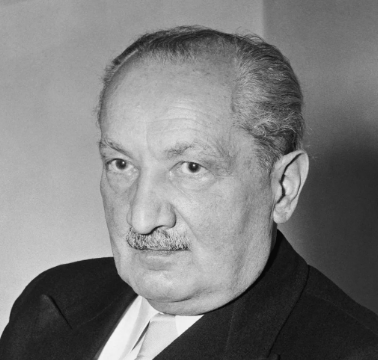
Form displays the relation itself as the state of original comportment toward beings, the festive state in which the being itself in its essence is celebrated and thus for the first time placed in the open.
▼
Source
source
p. 119
2 months 1 week ago
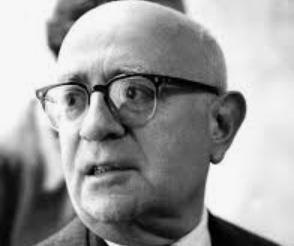
Philosophy ... must not bargain away anything of the emphatic concept of truth.
▼
Source
source
p. 7
1 month ago
Like literature, philosophy is not distinguished from other subjects by a specific approach to a subject-matter independent of it. Chemistry deals with chemicals, biology with life and astronomy with very large, very distant objects. Philosophy can boast no such definite subject-matter.
▼
Source
source
Chapter 4, Philosophy As Writing: The Case Of Hegel, p. 69
2 months 3 days ago
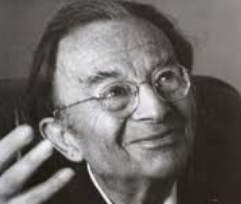
The quest for certainty blocks the search for meaning. Uncertainty is the very condition to impel man to unfold his powers.
▼
Source
source
Ch. 3
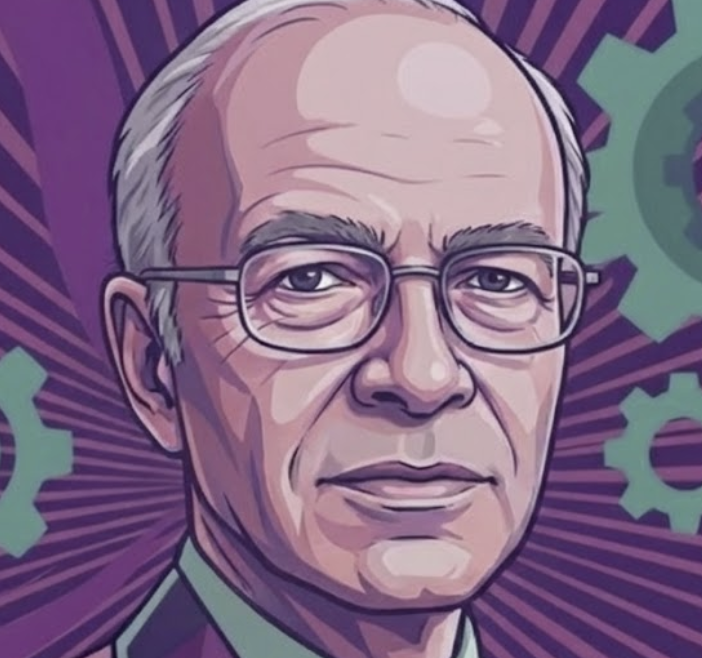
3 months 1 week ago
At one level, this movement on behalf of oppressed farm animals is emotional...Yet the movement is also the product of a deep intellectual ferment pioneered by the Princeton scholar Peter Singer...This idea popularized by Professor Singer - that we have ethical obligations that transcend our species - is one whose time appears to have come...What we're seeing now is an interesting moral moment: a grass-roots effort by members of one species to promote the welfare of others...animal rights are now firmly on the mainstream ethical agenda.
▼
Source
source
Nicholas Kristof, "Humanity Even for Nonhumans," in The New York Times (8 April 2009).
1 week 5 days ago
Do nothing, only keep agitating, debating; and things will destroy themselves.
▼
Source
source
Pt. I, Bk. VI, ch. 3.
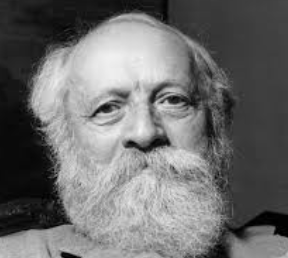
2 months 1 week ago
Life, in that it is life, necessarily entails justice.
▼
Source
source
"Politics and Morality" in Be'ayot (April 1945), as published in A Land of Two Peoples : Martin Buber on Jews and Arabs (1983) edited by Paul Mendes-Flohr, p. 169

3 months 3 weeks ago
As there were black swans, though civilized people had existed for three thousand years on the earth without meeting with them...The uniform experience, therefore, of the inhabitants of the known world, agreeing in a common result, without one known instance of deviation from that result, is not always sufficient to establish a general conclusion.
1 month 2 weeks ago
When reason rules, money is a blessing.
▼
Source
source
Maxim 50
3 months 3 weeks ago
The application of algebra to geometry... far more than any of his metaphysical speculations, has immortalized the name of Descartes, and constitutes the greatest single step ever made in the progress of the exact sciences.
▼
Source
source
An Examination of Sir William Hamilton's Philosophy (1865) as quoted in 5th ed. (1878) p. 617.

2 months 2 weeks ago
Thou shalt love the Lord thy God with all thy heart, and with all thy soul, and with all thy mind. This is the first and great commandment. And the second is like unto it, Thou shalt love thy neighbour as thyself. On these two commandments hang all the law and the prophets.
▼
Source
source
22:37-40 (KJV)

3 months 3 weeks ago
I dislike Communism because it is undemocratic, and capitalism because it favors exploitation.
▼
Source
source
Unarmed Victory (1963), p. 14

6 days ago
Whatever can happen at any time can happen today.

1 month 2 weeks ago
The unformulated message of an assembly of news items from every quarter of the globe is that the world today is one city. All war is civil war. All suffering is our own.
▼
Source
source
p. 291
6 days ago
Unrighteous fortune seldom spares the highest worth; no one with safety can long front so frequent perils. Whom calamity oft passes by she finds at last.
▼
Source
source
lines 325-328; (Megara).

2 months 4 days ago
This is the Outsider's extremity. He does not prefer not to believe; he doesn't like feeling that futility gets the last word in the universe; his human nature would like to find something it can answer to with complete assent. But honesty prevents his accepting a solution that he cannot reason about.
▼
Source
source
Chapter Five, The Pain Threshold

3 months 3 weeks ago
It is from the Bible that man has learned cruelty, rapine, and murder; for the belief of a cruel God makes a cruel man.
▼
Source
source
A Letter: Being an Answer to a Friend, on the publication of The Age of Reason" (12 May 1797), published in an 1852 edition of The Age of Reason, p. 205
3 months 3 weeks ago
A testimony is sufficient when it rests on: 1st. A great number of very sensible witnesses who agree in having seen well. 2d. Who are sane, bodily and mentally. 3d. Who are impartial and disinterested. 4th. Who unanimously agree. 5th. Who solemnly certify to the fact.
▼
Source
source
As quoted by H. P. Blavatsky in Isis Unveiled, Vol. I, p. 108, 1877
1 month 3 weeks ago
One might expect that a consideration of grievability pertains only to those who are dead, but my contention is that grievability is already operative in life, and that it is a characteristic attributed to living creatures, marking their value within a differential scheme of values and bearing directly on the question of whether or not they are treated equally and in a just way. To be grievable is to be interpellated in such a way that you know your life matters; that the loss of your life would matter; that your body is treated as one that should be able to live and thrive, whose precarity should be minimized, for which provisions for flourishing should be available. The presumption of equal grievability would be not only a conviction or attitude with which another person greets you, but a principle that organizes the social organization of health, food, shelter, employment, sexual life, and civic life.
▼
Source
source
p. 59

3 months 2 weeks ago
The more you obey your conscience, the more your conscience will demand of you.
▼
Source
source
Book IV, Chapter 8, "Is Christianity Hard or Easy?"
3 months 3 weeks ago
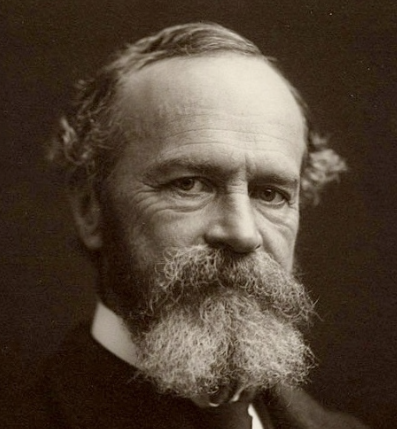
Now in all of us, however constituted, but to a degree the greater in proportion as we are intense and sensitive and subject to diversified temptations, and to the greatest possible degree if we are decidedly psychopathic, does the normal evolution of character chiefly consist in the straightening out and unifying of the inner self. The higher and the lower feelings, the useful and the erring impulses, begin by being a comparative chaos within us - they must end by forming a stable system of functions in right subordination. Unhappiness is apt to characterize the period of order-making and struggle.
▼
Source
source
Lecture VIII, "The Divided Self, and the Process of its Unification"
1 week 5 days ago
History is the essence of innumerable biographies.
▼
Source
source
On History.
2 months 2 weeks ago
The will is a unity of two different aspects or moments: first, the individual's ability to abstract from every specific condition and, by negating it, to return to the absolute liberty of the pure ego; secondly, the individual's act of freely adopting a concrete condition, freely affirming his existence as a particular, limited ego.
▼
Source
source
P. 185
1 month 3 weeks ago
Violence as a tool is already operating in the world before anyone takes it up: that fact alone neither justifies nor discounts the use of the tool. What seems most important, however, is that the tool is already part of a practice, presupposing a world conducive to its use; that the use of the tool builds or rebuilds a specific kind of world, activating a sedimented legacy of use. When any of us commit acts of violence, we are, in and through those acts, building a more violent world.
▼
Source
source
p. 19

2 months 3 weeks ago
Muhammad brought down from heaven and put into the Koran not religious doctrines only, but political maxims, criminal and civil laws, and scientific theories. The Gospels, on the other hand, deal only with the general relations between man and God and between man and man. Beyond that, they teach nothing and do not oblige people to believe anything. That alone, among a thousand reasons, is enough to show that Islam will not be able to hold its power long in ages of enlightenment and democracy, while Christianity is destined to reign in such ages, as in all others.
▼
Source
source
Book One, Chapter V.
1 month 2 weeks ago
Environments are invisible. Their groundrules, pervasive structure, and overall patterns elude easy perception.
1 month 2 weeks ago
The TV generation is postliterate and retribalized. It seeks by violence to scrub the old private image and to merge in a new tribal identity, like any corporate executive.
▼
Source
source
(p. 201)

2 months 5 days ago
Intelligence is quickness to apprehend as distinct from ability, which is capacity to act wisely on the thing apprehended.
▼
Source
source
p. 135; Ch. 17, December 15, 1939.
3 months 2 weeks ago
Catherine: Why commit Evil? Goetz: Because Good has already been done. Catherine: Who has done it? Goetz: God the Father. I, on the other hand, am improvising.
▼
Source
source
Act 3, sc. 4
CivilSimian.com created by AxiomaticPanic, CivilSimian, Kalokagathia