


3 months 3 weeks ago
Pragmatism, on the other hand, asks its usual question. "Grant an idea or belief to be true," it says, "what concrete difference will its being true make in anyone's actual life? How will the truth be realized? What experiences will be different from those which would obtain if the belief were false? What, in short, is the truth's cash-value in experiential terms?"
▼
Source
source
Lecture VI, Pragmatism's Conception of Truth

3 months 3 weeks ago
There is much pleasure to be gained from useless knowledge.
▼
Source
source
Ch. 2: 'Useless' Knowledge
4 months ago
It would be an unsound fancy and self-contradictory to expect that things which have never yet been done can be done except by means which have never yet been tried.
▼
Source
source
Aphorism 6
2 months 3 weeks ago
The romantic poetry is a progressive universal poetry.
▼
Source
source
Progressive Universalpoesie (1798)

2 months 1 week ago
The first thing that we know about ourselves is our imperfection.

3 months 3 weeks ago
If a man own land, the land owns him.
▼
Source
source
Wealth

6 days ago
These actions are not essentially difficult; it is we ourselves that are soft and flabby.
1 month 3 weeks ago
The ascription of an unconscious intentional phenomenon to a system implies that the phenomenon is in principle accessible to consciousness. A statement of the author's "connection principle."
▼
Source
source
"Consciousness, Explanatory Inversion, and Cognitive Science," The Behavioral and Brain Sciences 13, 4 (December 1990): 585-696.
1 month 4 days ago
Compared with the life-span of a human being the time-span of a civilization is so vast that a human observer cannot hope to take the measure of its curve unless he is in a position to view it in a distant perspective; and he can only obtain this perspective vis-a-vis some society that is extinct. He can never stand back sufficiently far from the history of the society in which he himself lives and moves and has his being. In other words, to assert of any living society, at any moment in its life, that it is the consummation of human history is to hazard a guess which is intrinsically unsusceptible of immediate verification. When we find that a majority of the members of all societies at all times make this assertion about their own civilizations, it becomes evident that their guesses have really nothing to do with any objective calculation of probabilities but are pure expressions of the egocentric illusion.
▼
Source
source
Vol. 1
1 month 2 weeks ago
When two do the same thing, it is not the same thing after all.
▼
Source
source
Maxim 338
3 months 3 weeks ago
Why? Surely they can find other men. Russell's reply when asked "if it wasn't unkind of him to love and leave so many women";
▼
Source
source
as quoted in My Father - Bertrand Russell (1975) by Katharine Tait, p. 106

3 months 2 weeks ago
...no matter how many instances of white swans we may have observed, this does not justify the conclusion that all swans are white.
▼
Source
source
Ch. 1 "A Survey of Some Fundamental Problems", Section 1: The Problem of Induction, p. 4.
3 months 3 weeks ago
The method of the science not being practiced much nowadays, except what logic prescribes to all sciences generally, that fitted for the peculiar nature of metaphysics being simply ignored, it is no wonder that those who everlastingly turn the Sisyphean stone of this inquiry do not seem so far to have made much progress. Though here I neither can nor will expatiate upon so important and extensive a subject, I shall briefly shadow forth what constitutes no despicable part of this method, namely, the infection between sensuous and intellectual cognition, not only as creeping in on those incautious in the application of principles, but even producing spurious principles under the appearance of axioms.
1 month 2 weeks ago
There is a sort of dead-alive, hackneyed people about, who are scarcely conscious of living except in the exercise of some conventional occupation. ... They have no curiosity; they cannot give themselves over to random provocations; they do not take pleasure in the exercise of their faculties for its own sake; and unless necessity lays about them with a stick, they will even stand still. It is no good speaking to such folk: they cannot be idle, their nature is not generous enough; and they pass those hours in a sort of coma, which are not dedicated to furious moiling in the gold-mill.
▼
Source
source
An Apology for Idlers.
3 months 3 weeks ago
Either Man will abolish war, or war will abolish Man.
▼
Source
source
Fact and Fiction (1961), Part IV, Ch. 10: "Can War Be Abolished?", p. 276
2 months 6 days ago
A race preserves its vigour so long as it harbours a real contrast between what has been and what may be, and so long as it is nerved by the vigour to adventure beyond the safeties of the past. Without adventure, civilization is in full decay.
▼
Source
source
p. 360.

2 months 1 week ago
The basic word I-Thou can be spoken only with one's whole being. The concentration and fusion into a whole being can never be accomplished by me, can never be accomplished without me. I require a Thou to become; becoming I, I say Thou.

1 month 3 weeks ago
When the Indians complain that the English have enslaved them it is as if drunkards complained that the spirit-dealers who have settled among them have enslaved them. You tell them that they might give up drinking, but they reply that they are so accustomed to it that they cannot abstain, and that they must have alcohol to keep up their energy. Is it not the same thing with the millions of people who submit to thousands or even to hundreds, of others - of their own or other nations? If the people of India are enslaved by violence it is only because they themselves live and have lived by violence, and do not recognize the eternal law of love inherent in humanity.
▼
Source
source
V
2 months 3 weeks ago
The recognition of the light of reality within the darkness of abstraction is a contradiction - both the affirmation and the negation of the real at one and the same time. The new philosophy, which thinks the concrete not in an abstract but a concrete way, which acknowledges the real in its reality - that is, in a way corresponding to the being of the real as true, which elevates it into the principle and object of philosophy - is consequently the truth of the Hegelian philosophy, indeed of modern philosophy as a whole.
▼
Source
source
Part III, Section 31
6 days ago
To animals not only human virtues but even human vices are forbidden: their whole constitution, mental and bodily, is unlike that of human beings...they possess intellect, the greatest attribute of all, but in a rough and inexact condition. It is, consequently, able to grasp those visions and semblances which rouse it to action, but only in a cloudy and indistinct fashion. Their impulses and outbreaks are violent, and that they do not feel fear, anxieties, grief, or anger, but some semblances of these feelings: wherefore they quickly drop them and adopt the converse of them: they graze after showing the most vehement rage and terror, and after frantic bellowing and plunging they straightaway sink into quiet sleep.
1 month 3 weeks ago
Ivan Ilych's life had been most simple and most ordinary and therefore most terrible.
▼
Source
source
Ch. II

4 months 3 weeks ago
Magister Adler was deeply moved by something higher, but now when he wants to express his thoughts in words, wants to communicate, he confuses the subjective with the objective, his altered subjective state with an external event, the dawning of a light upon him with the coming into existence of something new outside him, the falling of the veil from his eyes with his having had a revelation. Subjectively his emotion is carried to the extreme; he wants to select the most powerful expression to describe it and by means of a mental deception grasps the objective qualification: having had a revelation.

3 months 4 weeks ago
There is as much difference between us and ourselves as between us and others.
▼
Source
source
Ch. 1. Of the Inconstancy of Our Actions, tr. Cotton, rev. W. Carew Hazlitt, 1877
2 months 4 days ago
Rituals are also symbolic practices... in the sense that they bring people together to create an alliance, a wholeness, a community.

3 months 3 weeks ago
Define your terms, you will permit me again to say, or we shall never understand one another.
▼
Source
source
"Miracles", 1764

3 months 3 weeks ago
Here then we may learn the fallacy of the remark... that any particular state is weak, though fertile, populous, and well cultivated, merely because it wants money. It appears that the want of money can never injure any state within itself: For men and commodities are the real strength of any community. It is the simple manner of living which here hurts the public, by confining the gold and silver to few hands, and preventing its universal diffusion and circulation. On the contrary, industry and refinements of all kinds incorporate it with the whole state, however small its quantity may be: They digest it into every vein, so to speak; and make it enter into every transaction and contract.
▼
Source
source
Of Money (1752) as quoted in David Hume: Writings on Economics (1955, 1970) ed., Eugene Rotwein, p. 45.

3 months 3 weeks ago
This miracle of analysis, this marvel of the world of ideas, an almost amphibian object between Being and Non-being that we call the imaginary number.
▼
Source
source
Quoted in Singularités : individus et relations dans le système de Leibniz (2003) by Christiane Frémont

2 months 2 weeks ago
What renders man an imaginative and moral being is that in society he gives new aims to his life which could not have existed in solitude: the aims of friendship, religion, science, and art.
▼
Source
source
Ch. V: Democracy
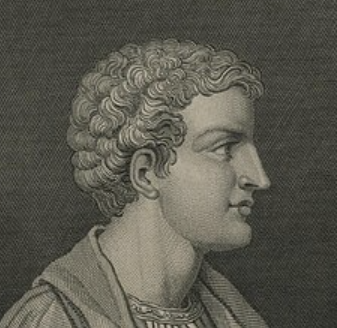
3 months 1 week ago
Tomorrow we will be back on the vast ocean.
▼
Source
source
The Routledge Dictionary of Latin Quotations: The Illiterati's Guide to Latin Maxims, Mottoes, Proverbs and Sayings
2 months 1 week ago
The real struggle is not between East and West, or capitalism and communism, but between education and propaganda.
▼
Source
source
As quoted in Encounter with Martin Buber (1972) by Aubrey Hodes, p. 135
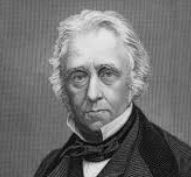
1 month 1 week ago
It is our deliberate opinion that the French Revolution, in spite of all its crimes and follies, was a great blessing to mankind.
▼
Source
source
'Sir James Mackintosh', The Edinburgh Review (July 1835), quoted in T. B. Macaulay, Critical and Historical Essays Contributed to The Edinburgh Review, Vol. II (1843), p. 215
3 months 3 weeks ago
The collective name for the ripe fruits of religion in a character is Saintliness. The saintly character is the character for which spiritual emotions are the habitual centre of the personal energy; and there is a certain composite photograph of universal saintliness, the same in all religions, of which the features can easily be traced.
▼
Source
source
Lectures XI, XII, AND XIII : "Saintliness"

1 week 5 days ago
Men, I say, never did believe idle songs, never risked their soul's life on allegories: men in all times, especially in early earnest times, have had an instinct for detecting quacks, for detesting quacks.
3 months 3 weeks ago
If the Russians still adhered to the Greek Orthodox religion, if they had instituted parliamentary government, and if they had a completely free press which daily vituperated us, then - provided they still had armed forces as powerful as they have now - we should still hate them if they gave us ground for thinking them hostile.

3 months 2 weeks ago
"No, no no," she said. "You don't understand. Not that kind of longing. It was when I was happiest that I longed most. It was on happy days when we were up there on the hills, the three of us, with the wind and the sunshine ... where you couldn't see Glome or the palace. Do you remember? The colour and the smell, and looking at the Grey Mountain in the distance? And because it was so beautiful, it set me longing, always longing. Somewhere else there must be more of it. Everything seemed to be saying, Psyche come! But I couldn't (not yet) come and I didn't know where I was to come to. It almost hurt me. I felt like a bird in a cage when the other birds of its kind are flying home."
▼
Source
source
Psyche
6 days ago
Would you not think him an utter fool who wept because he was not alive a thousand years ago? And is he not just as much of a fool who weeps because he will not be alive a thousand years from now? It is all the same; you will not be, and you were not. Neither of these periods of time belongs to you.
4 months 3 weeks ago
Dogmatics must be designed in this way. Above all, every science must vigorously lay hold of its own beginning and not live in complicated relations with other sciences. If dogmatics begins by wanting to explain sinfulness or by wanting to prove its actuality, no dogmatics will come out of it, but the entire existence of dogmatics will become problematic and vague.
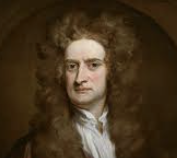
1 month 3 weeks ago
To explain all nature is too difficult a task for any one man or even for any one age. 'Tis much better to do a little with certainty, & leave the rest for others that come after you, than to explain all things by conjecture without making sure of any thing.
▼
Source
source
Statement from unpublished notes for the Preface to Opticks (1704) quoted in Never at Rest: A Biography of Isaac Newton (1983) by Richard S. Westfall, p. 643
4 months 4 days ago
All who say the same things do not possess them in the same manner; and hence the incomparable author of the Art of Conversation pauses with so much care to make it understood that we must not judge of the capacity of a man by the excellence of a happy remark that we heard him make. ...let us penetrate, says he, the mind from which it proceeds... it will oftenest be seen that he will be made to disavow it on the spot, and will be drawn very far from this better thought in which he does not believe, to plunge himself into another, quite base and ridiculous.
▼
Source
source
Montaigne, Essais, liv. III, chap. viii.-Faugère
6 days ago
There is no sorrow in the world, when we have escaped from the fear of death.
3 months 3 weeks ago
There will always be some people who think for themselves, even among the self-appointed guardians of the great mass who, after having thrown off the yoke of immaturity themselves, will spread about them the spirit of a reasonable estimate of their own value and of the need for every man to think for himself.

3 months 2 weeks ago
Fascism is not defined by the number of its victims, but by the way it kills them.
▼
Source
source
On the Execution of Julius and Ethel Rosenberg, Libération
1 month 3 weeks ago
There is no aphrodisiac like innocence.
▼
Source
source
Chapter 5
2 months 6 days ago
He has been named respectively, Jehovah, Allah, Brahma, Father in Heaven, Order of Heaven, First Cause, Supreme Being, Chance. Each name corresponds to a system of thought derived from the experiences of those who have used it.Among medieval and modern philosophers, anxious to establish the religious significance of God, an unfortunate habit has prevailed of paying Him metaphysical compliments. He has been conceived as the foundation of the metaphysical situation with its ultimate activity. If this conception be adhered to, there can be no alternative except to discern in Him the origin of all evil as well as of all good. He is then the supreme author of the play, and to Him must therefore be ascribed its shortcomings as well as its success.
▼
Source
source
Ch. 11: "God", pp. 250-251
2 months 5 days ago
If the passion for truthfulness is merely controlled and stilled without being satisfied, it will kill the activities it is supposed to support. This may be one of the reasons why, at the present time, the study of the humanities runs a risk of sliding from professional seriousness, through professionalization, to a finally disenchanted careerism.
▼
Source
source
p. 3

3 months 3 weeks ago
Happiness is not achieved by the conscious pursuit of happiness; it is generally the by-product of other activities.
▼
Source
source
Essay "Religion and Time" in Vedanta for the Western World (1945) edited by Christopher Isherwood
3 months 3 weeks ago
Every hero becomes a bore at last.
▼
Source
source
Uses of Great Men
CivilSimian.com created by AxiomaticPanic, CivilSimian, Kalokagathia