


2 weeks 2 days ago
To rule the imperial population, behold our vocation.
▼
Source
source
94
1 month 2 weeks ago
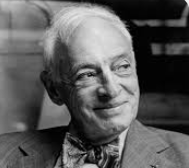
We mustn't forget how quickly the visions of genius become the canned goods of intellectuals.
▼
Source
source
Herzog (1964) [Penguin Classics, 2003, ISBN 0-142-43729-8], p. 82

3 months 3 weeks ago
Divorce is probably of nearly the same age as marriage. I believe, however, that marriage is some weeks the more ancient.
▼
Source
source
"Divorce", 1771

3 months 4 weeks ago
A penny saved is of more value than a penny paid out.
▼
Source
source
What Luther Says, Section on "Life, Human," No. 2438. Rules for a Thrifty Life. 2, p. 784

2 months 3 weeks ago
Men that look no further than their outsides, think health an appurtenance unto life, and quarrel with their constitutions for being sick; but I that have examined the parts of man, and know upon what tender filaments that fabric hangs, do wonder that we are not always so; and considering the thousand doors that lead to death, do thank my God that we can die but once.
▼
Source
source
Section 44 Compare: "I know death hath ten thousand several doors / For men to take their exits.", John Webster, Duchess of Malfi (1623); Act IV, scene ii.
3 months 3 weeks ago
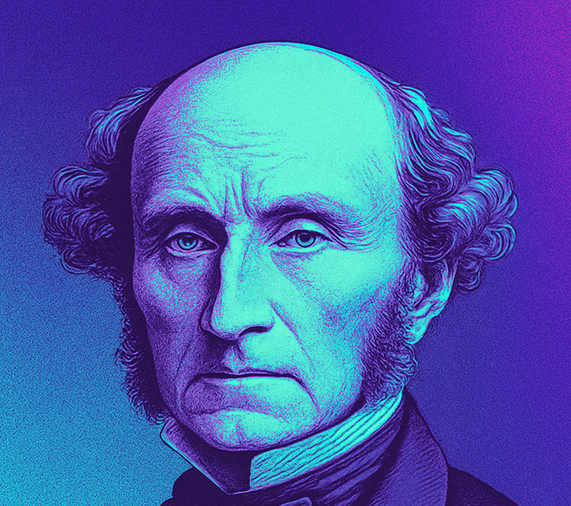
Human beings have faculties more elevated than the animal appetites, and when once made conscious of them, do not regard anything as happiness which does not include their gratification. I do not, indeed, consider the Epicureans to have been by any means faultless in drawing out their scheme of consequences from the utilitarian principle. To do this in any sufficient manner, many Stoic, as well as Christian elements require to be included. But there is no known Epicurean theory of life which does not assign to the pleasures of the intellect, of the feelings and imagination, and of the moral sentiments, a much higher value as pleasures than to those of mere sensation.
▼
Source
source
Ch. 2

2 months 2 weeks ago
Suicide is a sudden accomplishment, a lightning-like deliverance: it is nirvana by violence.
2 months 2 weeks ago
Only those are happy who never think or, rather, who only think about life's bare necessities, and to think about such things means not to think at all. True thinking resembles a demon who muddies the spring of life or a sickness which corrupts its roots. To think all the time, to raise questions, to doubt your own destiny, to feel the weariness of living, to be worn out to the point of exhaustion by thoughts and life, to leave behind you, as symbols of your life's drama, a trail of smoke and blood - all this means you are so unhappy that reflection and thinking appear as a curse causing a violent revulsion in you.
4 months 4 days ago
God is surrounded with people full of love who demand of him the benefits of love which are in his power: thus he is properly the king of love.
2 months 2 weeks ago
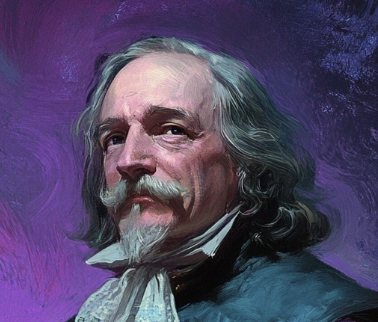
The RIGHT OF NATURE, which Writers commonly call Jus Naturale, is the Liberty each man hath, to use his own power, as he will himself, for the preservation of his own Nature; that is to say, of his own Life; and consequently, of doing any thing, which in his own Judgement, and Reason, he shall conceive to be the aptest means thereunto.
▼
Source
source
The First Part, Chapter 14, p. 64
4 months 1 week ago
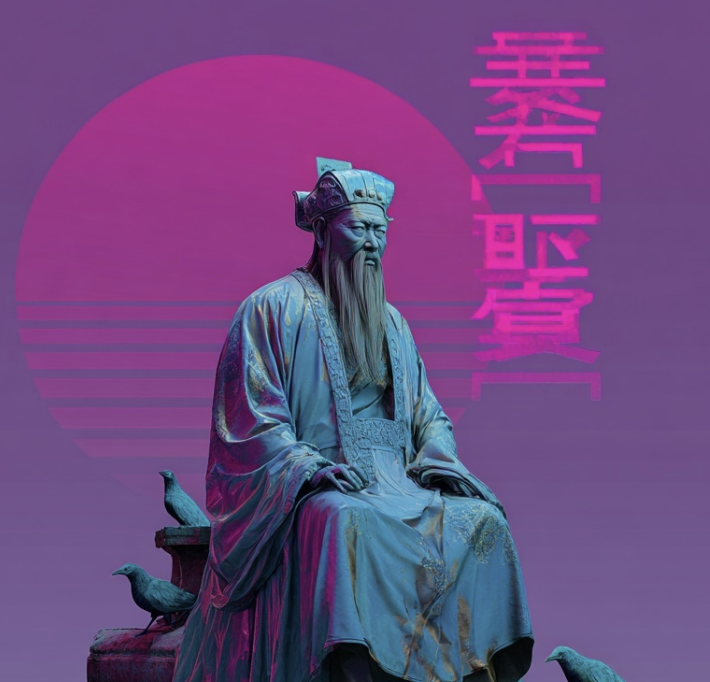
When I walk along with two others, they may serve me as my teachers. I will select their good qualities and follow them, their bad qualities and avoid them.
2 months 2 weeks ago
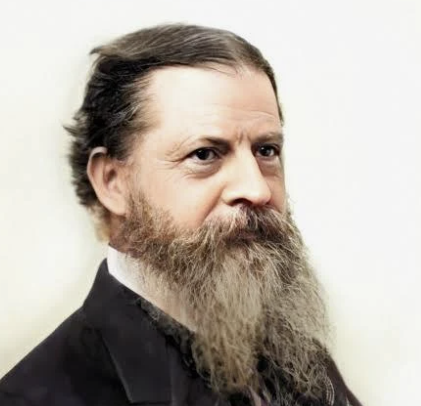
The first character of a general idea so resulting is that it is living feeling. A continuum of this feeling, infinitesimal in duration, but still embracing innumerable parts, and also, though infinitesimal, entirely unlimited, is immediately present. And in its absence of boundedness a vague possibility of more than is present is directly felt.


3 months 2 weeks ago
All human activities are equivalent ... and ... all are on principle doomed to failure.
▼
Source
source
Conclusion, II

3 months 2 weeks ago
Where we find a difficulty we may always expect that a discovery awaits us. Where there is cover we hope for game.
▼
Source
source
Reflections on the Psalms (1958), ch. III: Cursings

3 months 3 days ago
The soul of man is divided into three parts, intelligence, reason, and passion. Intelligence and passion are possessed by other animals, but reason by man alone.
▼
Source
source
As reported by Alexander Polyhistor, and Diogenes Laërtius in Lives and Opinions of Eminent Philosophers, "Pythagoras", Sect. 30, in the translation of C. D. Yonge
1 month 2 weeks ago
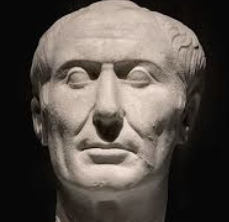
Success makes some crimes honorable.
▼
Source
source
Maxim 326

3 months 3 weeks ago
Hast thou named all the birds without a gun; Loved the wood-rose, and left it on its stalk.
▼
Source
source
Forbearance
3 months 2 weeks ago
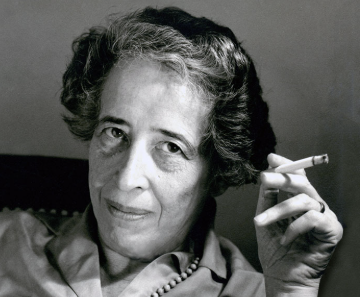
Real power begins where secrecy begins.
▼
Source
source
Part 3, Ch. 12, § 1
1 month 3 weeks ago
I have wanted to give Iraq a lesson in democracy - because we're experienced with it, you know. And, in democracy, after a hundred years, you have to let your slaves go. And, after a hundred and fifty years, you have to let your women vote. And, at the beginning of democracy, is that quite a bit of genocide and ethnic cleansing is quite okay. And that's what's going on now.
▼
Source
source
Interviewed by Jon Stewart on The Daily Show
2 months 2 weeks ago
The dynamic principle of fantasy is play, a characteristic also of the child, and as such it appears inconsistent with the principle of serious work. But without this playing with fantasy no creative work has ever yet come to birth. The debt we owe to the play of imagination is incalculable. It is therefore short-sighted to treat fantasy, on account of its risky or unacceptable nature, as a thing of little worth.
▼
Source
source
Ch. 1, p. 82

2 months 1 week ago
It is impossible to feel equal respect for things that are in fact unequal unless the respect is given to something that is identical in all of them. Men are unequal in all their relations with the things of this world, without exception. The only thing that is identical in all men is the presence of a link with the reality outside the world. All human beings are absolutely identical in so far as they can be thought of as consisting of a centre, which is an unquenchable desire for good, surrounded by an accretion of psychical and bodily matter.

4 months 1 week ago
Therefore let every Christian, yea, let the whole body of Christ everywhere cry out, despite the tribulations it endures, despite temptations and countless scandals, saying: "Preserve my soul, for I am holy; save Thy servant, O my God, that trusteth in thee" (Ps. 85:2) No, this holy one is not proud, for he trusts in God.
▼
Source
source
p.429
3 months 3 weeks ago
The writers by whom, more than by any others, a new mode of political thinking was brought home to me, were those of the St. Simonian school in France. In 1829 and 1830 I became acquainted with some of their writings. They were then only in the earlier stages of their speculations. They had not yet dressed out their philosophy as a religion, nor had they organized their scheme of Socialism. They were just beginning to question the principle of hereditary property. I was by no means prepared to go with them even this length; but I was greatly struck with the connected view which they for the first time presented to me, of the natural order of human progress; and especially with their division of all history into organic periods and critical periods.
▼
Source
source
(p. 163)

3 months 3 weeks ago
Without effort and change, human life cannot remain good. It is not a finished Utopia that we ought to desire, but a world where imagination and hope are alive and active.

3 months 2 weeks ago
There is no spiritual sustenance in flat equality. It is a dim recognition of this fact which makes much of our political propaganda sound so thin. We are trying to be enraptured by something which is merely the negative condition of the good life. That is why the imagination of people is so easily captured by appeals to the craving for inequality, whether in a romantic form of films about loyal courtiers or in the brutal form of Nazi ideology. The tempter always works on some real weakness in our own system of values - offers food to some need which we have starved.

2 months 1 week ago
It has often been said that every man who has suffered misfortunes prefers to be himself, even with his misfortunes, rather than to be someone else without them. For unfortunate men, when they preserve their normality in their misfortune - that is to say, when they endeavor to persist in their own being - prefer misfortune to non-existence. For myself I can say that when a as a youth, and even as a child, I remained unmoved when shown the most moving pictures of hell, for even then nothing appeared to me quite so horrible as nothingness itself. It was a furious hunger of being that possessed me, an appetite for divinity, as one of our ascetics [San Juan de los Angeles] has put it.
4 months 3 weeks ago
The single harmony produced by all the heavenly bodies singing and dancing together springs from one source and ends by achieving one purpose, and has rightly bestowed the name not of "disordered" but of "ordered universe" upon the whole.
3 months 2 weeks ago
If there is equality, it is in His love, not in us.
2 months 2 weeks ago
If now I...say "Stealing money is wrong," I produce a sentence which has no factual meaning - that is, expresses no proposition which can be either true or false. It is as if I had written "Stealing money!!" - where the shape and thickness of the exclamation marks show, by a suitable convention, that a special sort of moral disapproval is the feeling which is being expressed.
▼
Source
source
p. 107.

3 months 4 weeks ago
The most manifest sign of wisdom is a continual cheerfulness; her state is like that in the regions above the moon, always clear and serene.
▼
Source
source
Book I, Ch. 26

6 days ago
Why does God afflict the best of men with ill-health, or sorrow, or other troubles? Because in the army the most hazardous services are assigned to the bravest soldiers: a general sends his choicest troops to attack the enemy in a midnight ambuscade, to reconnoitre his line of march, or to drive the hostile garrisons from their strong places. No one of these men says as he begins his march, " The general has dealt hardly with me," but "He has judged well of me."
▼
Source
source
De Providentia (On Providence), 4.8, translated by Aubrey Stewart
2 months 1 week ago
Morally, it is wrong to suppose the source of evil is outside oneself, that one is a vessel of holiness running over with virtue. Such a disposition is the best soil for a hateful and cruel fanaticism. It is as wrong to impute every wickedness to Jews, Freemasons, "intellectuals," as it is to blame all crimes on the bourgeoisie, the nobility, and the powers that were. No; the root of evil is in me as well, and I must take my share of the responsibility and the blame. That was true before the revolution and it is true still.
▼
Source
source
p. 128
6 days ago
Let every man be occupied, and occupied in the highest employment of which his nature is capable, and die with the consciousness that he has done his best.
▼
Source
source
Vol. I, ch. 6, "Of Occupation", p. 178
3 months 2 weeks ago
...in order to change poverty into wealth, one must start by displaying it.
▼
Source
source
p. 420
2 weeks ago
A modern philosopher who has never once suspected himself of being a charlatan must be such a shallow mind that his work is probably not worth reading.
▼
Source
source
Metaphysical Horror
3 months 4 weeks ago
To say that the cross emblazoned with the papal coat of arms, and set up by the indulgence preachers, is equal in worth to the cross of Christ is blasphemy.
▼
Source
source
Thesis 79

4 months 1 week ago
The texts about the future life fall into, since demonstrative scholars do not agree whether to take them in their apparent meaning or interpret them allegorically. Either is permissible. But it is inexcusable to deny the fact of a future life altogether.
3 months 3 weeks ago
The State is a collection of officials, different for difference purposes, drawing comfortable incomes so long as the status quo is preserved. The only alteration they are likely to desire in the status quo is an increase of bureaucracy and the power of bureaucrats.
▼
Source
source
Ch. 12: Free Thought and Official Propaganda

4 months 2 weeks ago
People who want to do so can lose weight most safely and permanently if they realize that above all they must be patient. ... It is better to eat a little less at each meal than impulse would suggest and to do that constantly. Add to this a little more exercise or activity than impulse suggests and keep that up constantly too. A few less calories taken in each day and a few more used up will decrease weight, slowly, to be sure, but without undue misery. And with better long-range results too.

3 months 3 weeks ago
Eloquence may strike the ear, but the language of poverty strikes the heart; the first may charm like music, but the second alarms like a knell.
▼
Source
source
The Case of the Officers of Excise (1772), p. 20

3 months 3 weeks ago
Religious suffering is, at one and the same time, the expression of real suffering and a protest against real suffering. Religion is the sigh of the oppressed creature, the heart of a heartless world, and the soul of soulless conditions. It is the opium of the people.The abolition of religion as the illusory happiness of the people is the demand for their real happiness. To call on them to give up their illusions about their condition is to call on them to give up a condition that requires illusions. The criticism of religion is, therefore, in embryo, the criticism of that vale of tears of which religion is the halo.Criticism has plucked the imaginary flowers on the chain not in order that man shall continue to bear that chain without fantasy or consolation, but so that he shall throw off the chain and pluck the living flower.

1 month 2 weeks ago
Psychic communal integration, made possible at last by the electronic media, could create the universality of consciousness foreseen by Dante when he predicted that men would continue as no more than broken fragments until they were unified into an inclusive consciousness...This is a new interpretation of the mystical body of Christ; and Christ, after all, is the ultimate extension of man.
2 months 2 weeks ago
One cannot live without motives. I have no motives left, and I am living.
3 months 3 weeks ago
I feel like that intellectual but plain-looking lady who was warmly complimented on her beauty. In accepting his Nobel Prize, in December 1950; Russell denied that he had contributed anything in particular to literature.
▼
Source
source
Quoted in LIFE, Editorials: "A great mind is still annoying and adorning our age", 26 May 1952
3 months 3 weeks ago
Life seems to me essentially passion, conflict, rage... It is only intellect that keeps me sane; perhaps this makes me overvalue intellect against feeling.
▼
Source
source
Letter to Lady Ottoline Morrell in 1912, as quoted in Clark The life of Bertrand Russell (1976), p. 174
2 months 1 week ago
The "old maid" with her repressed cravings for tenderness, sex, and propagation, is rarely quite free of ressentiment. What we call "prudery," in contrast with true modesty, is but one of the numerous variants of sexual ressentiment. The habitual behavior of many old maids, who obsessively ferret out all sexually significant events in their surroundings in order to condemn them harshly, is nothing but sexual gratification transformed into ressentiment satisfaction. Thus the criticism accomplishes the very thing it pretends to condemn.
▼
Source
source
L. Coser, trans. (1973), pp. 61-62
CivilSimian.com created by AxiomaticPanic, CivilSimian, Kalokagathia