


3 months 2 weeks ago
It is in vain to dream of a wildness distant from ourselves.
▼
Source
source
August 30, 1856

1 week 6 days ago
Every identity, such (third) critics say, even the multitude, must be defined by its remained, those outside of it, call them excluded, the abject, or the subaltern. ... There can certainly be points or nodes outside a network but none are necessarily outside. Its boundaries are indefinite and open. ... None is necessarily excluded but this inclusion is not guaranteed: the expansion of the common is a practical, political manner.
▼
Source
source
226
1 month 3 weeks ago
Much early alchemy seems to have been adventure. You heated and mixed and burnt and pounded and to see what would happen. An adventure might suggest an hypothesis that can subsequently be tested, but adventure is prior to theory.
▼
Source
source
Chapter 4, Evidence, p. 36.
3 months 2 weeks ago
[H]e regarded it with the feelings due not to a mere mental delusion, but to a great moral evil. He looked upon it as the greatest enemy of morality: first, by setting up factitious excellencies,-belief in creeds, devotional feelings, and ceremonies, not connected with the good of human kind,-and causing these to be accepted as substitutes for genuine virtues: but above all, by radically vitiating the standard of morals; making it consist in doing the will of a being, on whom it lavishes indeed all the phrases of adulation, but whom in sober truth it depicts as eminently hateful.
▼
Source
source
(p. 40)
2 months 1 week ago
When the whole is at stake, there is no crime except that of rejecting the whole, or not defending it. ... Those who identify themselves with the whole, who are installed as the leaders and defenders of the whole can make mistakes, but they cannot do wrong-they are not guilty. They may become guilty again when this identification no longer holds, when they are gone.
▼
Source
source
pp. 82-83
1 month ago
Simplicity and nonviolence are the basis of an economy of wellbeing, and such an economy must be localised.
2 months 2 weeks ago
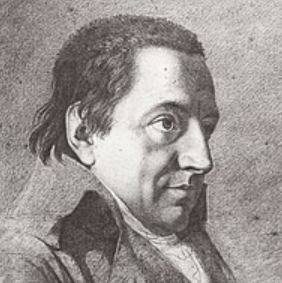
That I should by necessity be either wise and good, or foolish or vicious, without having in one case or the other merit or fault - this it was that filled me with aversion and horror.The determination of my actions by a cause out of myself, whose manifestations were again determined by other causes - this it was from which I so violently revolted.The freedom which was not mine, but that of a foreign power, and, in that, only a conditional, half freedom - this it was with which I could not rest satisfied. I myself - that which in this system only appears as the manifestation of a higher existence, I will be independent, - will be something, not by another or through another, but of myself.
▼
Source
source
Jane Sinnett, trans 1846 p. 21

3 months 3 weeks ago
We must not attach knowledge to the mind, we have to incorporate it there.
▼
Source
source
Ch. 25

1 week 5 days ago
There is a left wing version of this longing for community... because in a liberal society we never move as quickly as we should towards full equality, and therefore there are many marginalized groups who feel that the liberal society is... hypocritical, that it's promising an equality of recognition, and of rights, but it is not delivering... and therefore the very concept of liberal universalism is challenged in favor of a definition of rights that is tied to the specific groups.
▼
Source
source
18:44
4 months 2 weeks ago
Philosophy is the science of truth.
2 months 3 days ago
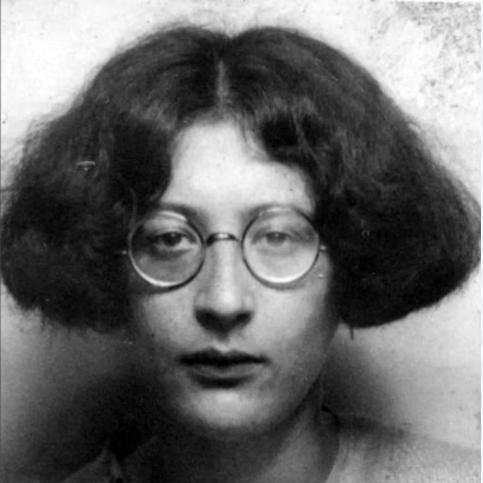
The recognition of human wretchedness is difficult for whoever is rich and powerful because he is almost invincibly led to believe that he is something. It is equally difficult for the man in miserable circumstances because he is almost invincibly led to believe that the rich and powerful man is something.
▼
Source
source
p. 216
3 months 2 weeks ago
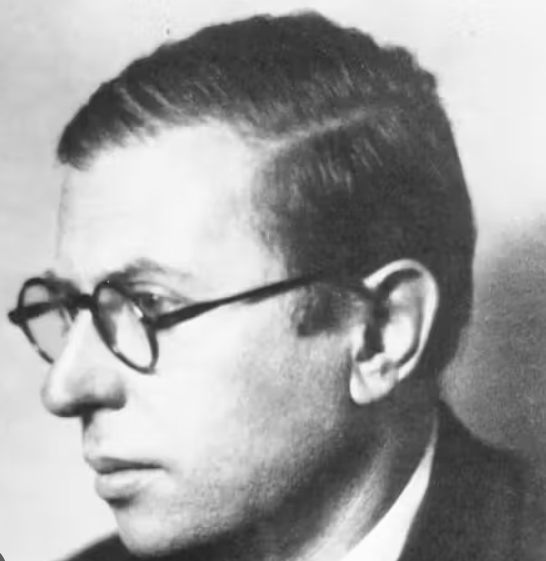
In any case, if you ever leave me with a handsome man, do not tell me that you trust me because, let me warn you: that is not what will prevent me from deceiving you, if I want to. On the contrary.
▼
Source
source
Jessica to her husband Hugo, Act 3, sc. 5

3 months 2 weeks ago
The Quaestor turned back the pages until he found himself among the Pensées. "We are not satisfied," he read, "with the life we have in ourselves and our own being; we want to live an imaginary life in other people's idea of us. Hence all our efforts are directed to seeming what we are not. We labor incessantly to preserve and embellish this imaginary being, and neglect that which is really ours." The Quaestor put down the book, ... and ruefully reflected that all his own troubles had arisen from this desire to seem what in fact he was not. To seem a man of action, when in fact he was a contemplative; to seem a politician, when nature had made him an introspective psychologist; to seem a wit, which God had intended him for a sage.
▼
Source
source
"Variations on a Philosopher" in Themes and Variations (1943), p. 2

2 months 2 weeks ago
A conscientious man would be cautious how he dealt in blood.
▼
Source
source
Letter to the Sheriffs of Bristol (3 April 1777); as published in The Works of the Right Hon. Edmund Burke (1899), vol. 2, p. 206

1 week 1 day ago
But greatly his most important culture he had gathered - and this, too, by his own endeavors - from the better part of the district, the religious men; to whom, as to the most excellent, his own nature gradually attached and attracted him. He was religious with the consent of his whole faculties. Without religion he would have been nothing.

3 months 2 weeks ago
All styles are good except the boring kind.
▼
Source
source
L'Enfant prodigue: comédie en vers dissillabes (1736), Preface
2 months 1 week ago
Unless man have a natural bent in accordance with nature's, he has no chance of understanding nature at all.
▼
Source
source
IV
1 week 1 day ago
The most remarkable piece of reading that you may be recommended to take and try if you can study is a book by Goethe-one of his last books, which he wrote when he was an old man, about seventy years of age-I think one of the most beautiful he ever wrote, full of mild wisdom, and which is found to be very touching by those who have eyes to discern and hearts to feel it. It is one of the pieces in "Wilhelm Meister's Travels." I read it through many years ago; and, of course, I had to read into it very hard when I was translating it (applause), and it has always dwelt in my mind as about the most remarkable bit of writing that I have known to be executed in these late centuries. I have often said, there are ten pages of that which, if ambition had been my only rule, I would rather have written than have written all the books that have appeared since I came into the world.

4 months 2 weeks ago
I don't say it was deliberate fraud. He was probably madly sincere, and sincerely mad.

2 months 1 week ago
The initial revelation of any monastery: everything is nothing. Thus begin all mysticisms. It is less than one step from nothing to God, for God is the positive expression of nothingness.

3 months 1 week ago
The most taboo issue on U.S. campuses these days, in many instances, has to do with the vicious Israeli occupation of precious Palestinians. It's very difficult to have a respectful, robust conversation about that. And I am unequivocal in my solidarity with Palestinian brothers and sisters... I'm not in any way going to stop talking about the Palestinian plight and predicament.
▼
Source
source
Speaking in Too Radical for Harvard? Cornel West on Failed Fight for Tenure, Biden's First 50 Days & More, Democracy Now!
1 month 6 days ago
I believe that the progress of experimental science, the free intercourse of nation with nation, the unrestricted influx of commodities from countries where they are cheap, and the unrestricted efflux of labour towards countries where it is dear, will soon produce, nay, I believe that they are beginning to produce, a great and most blessed social revolution.
▼
Source
source
Speech in Edinburgh (2 November 1852), quoted in Speeches of the Right Honourable T. B. Macaulay, M.P. (1854), p. 517



3 months 2 weeks ago
If there is equality, it is in His love, not in us.
3 months 2 weeks ago
We should be considerate to the living; to the dead we owe only the truth.
▼
Source
source
Letter to M. de Grenonville, 1719
2 months 1 week ago
Since the management of industry by individuals necessarily implies private property, and since competition is in reality merely the manner and form in which the control of industry by private property owners expresses itself, it follows that private property cannot be separated from competition and the individual management of industry. Private property must, therefore, be abolished and in its place must come the common utilization of all instruments of production and the distribution of all products according to common agreement - in a word, what is called the communal ownership of goods.
3 months 3 weeks ago
Truly man is a marvellously vain, diverse, and undulating object. It is hard to found any constant and uniform judgement on him.
▼
Source
source
Ch. 1. That Men by various Ways arrive at the same End (tr. Donald M. Frame)Cotton, rev. W. Hazlitt, 1842

1 month 2 weeks ago
The Churches as Churches have always been and cannot fail to be institutions not only alien to, but directly hostile towards, Christ's teaching.
▼
Source
source
Chapter III, Christianity Misunderstood by Believers
2 months 1 week ago
The human race, in its intellectual life, is organized like the bees: the masculine soul is a worker, sexually atrophied, and essentially dedicated to impersonal and universal arts; the feminine is a queen, infinitely fertile, omnipresent in its brooding industry, but passive and abounding in intuitions without method and passions without justice.
1 month 3 weeks ago
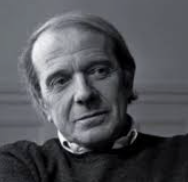
It is at work everywhere, functioning smoothly at times, at other times in fits and starts. It breathes, it heats, it eats. It shits and fucks. What a mistake to have ever said the id. Everywhere it is machines - real ones, not figurative ones: machines driving other machines, machines being driven by other machines, with all the necessary couplings and connections. from Anti-oedipus: capitalism and schizophrenia,
▼
Source
source
p. 1

3 months 3 weeks ago
Animals only follow their natural instincts; but man, unless he has experienced the influence of learning and philosophy, is at the mercy of impulses that are worse than those of a wild beast. There is no beast more savage and dangerous than a human being who is swept along by the passions of ambition, greed, anger, envy, extravagance, and sensuality.
▼
Source
source
Translated by Beert C. Verstraete as On Education for Children, in The Erasmus Reader (University of Toronto Press: 1990), p. 73
1 week 6 days ago
No effective blueprint [of a political alternative to Empire] will ever arise from a theoretical articulation such as ours.
▼
Source
source
206

2 days ago
The customs of that most criminal nation have gained such strength that they have now been received in all lands. The conquered have given laws to the conquerors.
▼
Source
source
Apostle Paul: A Polite Bribe by Robert Orlando; p. 108
2 months 1 week ago
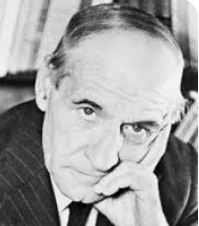
Whatever be the substance which takes possession of such a soul, it will produce the same result, and will change into a pretext for not conforming to any concrete purpose. If it appears as reactionary or anti-liberal it will be in order to affirm that the salvation of the State gives a right to level down all other standards, and to manhandle one's neighbour, above all if one's neighbour is an outstanding personality. But the same happens if it decides to act the revolutionary; the apparent enthusiasm for the manual worker, for the afflicted and for social justice, serves as a mask to facilitate the refusal of all obligations, such as courtesy, truthfulness and, above all, respect or esteem for superior individuals. ... As regards other kinds of Dictatorship, we have seen only too well how they flatter the mass-man, by trampling on everything that appeared to be above the common level.
▼
Source
source
Chapter XV: We Arrive At The Real Question

1 month 2 weeks ago
Sentimentality, like pornography, is fragmented emotion; a natural consequence of a high visual gradient in any culture.
1 month ago
Those least responsible for climate change are worst affected by it.
▼
Source
source
Soil Not Oil: Environmental Justice in an Age of Climate Crisis

3 months 2 weeks ago
I must before I die, find some way to say the essential thing that is in me, that I have never said yet - a thing that is not love or hate or pity or scorn, but the very breath of life, fierce and coming from far away, bringing into human life the vastness and fearful passionless force of non-human things...
▼
Source
source
p. 261

3 months 3 weeks ago
Look round the world: contemplate the whole and every part of it: You will find it to be nothing but one great machine, subdivided into an infinite number of lesser machines, which again admit of subdivisions, to a degree beyond what human senses and faculties can trace and explain. All these various machines, and even their most minute parts, are adjusted to each other with an accuracy, which ravishes into admiration all men, who have ever contemplated them. The curious adapting of means to ends, throughout all nature, resembles exactly, though it much exceeds, the productions of human contrivance; of human design, thought, wisdom, and intelligence.
▼
Source
source
Philo to Cleanthes, Part II
3 months 2 weeks ago
He [the child] does not despise real woods because he has read of enchanted woods: the reading makes all real woods a little enchanted.
▼
Source
source
"On Three Ways of Writing for Children", 1952
3 months 3 weeks ago
I do not speak the minds of others except to speak my own mind better.
▼
Source
source
Ch. 26. On the Education of Children

3 months 1 day ago
Man is the measure of all things: of things which are, that they are, and of things which are not, that they are not.
▼
Source
source
As quoted in Theaetetus by Plato section 152a
3 months 2 weeks ago
I shall keep it [the manuscript] by me until the end of May for purposes of revision, and of adding malicious foot-notes.
▼
Source
source
Letter to W. W. Norton, 17 February, 1931
2 months 2 weeks ago
I decline the election. - It has ever been my rule through life, to observe a proportion between my efforts and my objects. I have never been remarkable for a bold, active, and sanguine pursuit of advantages that are personal to myself.
▼
Source
source
Speech at Bristol on declining the poll (9 September 1780), quoted in The Works of the Right Honourable Edmund Burke, Vol. II (1855), p. 170

3 months 2 weeks ago
Words are good servants but bad masters.
▼
Source
source
As quoted by Laura Huxley, in conversation with Alan Watts about her memoir This Timeless Moment (1968), in Pacifica Archives #BB2037
2 months 4 days ago
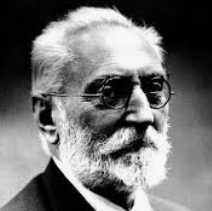
To know something is to make this something that I know myself; but to avail myself of it, to dominate it, it has to remain distinct from myself.
2 months 1 week ago
It is terrible to see how a single unclear idea, a single formula without meaning, lurking in a young man's head, will sometimes act like an obstruction ... in an artery, hindering the nutrition of the brain, and condemning its victim to pine away in the fullness of his intellectual vigor and in the midst of intellectual plenty.
▼
Source
source
How to make our ideas clear, Popular Science Monthly, Vol. 12
3 months 1 week ago
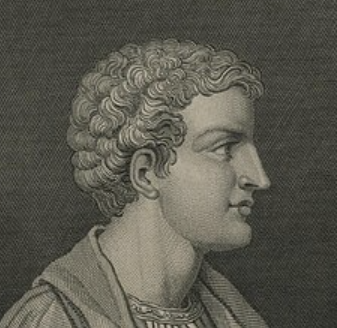
He who feared that he would not succeed sat still.
▼
Source
source
Book I, epistle xvii, line 37
1 month 1 week ago
National loyalty involves a love of home and a preparedness to defend it; nationalism is a belligerent ideology, which uses national symbols in order to conscript the people to war.
1 week 1 day ago
He that has a secret should not only hide it, but hide that he has it to hide.
▼
Source
source
Pt. II, Bk. I, ch. 7.
CivilSimian.com created by AxiomaticPanic, CivilSimian, Kalokagathia