


1 month 2 weeks ago
The professional tends to classify and to specialize, to accept uncritically the ground rules of the environment. The ground rules provided by the mass response of his colleagues serves as a pervasive environment of which he is contentedly unaware.
▼
Source
source
(p. 93)
1 month 3 weeks ago
We are in a logic of simulation, which no longer has anything to do with a logic of facts and an order of reason. Simulation is characterized by a precession of the model, of all the models based on the merest fact-the models come first, their circulation, orbital like that of the bomb, constitutes the genuine magnetic field of the event. The facts no longer have a specific trajectory, they are born at the intersection of models, a single fact can be engendered by all the models at once.
▼
Source
source
"The Precession of Simulacra," pp. 16-17

3 months 3 weeks ago
I remain convinced that obstinate addiction to ordinary language in our private thoughts is one of the main obstacles to progress in philosophy.
▼
Source
source
Quoted in Library of Living Philosophers: The Philosophy of Bertrand Russell, 1944
2 months 1 week ago
The concept of guilt is found most powerfully developed even in the most primitive communal forms which we know: ... the man is guilty who violates one of the original laws which dominate the society and which are mostly derived from a divine founder; the boy who is accepted into the tribal community and learns its laws, which bind him thenceforth, learns to promise; this promise is often given under the sign of death, which is symbolically carried out on the boy, with a symbolical rebirth.
▼
Source
source
p. 178

3 months 3 weeks ago
If you are describing any occurrence... make two or more distinct reports at different times... We discriminate at first only a few features, and we need to reconsider our experience from many points of view and in various moods in order to perceive the whole.
▼
Source
source
March 24, 1857

3 months 2 weeks ago
What all these people are doing is not aggressive; they are inventing new possibilities of pleasure with strange parts of their body - through the eroticization of the body. I think it's ... a creative enterprise, which has as one of its main features what I call the desexualization of pleasure.
▼
Source
source
In reference to Sadism and Masochism, as quoted in Who's Who in Contemporary Gay & Lesbian History: From World War II to the Present Day (2001) by Robert Aldrich and Gary Wotherspoon
2 months 2 weeks ago
I veil my face before thee, and lay my finger on my lips. What thou art in thyself, or how thou appearest to thyself, I can never know. After living through a thousand lives, I shall comprehend Thee as little as I do now in this mansion of clay. What I can comprehend, becomes finite by my mere comprehension, and this can never, by perpetual ascent, be transformed into the infinite, for it does not differ from it in degree merely, but in kind. By that ascent we may find a greater and greater man, but never a God, who is capable of no measurement.
▼
Source
source
Jane Sinnett, trans 1846 p.115

3 months 2 weeks ago
I am not virtuous. Our sons will be if we shed enough blood to give them the right to be.
▼
Source
source
Act 3, sc. 5
1 day ago
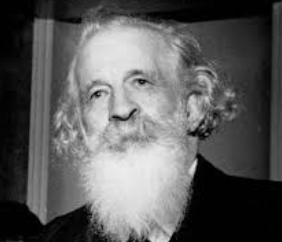
Don't let your hearts grow numb. Stay alert. It is your soul which matters.
2 months 1 week ago
There is no original truth, only original error.
▼
Source
source
A Retrospective Glance at the Lifework of a Master of Books

1 month 2 weeks ago
One might think that it must be quite clear to people not deprived of reason, that violence breeds violence; that the only means of deliverance from violence lies in not taking part in it. This method, one would think, is quite obvious. It is evident that a great majority of men can be enslaved by a small minority only if the enslaved themselves take part in their own enslavement. If people are enslaved, it is only because they either fight violence with violence or participate in violence for their own personal profit. Those who neither struggle against violence nor take part in it can no more be enslaved than water can be cut. They can be robbed, prevented from moving about, wounded or killed, but they cannot be enslaved: that is, made to act against their own reasonable will.
▼
Source
source
The Meaning of the Russian Revolution

4 months 2 weeks ago
At that moment he knew what his mother was thinking, and that she loved him. But he knew, too, that to love someone means relatively little; or, rather, that love is never wrong enough to find the word befitting it.
2 months 3 weeks ago
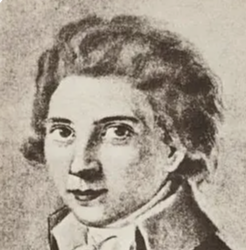
The romantic poetry is a progressive universal poetry.
▼
Source
source
Progressive Universalpoesie (1798)
1 day ago
The ethic of Reverence for Life prompts us to keep each other alert to what troubles us and to speak and act dauntlessly together in discharging the responsibility that we feel. It keeps us watching together for opportunities to bring some sort of help to animals in recompense for the great misery that men inflict upon them, and thus for a moment we escape from the incomprehensible horror of existence.
1 week 6 days ago
As for one-party rule, it was questioned neither by the Left Opposition nor by the Right [wing of the Communist party]. All were prisoners of their own doctrine and their own past: all had worked with a will to create the apparatus of violence that crushed them. Bukharin's hopeless attempt to form a league with Kamenev was no more than a pitiful epilogue to his career. In November 1929 the deviationists performed a public act of penance, but even this did not save them. Stalin's victory was complete; the collapse of the Bukharinite opposition meant the triumph of autocracy in the party and in the country. In December 1929 Stalin's fiftieth birthday was celebrated as a major historical event, and from this point we may date the "cult of personality". Trotsky's prophecy of 1903 had come true: party rule had become Central Committee rule, and this in turn had becorne the personal tyranny of a dictator.
▼
Source
source
(pp. 42-3)
3 months 2 weeks ago
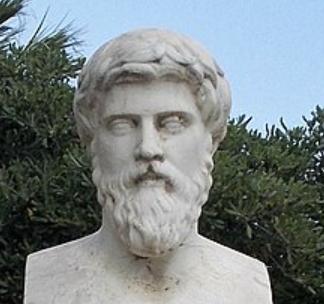
I respect orders but I respect myself too and I do not obey foolish rules made especially to humiliate me.
▼
Source
source
Hugo to Slick and Georges, Act 3, sc. 2
3 months 1 week ago
To Harmodius, descended from the ancient Harmodius, when he reviled Iphicrates [a shoemaker's son] for his mean birth, "My nobility," said he, "begins in me, but yours ends in you."
▼
Source
source
54 Iphicrates

5 days ago
All the Good of mortals is mortal.

3 months 3 weeks ago
For a work to become immortal it must possess so many excellences that it will not be easy to find a man who understands and values them all; so that there will be in all ages men who recognise and appreciate some of these excellences; by this means the credit of the work will be retained throughout the long course of centuries and ever-changing interests, for, as it is appreciated first in this sense, then in that, the interest is never exhausted.

3 months 2 weeks ago
The trouble with fiction... is that it makes too much sense. Reality never makes sense.
▼
Source
source
"John Rivers" in The Genius and the Goddess, 1955

1 week 4 days ago
No nation ever had so bad a neighbour as Germany has had in France for the last 400 years; bad in all manner of ways; insolent, rapacious, insatiable, unappeasable, continually aggressive. ... Germany, after 400 years of ill-usage, and generally ill-fortune, from that neighbour, has had at last the great happiness to see its enemy fairly down in this manner; and Germany, I do clearly believe, would be a foolish nation not to think of raising up some secure boundary-fence between herself and such a neighbour now that she has the chance.
▼
Source
source
Letter to The Times on the Franco-Prussian War and Germany's annexation of Alsace-Lorraine (18 November 1870), p. 8

4 months 1 week ago
Only after Winter comes do we know that the pine and the cypress are the last to fade.

3 months 2 weeks ago
The aspects of things that are most important for us are hidden because of their simplicity and familiarity. (One is unable to notice something - because it is always before one's eyes.) The real foundations of his enquiry do not strike a man at all. Unless that fact has at some time struck him. - And this means: we fail to be struck by what, once seen, is most striking and most powerful.
▼
Source
source
§ 129
3 months 2 weeks ago
Politics is a science. You can demonstrate that you are right and that others are wrong.
▼
Source
source
Act 5, sc. 2
2 months 6 days ago
Both are torn halves of an integral freedom, to which however they do not add up.
▼
Source
source
On high culture and popular culture, in a letter to Walter Benjamin

4 months 3 weeks ago
He who thinks a great deal is not suited to be a party man: he thinks his way through the party and out the other side too soon.
3 months 4 weeks ago
No doubt you know that Galileo had been convicted not long ago by the Inquisition, and that his opinion on the movement of the Earth had been condemned as heresy. Now I will tell you that all things I explain in my treatise, among which is also that same opinion about the movement of the Earth, all depend on one another, and are based upon certain evident truths. Nevertheless, I will not for the world stand up against the authority of the Church. ...I have the desire to live in peace and to continue on the road on which I have started.
▼
Source
source
Letter to Marin Mersenne (end of Feb., 1634) as quoted by Amir Aczel, Pendulum: Leon Foucault and the Triumph of Science

3 months 3 weeks ago
If God has made us in his image, we have returned him the favor.
▼
Source
source
Notebooks, c.1735-c.1750

2 weeks 1 day ago
The idea of universal human dignity ultimately comes out of Christianity... the view that all human beings are equal in the sight of God because they have the capacity for moral choice. As Western thought developed in the 17th-18th centuries, this took on a secular form under thinkers like Jean-Jacques Rousseau or Immanuel Kant or Georg Hegel, who argued that human equality is... based on human autonomy.
▼
Source
source
11:12

2 months 5 days ago
The pursuit of mathematics is a divine madness of the human spirit.
▼
Source
source
Ch. 2: "Mathematics as an Element in the History of Thought", p. 30

3 months 2 weeks ago
Scientific Method... [is] even less existent than some other non-existent subjects.
2 weeks ago
Scientists believe there is a hierarchy of facts and that among them may be made a judicious choice. They are right, since otherwise there would be no science...
1 day ago
I am of course confident that I will fulfil my tasks as a writer in all circumstances - from my grave even more successfully and more irrefutably than in my lifetime. No one can bar the road to truth, and to advance its cause I am prepared to accept even death. But may it be that repeated lessons will finally teach us not to stop the writer's pen during his lifetime? At no time has this ennobled our history.
▼
Source
source
Open letter to the Fourth Soviet Writers' Congress (16 May 1967); as translated in Solzhenitsyn: A Documentary Record (1970) edited by Leopold Labedz
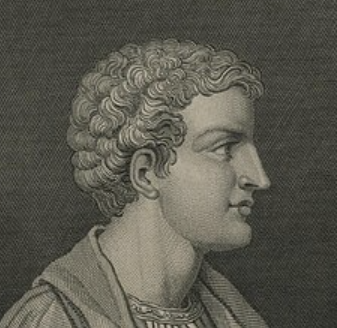
3 months 1 week ago
Then take, good sir, your pleasure while you may; With life so short 'twere wrong to lose a day.
▼
Source
source
Book II, satire viii, line 96 (trans. Conington)

4 months 1 week ago
A happy and eternal being has no trouble himself and brings no trouble upon any other being; hence he is exempt from movements of anger and partiality, for every such movement implies weakness.

3 months 3 weeks ago
There are two distinct classes of men in the nation, those who pay taxes, and those who receive and live upon the taxes.
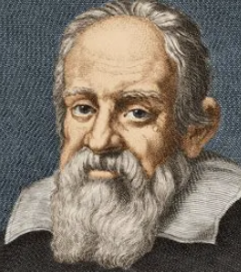
2 weeks ago
Well, since paradoxes are at hand, let us see how it might be demonstrated that in a finite continuous extension it is not impossible for infinitely many voids to be found.
▼
Source
source
Salviati, First Day, Stillman Drake translation
1 day ago
The disastrous feature of our civilization is that it is far more developed materially than spiritually. Its balance is disturbed ... Now come the facts to summon us to reflect. They tell us in terribly harsh language that a civilization which develops only on its material side, and not in the sphere of the spirit ... heads for disaster.

3 months 3 weeks ago
In England, success in the profession of the law leads to some very great objects of ambition; and yet how few men, born to easy fortunes, have ever in this country been eminent in that profession?
▼
Source
source
Chapter I, Part III, p. 824.
5 days ago
Who else is the enemy of Nature but he who mistakes himself for more intelligent than Nature, though it is the highest school for all of us?
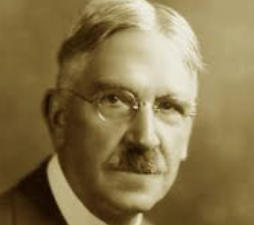
2 months 1 week ago
The ground of democratic ideas and practices is faith in the potentialities of individuals, faith in the capacity for positive developments if proper conditions are provided. The weakness of the philosophy originally advanced to justify the democratic movement was that it took individuality to be something given ready-made, that is, in abstraction from time, instead of as a power to develop.
2 months 6 days ago
Bourgeois society is ruled by equivalence. It makes the dissimilar comparable by reducing it to abstract quantities. To the enlightenment, that which does not reduce to numbers, and ultimately to the one, becomes illusion.
▼
Source
source
John Cumming trans., p. 7
3 months 3 weeks ago
National character is only another name for the particular form which the littleness, perversity and baseness of mankind take in every country. Every nation mocks at other nations, and all are right. Variant translation: Every nation criticizes every other one - and they are all correct.
▼
Source
source
As quoted by Wolfgang Pauli in a letter to Abraham Pais (17 August 1950) published in The Genius of Science (2000) by Abraham Pais, p. 242

2 months 2 weeks ago
We must suffer to the end, to the moment when we stop believing in suffering.

4 months 6 days ago
Let us rejoice and give thanks. Not only are we become Christians, but we are become Christ. My brothers, do you understand the grace of God that is given us? Wonder, rejoice, for we are made Christ! If He is the Head, and we the members, then together He and we are the whole man.... This would be foolish pride on our part, were it not a gift of his bounty. But this is what He promised by the mouth of the Apostle: You are the body of Christ, and severally His members.
▼
Source
source
(1 Cor. 12:27). p. 415

2 months 4 days ago
Hooks is a contentious writer, and I don't always agree with her contentions, but Ain't I a Woman has an intellectual vitality and daring that should set new standards for the discussion of race and sex.
▼
Source
source
Ellen Willis in No More Nice Girls: Countercultural Essays
4 months 1 week ago
It is only he who is possessed of the most complete sincerity that can exist under heaven, who can give its full development to his nature. Able to give its full development to his own nature, he can do the same to the nature of other men. Able to give its full development to the nature of other men, he can give their full development to the natures of animals and things. Able to give their full development to the natures of creatures and things, he can assist the transforming and nourishing powers of Heaven and Earth. Able to assist the transforming and nourishing powers of Heaven and Earth, he may with Heaven and Earth form a ternion.
3 months 1 week ago
Cato instigated the magistrates to punish all offenders, saying that they that did not prevent crimes when they might, encouraged them. Of young men, he liked them that blushed better than those who looked pale.
▼
Source
source
Cato the Elder
2 months ago
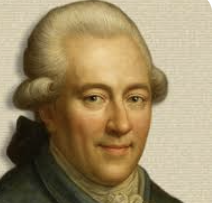
That man is the noblest creature may also be inferred from the fact that no other creature has yet contested this claim.
▼
Source
source
D 58 The proof that man is the noblest of all creatures is that no other creature has ever denied it.
3 months 3 weeks ago
For my part, while I am as convinced a Socialist as the most ardent Marxian, I do not regard Socialism as a gospel of proletarian revenge, nor even, primarily, as a means of securing economic justice. I regard it primarily as an adjustment to machine production demanded by considerations of common sense, and calculated to increase the happiness, not only of proletarians, but of all except a tiny minority of the human race.
▼
Source
source
Ch. 7: The Case for Socialism
CivilSimian.com created by AxiomaticPanic, CivilSimian, Kalokagathia