


2 months 1 week ago
Get thee hence, Satan: for it is written, Thou shalt worship the Lord thy God, and him only shalt thou serve.
▼
Source
source
4:10 (KJV) Said to Satan.

4 months 3 weeks ago
A line by Thomas à Kempis which perhaps could be used as a motto sometime. He says of Paul: Therefore he turned everything over to God, who knows all, and defended himself solely by means of patience and humility . . . . He did defend himself now and then so that the weak would not be offended by his silence.

3 months 2 weeks ago
The measure of a master is his success in bringing all men round to his opinion twenty years later.
▼
Source
source
Culture

2 months 2 weeks ago
I am for the most part so convinced that everything is lacking in basis, consequence, justification, that if someone dared to contradict me, even the man I most admire, he would seem to me a charlatan or a fool.


1 month 6 days ago
The students of physical science are not unfrequently told that their pursuits unfit them for the estimation of moral probability. And it may be so, for I am afraid that to those who are accustomed to severe reasoning, either in the province of Science or in that of Law, reasoning from 'moral probability' is apt to be regarded as a process of accumulating inconclusive arguments, in the hope that a great heap of them may, at least, look as firm as one good demonstration.
▼
Source
source
The Evidence of the Miracle of the Resurrection

1 month 2 weeks ago
The potential of any new technology is always dissipated by its users involvement in its predecessors.
▼
Source
source
(p. 210)

1 week 4 days ago
All old Poems, Homer's and the rest, are authentically Songs. I would say, in strictness, that all right Poems are; that whatsoever is not sung is properly no Poem, but a piece of Prose cramped into jingling lines,-to the great injury of the grammar, to the great grief of the reader, for most part! What we wants to get at is the thought the man had, if he had any: why should he twist it into jingle, if he could speak it out plainly? It is only when the heart of him is rapt into true passion of melody, and the very tones of him, according to Coleridge's remark, become musical by the greatness, depth and music of his thoughts, that we can give him right to rhyme and sing; that we call him a Poet, and listen to him as the Heroic of Speakers,-whose speech is Song.
3 months 2 weeks ago
In the darkest region of the political field the condemned man represents the symmetrical, inverted figure of the king.
3 months 2 weeks ago
For there's no rood has not a star above it; The cordial quality of pear or plum Ascends as gladly in a single tree, As in broad orchards resonant with bees; And every atom poises for itself, And for the whole.
▼
Source
source
Musketaquid, st. 5

2 months 3 days ago
A child might be overawed by a great city, but a civil engineer knows that he might demolish it and rebuild it himself. Husserl's philosophy has the same aim: to show us that, although we may have been thrust into this world without a 'by your leave,' we are mistaken to assume that it exists independently of us. It is true that reality exists apart from us; but what we mistake for the world is actually a world constituted by us, selected from an infinitely complex reality.
▼
Source
source
p. 63

2 months 1 week ago
And above all, we must feel and act as if an endless continuation of our earthly life awaited us after death; and if it be that nothingness is the fate that awaits us we must not, in the words of Obermann, so act that it shall be a just fate.

1 month 2 weeks ago
The only absolute knowledge attainable by man is that life is meaningless.
▼
Source
source
Ch. 5, translated by David Patterson, 1983
3 weeks 3 days ago
From each as they choose, to each as they are chosen.
▼
Source
source
Ch. 7 : Distributive Justice, Section I, Patterning, p. 160

3 months 2 weeks ago
The standard of permanent Christianity must be kept clear in our minds and it is against that standard that we must test all contemporary thought. In fact, we must at all costs not move with the times.
▼
Source
source
"Christian Apologetics" (1945), p. 92
4 months 5 days ago
Any one thing in the creation is sufficient to demonstrate a Providence to an humble and grateful mind.
▼
Source
source
Book I, ch. 16,7.
1 week 4 days ago
The spoken Word, the written Poem, is said to be an epitome of the man; how much more the done Work. Whatsoever of morality and of intelligence; what of patience, perseverance, faithfulness, of method, insight, ingenuity, energy; in a word, whatsoever of Strength the man had in him will lie written in the Work he does. To work: why, it is to try himself against Nature, and her everlasting unerring Laws; these will tell a true verdict as to the man.
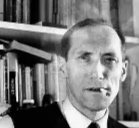
1 week 6 days ago
I do not know what postmodern is and how it differs from the premodern, nor do I feel that I ought to know.
▼
Source
source
"Modernity on Endless Trial"
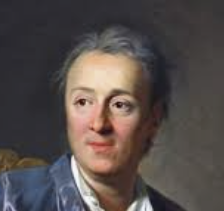
2 months 3 weeks ago
The general interest of the masses might take the place of the insight of genius if it were allowed freedom of action.

1 month 2 weeks ago
It is an article of passionate faith among "politically correct" biologists and anthropologists that brain size has no connection with intelligence; that intelligence has nothing to do with genes; and that genes are probably nasty fascist things anyway.
2 months 2 weeks ago
Two enemies - the same man divided.

3 months 3 weeks ago
For my part, while I am as convinced a Socialist as the most ardent Marxian, I do not regard Socialism as a gospel of proletarian revenge, nor even, primarily, as a means of securing economic justice. I regard it primarily as an adjustment to machine production demanded by considerations of common sense, and calculated to increase the happiness, not only of proletarians, but of all except a tiny minority of the human race.
▼
Source
source
Ch. 7: The Case for Socialism
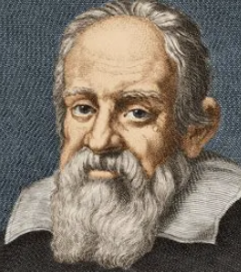
2 weeks ago
I am quite convinced; and, believe me, if I were again beginning my studies, I should follow the advice of Plato and start with mathematics, a science which proceeds very cautiously and admits nothing as established until it has been rigidly demonstrated.
▼
Source
source
Simplicio, First Day, page 90.
3 months 2 weeks ago
I don't really know what they mean by "intellectuals," all the people who describe, denounce, or scold them. I do know, on the other hand, what I have committed myself to, as an intellectual, which is to say, after all, a cerebro-spinal individual: to having a brain as supple as possible and a spinal column that's as straight as necessary.
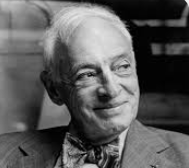
1 month 1 week ago
We take foreigners to be incomplete Americans - convinced that we must help and hasten their evolution.
▼
Source
source
" A Second Half Life" (1991), p. 324

2 months 5 days ago
Our minds are finite, and yet even in these circumstances of finitude we are surrounded by possibilities that are infinite, and the purpose of human life is to grasp as much as we can out of the infinitude.
▼
Source
source
Ch. 21, June 28, 1941.
1 week 4 days ago
But in the days that are now passing over us, even fools are arrested to ask the meaning of them; few of the generations of men have seen more impressive days. Days of endless calamity, disruption, dislocation, confusion worse confounded: if they are not days of endless hope too, then they are days of utter despair. For it is not a small hope that will suffice, the ruin being clearly, either in action or in prospect, universal. There must be a new world, if there is to be any world at all!

4 weeks 1 day ago
Human intuitions are systematically biased. Evolutionary psychology explains how our moral intuitions and the rationalisations they spawn have been shaped by millennia of natural selection to maximise the inclusive fitness of our genes, not to track the welfare of other sentient beings impartially conceived. Many human cultures have found nothing intuitively wrong with aggressive warfare, slavery, wife-beating, infanticide or female genital mutilation. Ultimately, folk morality is a doomed enterprise as hopeless as folk physics. A mature posthuman ethics, I'd argue, must be committed to the well-being of all sentient life; and mature posthuman technology offers the means to deliver that commitment.
▼
Source
source
"Post-Darwinian Ethics?", H+ Magazine, May 2009
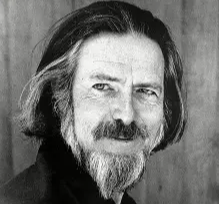
1 day ago
Sex is no longer a serious taboo. Teenagers sometimes know more about it than adults.
▼
Source
source
Inside Information p. 4

3 months 3 weeks ago
It is a great art to saunter.
▼
Source
source
April 26, 1841
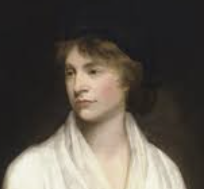
2 months 2 weeks ago
Ah! why do women condescend to receive a degree of attention and respect from strangers different from that reciprocation of civility which the dictates of humanity and the politeness of civilization authorize between man and man? And why do they not discover, when, "in the noon of beauty's power", that they are treated like queens only to be deluded by hollow respect. Confined, then, in cages like the feathered race, they have nothing to do but to plume themselves, and stalk with mock majesty from perch to perch.
▼
Source
source
Ch. 4
3 months 3 weeks ago
First of all: what is work? Work is of two kinds: first, altering the position of matter at or near the earth's surface relatively to other such matter; second, telling other people to do so. The first kind is unpleasant and ill paid; the second is pleasant and highly paid.
▼
Source
source
Ch. 1: In Praise of Idleness

3 months 2 weeks ago
The sentiment of reality can indeed attach itself so strongly to our object of belief that our whole life is polarized through and through, so to speak, by its sense of the existence of the thing believed in, and yet that thing, for the purpose of definite description, can hardly be said to be present to our mind at all.
▼
Source
source
Lecture III, "The Reality of the Unseen"
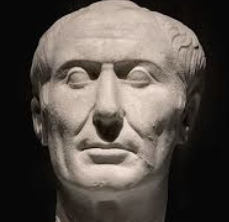
1 month 2 weeks ago
The fear of death is more to be dreaded than death itself.
▼
Source
source
Maxim 511
3 months 2 weeks ago
No differeance without alterity, no alterity without singularity, no singularity without here-now.
▼
Source
source
Injunctions of Marx, p,31

4 months 3 weeks ago
Against that positivism which stops before phenomena, saying "there are only facts," I should say: no, it is precisely facts that do not exist, only interpretations...
1 day ago
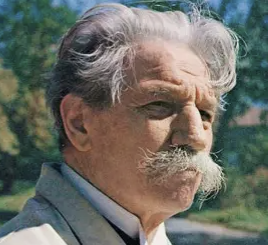
There slowly grew up in me an unshakable conviction that we have no right to inflict suffering and death on another living creature unless there is some unavoidable necessity for it, and that we ought all of us to feel what a horrible thing it is to cause suffering and death out of mere thoughtlessness. And this conviction has influenced me only more and more strongly with time. I have grown more and more certain that at the bottom of our heart we all think this, and that we fail to acknowledge it because we are afraid of being laughed at by other people as sentimentalists, though partly also because we allow our best feelings to get blunted. But I vowed that I would never let my feelings get blunted, and that I would never be afraid of the reproach of sentimentalism.
▼
Source
source
p. 275
2 months 3 days ago
The effects of mescalin or LSD can be, in some respects, far more satisfying than those of alcohol. To begin with, they last longer; they also leave behind no hangover, and leave the mental faculties clear and unimpaired. They stimulate the faculties and produce the ideal ground for a peak experience.
▼
Source
source
p. 88
2 months 2 weeks ago
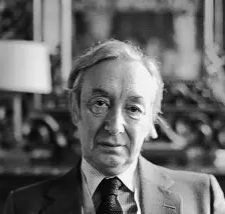
There is philosophy, which is about conceptual analysis - about the meaning of what we say - and there is all of this ... all of life.
▼
Source
source
Emphasizing his views on philosophy as something abstract and separate from normal life to Isaiah Berlin, in the early 1930s, as quoted in A.J. Ayer: A Life (1999) by Ben Rogers, p. 2.

4 months 6 days ago
To the divine providence it has seemed good to prepare in the world to come for the righteous good things, which the unrighteous shall not enjoy; and for the wicked evil things, by which the good shall not be tormented. But as for the good things of this life, and its ills, God has willed that these should be common to both; that we might not too eagerly covet the things which wicked men are seen equally to enjoy, nor shrink with an unseemly fear from the ills which even good men often suffer. There is, too, a very great difference in the purpose served both by those events which we call adverse and those called prosperous. For the good man is neither uplifted with the good things of time, nor broken by its ills; but the wicked man, because he is corrupted by this world's happiness, feels himself punished by its unhappiness.
▼
Source
source
I, 8

3 months 1 week ago
Teach him what has been said in the past; then he will set a good example to the children of the magistrates, and judgement and all exactitude shall enter into him. Speak to him, for there is none born wise.
▼
Source
source
Introduction.
2 months 2 weeks ago
A marvel that has nothing to offer, democracy is at once a nation's paradise and its tomb.

1 month 2 weeks ago
Times are changed with him who marries; there are no more by-path meadows, where you may innocently linger, but the road lies long and straight and dusty to the grave. Idleness, which is often becoming and even wise in the bachelor, begins to wear a different aspect when you have a wife to support.
▼
Source
source
Virginibus Puerisque, Ch. 2.
3 months 2 weeks ago
We may well call it black diamonds. Every basket is power and civilization. For coal is a portable climate. It carries the heat of the tropics to Labrador and the polar circle; and it is the means of transporting itself withersoever it is wanted. Watt and Stephenson whispered in the ear of mankind their secret, that a half-ounce of coal will draw two tons a mile, and coal carries coal, by rail and by boat, to make Canada as warm as Calcutta, and with its comfort brings its industrial power.
▼
Source
source
Wealth

5 days ago
Two elements must therefore be rooted out once for all-the fear of future suffering, and the recollection of past suffering; since the latter no longer concerns me, and the former concerns me not yet.

2 months 3 weeks ago
To kill someone for committing murder is a punishment incomparably worse than the crime itself. Murder by legal sentence is immeasurably more terrible than murder by brigands.
▼
Source
source
Part 1, Chapter 2

3 months 2 weeks ago
A hero looks death in the face, real death, not just the image of death. Behaving honourably in a crisis doesn't mean being able to act the part of a hero well, as in the theatre, it means being able to look death itself in the eye. For an actor may play lots of different roles, but at the end of it all he himself, the human being, is the one who has to die.
▼
Source
source
p. 50e

4 months 2 weeks ago
No matter how outrageous a lie may be, it will be accepted if stated loudly enough and often enough.
4 months 2 weeks ago
Socrates: The shoemaker, for example, uses a square tool, and a circular tool, and other tools for cutting?
4 months 3 weeks ago
What does man actually know about himself? Is he, indeed, ever able to perceive himself completely, as if laid out in a lighted display case? Does nature not conceal most things from him even concerning his own body in order to confine and lock him within a proud, deceptive consciousness, aloof from the coils of the bowels, the rapid flow of the blood stream, and the intricate quivering of the fibers! She threw away the key.
CivilSimian.com created by AxiomaticPanic, CivilSimian, Kalokagathia