


3 months 4 weeks ago
How can he [today's writer] be honored, when he does not honor himself; when he loses himself in the crowd; when he is no longer the lawgiver, but the sycophant, ducking to the giddy opinion of a reckless public.
▼
Source
source
Goethe; or, The Writer
2 months 2 days ago
Once animals had a more sacred, more divine character than men. There is not even a reign of the "human" in primitive societies, and for a long time the animal order has been the order of reference. Only the animal is worth being sacrificed, as a god, the sacrifice of man only comes afterward, according to a degraded order. Men qualify only by their affiliation to the animal: the Bororos "are" macaws. "
▼
Source
source
The Animals: Territory and Metamorphoses," p. 133

4 months ago
It is a waste of energy to be angry with a man who behaves badly, just as it is to be angry with a car that won't go. The difference is that you can compel your car to go to a garage, but you cannot compel Hitler to go to a psychiatrist.
▼
Source
source
A Fresh Look at Empiricism: 1927-42 (1996), p. 544
3 months 4 weeks ago
He thought it happier to be dead, To die for Beauty, than live for bread.
▼
Source
source
Beauty



2 months 1 week ago
The supreme effort of the avant-guard is onward, ever onward.
▼
Source
source
Light and Shadows in the Life of an Avant-Guard
2 months 2 weeks ago
The fake love of ressentiment man offers no real help, since for his perverted sense of values, evils like "sickness" and "poverty" have become goods.
▼
Source
source
L. Coser, trans. (1961), p. 92
2 months 2 weeks ago
In the world of action, we know that it is disastrous to treat animals or human beings as though they were stocks and stones. Why should we suppose this treatment to be any less mistaken in the world of ideas?
▼
Source
source
p. 21.
1 month 3 weeks ago
Nothing like a little judicious levity.
▼
Source
source
The Wrong Box, ch. 7 (1889).
2 weeks 1 day ago
You have the courage to tell the masses what no politician told them: you are inferior and all the improvements in your conditions which you simply take for granted you owe to the effort of men who are better than you. If this be arrogance, as some of your critics observed, it is still the truth that had to said in the age of the Welfare State.
▼
Source
source
Mises' letter to Ayn Rand praising Atlas Shrugged,(23 January 1958), quoted in Mises: The Last Knight of Liberalism (2007).
3 months 4 weeks ago
Justice is the first virtue of social institutions, as truth is of systems of thought. A theory however elegant and economical must be rejected or revised if it is untrue; likewise laws and institutions no matter how efficient and well-arranged must be reformed or abolished if they are unjust. Each person possesses an inviolability founded on justice that even the welfare of society as a whole cannot override. For this reason justice denies that the loss of freedom for some is made right by a greater good shared by others. It does not allow that the sacrifices imposed on a few are outweighed by the larger sum of advantages enjoyed by many. Therefore in a just society the liberties of equal citizenship are taken as settled; the rights secured by justice are not subject to political bargaining or to the calculus of social interests.
▼
Source
source
Chapter I, Section 1, pg. 3-4
3 weeks 1 day ago
Of the radical and iconoclastic ideals preached in the early years of the revolution, all were discarded except those which helped the state to exert absolute control over the individual. Hence the idea of collective education and reduction of parental authority to the minimum continued to hold sway, but an end was put to "progressive" educational methods designed to promote initiative and independence. Strict discipline became once more the rule, and in this respect Soviet schools differed from Tsarist ones only in the immensely increased emphasis on indoctrination. In due course, puritanical sexual ethics were restored to favour.
▼
Source
source
(pg. 53)

3 months 3 weeks ago
But a punishment like forced labour or even imprisonment - mere loss of liberty - has never functioned without a certain additional element of punishment that certainly concerns the body itself: rationing of food, sexual deprivation, corporal punishment, solitary confinement ... There remains, therefore, a trace of 'torture' in the modern mechanisms of criminal justice - a trace that has not been entirely overcome, but which is enveloped, increasingly, by the non-corporal nature of the penal system
2 months 3 weeks ago
And because the condition of Man, (as hath been declared in the precedent Chapter) is a condition of Warre of every one against everyone; in which case every one is governed by his own Reason; and there is nothing he can make use of, that may not be a help unto him, in preserving his life against his enemyes; It followeth, that in such a condition, every man has a Right to every thing; even to one anothers body.
▼
Source
source
The First Part, Chapter 14, p. 64
1 month 1 week ago
The supreme accomplishment is to blur the line between work and play.
▼
Source
source
In Ellen J. Langer (ed.) Mindfulness (Merloyd Lawrence Books, 1989) p. 133

4 months 1 week ago
As far as physicians go, chance is more valuable than knowledge.
▼
Source
source
Ch. 37
3 weeks 2 days ago
Sociology is the science which has the most methods and the least results.
▼
Source
source
Part I. Ch. 1 : The Selection of Facts, p. 19

1 month 4 weeks ago
The vicomte was a nice-looking young man with soft features and polished manners, who evidently considered himself a celebrity but out of politeness modestly placed himself at the disposal of the circle in which he found himself. Anna Pávlovna was obviously serving him up as a treat to her guests. As a clever maître d'hôtel serves up as a specially choice delicacy a piece of meat that no one who had seen it in the kitchen would have cared to eat, so Anna Pávlovna served up to her guests, first the vicomte and then the abbé, as peculiarly choice morsels. The group about Mortemart immediately began discussing the murder of the Duc d'Enghien. The vicomte said that the Duc d'Enghien had perished by his own magnanimity, and that there were particular reasons for Buonaparte's hatred of him.
▼
Source
source
Bk. I, Ch. III

2 months 1 week ago
If it is permissible to write plays that are not intended to be seen, I should like to see who can prevent me from writing a book no one can read.
▼
Source
source
F 1
1 month 3 weeks ago
We are survival machines-robot vehicles blindly programmed to preserve the selfish molecules known as genes. This is a truth which still fills me with astonishment.
▼
Source
source
Preface to the first edition
4 months ago
It is entirely clear that there is only one way in which great wars can be permanently prevented, and that is the establishment of an international government with a monopoly of serious armed force.
▼
Source
source
"The Atomic Bomb and the Prevention of War" in the Bulletin of the Atomic Scientists, 10/1/1945
2 months 1 week ago
books are only what we want them to be; rather, what we read into them.
2 months 3 weeks ago
Oblivious of Democritus, the unwilling materialists of our day have generally been awkwardly intellectual and quite incapable of laughter. If they have felt anything, they have felt melancholy. Their allegiance and affection were still fixed on those mythical sentimental worlds which they saw to be illusory. The mechanical world they believed in could not please them, in spite of its extent and fertility. Giving rhetorical vent to their spleen and prejudice, they exaggerated nature's meagreness and mathematical dryness. When their imagination was chilled they spoke of nature, most unwarrantably, as dead, and when their judgment was heated they took the next step and called it unreal.
▼
Source
source
Ch. 3 "Mechanism"

4 months 2 weeks ago
Temperance is that discreet regulation of the desires and passions, by which we are enabled to enjoy pleasures without suffering any consequent inconvenience. They who maintain such a constant self-command, as never to be enticed by the prospect of present indulgence, to do that which will be productive of evil, obtain the truest pleasure by declining pleasure.
2 weeks 5 days ago
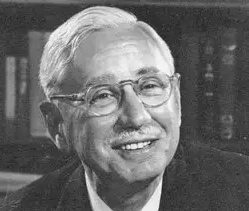
...Lucretius talked epicureanism stoically (like Heine's Englishman taking his pleasures sadly), and concluded on his stren gospel of pleasure by committing suicide. His noble epic "on the Nature of Things", follows Epicurus in damning pleasure with faint praise. Almost contemporary with Caesar and Pompey, he lived in the midst of turmoil and alarms; his nervous pen is forever inditing prayers to tranquility and peace. One pictures him as a timid soul whose youth had been darkened with religious fears; for he never tires of telling his readers that there's no hell, except here, and there are no gods except gentlemanly ones who live in a garden of Epicurus in the clouds, and never intrude in the affairs of men.
3 weeks ago
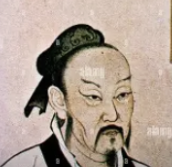
The principles of great men illuminate the universe.
▼
Source
source
Discipline and Character, no. 50
2 months 3 weeks ago
Even the most inspired verse, which boasts not without a relative justification to be immortal, becomes in the course of ages a scarcely legible hieroglyphic; the language it was written in dies, a learned education and an imaginative effort are requisite to catch even a vestige of its original force. Nothing is so irrevocable as mind.

4 months ago
Manufacture was all the time sheltered by protective duties in the hoe market, by monopolies in the colonial market, and broad as much as possible by differential duties.
▼
Source
source
ibid, pp. 183
2 months 1 week ago
Do not all theists insist that there can be no morality, no justice, honesty or fidelity without the belief in a Divine Power? Based upon fear and hope, such morality has always been a vile product, imbued partly with self-righteousness, partly with hypocrisy. As to truth, justice, and fidelity, who have been their brave exponents and daring proclaimers? Nearly always the godless ones: the Atheists; they lived, fought, and died for them. They knew that justice, truth, and fidelity are not conditioned in heaven, but that they are related to and interwoven with the tremendous changes going on in the social and material life of the human race; not fixed and eternal, but fluctuating, even as life itself.

2 months 3 weeks ago
The revolution, Stahl declared, is the 'world-historic mark of our age.' It would found 'the entire State on the will of man instead of on the commandment and ordinance of God.'
▼
Source
source
p. 364
2 months 1 week ago
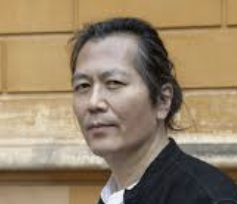
At the deepest level, the desire for complete union with God exhibits a narcissistic structure.

2 months 2 weeks ago
The work of charity, of the love of God, is to endeavor to to liberate God from brute matter, to endeavor to give consciousness to everything, to spiritualize or universalize everything; it is to dream that the very rocks may find a voice and work in accordance with the spirit of this dream; it is to dream that everything that exists may become conscious, that the Word may become life.

3 months 4 weeks ago
I think they do it to pass the time, nothing more. But time is too large, it can't be filled up. Everything you plunge into it is stretched and disintegrates.
▼
Source
source
Diary entry of Friday (2 February), concerning a card game
2 months 1 week ago
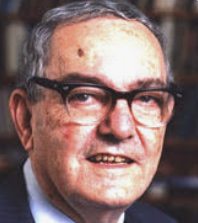
Economic man deals with the "real world" in all its complexity. Administrative man recognizes that the world he perceives is a drastic simplified model... He makes his choices using a simple picture of the situation that takes into account just a few of the factors that he regards as most relevant and crucial.
▼
Source
source
p. xxix; As cited in: Jesper Simonsen (1994) Administrative Behavior: How Organizations can be Understood in Terms of Decision Processes. Roskilde Universitet.
4 months 1 week ago
Truth will sooner come out from error than from confusion.
▼
Source
source
Aphorism 20

2 months 2 weeks ago
We do not obtain the most precious gifts by going in search of them but by waiting for them. Man cannot discover them by his own powers, and if he sets out to seek for them he will find in their place counterfeits of which he will be unable to discern falsity.

4 months 3 weeks ago
If the world were clear, art would not exist.
5 months ago
.... In a word, acts of any kind produce habits or characters of the same kind. Hence we ought to make sure that our acts are of a certain kind; for the resulting character varies as they vary. It makes no small difference, therefore, whether a man be trained in his youth up in this way or that, but a great difference, or rather all the difference.
4 months 3 weeks ago
He kept the middle way, that's all: he was the type of man for whom one has an affection of the mild but steady order - which is the kind that wears best.
2 months 3 weeks ago
By creating the world market, big industry has already brought all the peoples of the Earth, and especially the civilized peoples, into such close relation with one another that none is independent of what happens to the others. Further, it has co-ordinated the social development of the civilized countries to such an extent that, in all of them, bourgeoisie and proletariat have become the decisive classes, and the struggle between them the great struggle of the day. It follows that the communist revolution will not merely be a national phenomenon but must take place simultaneously in all civilized countries.
1 month 2 weeks ago
I now propose briefly to... set forth, in a form intelligible to those who possess no special acquaintance with anatomical science, the chief facts upon which all conclusions respecting the nature and the extent of the bonds which connect man with the brute world must be based: I shall then indicate the one immediate conclusion which, in my judgment, is justified by those facts, and I shall finally discuss the bearing of that conclusion upon the hypotheses which have been entertained respecting the Origin of Man.
▼
Source
source
Ch.2, p. 74

4 months 3 days ago
Thus the labour of a manufacture adds, generally, to the value of the materials which he works upon, that of his own maintenance, and of his masters profits. The labour of a menial servant, on the contrary, adds to the value of nothing.
▼
Source
source
Chapter III, p. 364 (see Proverbs 14-23 KJV).

3 months ago
Boldness formerly was not the character of Atheists as such. ... But of late they are grown active, designing, turbulent, and seditious.
▼
Source
source
"Thoughts on French Affairs" (December 1791), in Three Memorials on French Affairs (1797), p. 53
4 months 3 days ago
It appears, accordingly, from the experience of all ages and nations, I believe, that the work done by freemen comes cheaper in the end than that performed by slaves.
▼
Source
source
Chapter VIII.

4 months ago
Again, defenders of utility often find themselves called upon to reply to such objections as this-that there is not time, previous to action, for calculating and weighing the effects of any line of conduct on the general happiness. This is exactly as if any one were to say that it is impossible to guide our conduct by Christianity, because there is not time, on every occasion on which anything has to be done, to read through the Old and New Testaments. The answer to the objection is, that there has been ample time, namely, the whole past duration of the human species. During all that time mankind have been learning by experience the tendencies of actions.
▼
Source
source
Ch. 2

2 months 3 weeks ago
The avant-garde and the beatniks share in the function of entertaining without endangering the good conscience of the men of good will.
▼
Source
source
p. 70
4 months 1 week ago
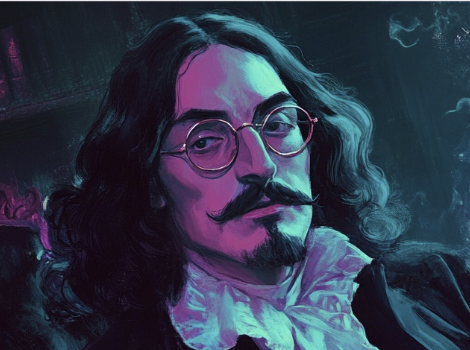
I suppose the body to be nothing but a statue or machine made of earth, which God forms with the explicit intention of making it as much as possible like us.
▼
Source
source
Descartes, René (1662). Le Homme (The Treatise on Man), XI:119, CSM I:99 in The Stanford Encyclopedia of Philosophy: "Descartes and the Pineal Gland - 2.1 "The Treatise of Man".
2 months 1 day ago
When the world fails us, when we ourselves become worldless in the social sense, the body suffers and shows its precarity; that mode of demonstrating precarity is itself, or carries with it, a political demand and even an expression of outrage. To be a body differentially exposed to harm or to death is precisely to exhibit a form of precarity, but also to suffer a form of inequality that is unjust. So, the situation of many populations who are increasingly subject to unlivable precarity raises for us the question of global obligations. If we ask why any of us should care about those who suffer at a distance from us, the answer is not to be found in paternalistic justifications, but in the fact that we inhabit the world together in relations of interdependency. Our fates are, as it were, given over to one another.
▼
Source
source
p. 50
1 month 1 week ago
Nature shrinks as capital grows. The growth of the market cannot solve the very crisis it creates.
▼
Source
source
Soil Not Oil: Environmental Justice in an Age of Climate Crisis
CivilSimian.com created by AxiomaticPanic, CivilSimian, Kalokagathia