


2 months 1 week ago
People praise virtue, but they hate it, they run away from it. It freezes you to death, and in this world you've got to keep your feet warm.

1 month 3 weeks ago
In classroom settings I have often listened to groups of students tell me that racism really no longer shapes the contours of our lives, that there is no such thing as racial difference, that "we are all just people." Then a few minutes later I give them an exercise. I ask if they were about to die and could choose to come back as a white male, a white female, a black female, or a black male, which identity would they choose. Each time I do this exercise, most individuals, irrespective of gender or race invariably choose whiteness, and most often male whiteness. Black females are the least chosen. When I ask students to explain their choice they proceed to do a sophisticated analysis of privilege based on race (with perspectives that take gender and class into consideration).
▼
Source
source
Teaching Community: A Pedagogy of Hope

3 months 1 week ago
Truth happens to an idea. It becomes true, is made true by events. Its verity is in fact an event, a process: the process namely of its verifying itself, its veri-fication. Its validity is the process of its valid-ation.
▼
Source
source
Lecture VI, Pragmatism's Conception of Truth

2 months 3 days ago
Nothing deserves to be undone, doubtless because nothing deserved to be done.
2 months 1 week ago
The Present Age, according to my view of it, stands in that Epoch which in my former lecture I named the THIRD, and which I characterized as the Epoch of Liberation-directly from the external ruling Authority, indirectly from the power of Reason as Instinct, and generally from Reason in any form; the Age of absolute indifference towards all truth, and of entire and unrestrained licentiousness:-the state of completed sinfulness.
▼
Source
source
p. 16

3 months 1 week ago
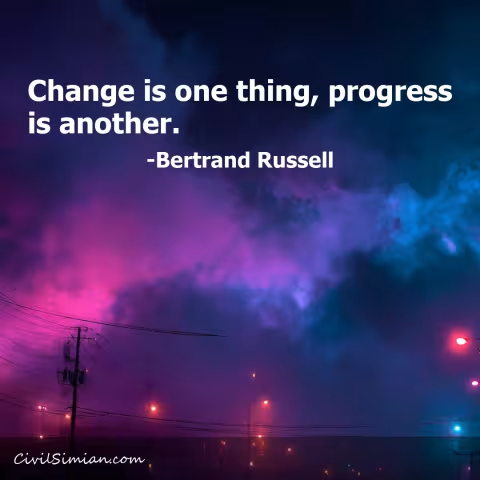
Democracy is the process by which people choose the man who'll get the blame.
▼
Source
source
Attributed to Russell in Geary's Guide to the World's Great Aphorists (2007), p. 346

3 months 1 week ago
As there were black swans, though civilized people had existed for three thousand years on the earth without meeting with them...The uniform experience, therefore, of the inhabitants of the known world, agreeing in a common result, without one known instance of deviation from that result, is not always sufficient to establish a general conclusion.

3 months 1 week ago
If a man own land, the land owns him.
▼
Source
source
Wealth

3 months 2 days ago
Recalling all the erroneous things that doctors have been able to say about sex or madness does us a fat lot of good. I think that what is currently politically important is to determine the regime of verediction established at a given moment ... on the basis of which you can now recognize, for example, that doctors in the nineteenth century said so many stupid things about sex. ... It is not so much the history of the true or the history of the false as the history of verediction which has a political significance.
▼
Source
source
Lecture 2, January 17, 1979, p. 36
3 months 1 week ago
I have been merely oppressed by the weariness and tedium and vanity of things lately: nothing stirs me, nothing seems worth doing or worth having done: the only thing that I strongly feel worth while would be to murder as many people as possible so as to diminish the amount of consciousness in the world. These times have to be lived through: there is nothing to be done with them.
▼
Source
source
Letter to Gilbert Murray, March 21, 1903

1 month 2 weeks ago
One cannot ignore half of life for the purposes of science, and then claim that the results of science give a full and adequate picture of the meaning of life. All discussions of 'life' which begin with a description of man's place on a speck of matter in space, in an endless evolutionary scale, are bound to be half-measures, because they leave out most of the experiences which are important to use as human beings.
▼
Source
source
p. 309
2 days ago
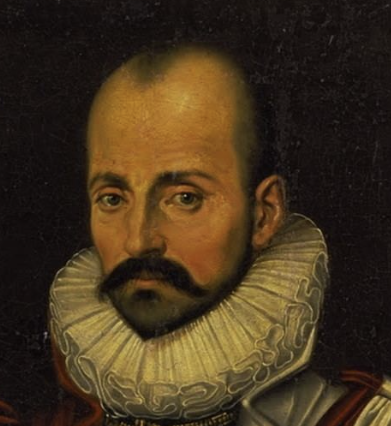
Do not imagine that there is any bird more easily caught by decoy, nor any fish sooner fixed on the hook by wormy bait, than are all these poor fools neatly tricked into servitude by the slightest feather passed, so to speak, before their mouths. Truly it is a marvelous thing that they let themselves be caught so quickly at the slightest tickling of their fancy. Plays, farces, spectacles, gladiators, strange beasts, medals, pictures, and other such opiates, these were for ancient peoples the bait toward slavery, the price of their liberty, the instruments of tyranny. By these practices and enticements the ancient dictators so successfully lulled their subjects under the yoke, that the stupefied peoples, fascinated by the pastimes and vain pleasures flashed before their eyes, learned subservience as naïvely, but not so creditably, as little children learn to read by looking at bright picture books.
▼
Source
source
Part 2

3 months 2 weeks ago
Superstition, idolatry, and hypocrisy have ample wages, but truth goes a-begging.
▼
Source
source
53
3 months 1 week ago
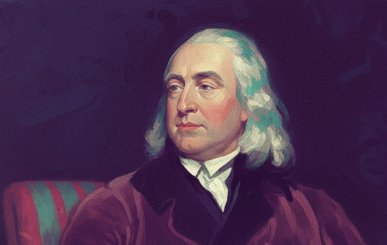
Of corruption, the principal and direct use is, to engage the representatives of the people to betray their trust, and sell themselves and the people to the universal corrupter-the monarch, in his capacity of corrupter-general.
▼
Source
source
Constitutional Code (written between 1820 and 1832), quoted in The Works of Jeremy Bentham, Vol. XVII (1841), p. 76

1 month 2 weeks ago
Historical time knows no lasting present.
2 months ago
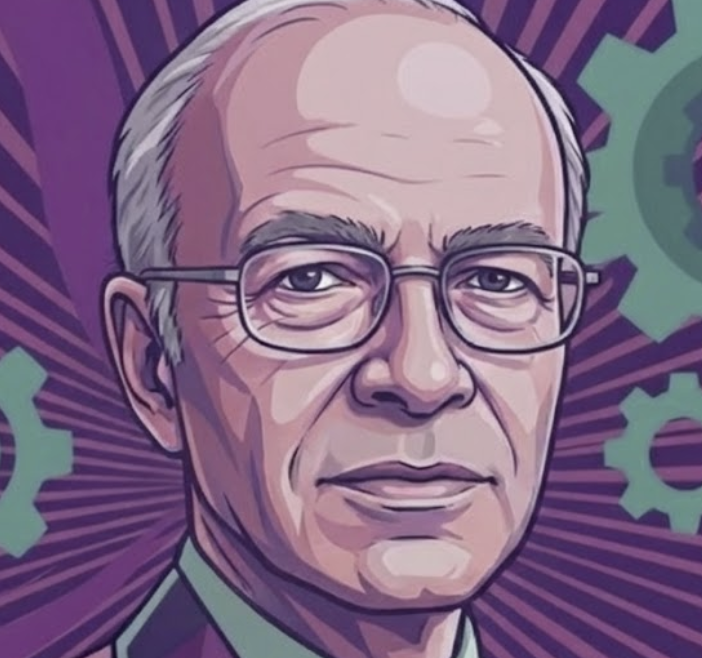
The closed language does not demonstrate and explain-it communicates decision, dictum, command. Where it defines, the definition becomes "separation of good from evil;" it establishes unquestionable.
▼
Source
source
p. 101
2 months 4 weeks ago
Speciesism-the word is not an attractive one, but I can think of no better term-is a prejudice or attitude of bias in favor of the interests of members of one's own species and against those of members of other species.
▼
Source
source
Ch. 1: All Animals Are Equal
2 months 5 days ago
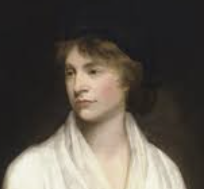
It would be an endless task to trace the variety of meannesses, cares, and sorrows, into which women are plunged by the prevailing opinion that they were created rather to feel than reason, and that all the power they obtain, must be obtained by their charms and weakness.
▼
Source
source
Ch. 4

1 month 5 days ago
New media are new archetypes, at first disguised as degradations of older media.
▼
Source
source
Arts in society, Volume 3, 1964, p. 240

3 months 1 week ago
So monstrous is the making and keeping them slaves at all, abstracted from the barbarous usage they suffer, and the many evils attending the practice; as selling husbands away from wives, children from parents, and from each other, in violation of sacred and natural ties; and opening the way for adulteries, incests, and many shocking consequences, for all of which the guilty Masters must answer to the final Judge.

2 months ago
Who is my mother? and who are my brethren? And he stretched forth his hand toward his disciples, and said, Behold my mother and my brethren! For whosoever shall do the will of my Father which is in heaven, the same is my brother, and sister, and mother.
▼
Source
source
12:48-50 (KJV)
1 month 3 weeks ago
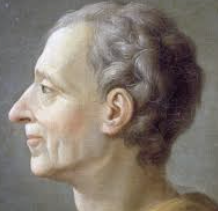
It is a paralogism to say, that the good of the individual should give way to that of the public; this can never take place, except when the government of the community, or, in other words, the liberty of the subject is concerned; this does not affect such cases as relate to private property, because the public good consists in everyone's having his property, which was given him by the civil laws, invariably preserved.
▼
Source
source
Book XXVI, Chapter 15.
1 month 4 weeks ago
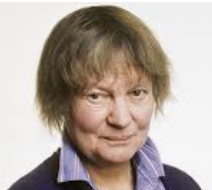
Whit Meynell was a sociologist; he had got into an intellectual muddle early on in life and never managed to get out.
▼
Source
source
The Philosopher's Pupil (1983) p. 165.

3 months 2 weeks ago
Courtesy is a science of the highest importance. It is, like grace and beauty in the body, which charm at first sight, and lead on to further intimacy and friendship, opening a door that we may derive instruction from the example of others, and at the same time enabling us to benefit them by our example, if there be anything in our character worthy of imitation.
3 months 1 week ago
No particular results then, so far, but only an attitude of orientation, is what the pragmatic method means. The attitude of looking away from first things, principles, 'categories,' supposed necessities; and of looking towards last things, fruits, consequences, facts.
▼
Source
source
Lecture II, What Pragmatism Means
3 months 3 days ago
We do not "have" a body; rather, we "are" bodily.
▼
Source
source
p. 99
1 month 2 weeks ago
Courage, garrulousness and the mob are on our side. What more do we want?
▼
Source
source
E 32
2 months 4 days ago
The traditional disputes of philosophers are, for the most part, as unwarranted as they are unfruitful. The surest way to end them is to establish beyond question what should be the purpose and method of a philosophical enquiry. And this is by no means so difficult a task as the history of philosophy would lead one to suppose. For if there are any questions which science leaves it to philosophy to answer, a straightforward process of elimination must lead to their discovery.
▼
Source
source
Ch. 1, first lines.

1 month 3 weeks ago
The real sin - perhaps it is a sin against the Holy Ghost for which there is no remission - is the sin of heresy, the sin of thinking for oneself. The saying has been heard before now, here in Spain, that to be a liberal - that is, a heretic - is worse than being an assassin, a thief, or an adulterer. The gravest sin is not to obey the Church, whose infallibility protects us from reason.

3 months 3 weeks ago
If teleological study of the world is philosophy, and if the Law commands such a study, then the Law commands philosophy.
3 months 1 week ago
In the welter of conflicting fanaticisms, one of the few unifying forces is scientific truthfulness, by which I mean the habit of basing our beliefs upon observations and inferences as impersonal, and as much divested of local and temperamental bias, as is possible for human beings.
▼
Source
source
Chapter XXXI "The Philosophy of Logical Analysis"
2 weeks 2 days ago
The public has lost the habit of movie-going because the cinema no longer possesses the charm, the hypnotic charisma, the authority it once commanded. The image it once held for us all - that of a dream we dreamt with our eyes open - has disappeared. Is it still possible that one thousand people might group together in the dark and experience the dream that a single individual has directed?
▼
Source
source
"Decline of Cinema"
2 months 1 week ago
There's a bit of testicle at the bottom of our most sublime feelings and our purest tenderness.
▼
Source
source
Letter to Étienne Noël Damilaville
3 months 1 week ago
The writers by whom, more than by any others, a new mode of political thinking was brought home to me, were those of the St. Simonian school in France. In 1829 and 1830 I became acquainted with some of their writings. They were then only in the earlier stages of their speculations. They had not yet dressed out their philosophy as a religion, nor had they organized their scheme of Socialism. They were just beginning to question the principle of hereditary property. I was by no means prepared to go with them even this length; but I was greatly struck with the connected view which they for the first time presented to me, of the natural order of human progress; and especially with their division of all history into organic periods and critical periods.
▼
Source
source
(p. 163)

2 days ago
That liberal world that emerged after 1945 led to one of the most spectacularly successful periods in human history. There was material progress. There was stability. There was human freedom. There was the flourishing of many human activities that can only take place in a liberal, and therefore free society...
▼
Source
source
10:06
2 months 1 week ago
Am I a free agent, or am I merely the manifestation of a foreign power? Neither appear sufficiently well founded.By the most courageous resolve of my life am I reduced to this! what Power can save me from it, from myself?
▼
Source
source
Jane Sinnett, trans 1846 p. 24

3 months 3 days ago
I sit astride life like a bad rider on a horse. I only owe it to the horse's good nature that I am not thrown off at this very moment.
▼
Source
source
p. 36e

3 months 3 weeks ago
Gentleness, as opposed to an irascible temper, greatly contributes to the tranquility and happiness of life, by preserving the mind from perturbation, and arming it against the assaults of calumny and malice.
3 months 1 week ago
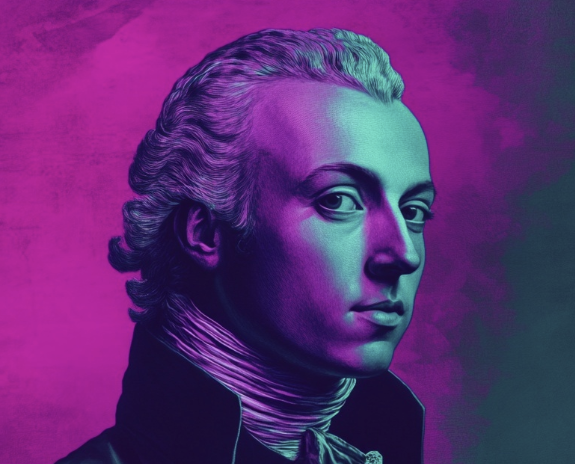
...happiness is not an ideal of reason but of imagination, resting solely on empirical grounds.
▼
Source
source
Fundamental Principles of the Metaphysics of Ethics (1785), Second Section.
2 months 1 week ago
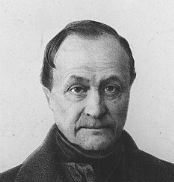
Social positivism only accepts duties, for all and towards all. Its constant social viewpoint cannot include any notion of rights, for such notion always rests on individuality. We are born under a load of obligations of every kind, to our predecessors, to our successors, to our contemporaries. These obligations then increase or accumulate, for it is some time before we can return any service. ... Any human right is therefore as absurd as immoral. Since there are no divine rights anymore, this concept must therefore disappear completely as related only to the preliminary regime and totally inconsistent with the final state where there are only duties based on functions.
▼
Source
source
Le Catéchisme positiviste

2 months 1 week ago
Old religious factions are volcanoes burnt out.
▼
Source
source
Speech on the Petition of the Unitarians
3 months 1 week ago
Modern transcendental idealism, Emersonianism, for instance, also seems to let God evaporate into abstract Ideality. Not a deity in concreto, not a superhuman person, but the immanent divinity in things, the essentially spiritual structure of the universe, is the object of the transcendentalist cult. In that address of the graduating class at Divinity College in 1838 which made Emerson famous, the frank expression of this worship of mere abstract laws was what made the scandal of the performance.
▼
Source
source
Lecture II, "Circumscription of the Topic"
1 month 2 weeks ago
If this is philosophy it is at any rate a philosophy that is not in its right mind.
▼
Source
source
L 23

3 months 6 days ago
For the trouble with lying and deceiving is that their efficiency depends entirely upon a clear notion of the truth that the liar and deceiver wishes to hide. In this sense, truth, even if it does not prevail in public, possesses an ineradicable primacy over all falsehoods.
▼
Source
source
"Lying in Politics"
3 months 1 week ago
If everything must have a cause, then God must have a cause. If there can be anything without a cause, it may just as well be the world as God, so that there cannot be any validity in that argument. It is exactly of the same nature as the Hindu's view, that the world rested upon an elephant and the elephant rested upon a tortoise; and when they said, "How about the tortoise?" the Indian said, "Suppose we change the subject." The argument is really no better than that.
▼
Source
source
"The First-cause Argument"
1 month 3 weeks ago
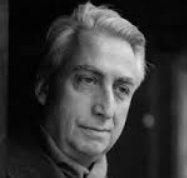
The politician being interviewed clearly takes a great deal of trouble to imagine an ending to his sentence: and if he stopped short? His entire policy would be jeopardized!
▼
Source
source
Sentence, in The Pleasure of the Text
1 month 3 weeks ago
There is no tyranny in the world more hateful than that of ideas. Ideas bring ideophobia, and the consequence is that people begin to persecute their neighbors in the name of ideas. I loathe and detest all labels, and the only label that I could now tolerate would be that of ideoclast or idea breaker.
▼
Source
source
Recalled by Walter Starkie from a conversation he had with Unamuno, as related in the Epilogue of Unamuno.
CivilSimian.com created by AxiomaticPanic, CivilSimian, Kalokagathia