


3 weeks 3 days ago
In morals, truth is but little prized when it is a mere sentiment, and only attains its full value when realized in the world as fact.
▼
Source
source
Ch. 5.

3 months 4 weeks ago
To his dog, every man is Napoleon; hence the constant popularity of dogs.
▼
Source
source
Reader's Digest, 1934
2 months 2 days ago
Once animals had a more sacred, more divine character than men. There is not even a reign of the "human" in primitive societies, and for a long time the animal order has been the order of reference. Only the animal is worth being sacrificed, as a god, the sacrifice of man only comes afterward, according to a degraded order. Men qualify only by their affiliation to the animal: the Bororos "are" macaws. "
▼
Source
source
The Animals: Territory and Metamorphoses," p. 133

4 months 1 day ago
"You're a bitter man," said Candide. "That's because I've lived," said Martin.

4 months ago
I am as firmly convinced that religions do harm as I am that they are untrue.

3 months 4 weeks ago
Rhodora! if the sages ask thee why This charm is wasted on the earth and sky, Tell them, dear, that, if eyes were made for seeing, Then beauty is its own excuse for Being.
▼
Source
source
The Rhodora
1 week ago
For a long time there have been no true sovereigns, monarchs by divine right capable of wielding sword and scepter, and symbols of a higher human ideal. More than a century ago, Juan Donoso Cortés stated that no kings existed capable of proclaiming themselves as such except "by the will of the nation," adding that, even if any had existed, they would not have been recognized. The few monarchies still surviving are notoriously impotent and empty, while the traditional nobility has lost its essential character as a political class and any existential prestige and rank along with it. Its current representatives may still interest our contemporaries when put on the same plane as film actors and actresses, sport heroes and opera stars, and when through some private, sentimental, or scandalous chance, they serve as fodder for magazine articles.
▼
Source
source
p. 172

4 months ago
The soldier is applauded who refuses to serve in an unjust war by those who do not refuse to sustain the unjust government which makes the war; is applauded by those whose own act and authority he disregards and sets at naught; as if the state were penitent to that degree that it hired one to scourge it while it sinned, but not to that degree that it left off sinning for a moment.

4 months 3 days ago
The real and effectual discipline which is exercised over a workman is that of his customers. It is the fear of losing their employment which restrains his frauds and corrects his negligence.
▼
Source
source
Chapter X, Part II.

2 months 3 weeks ago
Put up again thy sword into his place: for all they that take the sword shall perish with the sword. Thinkest thou that I cannot now pray to my Father, and he shall presently give me more than twelve legions of angels? But how then shall the scriptures be fulfilled, that thus it must be?
2 weeks ago
No furniture so charming as books.
▼
Source
source
Vol. I, ch. 9, p. 289

1 month 3 weeks ago
The hot radio medium used in cool or nonliterate cultures has a violent effect, quite unlike its effect, say in England or America, where radio is felt as entertainment.
▼
Source
source
(p. 30)
2 months 3 weeks ago
Sudden Glory, is the passion which maketh those Grimaces called LAUGHTER.
▼
Source
source
The First Part, Chapter 6, p. 27 (italics and spelling as per text)

3 months 3 weeks ago
What is the case, the fact, is the existence of atomic facts.
▼
Source
source
(2) Original German: Was der Fall ist, die Tatsache, ist das Bestehen von Sachverhalten.

2 months 3 weeks ago
Scaffolds, dungeons, jails flourish only in the shadow of a faith - of that need to believe which has infested the mind forever. The devil pales beside the man who owns a truth, his truth. We are unfair to a Nero, a Tiberius: it was not they who invented the concept heretic: they were only degenerate dreamers who happened to be entertained by massacres. The real criminals are men who establish an orthodoxy on the religious or political level, men who distinguish between the faithful and the schismatic.

2 weeks 6 days ago
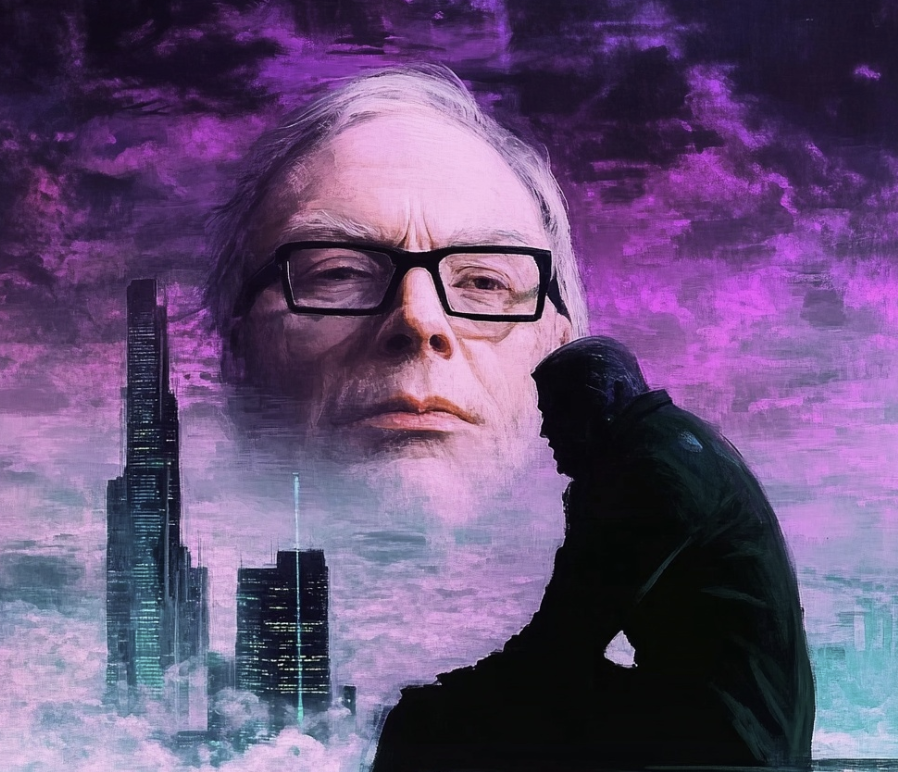
Oceans of horse-hair, continents of parchment, and learned-sergeant eloquence, were it continued till the learned tongue wore itself small in the indefatigable learned mouth, cannot make unjust just.
4 months 3 weeks ago
In my fiction I am careful to make everything probable and to tie up all loose ends. Real life is not hampered by such considerations.
4 months ago
All sources of energy upon which industry depends are wasted when they are employed; and industry is expending them at a continually increasing rate. Already coal has been largely replaced by oil, and oil is being used up so fast that East and West alike conceive it necessary to their own prosperity to destroy the industry of the other. And what is true of oil is equally true of other natural resources. Every day, many square miles of forest are turned into newspaper, but there is no known process by which newspaper can be turned into forest. You will say that this need not worry us, since newspapers will be replaced by radio, but radio requires electricity, electricity requires power, and power depends upon raw materials.
▼
Source
source
Part I: Man and Nature, Ch. 4: The Limits of Human Power, p. 30

3 months 4 weeks ago
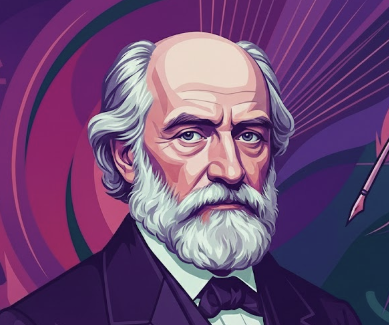
The true Enlightenment thinker, the true rationalist, never wants to talk anyone into anything. No, he does not even want to convince; all the time he is aware that he may be wrong. Above all, he values the intellectual independence of others too highly to want to convince them in important matters. He would much rather invite contradiction, preferably in the form of rational and disciplined criticism. He seeks not to convince but to arouse - to challenge others to form free opinions.
4 months ago
A man's face as a rule says more, and more interesting things, than his mouth, for it is a compendium of everything his mouth will ever say, in that it is the monogram of all this man's thoughts and aspirations.
▼
Source
source
Vol. 2, Ch. 29, § 377
2 weeks 6 days ago
This poor amphibious Pope too gives loaves to the Poor; has in him more good latent than he is himself aware of. His poor Jesuits, in the late Italian Cholera, were, with a few German Doctors, the only creatures whom dastard terror had not driven mad: they descended fearless into all gulfs and bedlams; watched over the pillow of the dying, with help, with counsel and hope; shone as luminous fixed stars, when all else had gone out in chaotic night: honour to them!
3 months 4 weeks ago
Why do I think that we, the intellectuals, are able to help? Simply because we, the intellectuals, have done the most terrible harm for thousands of years. Mass murder in the name of an idea, a doctrine, a theory, a religion - that is all our doing, our invention: the invention of the intellectuals. If only we would stop setting man against man - often with the best intentions - much would be gained. Nobody can say that it is impossible for us to stop doing this.

4 months 3 days ago
Extreme pride or dejection indicates extreme ignorance of self.
▼
Source
source
Part IV, Prop. LV
2 months 3 weeks ago
Only the idiot is equipped to breathe.
2 months 2 weeks ago
Even at the outset, the total and massive quality has its uniqueness; even when vague and undefined, it is just that which it is and not anything else. If the perception continues, discrimination inevitably sets in. Attention must move, and as it moves, parts, members, emerge from the background. And if attention moves in a unified direction instead of wandering, it is controlled by the pervading qualitative unity; attention is controlled by it because it operates within it.
▼
Source
source
p. 199
2 months 3 weeks ago
Even the most wretched individual of our present society could not exist and develop without the cumulative social efforts of countless generations. Thus the individual, his freedom and reason, are the products of society, and not vice versa: society is not the product of individuals comprising it; and the higher, the more fully the individual is developed, the greater his freedom - and the more he is the product of society, the more does he receive from society and the greater his debt to it.
▼
Source
source
As quoted in The Philosophy of Bakunin (1953) edited by G. P. Maximoff, p. 158
4 months 3 weeks ago
Great feelings take with them their own universe, splendid or abject. They light up with their passion an exclusive world in which they recognize their climate. There is a universe of jealousy, of ambition, of selfishness or generosity. A universe in other words a metaphysic and an attitude of mind.
2 months 3 weeks ago
We do not rush toward death, we flee the catastrophe of birth, survivors struggling to forget it. Fear of death is merely the projection into the future of a fear which dates back to our first moment of life. We are reluctant, of course, to treat birth as a scourge: has it not been inculcated as the sovereign good - have we not been told that the worst came at the end, not at the outset of our lives? Yet evil, the real evil, is behind, not ahead of us. What escaped Jesus did not escape Buddha: "If three things did not exist in the world, O disciples, the Perfect One would not appear in the world. ..." And ahead of old age and death he places the fact of birth, source of every infirmity, every disaster.
4 months 2 weeks ago
The verdict of the world is conclusive.
▼
Source
source
III, 24
4 months 2 weeks ago
Speaking with sense we must fortify ourselves in the common sense of all, as a city is fortified by its law, and even more forcefully. For all human laws are nourished by the one divine law. For it prevails as far as it will and suffices for all and is superabundant.
1 week 3 days ago
Truth has no special time of its own. Its hour is now - always, and indeed then most truly when it seems most unsuitable to actual circumstances. Care for distress at home and care for distress elsewhere do but help each other if, working together, they wake men in sufficient numbers from their thoughtlessness, and call into life a new spirit of humanity.
▼
Source
source
Ch. XI : Conclusion
4 months 3 weeks ago
To have time was at once the most magnificent and the most dangerous of experiments. Idleness is fatal only to the mediocre.
2 months 3 weeks ago
Now I am about to take my last voyage, a great leap in the dark.
▼
Source
source
Last words

2 months 2 weeks ago
One of those leaders of what they call the social revolution has said that religion is the opiate of the people. Opium...opium...opium, yes. Let us give them opium so that they can sleep and dream.
Just now
High up where the poor sat, the people quaked with fear:they saw the soul stretched on the ground, a votive beastbeaten by the conflicting powers of light and dark,and their minds shook, nor knew now what great god to choose,for comfort's road dropped to the right, the rough ascentrose to the left, and both roads seemed to lead to God,while at the crossroads stood the human heart, and swayed.
▼
Source
source
Book VI, line 242
1 month 3 weeks ago
Speech is a mirror of the soul; as a man speaks, so is he.
▼
Source
source
Maxim 1073
4 months 1 week ago
Further, it will not be amiss to distinguish the three kinds and, as it were, grades of ambition in mankind. The first is of those who desire to extend their own power in their native country, a vulgar and degenerate kind. The second is of those who labor to extend the power and dominion of their country among men. This certainly has more dignity, though not less covetousness. But if a man endeavor to establish and extend the power and dominion of the human race itself over the universe, his ambition (if ambition it can be called) is without doubt both a more wholesome and a more noble thing than the other two. Now the empire of man over things depends wholly on the arts and sciences. For we cannot command nature except by obeying her.
▼
Source
source
Aphorism 129
2 months 3 weeks ago
Ministers and favorites are a sort of people who have a state prisoner in their custody, the whole management of whose understanding and actions they can easily engross.
▼
Source
source
Book V, Ch. 5
3 months 3 weeks ago
If we compare the third-person attitude of someone who simply says how things stand (this is the attitude of the scientist, for example) with the performative attitude of someone who tries to understand what is said to him (this is the attitude of the interpreter, for example), the implications ... become clear. ... First, interpreters relinquish superiority that observers have by virtue of their privileged position, in that they themselves are drawn, at least potentially, into negotiations about the meaning and validity of utterances. By taking part in communicative action, they accept in principle the same status as those whose utterances they are trying to understand. ... It is impossible to decide a priori who is to learn from whom.
▼
Source
source
p. 26
1 month 1 week ago
Our present-day neurochemical cocktail, we are asked to believe, is the medium through which alien realms of consciousness can be grasped and neutrally appraised from a third-person perspective. Empirical research suggests this optimism is at best naïve.
▼
Source
source
Storming Heaven: LSD and the American Dream, BLTC Research

3 months 4 weeks ago
The entire process seems simple and natural, i.e., possesses the naturalness of a shallow rationalism.
▼
Source
source
Vol. II, Ch. III, p. 95.
2 months 4 weeks ago
The Doctrine of a Perfect God; in whose nature nothing arbitrary or changeable can have a place; in whose Highest Being we all live, and in this Life may, and ought at all times to be, blessed;-this Doctrine, which ignorant men think they have sufficiently demolished when they have proclaimed it to be Mysticism, is by no means Mysticism, for it has an immediate reference to human action, and in deed to the inmost spirit which ought to inspire and guide all our actions. It can only become Mysticism when it is associated with the pretext that the insight into this truth proceeds from a certain inward and mysterious light, which is not accessible to all men, but is only bestowed upon a few favourites chosen from among the rest:-in which pretext the Mysticism consists, for it betrays a presumptuous contemplation of personal merit, and a pride in mere sensuous Individuality.
▼
Source
source
p, 122-123

2 months 3 weeks ago
The development of the human mind has practically extinguished all feelings, except a few sporadic kinds, like sound, colors, smells, warmth, etc., which now appear to be disconnected and separate.


2 months 1 week ago
The principle of brotherhood expounded by the agitator of Nazareth preserved the germ of life, of truth and justice, so long as it was the beacon light of the few. The moment the majority seized upon it, that great principle became a shibboleth and harbinger of blood and fire, spreading suffering and disaster. The attack on the omnipotence of Rome was like a sunrise amid the darkness of the night, only so long as it was made by the colossal figures of a Huss, a Calvin, or a Luther. Yet when the mass joined in the procession against the Catholic monster, it was no less cruel, no less bloodthirsty than its enemy. Woe to the heretics, to the minority, who would not bow to its dicta. After infinite zeal, endurance, and sacrifice, the human mind is at last free from the religious phantom; the minority has gone on in pursuit of new conquests, and the majority is lagging behind, handicapped by truth grown false with age.

3 months 4 weeks ago
I look forward to a future when acts of war shall be formally outlawed as between civilized peoples. All these beliefs of mine put me firmly into the anti-military party. But I do not believe that peace either ought to be or will be permanent on this globe, unless the states, pacifically organized, preserve some of the old elements of army-discipline. A permanently successful peace-economy cannot be a simple pleasure-economy. In the more or less socialistic future toward which mankind seems drifting we must still subject ourselves collectively to those severities which answer to our real position upon this only partly hospitable globe. We must make new energies and hardihoods continue the manliness to which the military mind so faithfully clings.
2 weeks 6 days ago
Men's hearts ought not to be set against one another; but set with one another, and all against the Evil Thing only.

4 months 1 week ago
If you press me to say why I loved him, I can say no more than it was because he was he, and I was I. Variants: If a man urge me to tell wherefore I loved him, I feel it cannot be expressed but by answering: Because it was he, because it was myself. If a man should importune me to give a reason why I loved him, I find it could no otherwise be expressed, than by making answer: because it was he, because it was I.
▼
Source
source
Ch. 28
1 week ago
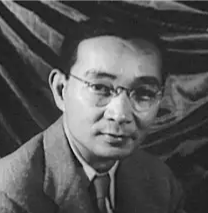
If life is all subjective, why not be subjectively happy rather than subjectively sad?
▼
Source
source
On the Wisdom of America (1950), p. 155
CivilSimian.com created by AxiomaticPanic, CivilSimian, Kalokagathia