


4 months 4 weeks ago
A line by Thomas à Kempis which perhaps could be used as a motto sometime. He says of Paul: Therefore he turned everything over to God, who knows all, and defended himself solely by means of patience and humility . . . . He did defend himself now and then so that the weak would not be offended by his silence.

3 months 4 weeks ago
When I say that children should be told about sex, I do not mean that they should be told only the bare physiological facts; they should be told whatever they wish to know. There should be no attempt to represent adults as more virtuous than they are, or sex as occurring only in marriage. There is no excuse for deceiving children. And when, as must happen in conventional families, they find that their parents have lied, they lose confidence in them, and feel justified in lying to them.
▼
Source
source
Our Sexual Ethics, 1936

2 months 1 week ago
Feminism in the United States has never emerged from the women who are most victimized by sexist oppression; women who are daily beaten down, mentally, physically, and spiritually-women who are powerless to change their condition in life. They are a silent majority. A mark of their victimization is that they accept their lot in life without visible question, without organized protest, without collective anger or rage.
▼
Source
source
p. 1.
2 months 2 weeks ago
The doctrine of Right and Wrong, is perpetually disputed, both by Pen and the Sword: Whereas the doctrine of Lines, and Figures, is not so; because men care not, in that subject what be truth, as a thing that crosses no mans ambition, profit, or lust. For I doubt not, but if it had been a thing contrary to any mans right of dominion, or to the interest of men that have dominion, That the three Angles of a Triangle, should be equall to two Angles of a Square; that doctrine should have been, if not disputed, yet by the burning of all books of Geometry, suppressed, as far as he whom it concerned was able.
▼
Source
source
The First Part, Chapter 11, p. 80-81
2 months 2 weeks ago
For such is the nature of men, that howsoever they may acknowledge many others to be more witty, or more eloquent, or more learned; Yet they will hardly believe there be many so wise as themselves: For they see their own wit at hand, and other men's at a distance.
▼
Source
source
The First Part, Chapter 13, p. 61

1 month 3 days ago
As Malaparte saw it, Naples was a pagan city with an ancient sense of time. Christianity taught those who were converted to it to think of history as the unfolding of a single plot - a moral drama of sin and redemption. In the ancient world there was no such plot - only a multitude of stories that were forever being repeated. Inhabiting that ancient world, the Neapolitans did not expect any fundamental alteration in human affairs. Not having accepted the Christian story of redemption, they had not been seduced by the myth of progress. Never having believed civilization to be permanent, they were not surprised when it foundered.
▼
Source
source
An Old Chaos: Frozen Horses and Deserts of Brick (p. 22)



2 weeks 4 days ago
It must have been in his teens, perhaps rather early, that he and his elder brother John, with William Bell (afterwards of Wylie Hill, and a noted drover) and his brother, all met in the kiln at Eelief to play cards. The corn was dried then at home. There was a fire, therefore, aud perhaps it was both heat and light. The boys had played, perhaps, often enough for trifling stakes, and always parted in good humor. One night they came to some disagreement. My father spoke out what was in him about the folly, the sinfulness, of quarreling over a perhaps sinful amusement. The earnest mind persuaded other minds. They threw the cards into the fire, and (I think the younger Bell told my brother James) no one of the four ever touched a card again through life. My father certainly never hinted at such a game since I knew him. I cannot remember that I, at that age, had any such force of belief. Which of us can?

4 months 3 weeks ago
So many men are deprived of grace. How can one live without grace? One has to try it and do what Christianity never did: be concerned with the damned.

3 months 3 weeks ago
Half of the human race lives in manifest obedience to the lunar rhythm; and there is evidence to show that the psychological and therefore the spiritual life, not only of women, but of men too, mysteriously ebbs and flows with the changes of the moon. There are unreasoned joys, inexplicable miseries, laughters and remorses without a cause. Their sudden and fantastic alternations constitute the ordinary weather of our minds. These moods, of which the more gravely numinous may be hypostasized as gods, the lighter, if we will, as hobgoblins and fairies, are the children of the blood and humours. But the blood and humours obey, among many other masters, the changing moon. Touching the soul directly through the eyes and, indirectly, along the dark channels of the blood, the moon is doubly a divinity.
▼
Source
source
"Meditation on the Moon"

4 months 4 days ago
There is nothing so easy, so sweet, and so favourable, as the divine law: it calls and invites us to her, guilty and abominable as we are; extends her arms and receives us into her bosom, foul and polluted as we at present are, and are for the future to be. But then, in return, we are to look upon her with a respectful eye; we are to receive this pardon with all gratitude and submission, and for that instant at least, wherein we address ourselves to her, to have the soul sensible of the ills we have committed, and at enmity with those passions that seduced us to offend her.
▼
Source
source
Ch. 56, tr. Cotton, rev. W. Carew Hazlitt, 1877

3 months 1 day ago
I discuss with myself questions of politics, love, taste, or philosophy. I let my mind rove wantonly, give it free rein to follow any idea, wise or mad that may present itself. ... My ideas are my harlots.

3 months 4 weeks ago
Here the institution that compels is the state, the only purpose of which is to protect individuals from one another and the whole from external enemies. Some German philosophasters of this mercenary age would like to twist it into an institution for education and edification in morality; in the background of this lurks the Jesuitical purpose of eliminating personal freedom and the individual's personal development in order to make him into a mere cog in a Chinese machine of state and religion. But this is the path by which in the past one has arrived at the inquisitions, burning of heretics, and religious wars; Frederick the Great's pledge, 'In my country, each shall be able to tend to his salvation in his own fashion', indicated that he never wanted to tread that path.
▼
Source
source
Part III, Ch. VI, p. 184

3 months 4 weeks ago
So monstrous is the making and keeping them slaves at all, abstracted from the barbarous usage they suffer, and the many evils attending the practice; as selling husbands away from wives, children from parents, and from each other, in violation of sacred and natural ties; and opening the way for adulteries, incests, and many shocking consequences, for all of which the guilty Masters must answer to the final Judge.

4 months 2 weeks ago
A true friend will partake of the wants and sorrows of his friend, as if they were his own; if he be in want, he will relieve him; if he be in prison, he will visit him; if he be sick, he will come to him; nay-situations may occur, in which he would not scruple to die for him. It cannot then be doubted, that friendship is one of the most useful means of procuring a secure, tranquil, and happy life.
1 week 5 days ago
What is not supposed to be my concern! First and foremost, the Good Cause, then God's cause, the cause of mankind, of truth, of freedom, of humanity, of justice; further, the cause of my people, my prince, my fatherland; finally, even the cause of Mind, and a thousand other causes. Only my cause is never to be my concern. "Shame on the egoist who thinks only of himself!"
▼
Source
source
Cambridge 1995, p. 5

3 weeks 1 day ago
While Trump is not going to be president, Trumpism is going to survive. ...The Democrats need to look very very carefully at those election results because ...the Republicans did well not necessarily because people love what they represent, but because they don't like what the Democrats represent... Unless they sort out what that is, they are going to continue to lose elections.
▼
Source
source
28:52:00
1 month 1 week ago
Perhaps the most valuable result of all education is the ability to make yourself do the thing you have to do, when it ought to be done, whether you like it or not; it is the first lesson that ought to be learned; and, however early a man's training begins, it is probably the last lesson that he learns thoroughly.
▼
Source
source
Technical Education
3 months 4 weeks ago
In a logically perfect language, there will be one word and no more for every simple object, and everything that is not simple will be expressed by a combination of words, by a combination derived, of course, from the words for the simple things that enter in, one word for each simple component.
1 week 4 days ago
As the French say, there are three sexes - men, women, and clergymen.
▼
Source
source
Vol. I, ch. 9, p. 313

3 months 3 weeks ago
The homosexual never thinks of himself when someone is branded in his presence with the name homosexual. ...His sexual tastes will doubtless lead him to enter into relationships with this suspect category, but he would like to make use of them without being likened to them. Here, too, the ban that is cast on certain men by society has destroyed all possibility of reciprocity among them. Shame isolates.
4 months 1 week ago
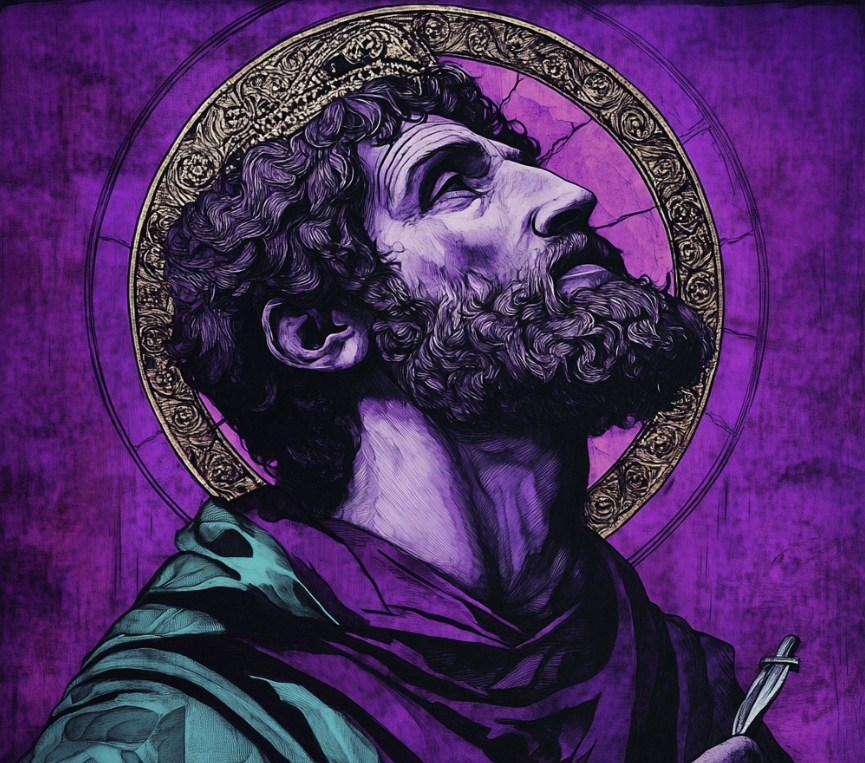
The philosophers who wished us to have the gods for our friends rank the friendship of the holy angels in the fourth circle of society, advancing now from the three circles of society on earth to the universe, and embracing heaven itself. And in this friendship we have indeed no fear that the angels will grieve us by their death or deterioration. But as we cannot mingle with them as familiarly as with men (which itself is one of the grievances of this life), and as Satan, as we read, sometimes transforms himself into an angel of light, to tempt those whom it is necessary to discipline, or just to deceive, there is great need of God's mercy to preserve us from making friends of demons in disguise, while we fancy we have good angels for our friends; for the astuteness and deceitfulness of these wicked spirits is equalled by their hurtfulness.
▼
Source
source
XIX, 9
4 months 1 week ago
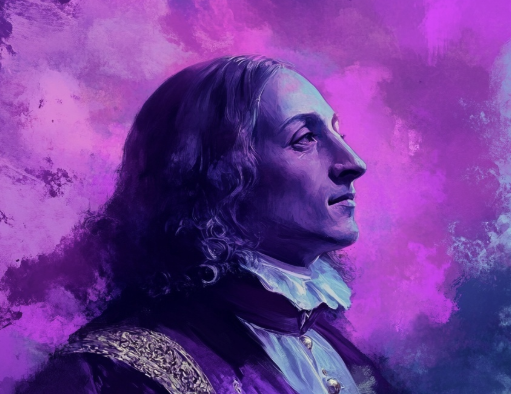
I make no doubt... that these rules are simple, artless, and natural.
2 months 3 weeks ago
True, the law is sacred to the bourgeois, for it is his own composition, enacted with his consent, and for his benefit and protection. He knows that, even if an individual law should injure him, the whole fabric protects his interests; and more than all, the sanctity of the law, the sacredness of order as established by the active will of one part of society, and the passive acceptance of the other, is the strongest support of his social position. Because the English bourgeois finds himself reproduced in his law, as he does in his God, the policeman's truncheon which, in a certain measure, is his own club, has for him a wonderfully soothing power. But for the working-man quite otherwise! The working-man knows too well, has learned from too oft-repeated experience, that the law is a rod which the bourgeois has prepared for him; and when he is not compelled to do so, he never appeals to the law.

3 months 3 weeks ago
Of course a war is entertaining. The immediate fear and suffering of the humans is a legitimate and pleasing refreshment for our myriads of toiling workers. But what permanent good does it do us unless we make use of it for bringing souls to Our Father Below? When I see the temporal suffering of humans who finally escape us, I feel as if I had been allowed to taste the first course of a rich banquet and then denied all the rest. It is worse than not to have tasted it at all. The Enemy, true to His barbarous methods of warfare, allows us to see the short misery of His favourites only to tantalize and torment us - to mock the incessant hunger, which, during this present phase of great conflict, His blockade is admittedly imposing.
▼
Source
source
Letter V

2 months ago
God created everything by number, weight and measure.
▼
Source
source
As quoted in Symmetry in Plants (1998) by Roger V. Jean and Denis Barabé, p. xxxvii

3 months 3 days ago
The universe comprises all being in a totality; for nothing that exists is outside or beyond infinite being, as the latter has no outside or beyond.

8 months 2 days ago
Ideology is not a dreamlike illusion that we build to escape insupportable; in its basic dimension, it is a fantasy-construction which serves as a support for our reality itself; an illusion which structures our effective, real social relations and thereby masks some insupportable, real, impossible kernel.
4 months 4 days ago
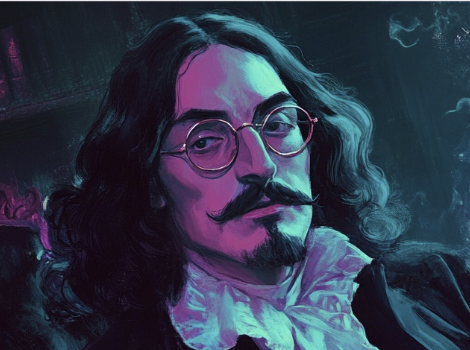
Staying as I am, one foot in one country and the other in another, I find my condition very happy, in that it is free.
▼
Source
source
Letter to Elisabeth of Bohemia, Princess Palatine, Paris, June/July 1648
5 days ago
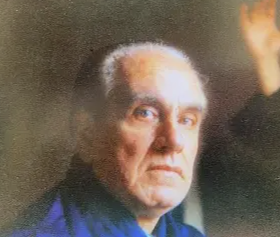
I truly cannot say what the person who still has hope for man should think of the imminence of quasi-apocalyptic destruction. It would certainly force many to face the existential problem in all its nakedness, and subject them to extreme trials; but is this a worse evil than that of mankind's safe, secure, satisfied, and total consignment to the kind of happiness that befits Nietzsche's "last man": a comfortable consumer civilization of socialized human animals, aided by all the discoveries of science and industry and reproducing demographically in a squirming, catastrophic crescendo?
▼
Source
source
p. 140

2 months 3 weeks ago
Yes - you, you alone must pay for everything because you turned up like this, because I'm a scoundrel, because I'm the nastiest, most ridiculous, pettiest, stupidest, and most envious worm of all those living on earth who're no better than me in any way, but who, the devil knows why, never get embarrassed, while all my life I have to endure insults from every louse - that's my fate. What do I care that you do not understand any of this?
▼
Source
source
Part 2, Chapter 9

3 months 3 weeks ago
As a rule we disbelieve all the facts and theories for which we have no use.
▼
Source
source
"The Will to Believe" p. 10
3 months 4 weeks ago
It is obvious that "obscenity" is not a term capable of exact legal definition; in the practice of the Courts, it means "anything that shocks the magistrate."
▼
Source
source
Ch. 10: Recrudescence of Puritanism

3 months 4 weeks ago
Being of opinion that the doctrine and history of so extraordinary a sect as the Quakers were very well deserving the curiosity of every thinking man, I resolved to make myself acquainted with them, and for that purpose made a visit to one of the most eminent of that sect in England, who, after having been in trade for thirty years, had the wisdom to prescribe limits to his fortune, and to his desires, and withdrew to a small but pleasant retirement in the country, not many miles from London. Here it was that I made him my visit. His house was small, but neatly built, and with no other ornaments but those of decency and convenience.
4 months 4 days ago
Of all our infirmities, the most savage is to despise our being.
▼
Source
source
Book III, Ch. 13 Variant: Of all the infirmities we have, 'tis the most savage to despise our being. (Charles Cotton translation)

3 months 1 week ago
Again, Amyclas the Heracleotean, one of Plato's familiars, and Menæchmus, the disciple, indeed, of Eudoxus, but conversant with Plato, and his brother Dinostratus, rendered the whole of geometry as yet more perfect. But Theudius, the Magnian, appears to have excelled, as well in mathematical disciplines, as in the rest of philosophy. For he constructed elements egregiously, and rendered many particulars more universal. Besides, Cyzicinus the Athenian, flourished at the same period, and became illustrious in other mathematical disciplines, but especially in geometry. These, therefore, resorted by turns to the Academy, and employed themselves in proposing common questions.
▼
Source
source
Ch. IV.
4 months 4 weeks ago
Death induces the sensual person to say: Let us eat and drink, because tomorrow we shall die – but this is sensuality's cowardly lust for life, that contemptible order of things where one lives in order to eat and drink instead of eating and drinking in order to live.
3 months 4 weeks ago
The old often envy the young; when they do, they are apt to treat them cruelly.
3 months 4 weeks ago
Philosophy seems to me on the whole a rather hopeless business.
▼
Source
source
Letter to Gilbert Murray, December 28, 1902
2 weeks 4 days ago
Shall we say, for example, that Science and Art are indebted principally to the founders of Schools and Universities? Did not Science originate rather, and gain advancement, in the obscure closets of the Roger Bacons, Keplers, Newtons; in the workshops of the Fausts and the Watts; wherever, and in what guise soever Nature, from the first times downwards, had sent a gifted spirit upon the earth? Again, were Homer and Shakspeare members of any beneficed guild, or made Poets by means of it? Were Painting and Sculpture created by forethought, brought into the world by institutions for that end? No; Science and Art have, from first to last, been the free gift of Nature; an unsolicited, unexpected gift; often even a fatal one.
1 week ago
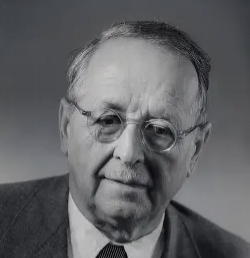
A new theory by the author has been added, which draws the physical inferences consequent on the extension of the foundations of geometry beyond Reimann... and represents an attempt to derive from world-geometry not only gravitational but also electromagnetic phenomena. Even if this theory is still only in its infant stage, I feel convinced that it contains no less truth than Einstein's Theory of Gravitation-whether this amount of truth is unlimited or, what is more probable, is bounded by the Quantum Theory.
▼
Source
source
From the Author's Preface to Third Edition

2 months 1 week ago
Haikus allow the whole world to appear within things.
4 months 1 week ago
You can live, provided you live; that is, you can live for ever, provided you live a good life.
▼
Source
source
229H:3:2
2 weeks 5 days ago
There is no idea so obscure that someone could not come to regard it as self-evident.
▼
Source
source
Chapter Seven, Pragmatism and Positivism, p. 156

2 weeks 5 days ago
If you let people follow their feelings, they will be able to do good. This is what is meant by saying that human nature is good.
▼
Source
source
Book 6, pt. 1, v. 6

2 months 3 weeks ago
No position is so false as having understood and still remaining alive.
2 months 1 week ago
But many of us seek community solely to escape the fear of being alone. Knowing how to be solitary is central to the art of loving. When we can be alone, we can be with others without using them as a means of escape.
▼
Source
source
All About Love: New Visions, 1999
2 months 1 week ago
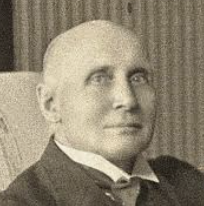
We cannot think first and act afterwards. From the moment of birth we are immersed in action, and can only fitfully guide it by taking thought.
▼
Source
source
Ch. 12: "Religion and Science", p. 261
3 weeks 2 days ago
There is only one purpose to which a whole society can be directed by a deliberate plan. That purpose is war, and there is no other.
▼
Source
source
Ch. V: "The Totalitarian Regimes", §7, p. 90
3 months 4 weeks ago
A single part of physics occupies the lives of many men, and often leaves them dying in uncertainty.
▼
Source
source
"A Madame la Marquise du Châtelet, Avant-Propos," Eléments de Philosophie de Newton, 1738
CivilSimian.com created by AxiomaticPanic, CivilSimian, Kalokagathia