

2 months 6 days ago
Our life is a hope which is continually converting itself into memory and memory in its turn begets hope. Give us leave to live! The eternity that is like an eternal present, without memory and without hope, is death. Thus do ideas exist in the God-Idea, but not thus do men live in the living God, in the God-Man.
3 months 2 weeks ago
Undeterred by this examination, the French Revolution gave rise to ideas which led beyond the ideas of the entire old world order. The revolutionary movement which began in 1789 in the Cercle Social, which in the middle of its course had as its chief representatives Leclerc and Roux, and which finally with Babeuf's conspiracy was temporarily defeated, gave rise to the communist idea which Babeuf's friend Buonarroti re-introduced in France after the Revolution of 1830. This idea, consistently developed, is the idea of the new world order.
▼
Source
source
Chapter 6, 3

3 months 3 weeks ago
People of the same trade seldom meet together, even for merriment and diversion, but the conversation ends in a conspiracy against the public, or in some contrivance to raise prices. It is impossible indeed to prevent such meetings, by any law which either could be executed, or would be consistent with liberty or justice. But though the law cannot hinder people of the same trade from sometimes assembling together, it ought to do nothing to facilitate such assemblies; much less to render them necessary.
▼
Source
source
Chapter X, Part II, p. 152.

4 days ago
Man is a reasoning animal.
2 months 2 weeks ago
When one is not understood one should as a rule lower one's voice, because when one really speaks loudly enough and is not heard, it is because people do not want to hear. One had better begin to mutter to oneself, then they get curious.
▼
Source
source
Nietzsche's Zarathustra (1988), p. 30
2 months 4 days ago
What is morality in any given time or place? It is what the majority then and there happen to like, and immorality is what they dislike.
▼
Source
source
Ch. 22, August 30, 1941.
2 months 1 week ago
The fault with Hegel lies much deeper than in his glorification of the Prussian monarchy. He is guilty not so much of being servile as of betraying his highest philosophical ideas. His political doctrine surrenders society to nature, freedom to necessity, reason to caprice. And in so doing, it mirrors the destiny of the social order that falls, while in pursuit of its freedom, into a state of nature far below reason.
▼
Source
source
P. 218
3 months 1 week ago
Wealth and poverty do not lie in a person's estate, but in their souls.
▼
Source
source
iv. 34
3 months 2 weeks ago
But, suppose, besides, that the making of the new machinery affords employment to a greater number of mechanics, can that be called compensation to the carpet makers, thrown on the streets?
▼
Source
source
Vol. I, Ch. 15, Section 6, pg. 479.
3 months 2 weeks ago
With despair, true optimism begins: the optimism of the man who expects nothing, who knows he has no rights and nothing coming to him, who rejoices in counting on himself alone and in acting alone for the good of all.

3 months 4 weeks ago
The beginning is from God: for the business which is in hand, having the character of good so strongly impressed upon it, appears manifestly to proceed from God, who is the author of good, and the Father of Lights. Now in divine operations even the smallest beginnings lead of a certainty to their end. And as it was said of spiritual things, "The kingdom of God cometh not with observation," so is it in all the greater works of Divine Providence; everything glides on smoothly and noiselessly, and the work is fairly going on "before men are aware that it has begun. Nor should the prophecy of Daniel be forgotten, touching the last ages of the world: -"Many shall go to and fro, and knowledge shall be increased;" clearly intimating that the thorough passage of the world (which now by so many distant voyages seems to be accomplished, or in course of accomplishment), and the advancement of the sciences, are destined by fate, that is, by Divine Providence, to meet in the same age.
▼
Source
source
Aphorism 93

1 week 3 days ago
With his sharp power of vision, resolute power of action, I doubt not he could have learned to write Books withal, and speak fluently enough;-he did harder things than writing of Books. This kind of man is precisely he who is fit for doing manfully all things you will set him on doing.

3 months 3 weeks ago
And why should man, added he, pretend to an exemption from the lot of all other animals? The whole earth, believe me, PHILO, is cursed and polluted. A perpetual war is kindled amongst all living creatures. Necessity, hunger, want, stimulate the strong and courageous: Fear, anxiety, terror, agitate the weak and infirm. The first entrance into life gives anguish to the new-born infant and to its wretched parent: Weakness, impotence, distress, attend each stage of that life: and it is at last finished in agony and horror.
▼
Source
source
Demea to Philo, Part X
3 months 2 weeks ago
The labour-power is a commodity, not capital, in the hands of the labourer, and it constitutes for him a revenue so long as he can continuously repeat its sale; it functions as capital after its sale, in the hands of the capitalist, during the process of production itself.
▼
Source
source
Vol. II, Ch. XIX, p. 384.
3 months 2 weeks ago
Moreover, if the character is formed, and the mind made up, on the few cardinal points of human opinion, agreement of conviction and feeling on these, has been felt in all times to be an essential requisite of anything worthy the name of friendship, in a really earnest mind. All these circumstances united, made the number very small of those whose society, and still more whose intimacy, I now voluntarily sought.
▼
Source
source
(p. 229)

4 months 4 days ago
Why, then, do we wonder any longer that, although in material things we are thoroughly experienced, nevertheless in our actions we are dejected, unseemly, worthless, cowardly, unwilling to stand the strain, utter failures one and all? .
▼
Source
source
Book II, ch. 16, 18
3 months 3 weeks ago
This art is music. It stands quite apart from all the others. In it we do not recognize the copy, the repetition, of any Idea of the inner nature of the world. Yet it is such a great and exceedingly fine art, its effect on man's innermost nature is so powerful, and it is so completely and profoundly understood by him in his innermost being as an entirely universal language, whose distinctness surpasses even that of the world of perception itself, that in it we certainly have to look for more than that.
▼
Source
source
Vol. I, Ch. III, The World As Representation: Second Aspect, as translated by Eric F. J. Payne, 1958
2 months 6 days ago
Christians are beginning to lose the spirit of intolerance which animated them: experience has shown the error of the expulsion of the Jews from Spain, and of the persecution of those Christians in France whose belief differed a little from that of the king. They have realized that zeal for the advancement of religion is different from a due attachment to it; and that in order to love it and fulfill its behests, it is not necessary to hate and persecute those who are opposed to it.
▼
Source
source
No. 60. (Usbek writing to Ibben)
3 months 2 weeks ago
The first intellectual operation in which I arrived at any proficiency, was dissecting a bad argument, and finding in what part the fallacy lay: and though whatever capacity of this sort I attained was due to the fact that it was an intellectual exercise in which I was most perseveringly drilled by my father, yet it is also true that the school logic, and the mental habits acquired in studying it, were among the principal instruments of this drilling. I am persuaded that nothing, in modern education, tends so much, when properly used, to form exact thinkers, who attach a precise meaning to words and propositions, and are not imposed on by vague, loose, or ambiguous terms. The boasted influence of mathematical studies is nothing to it; for in mathematical processes, none of the real difficulties of correct ratiocination occur.
▼
Source
source
(p. 19)
2 months 2 weeks ago
Here then is what we understand by these words: "the equalization of the classes." It would perhaps have been better to say suppression of the classes, the unification of society by the abolition of economic and social inequality. But we have also demanded the equalization of the individuals, and it is there especially that we attract all the thunderbolts of outraged eloquence from our adversaries. One has made use of that part of our proposition to prove in a conclusive manner that we are nothing but communists.

3 months 2 weeks ago
A sovereign shows himself to be a tyrant if he disregards his honest advisors, or punishes them for what they have said.
1 week 5 days ago
The spirits that I summoned up, I now can't rid myself of.
▼
Source
source
Der Zauberlehrling (The Sorcerer's Apprentice)
Just now
The greater part of human activity is designed to make permanent those experiences and joys which are only lovable because they are changing.
▼
Source
source
p. 32
3 months 3 weeks ago
The sentiments of men often differ with regard to beauty and deformity of all kinds, even while their general discourse is the same ... In all matters of opinion and science, the case is opposite: The difference among men is there oftener found to lie in generals than in particulars; and to be less in reality than in appearance.
2 months 2 days ago
Christianity was an epidemic rather than a religion. It appealed to fear, hysteria and ignorance. It spread across the Western world, not because it was true, but because humans are gullible and superstitious.
▼
Source
source
p. 212
3 months 2 weeks ago
My thinking is first and last and always for the sake of my doing.
▼
Source
source
Sometimes paraphrased as "Thinking is for doing", perhaps originally by S.T. Fiske (1992) Ch. 22

3 months 2 weeks ago
No man is liberated from fear who dare not see his place in the world as it is; no man can achieve the greatness of which he is capable until he has allowed himself to see his own littleness.
▼
Source
source
Dreams and Facts, 1919
2 months 4 days ago
It is the business of the future to be dangerous; and it is among the merits of science that it equips the future for its duties.
▼
Source
source
Ch. 13: "Requisites for Social Progress", p. 291
2 months 1 week ago
To call war the soil of courage and virtue is like calling debauchery the soil of love.
▼
Source
source
Ch. III: Industry, Government, the peasants
2 months 2 days ago
That passivity was the essence of the problem. The human being was intended to be passive only in a condition of fatigue, and not always then. Too much passivity of body produced surplus fat, short-windedness, indigestion: passivity of mind produced the same symptoms on the mental level. a feeling of spiritual dyspepsia. Since the average human being has no purposes that are not connected with the activities of keeping alive, the black room was bound to produce passivity, increasing dullness, a state in which the mind is at once awake and static, motionless, stagnant. This sense of dullness was nothing less than the collapse of the sense of reality and of values, the retreat into one's inner world.
▼
Source
source
p. 72

3 months 3 weeks ago
The greatest problem for the human race, to the solution of which Nature drives man, is the achievement of a universal civic society which administers law among men.
▼
Source
source
Fifth Thesis
4 weeks ago
To say that all philosophy is writing is, minimally, to say that it is never the transparent expression of thought.
▼
Source
source
Chapter 3, Deconstruction and Criticism, p. 46

2 months 2 weeks ago
Out of the shadow of the abstract man, who thinks for the pleasure of thinking, emerges the organic man, who thinks because of a vital imbalance, and who is beyond science and art.
2 weeks 2 days ago
Democracy is a meaningless word unless it signifies that differences of opinion have been expressed, represented, and even satisfied in the decision.
▼
Source
source
Ch. IV: "The Line of Least Resistance", pp. 47-48
4 weeks ago
To recognize a difficulty is not to solve it.
▼
Source
source
Chapter 1, The Faces of Silence, p. 9

4 months 2 weeks ago
Deep within every human being there still lives the anxiety over the possibility of being alone in the world, forgotten by God, overlooked among the millions and millions in this enormous household. One keeps this anxiety at a distance by looking at the many round about who are related to him as kin and friends, but the anxiety is still there, nevertheless, and one hardly dares think of how he would feel if all this were taken away.
3 months 2 weeks ago
The New Testament is an invaluable book, though I confess to having been slightly prejudiced against it in my very early days by the church and the Sabbath school, so that it seemed, before I read it, to be the yellowest book in the catalogue. Yet I early escaped from their meshes. It was hard to get the commentaries out of one's head and taste its true flavor. - I think that Pilgrim's Progress is the best sermon which has been preached from this text; almost all other sermons that I have heard, or heard of, have been but poor imitations of this. - It would be a poor story to be prejudiced against the Life of Christ because the book has been edited by Christians.

4 months 1 week ago
It is better to conceal ignorance than to expose it.

1 month 2 weeks ago
The only cool PR is provided by one's enemies. They toil incessantly and for free.
3 months 4 weeks ago
Neither did the dispensation of God vary in the times after our Saviour came into the world; for our Saviour himself did first show His power to subdue ignorance, by His conference with the priests and doctors of the law, before He showed His power to subdue nature by His miracles. And the coming of this Holy Spirit was chiefly figured and expressed in the similitude and gift of tongues, which are but vehicula scientiæ.
2 months 6 days ago
The vain man is in like cause with the avaricious - he takes the mean for the end; forgetting the end he pursues the means for its own sake and goes no further. The seeming to be something, conducive to being it, ends by forming our objective. We need that others should believe in our superiority to them in order that we may believe in it ourselves, and upon their belief base our faith in our own persistence, or at least in the persistence of our fame. We are more grateful to him that congratulates us on the skill with which we defend a cause than we are to him who recognizes the truth or goodness of the cause itself. A rabid mania for originality is rife in the modern intellectual world and characterizes all individual effort. We would rather err with genius than hit the mark with the crowd.
2 months 2 weeks ago
But the extraordinary insight which some persons are able to gain of others from indications so slight that it is difficult to ascertain what they are, is certainly rendered more comprehensible by the view here taken.
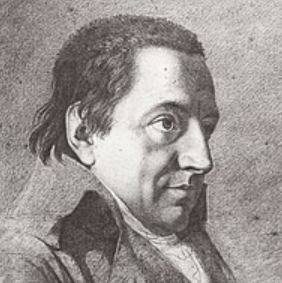
2 months 2 weeks ago
It is a proof that the state is not an arbitrary invention, but is established by nature and reason, when we actually find that, in places where men have lived together for a time and have become educated, states are erected, although the people in the one such place know not that the same thing has been done in other places. Each people, which does not live in a condition of nature, but has a government, no matter how constituted, has a right to compel its recognition from all adjoining states.
▼
Source
source
P. 474, 477
3 months 1 week ago
I'd rather be mad than feel pleasure.
▼
Source
source
§ 3; quoted also by Eusebius of Caesarea, Praeparatio Evangelica xv. 13

2 months 1 week ago
Adam came from great power and great wealth, but he was not worthy of you. For had he been worthy, [he would] not [have tasted] death.
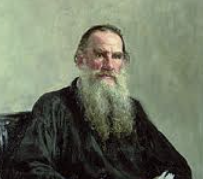
1 month 2 weeks ago
The vocation of every man and woman is to serve other people.
▼
Source
source
What Is To Be Done? (1886) Chap. XL

3 months 3 weeks ago
There ought to be some regulation with respect to the spirit of denunciation that now prevails. If every individual is to indulge his private malignancy or his private ambition, to denounce at random and without any kind of proof, all confidence will be undermined and all authority be destroyed. Calumny is a species of treachery that ought to be punished as well as any other kind of treachery. It is a private vice productive of public evils; because it is possible to irritate men into disaffection by continual calumny who never intended to be disaffected. It is therefore equally as necessary to guard against the evils of unfounded or malignant suspicion as against the evils of blind confidence. It is equally as necessary to protect the characters of public officers from calumny as it is to punish them for treachery or misconduct.
▼
Source
source
Letter to George Jacques Danton
CivilSimian.com created by AxiomaticPanic, CivilSimian, Kalokagathia