


2 months 2 weeks ago
Can the children of the bridechamber mourn, as long as the bridegroom is with them? but the days will come, when the bridegroom shall be taken from them, and then shall they fast. No man putteth a piece of new cloth unto an old garment, for that which is put in to fill it up taketh from the garment, and the rent is made worse. Neither do men put new wine into old bottles: else the bottles break, and the wine runneth out, and the bottles perish: but they put new wine into new bottles, and both are preserved.
▼
Source
source
9:15-17 (KJV)

4 months 1 week ago
In each separate thing that you do consider the matters which come first, and those which follow after, and only then approach the thing itself.
▼
Source
source
Book III, ch. 15, 1 (= Enchiridion 29, 1).

3 months 1 week ago
By Silence, the discretion of a man is known: and a fool, keeping Silence, seemeth to be wise.


3 months 2 weeks ago
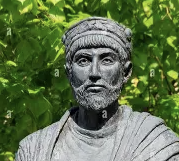
We know nothing accurately in reality, but [only] as it changes according to the bodily condition, and the constitution of those things that flow upon [the body] and impinge upon it.
▼
Source
source
Freeman (1948), p. 142
6 days ago
The visible world has, as I have said, subsisted around him from all eternity: and the Light also which surrounds the world has also its place from all eternity, not intermittently, nor in different degrees at different times, but constantly and in an equable manner. But whosoever will attempt to estimate, as far as thought goes, this external Nature, by the measure of Time, he will very easily discover respecting the Sun, Sovereign of all things, of how many blessings he is, from all eternity, the author to the world.

2 months 2 weeks ago
The intellectual is called on the carpet. ... Don't you conceal something? You talk a language which is suspect. You don't talk like the rest of us, like the man in the street, but rather like a foreigner who does not belong here. We have to cut you down to size, expose your tricks, purge you.
▼
Source
source
p. 192
2 months 3 weeks ago
Our blight is ideologies - they are the long-expected Antichrist!
▼
Source
source
The Tibetan Book of the Great Liberation
2 months 2 weeks ago
This they do in the service of an imaginary science; and, like the astrologers and soothsayers whom they have succeeded, cast up their eyes to the clouds, and speak in immense, unsubstantiated images and similes, in deeply misleading metaphors and allegories, and make use of hypnotic formulae with little regard for experience, or rational argument, or tests of proven reliability. Thereby they throw dust in their own eyes as well as in ours, obstruct our vision of the real world, and further confuse an already sufficiently bewildered public about the relations of morality to politics, and about the nature and methods of the natural sciences and historical studies alike.

4 months 3 weeks ago
A man is more a man through the things he keeps to himself than through those he says.
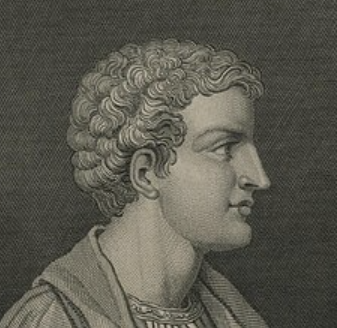
3 months 2 weeks ago
Anger is a momentary madness so control your passion or it will control you.
▼
Source
source
Book I, epistle ii, line 62
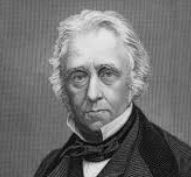
1 month 2 weeks ago
I have been deep in Plato, Aristotle, and Theocritus ever since I left home, and admiring more and more every day the powers of that mighty language which is incomparably the best vehicle both for reasoning and for imagery that mankind have ever discovered, and which is richer both in abstract philosophical terms and poetical expressions than the English, French, and Latin tongues put together.
▼
Source
source
Letter to Zachary Macaulay (19? August 1820), quoted in The Letters of Thomas Babington Macaulay, Volume I: 1807-February 1831, ed. Thomas Pinney (1974), p. 145
3 months 2 weeks ago
Many who have not learned wisdom live wisely, and many who do the basest deeds can make most learned speeches.
4 months 3 weeks ago
Thus I progressed on the surface of life, in the realm of words as it were, never in reality. All those books barely read, those friends barely loved, those cities barely visited, those women barely possessed! I went through the gestures out of boredom or absent-mindedness. Then came the human beings, they wanted to cling, but there was nothing to cling to, and that was unfortunate for them. As for me, I forgot. I never remembered anything but myself.
1 week 5 days ago
If the church had deadly sins, the state has capital crimes; if the one had heretics, the other has traitors; the one ecclesiastical penalties, the other criminal penalties; the one inquisitorial processes, the other fiscal; in short, there sins, here crimes, there inquisition and here - inquisition. Will the sanctity of the state not fall like the church's? The awe of its laws, the reverence for its highness, the humility of its 'subjects', will this remain? Will the 'saint's' face not be stripped of its adornment?
▼
Source
source
Cambridge 1995, p. 211, 212
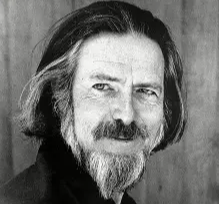
1 week ago
It was a basic Confucian principle that "it is man who makes truth great, not truth which makes man great." For this reason, "humanness" or "human-heartedness" (jen) was always felt to be superior to "righteousness" (i), since man himself is greater than any idea which he may invent. There are times when men's passions are much more trustworthy than their principles.
▼
Source
source
p. 29

2 months 3 weeks ago
The more cunning a man is, the less he suspects that he will be caught in a simple thing. The more cunning a man is, the simpler the trap he must be caught in.
2 months 2 weeks ago
In most cases the esthetic objection to doses of morals and of economic or political propaganda in works of art will be found upon analysis to reside in the over-weighing of certain values at the expense of others until, except for those in a similar stare of one-sides enthusiasm, weariness rather than refreshment sets in.
▼
Source
source
p. 188

3 months 3 weeks ago
Everybody knows that the same sum of money is of much greater value to a poor man that to a rich one. Give £10 a year to the man who has but £10 a year, you double his income, and you nearly double his enjoyments. Add £10 more, you do not add to his enjoyments so much as you did by the first £10. The third £10 is less valuable than the second, and the fourth less valuable than the third. To the possessor of £1,000 a year the addition of £10 would be scarcely perceptible; to the possessor of £10,000 it would not be worth slooping for.The richer a man is the less he is benefited by any further addition to his income. The man of £4,000 a year has four times the income of the man who has but £1,000; but does anybody suppose that he has four times the happiness?
▼
Source
source
John Stuart Mill, Primogeniture, in The Collected Works of John Stuart Mill, Toronto, 1988, vol. 26, p. 336
2 months 1 week ago
What is obscene about pornography is not an excess of sex, but the fact that it contains no sex at all.

3 months 3 weeks ago
At least two thirds of our miseries spring from human stupidity, human malice, and those great motivators and justifiers of malice and stupidity, idealism, dogmatism and proselytizing zeal on behalf of religious or political idols.
▼
Source
source
Tomorrow and Tomorrow and Tomorrow, 1952
2 months 2 weeks ago
That science is incapable of solving in its own way those fundamental questions is no sufficient reason for slighting them.
▼
Source
source
p. 14

2 months 1 week ago
I have told you that... we know nothing save what we have first, in one way or another, desired; and it may even be added that we can know nothing well save what we love, save what we pity.

1 month 3 weeks ago
Each new technology is a reprogramming of sensory life.
▼
Source
source
(p. 33)

2 weeks 3 days ago
May not this religious reticence, in these devout good souls, be perhaps a merit, and sign of health in them? Jocelin, Eadmer, and such religious men, have as yet nothing of 'Methodism;' no Doubt or even root of Doubt. Religion is not a diseased self-introspection, an agonising inquiry: their duties are clear to them, the way of supreme good plain, indisputable, and they are traveling on it. Religion lies over them like an all-embracing heavenly canopy, like an atmosphere and life-element, which is not spoken of, which in all things is presupposed without speech. Is not serene or complete Religion the highest aspect of human nature.
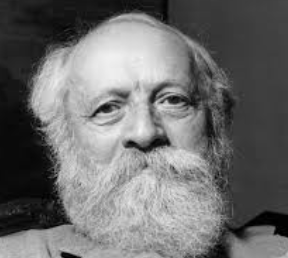
2 months 2 weeks ago
To be old is a glorious thing when one has not unlearned what it means to begin, this old man had perhaps first learned it thoroughly in old age.
▼
Source
source
p. 6
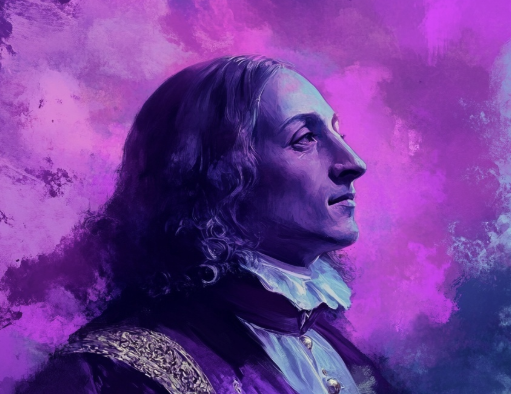
4 months 1 week ago
If they have entered into the spirit if these rules, and if the rules have made sufficient impression on them to become rooted and established in their minds, they will feel how much difference there is between what is said here and what a few logicians may perhaps have written by chance approximating to it in a few passages of their works.
4 months 1 week ago
Be not swept off your feet by the vividness of the impression, but say, "Impression, wait for me a little. Let me see what you are and what you represent. Let me try you."
▼
Source
source
Book II, ch. 18, § 24, Reported in Bartlett's Quotations (1919) as "Be not hurried away by excitement, but say, "Semblance, wait for me a little".

4 months 3 weeks ago
We certainly must contend by every argument against him who does away with knowledge or reason or mind and then makes any dogmatic assertion about anything. The philosopher, who pays the highest honor to these things, must necessarily, as it seems, because of them refuse to accept the theory of those who say the universe is at rest, whether as a unity or in many forms, and must also refuse utterly to listen to those who say that being is universal motion; he must say that being and the universe consist of both.
1 week ago
Now, you see, if you understand what I'm saying, with your intelligence, and then take the next step and say "But I understood it now, but I didn't feel it." Then, next I raise the question: Why do you want to feel it? You say: "I want something more", because that's again that spiritual greed. And you could only say that because you didn't understand it.
▼
Source
source
Intellectual Yoga
2 months 2 weeks ago
If the result of a war is to change nothing, but only to destroy, with the mere result that a group of human beings who do not differ notably from the conquered acquires preponderant advantages for the future, there is lacking the affective strength of an existence that has inspired faith, of an existence whose destiny would have been decided by the war.
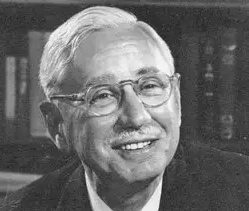
2 weeks 2 days ago
Childhood may be defined as the age of play; therefore some children are never young, and some adults are never old.
▼
Source
source
Ch. 1 : Our life begins
2 months 2 weeks ago
Our mass media have little difficulty in selling particular interests as those of all sensible men. The political needs of society become individual needs and aspirations, their satisfaction promotes business and the commonweal, and the whole appeals to be the very embodiment of Reason.
▼
Source
source
p. xli
3 months 1 week ago
There are men and gods, and beings like Pythagoras.
▼
Source
source
Of himself, as quoted in A History of Western Philosophy (1945) by Bertrand Russell

4 months 3 weeks ago
It was a purely Christian satisfaction to me that if ordinarily there was no one else there was one who in action tried a little to do the doctrine about loving the neighbor, alas, one who precisely by his act also received a frightful into what an illusion Christendom is and indeed, particularly later, also into how the common people let themselves be seduced by wretched journalists, whose striving and fighting for equality can only lead, if it leads to anything, since it is in the service of the lie, to making the elite, in self-defense, proud of their aloofness from the common man, and the common man brazen in his rudeness.

4 months 2 weeks ago
Temperance is that discreet regulation of the desires and passions, by which we are enabled to enjoy pleasures without suffering any consequent inconvenience. They who maintain such a constant self-command, as never to be enticed by the prospect of present indulgence, to do that which will be productive of evil, obtain the truest pleasure by declining pleasure.
2 months 3 weeks ago
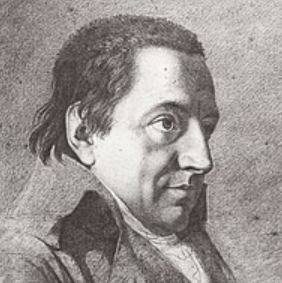
Spirit: Do not be deceived by sophists and half philosophers; things do not appear to thee by means of any representatives. Of the thing that exists, and that can exist, thou art conscious immediately ; thou, thyself, art that of which thou art conscious. By a fundamental law of thy being thou art thus presented to thyself, and thrown out of thyself.
▼
Source
source
Jane Sinnett, trans 1846 p. 53
2 months 1 week ago
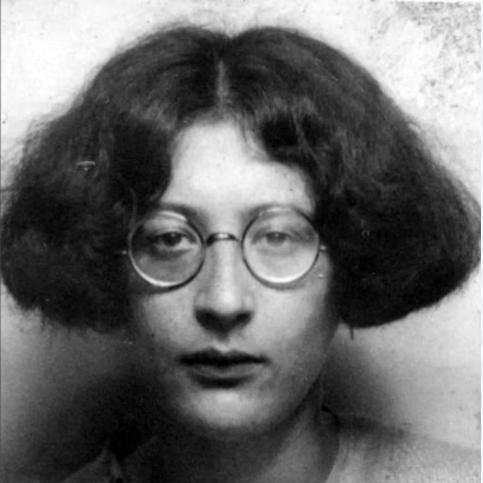
My purpose here is to denounce an idea which seems to be dangerous and false. ... Revolutionary trade unionists and orthodox communists are at one in considering everything that is purely theoretical as bourgeois. ... The culture of a socialist society would be a synthesis of theory and practice; but to synthesize is not the same as to confuse together; it is only contraries that can be synthesized. ... Marx's principal glory is to have rescued the study of societies not only from Utopianism but also and at the same time from empiricism. ... Humanity cannot progress by importing into theoretical study the processes of blind routine and haphazard experiment by which production has so long been dominated. ... The true relation between theory and application only appears when theoretical research has been purged of all empiricism.
▼
Source
source
"The teaching of mathematics," p. 71-72

3 months 3 weeks ago
Every step of real movement is more important than a dozen programmes.
▼
Source
source
Letter to W. Bracke, 5 May 1875

2 months 1 week ago
Feminism in the United States has never emerged from the women who are most victimized by sexist oppression; women who are daily beaten down, mentally, physically, and spiritually-women who are powerless to change their condition in life. They are a silent majority. A mark of their victimization is that they accept their lot in life without visible question, without organized protest, without collective anger or rage.
▼
Source
source
p. 1.
1 month 3 weeks ago
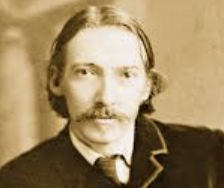
And perhaps this habit of much travel, and the engendering of scattered friendships, may prepare the euthanasia of ancient nations.
▼
Source
source
Pt. I, ch. II.

3 months 3 weeks ago
Setting the mind to remember... involves a continual minimal irradiation of excitement into paths which lead thereto... the continued presence of the thing in the 'fringe' of our consciousness. Letting the thing go involves withdrawal of the irradiation, unconsciousness of the thing, and... obliteration of the paths.
▼
Source
source
Ch. 16

4 months 2 weeks ago
Suppose a person entering a house were to feel heat on the porch, and going further, were to feel the heat increasing, the more they penetrated within. Doubtless, such a person would believe there was a fire in the house, even though they did not see the fire that must be causing all this heat. A similar thing will happen to anyone who considers this world in detail: one will observe that all things are arranged according to their degrees of beauty and excellence, and that the nearer they are to God, the more beautiful and better they are.
▼
Source
source
Art. 1
3 months 2 weeks ago
Conquered Greece took captive her savage conqueror and brought her arts into rustic Latium.
▼
Source
source
Book II, epistle i, lines 156-157

4 months ago
The commodities of Europe were almost all new to America, and many of those of America were new to Europe. A new set of exchanges, therefore, began..and which should naturally have proved as advantageous to the new, as it certainly did to the old continent. The savage injustice of the Europeans rendered an event, which ought to have been beneficial to all, ruinous and destructive to several of those unfortunate countries.
▼
Source
source
Chapter I, p. 481.
2 months 1 week ago
Faith which does not doubt is dead faith.
▼
Source
source
La Agonía del Cristianismo (The Agony of Christianity)
3 months 2 weeks ago
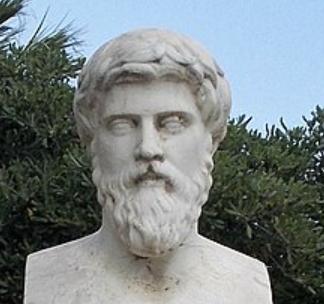
Pyrrhus said, "If I should overcome the Romans in another fight, I were undone."
▼
Source
source
47 Pyrrhus
2 months 1 week ago
If a captive mind is unaware of being in prison, it is living in error. If it has recognized the fact, even for the tenth of a second, and then quickly forgotten it in order to avoid suffering, it is living in falsehood. Men of the most brilliant intelligence can be born, live and die in error and falsehood. In them, intelligence is neither a good, nor even an asset. The difference between more or less intelligent men is like the difference between criminals condemned to life imprisonment in smaller or larger cells. The intelligent man who is proud of his intelligence is like a condemned man who is proud of his large cell.
▼
Source
source
p. 69

4 months 4 days ago
There are some defeats more triumphant than victories.
▼
Source
source
Ch. 30. Of Cannibals, tr. Cotton, rev. W. Hazlitt, 1842
CivilSimian.com created by AxiomaticPanic, CivilSimian, Kalokagathia