


2 months 1 week ago
It is the fallacy of all intellectuals to believe that intellect can grasp life. It cannot, because it works in terms of symbols and language. There is another factor involved: consciousness. If the flame of consciousness is low, a symbol has no power to evoke reality, and intellect is helpless.
▼
Source
source
p. 112

4 months 1 week ago
Certainly He says this for me, for thee, for this other man, since He bears His body, the Church. Unless you imagine, brethren, that when He said: My Father, if it be possible, let this cup pass away from (Matt. 26:39), it was the Lord that feared to die. . . . But Paul longed to die, that he might be with Christ. What? The Apostle desires to die, and Christ Himself should fear death? What can this mean, except that He bore our infirmity in Himself, and uttered these words for those who are in His body and still fear death? It is from these that the voice came; it was the voice of His members, not of the Head. When He said, My soul is sorrowful unto death (Matt. 26:38), He manifested Himself in thee, and thee in Himself. And when He said, My God, my God, why has Thou forsaken Me? (Matt. 27:46), the words He uttered on the cross were not His own, but ours.

3 months 1 day ago
When an opinion has taken root in a democracy and established itself in the minds of the majority, it afterward persists by itself, needing no effort to maintain it since no one attacks it. Those who at first rejected it as false come in the end to adopt it as accepted, and even those who still at the bottom of their hearts oppose it keep their views to themselves, taking great care to avoid a dangerous and futile contest.
▼
Source
source
Book Three, Chapter XXI.

3 months 3 weeks ago
We may well be ashamed to tell what things we have read or heard in our day. I do not know why my news should be so trivial, - considering what one's dreams and expectations are, why the developments should be so paltry. The news we hear, for the most part, is not news to our genius. It is the stalest repetition.
▼
Source
source
p. 491

3 weeks 1 day ago
No effective blueprint [of a political alternative to Empire] will ever arise from a theoretical articulation such as ours.
▼
Source
source
206
3 months 3 weeks ago
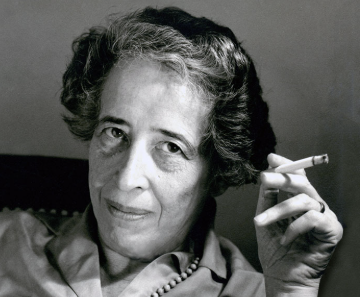
The defiance of established authority, religious and secular, social and political, as a world-wide phenomenon may well one day be accounted the outstanding event of the last decade.
▼
Source
source
"Civil Disobedience"
2 months 2 weeks ago
The world is so possessed by the power of what is and the efforts of adjustment to it, that the adolescent's rebellion, which once fought the father because his practices contradicted his own ideology, can no longer crop up. ... Psychologically, the father is ... replaced by the world of things.
▼
Source
source
p. 41-42.

4 months 4 weeks ago
All that exists that can be denied deserves to be denied; and being truthful means: to believe in an existence that can in no way be denied and which is itself true and without falsehood.
1 week ago
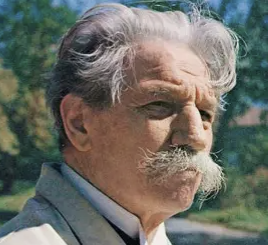
Every start upon an untrodden path is a venture which only in unusual circumstances looks sensible and likely to be successful.
▼
Source
source
Ch. 9 : I Resolve to Become a Jungle Doctor

1 month 3 weeks ago
Just because science can't in practice explain things like the love that motivates a poet to write a sonnet, that doesn't mean that religion can. It's a simple and logical fallacy to say, 'If science can't do something, therefore religion can'.
4 months 1 week ago
If you believe what you like in the gospels, and reject what you don't like, it is not the gospel you believe, but yourself.
▼
Source
source
Earliest attribution found in Who Said That?: More than 2,500 Usable Quotes and Illustrations (1995) by George Sweeting. Online sources always attribute the quote to Augustine, but never specify in which of his works it is to be found.

3 months 2 weeks ago
My enemy is not the man who wrongs me, but the man who means to wrong me.

2 months 3 weeks ago
Our place is somewhere between being and nonbeing - between two fictions.
2 months 3 weeks ago
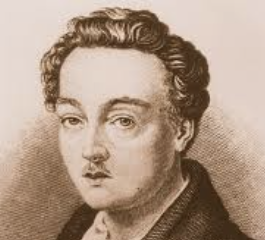
Supreme power rests in the will of all or of the majority.

3 months 3 weeks ago
If a victory is told in detail, one can no longer distinguish it from a defeat.
▼
Source
source
Act 1

4 months 2 weeks ago
The journey of a thousand miles begins with a single step.

2 weeks 3 days ago
The Great Man here too, as always, is a Force of Nature. Whatsoever is truly great in him springs up from the inarticulate deeps.
1 month 3 weeks ago
How do we account for the current paranormal vogue in the popular media? Perhaps it has something to do with the millennium - in which case it's depressing to realise that the millennium is still three years away.
1 month 3 days ago
In thinking of history in this [progressive & eschatological] way Islam shares common ground with Christianity and with the secular creeds of the modern West. It is misleading to represent Islam and 'the West' as forming civilisations that have nothing in common. Christianity and Islam are integral parts of western monotheism, and as such they share a view of history that marks them off from the rest of the world. Both are militant faiths that seek to convert all humankind. Other religions have been implicated in twentieth-century violence-the state cult of Shintō in Japan during the militarist period and Hindu nationalism in contemporary India, for example. But only Christianity and Islam have engendered movements that are committed to the systematic use of force to achieve universal goals.
▼
Source
source
Enlightenment and Terror in the Twentieth Century: Terror and the Western Tradition

4 months 3 weeks ago
[T]he infinite is in capacity. That, however, which is infinite in capacity is not to be assumed as that which is infinite in energy. ...[I]t has its being in capacity, and in division and diminution. ...[I]t is always possible to assume something beyond it. It does not, however, on this account surpass every definite magnitude; as in division it surpasses every definite magnitude, and will be less.

3 months 3 weeks ago
Between the fine point of the brush and the steely gaze, the scene is about to yield up its volume.
▼
Source
source
Las Meninas

4 months 4 days ago
The entire lower world was created in the likeness of the higher world. All that exists in the higher world appears like an image in this lower world; yet all this is but One.
1 week 5 days ago
The will is not fundamentally right, as the practical ones would like very much to assure us; one may not pass over the desire for knowledge in order to stand immediately in the will, but knowledge perfects itself to will when it desensualizes itself and creates itself as a spirit "which builds its own body."
▼
Source
source
p. 21
3 months 3 weeks ago
I will not talk about people a thousand miles off, but come as near home as I can. As the time is short, I will leave out all the flattery, and retain all the criticism. Let us consider the way in which we spend our lives.
▼
Source
source
p. 484

3 months 3 weeks ago
Nature magically suits the man to his fortunes, by making these the fruit of his character.
▼
Source
source
Fate
3 months 2 weeks ago
For a man petticoat government is the limit of insolence.
4 months 2 weeks ago
To entire sincerity there belongs ceaselessness. Not ceasing, it continues long. Continuing long, it evidences itself. Evidencing itself, it reaches far. Reaching far, it becomes large and substantial. Large and substantial, it becomes high and brilliant. Large and substantial; this is how it contains all things. High and brilliant; this is how it overspreads all things. Reaching far and continuing long; this is how it perfects all things. So large and substantial, the individual possessing it is the co-equal of Earth. So high and brilliant, it makes him the co-equal of Heaven. So far-reaching and long-continuing, it makes him infinite. Such being its nature, without any display, it becomes manifested; without any movement, it produces changes; and without any effort, it accomplishes its ends.
2 months 3 weeks ago
The consciousness of a general idea has a certain "unity of the ego" in it, which is identical when it passes from one mind to another. It is, therefore, quite analogous to a person, and indeed, a person is only a particular kind of general idea.
▼
Source
source
Man's Glassy Essence in The Monist, Vol. III, No. 1
2 weeks 3 days ago
The latest Gospel in this world is, Know thy work and do it. 'Know thyself:' long enough has that poor 'self' of thine tormented thee; thou wilt never get to 'know' it, I believe! Think it not thy business, this of knowing thyself; thou art an unknowable individual: know what thou canst work at; and work at it, like a Hercules! That will be thy better plan.
4 months 4 days ago
Confidence in another man's virtue is no light evidence of a man's own, and God willingly favors such a confidence.
▼
Source
source
Book I, Ch. 14
3 months 3 weeks ago
Nor knowest thou what argument Thy life to thy neighbor's creed has lent: All are needed by each one, Nothing is fair or good alone.
▼
Source
source
Each and All, st. 1
2 weeks 3 days ago
Can there be a more horrible object in existence than an eloquent man not speaking the truth?
▼
Source
source
Address as Lord Rector of Edinburgh University, (1866), reported in Bartlett's Familiar Quotations, 10th ed. (1919).
2 months 3 weeks ago
For the first time in the revolutionary movement of 1848, for the first time since 1793, a nation surrounded by superior counter-revolutionary forces dares to counter the cowardly counter-revolutionary fury by revolutionary passion, the terreur blanche by the terreur rouge. For the first time after a long period we meet with a truly revolutionary figure, a man who in the name of his people dares to accept the challenge of a desperate struggle, who for his nation is Danton and Carnot in one person - Lajos Kossuth.
▼
Source
source
The Magyar Struggle in Neue Rheinische Zeitung (13 January 1849).
3 months 1 day ago
In democratic ages men rarely sacrifice themselves for another, but they show a general compassion for all the human race. One never sees them inflict pointless suffering, and they are glad to relieve the sorrows of others when they can do so without much trouble to themselves. They are not disinterested, but they are gentle.
▼
Source
source
Book Three, Chapter I.

2 months 2 weeks ago
Verily I say unto you, I have not found so great faith, no, not in Israel. And I say unto you, That many shall come from the east and west, and shall sit down with Abraham, and Isaac, and Jacob, in the kingdom of heaven. But the children of the kingdom shall be cast out into outer darkness: there shall be weeping and gnashing of teeth.
▼
Source
source
8:10-12 (KJV) Said about the officer.

4 months 3 weeks ago
I believe that every human being with a physically normal brain can learn a great deal and can be surprisingly intellectual. I believe that what we badly need is social approval of learning and social rewards for learning.We can all be members of the intellectual elite and then, and only then, will a phrase like "America's right to know" and, indeed, any true concept of democracy, have any meaning.

3 months 3 weeks ago
Don't get involved in partial problems, but always take flight to where there is a free view over the whole single great problem, even if this view is still not a clear one.
▼
Source
source
Journal entry
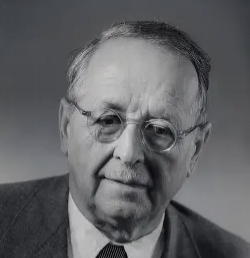
6 days ago
In the field of philosophy Kant was the first to take the next decisive step towards the point of view that not only the qualities revealed by the senses, but also space and spatial characteristics have no objective significance in the absolute sense; in other words, that space, too, is only a form of our perception.
▼
Source
source
Introduction
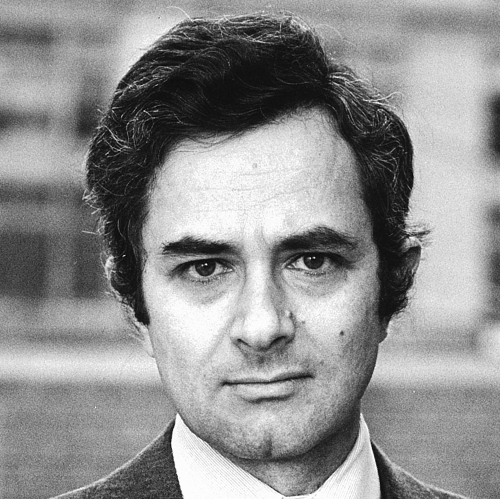
3 months 2 weeks ago
When the objective gaze is turned on human beings and other experiencing creatures, who are undeniably parts of the world, it can reveal only what they are like in themselves. And if the way things are for these subjects is not part of the way things are in themselves, an objective account, whatever it shows, will omit something. So reality is not just objective reality, and the pursuit of objectivity is not an equally effective method of reaching the truth about everything.
▼
Source
source
"Subjective and Objective" (1979), pp. 212-213.
1 week ago
What then is the place and role of the writer in this cruel, dynamic, split world on the brink of its ten destructions? After all we have nothing to do with letting off rockets, we do not even push the lowliest of hand-carts, we are quite scorned by those who respect only material power. Is it not natural for us too to step back, to lose faith in the steadfastness of goodness, in the indivisibility of truth, and to just impart to the world our bitter, detached observations: how mankind has become hopelessly corrupt, how men have degenerated, and how difficult it is for the few beautiful and refined souls to live amongst them? But we have not even recourse to this flight. Anyone who has once taken up the WORD can never again evade it; a writer is not the detached judge of his compatriots and contemporaries, he is an accomplice to all the evil committed in his native land or by his countrymen.
3 months 3 weeks ago
Philosophy may in no way interfere with the actual use of language; it can in the end only describe it.
▼
Source
source
§ 124

3 months 4 weeks ago
It is better to risk sparing a guilty person than to condemn an innocent one.
▼
Source
source
Zadig, 1747
3 months 4 weeks ago
Indeed, history is nothing more than a tableau of crimes and misfortunes.
▼
Source
source
L'Ingénu, ch.10 (1767) Quoted in The End, part 13 of A Series of Unfortunate Events
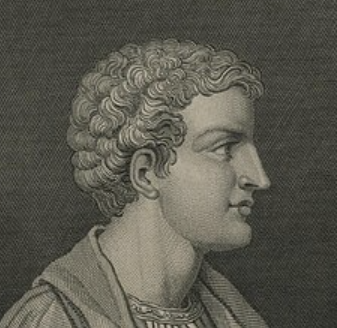
3 months 2 weeks ago
Tomorrow we will be back on the vast ocean.
▼
Source
source
The Routledge Dictionary of Latin Quotations: The Illiterati's Guide to Latin Maxims, Mottoes, Proverbs and Sayings
2 months 1 week ago
Thinking is more erotic than calculating.

2 months 3 weeks ago
It is sometimes difficult to avoid the impression that there is a sort of foreknowledge of the coming series of events.
▼
Source
source
p. 94

3 months 3 weeks ago
Every artist was first an amateur.
▼
Source
source
Progress of Culture
6 days ago
All relationships of people to each other rest, as a matter of course, upon the precondition that they know something about each other. The merchant knows that his correspondent wants to buy at the lowest price and to sell at the highest price. The teacher knows that he may credit to the pupil a certain quality and quantity of information. Within each social stratum the individual knows approximately what measure of culture he has to presuppose in each other individual.
▼
Source
source
p. 441: First lines of the article.

1 week 4 days ago
You must die erect and unyielding.
CivilSimian.com created by AxiomaticPanic, CivilSimian, Kalokagathia