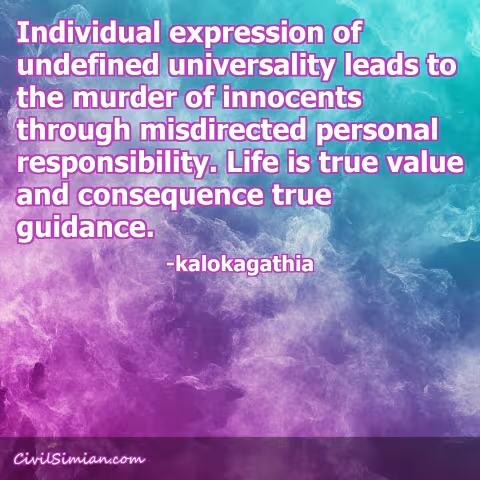
Individual expression of undefined universality leads to the murder of innocents through misdirected personal responsibility. Life is true value and consequence true guidance.



May not the absolute and perfect eternal happiness be an eternal hope, which would die if it were realized? Is it possible to be happy without hope? And there is no place for hope once possession has been realized, for hope, desire, is killed by possession. May it not be, I say, that all souls grow without ceasing, some in a greater measure than others, but all having to pass some time through the same degree of growth, whatever that degree may be, and yet without ever arriving at the infinite, at God, to whom they continually approach? Is not eternal happiness an eternal hope, with its eternal nucleus of sorrow in order that happiness shall not be swallowed up in nothingness?
I believe in clear-cut positions. I think that the most arrogant position is this apparent, multidisciplinary modesty of "what I am saying now is not unconditional, it is just a hypothesis," and so on. It really is a most arrogant position. I think that the only way to be honest and expose yourself to criticism is to state clearly and dogmatically where you are. You must take the risk and have a position.
Religion is the dream of the human mind. But even in dreams we do not find ourselves in emptiness or in heaven, but on earth, in the realm of reality; we only see real things in the entrancing splendor of imagination and caprice, instead of in the simple daylight of reality and necessity.

Any madness in us gains from being expressed, because in this way one gives a human form to what separates us from humanity.

Metaphysical rebellion is a claim, motivated by the concept of a complete unity, against the suffering of life and death and a protest against the human condition both for its incompleteness, thanks to death, and its wastefulness, thanks to evil.
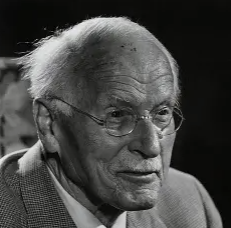
It is sometimes difficult to avoid the impression that there is a sort of foreknowledge of the coming series of events.
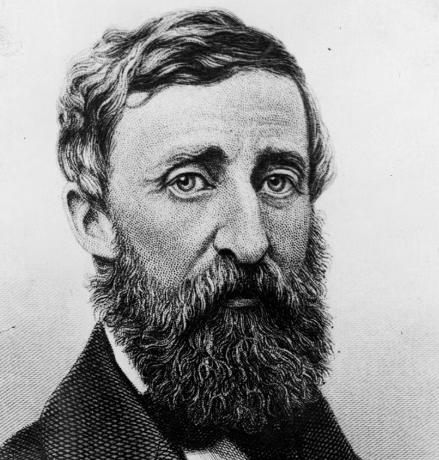
While there are manners and compliments we do not meet, we do not teach one another the lessons of honesty and sincerity that the brutes do, or of steadiness and solidity that the rocks do. The fault is commonly mutual, however; for we do not habitually demand any more of each other.
The first revolt is against the supreme tyranny of theology, of the phantom of God. As long as we have a master in heaven, we will be slaves on earth.

Understanding finds nothing but itself when it seeks the essence behind the appearance of things. 'It is manifest that behind the so-called curtain, which is to hide the inner world, there is nothing to be seen unless we ourselves go behind there, as much in order that we may thereby see, as that there may be something behind there which can be seen.'
All systems of morality are based on the idea that an action has consequences that legitimize or cancel it. A mind imbued with the absurd merely judges that those consequences must be considered calmly. It is ready to pay up. In other words, there may be responsible persons, but there are no guilty ones, in its opinion. At very most, such a mind will consent to use past experience as a basis for its future actions.
The political freedom of conscience and of the press, so far from being as it is commonly supposed an extension, is a new case of the limitation of rights and discretion. Conscience and the press ought to be unrestrained, not because men have a right to deviate from the exact line that duty prescribes, but because society, the aggregate of individuals, has no right to assume the prerogative of an infallible judge, and to undertake authoritatively to prescribe to its members in matters of pure speculation.
The spontaneous reproduction of superimposed needs by the individual does not establish autonomy; it only testifies to the efficacy of the control.

People seem not to see that their opinion of the world is also a confession of character.

There's a Bible on that shelf there. But I keep it next to Voltaire - poison and antidote.

The genius of democracies is seen not only in the great number of new words introduced but even more in the new ideas they express.
Therefore only an utterly senseless person can fail to know that our characters are the result of our conduct.
Government in reality, as has abundantly appeared, is a question of force, and not of consent. It is desirable that a government should be made as agreeable as possible to the ideas and inclinations of its subjects and that they should be consulted, as extensively as may be, respecting its construction and regulations. But, at last, the best constituted government that can be formed particularly for a large community, will contain many provisions that, far from having obtained the consent of all its members, encounter even in their outset a strenuous, thought ineffectual opposition.
In matters that are so obscure and far beyond our vision, we find in Holy Scripture passages which can be interpreted in very different ways without prejudice to the faith we have received. In such cases, we should not rush in headlong and so firmly take our stand on one side that, if further progress in the search for truth justly undermines this position, we too fall with it.
With this as its basic constitution, civilization achieved things of which gentile society was not even remotely capable. But it achieved them by setting in motion the lowest instincts and passions in man and developing them at the expense of all his other abilities. From its first day to this, sheer greed was the driving spirit of civilization; wealth and again wealth and once more wealth, wealth, not of society, but of the single scurvy individual-here was its one and final aim. If at the same time the progressive development of science and a repeated flowering of supreme art dropped into its lap, it was only because without them modern wealth could not have completely realized its achievements.

We are observing ourselves being observed by the painter, and made visible to his eyes by the same light that enables us to see him. And just as we are about to apprehend ourselves, transcribed by his hand as though in a mirror, we find that we can in fact apprehend nothing of that mirror but its lusterless back. The other side of a psyche.
When I was 15 years old, or 16, I carried around on the streets of Brooklyn a paperback copy of Plato's Republic, front cover facing outward. I had read only some of it and understood less, but I was excited by it and knew it was something wonderful.
For the purposes of poetry a convincing impossibility is preferable to an unconvincing possibility.

Philosophical problems can be compared to locks on safes, which can be opened by dialing a certain word or number, so that no force can open the door until just this word has been hit upon, and once it is hit upon any child can open it.

Understand then all of you, especially the young, that to want to impose an imaginary state of government on others by violence is not only a vulgar superstition, but even a criminal work. Understand that this work, far from assuring the well-being of humanity is only a lie, a more or less unconscious hypocrisy, camouflaging the lowest passions we possess.
Men seem to pursue honour in order that they may believe themselves to be good. Accordingly, they seek to be honoured by the wise, and by those who know them well, and on the score of virtue; it is clear, therefore, that in their opinion at any rate, virtue is superior to honour. Perhaps, then, one ought to say that virtue rather than honour is the end of the political life; yet even virtue is plainly too imperfect: for it seems that a man might have all the virtues and yet be asleep, or fail to achieve anything all his life; moreover, such a person may suffer the greatest evils and misfortunes. And no one, in this case, would call a man, who passed his life in this manner, happy, except for argument's sake.
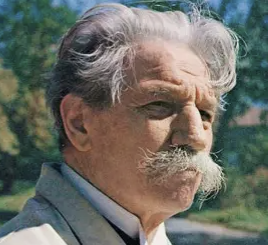
We cannot abdicate our conscience to an organization, nor to a government. 'Am I my brother's keeper?' Most certainly I am! I cannot escape my responsibility by saying the State will do all that is necessary. It is a tragedy that nowadays so many think and feel otherwise.

Hear, and understand: Not that which goeth into the mouth defileth a man; but that which cometh out of the mouth, this defileth a man.
Once the first radical attack on private property has been launched, the proletariat will find itself forced to go ever further, to concentrate increasingly in the hands of the state all capital, all agriculture, all transport, all trade. All the foregoing measures are directed to this end; and they will become practicable and feasible, capable of producing their centralizing effects to precisely the degree that the proletariat, through its labor, multiplies the country's productive forces.

A thing therefore never returns to nothing.
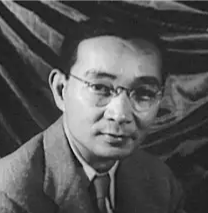
Our task is not so much discovery as re-discovery. What one needs is not so much thinking as remembering. Sometimes it suffices to sit quietly and listen well, when venerable men have thought before us. Constant forgettings of truths once perceived are the very charm of the human mind; the history of human thought is nothing more than the story of these forgettings and rememberings and forgettings again.

What is more affectionate to others than man? Yet what is more savage against them than anger?
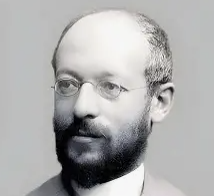
The individual who is subordinate to an objective law feels himself determined by it, while he, in turn, in no way determines the law, and has no possibility of reacting to it in a manner which could influence it-quite in contrast to even the most miserable slave, who, in some fashion at last, can still in this sense react to his master.
Art is the symbol of the two noblest human efforts: to construct and to refrain from destruction.

The reason I cannot really say that I positively enjoy nature is that I do not quite realize what it is that I enjoy. A work of art, on the other hand, I can grasp. I can - if I may put it this way - find that Archimedian point, and as soon as I have found it, everything is readily clear for me. Then I am able to pursue this one main idea and see how all the details serve to illuminate it.

Secrets in manufactures are capable of being longer kept than secrets in trade.
The manufacturing worker almost always lives in the countryside and in a more or less patriarchal relation to his landlord or employer; the proletarian lives, for the most part, in the city and his relation to his employer is purely a cash relation. The manufacturing worker is torn out of his patriarchal relation by big industry, loses whatever property he still has, and in this way becomes a proletarian.
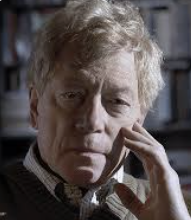
A developed legal system, with elaborate common law rights, and supported by a system of natural justice, was the most precious legacy of our empire. If it were still permissible to defend colonization, I should justify it in terms of this bequest, and at the same time contrast the colonization of Africa with the Soviet "colonization" of eastern Europe, which has advanced not by the generation but by the destruction of law.

What, in unenlightened societies, colour, race, religion, or in the case of a conquered country, nationality, are to some men, sex is to all women; a peremptory exclusion from almost all honourable occupations, but either such as cannot be fulfilled by others, or such as those others do not think worthy of their acceptance.
Do not imagine that it is less an accident by which you find yourself master of the wealth which you possess, than that by which this man found himself king.
Appearances to the mind are of four kinds. Things either are what they appear to be; or they neither are, nor appear to be; or they are, and do not appear to be; or they are not, and yet appear to be. Rightly to aim in all these cases is the wise man's task.

But when they have realized that it [society] rejects them forever, they themselves assume the ostracism of which they are victims so as not to leave the initiative to their oppressors.
...man first of all exists, encounters himself, surges up in the world - and defines himself afterwards.
How many women thus waste life away the prey of discontent, who might have practised as physicians, regulated a farm, managed a shop, and stood erect, supported by their own industry, instead of hanging their heads surcharged with the dew of sensibility, that consumes the beauty to which it at first gave lustre.

Be charitable before Wealth makes thee covetous.
The difference between the artificial and the artful in the artistic lies on the surface in the former there is a split between what is overly done and what is intended. The appearance is one of cordiality; the intent is that of gaining favor. Whenever this split between what is done and its purpose exists, there is insincerity, a trick, a simulation of an act that intrinsically has another effect. When the natural and the cultivated blend into one, acts of social intercourse are works of art. The animating impulsion of genial friendship and the deed performed completely coincide without intrusion of ulterior motive. Awkwardness may prevent adequacy of expression.
In the Platonic dialectic, ... the terms "Being" "Non-being" "Movement," "the One and the Many" "Identity" and "Contradiction" are methodically kept open, ambiguous, not fully defined. They have an open horizon, an entire universe of meaning which is gradually structured in the process of communication itself, but which is never closed. The propositions are submitted, developed, and tested in a dialogue, in which the partner is led to question the normally unquestioned universe of experience and speech, and to enter a new dimension of discourse - otherwise he is free and the discourse is addressed to his freedom. He is supposed to go beyond that which is given to him - as the speaker, in his proposition, goes beyond the initial setting of the terms. These terms have many meanings because the conditions to which they refer have many sides, implications, and effects which cannot be insulated and stabilized.

In a certain sense, everything is everywhere at all times. For every location involves an aspect of itself in every other location. Thus every spatio-temporal standpoint mirrors the world.
Only the great generalizations survive. The sharp words of the Declaration of Independence, lampooned then and since as 'glittering generalities,' have turned out blazing ubiquities that will burn forever and ever.
CivilSimian.com created by AxiomaticPanic, CivilSimian, Kalokagathia