


3 months 3 weeks ago
It's a bit embarrassing to have been concerned with the human problem all one's life and find at the end that one has no more to offer by way of advice than 'Try to be a little kinder.'
▼
Source
source
As quoted in Huston Smith, "Aldous Huxley--A Tribute," The Psychedelic Review, (1964) Vol I, No.3, (Aldous Huxley Memorial Issue), p. 264-5
4 months 4 days ago
Wherever your life ends, it is all there. The utility of living consists not in the length of days, but in the use of time; a man may have lived long, and yet lived but a little. Make use of time while it is present with you. It depends upon your will, and not upon the number of days, to have a sufficient length of life. Is it possible you can imagine never to arrive at the place towards which you are continually going? and yet there is no journey but hath its end. And, if company will make it more pleasant or more easy to you, does not all the world go the self-same way?
3 months 3 weeks ago
In these frequent talks about the books I read, he used, as opportunity offered, to give me explanations and ideas respecting civilization, government, morality, mental cultivation, which he required me afterwards to restate to him in my own words. He also made me read, and give him a verbal account of, many books which would not have interested me sufficiently to induce me to read them of myself: among others, Millar's Historical View of the English Government, a book of great merit for its time, and which he highly valued; Mosheim's Ecclesiastical History, McCrie's Life of John Knox, and even Sewel's and Rutty's Histories of the Quakers. He was fond of putting into my hands books which exhibited men of energy and resource in unusual circumstances, struggling against difficulties and overcoming them: of such works I remember Beaver's African Memoranda, and Collins's account of the first settlement of New South Wales.
▼
Source
source
(p. 8)

2 months 3 weeks ago
Dreams, as we all know, are very queer things: some parts are presented with appalling vividness, with details worked up with the elaborate finish of jewellery, while others one gallops through, as it were, without noticing them at all, as, for instance, through space and time. Dreams seem to be spurred on not by reason but by desire, not by the head but by the heart, and yet what complicated tricks my reason has played sometimes in dreams, what utterly incomprehensible things happen to it!

2 months 3 weeks ago
Why don't I commit suicide? Because I am as sick of death as I am of life.

3 months 1 week ago
Friends are as companions on a journey, who ought to aid each other to persevere in the road to a happier life.
▼
Source
source
As quoted in Gems of Thought: Being a Collection of More Than a Thousand Choice Selections

2 months 3 weeks ago
And having looked to Government for bread, on the very first scarcity they will turn and bite the hand that fed them.

2 months 2 weeks ago
And He is the God of the humble, for in the words of the Apostle, God chose the foolish things of the world to confound the wise and the weak things of the world to confound the things which are mighty (I Cor. i. 27) And God is in each of us in the measure in which one feels Him and loves Him. "If of two men," says Kierkegaard, "one prays to the true God without sincerity of heart, and the other prays to the an idol with all the passion of an infinite yearning, it is the first who really prays to the idol, while the second really prays to God." It would be better to say that the true God is He to whom man truly prays and whom man truly desires. And there may even be a truer revelation in superstition itself than in theology.

4 months 4 weeks ago
What! the inventors of ancient civilisations, the first makers of tools and tape lines, the first builders of vehicles, ships, and houses, the first observers of the laws of the heavens and the multiplication tables is it contended that they were entirely different from the inventors and observers of our own time, and superior to them? And that the first slow steps forward were of a value which has not been equalled by the discoveries we have made with all our travels and circumnavigations of the earth?
3 months 4 weeks ago
A command can express no more than an ought or a shall, because it is a universal, but it does not express an 'is'; and this at once makes plain its deficiency. Against such commands Jesus sets virtue, i.e., a loving disposition, which makes the content of the command superfluous and destroys its form as a command, because that form implies an opposition between a commander and something resisting the command.
3 months 3 weeks ago
We live together, we act on, and react to, one another; but always and in all circumstances we are by ourselves. The martyrs go hand in hand into the arena; they are crucified alone. Embraced, the lovers desperately try to fuse their insulated ecstasies into a single self-transcendence; in vain. By its very nature every embodied spirit is doomed to suffer and enjoy in solitude. Sensations, feelings, insights, fancies - all these are private and, except through symbols and at second hand, incommunicable. We can pool information about experiences, but never the experiences themselves. From family to nation, every human group is a society of island universes.
3 months 3 weeks ago
In its flight from death, the craving for permanence clings to the very things sure to be lost in death.
▼
Source
source
p. 17

3 months 3 weeks ago
Homeliness is almost as great a merit in a book as in a house, if the reader would abide there. It is next to beauty, and a very high art.
▼
Source
source
Pearls of Thought (1881) p. 32
2 months 3 weeks ago
All the evolution we know of proceeds from the vague to the definite.
▼
Source
source
Vol. VI, par. 191

2 months 2 weeks ago
For he must rule as king until God has put all enemies under his feet. And the last enemy, death, is to be brought to nothing.
▼
Source
source
Paul of Tarsus, 1 Corinthians 15: 25-26, NWT
6 days ago
In whatever state of knowledge we may conceive man to be placed, his progress towards a yet higher state need never fear a check, but must continue till the last existence of society.
▼
Source
source
Ch. 6 Of the Causes of the actual rapid Advance of the Physical Sciences compared with their Progress at an earlier Period

3 months 4 weeks ago
When I come to my own beliefs, I find myself quite unable to discern any purpose in the universe, and still more unable to wish to discern one.
▼
Source
source
"Is There a God?", 1952
2 months 1 week ago
You cannot think without abstractions; accordingly, it is of the utmost importance to be vigilant in critically revising your modes of abstraction. It is here that philosophy finds its niche as essential to the healthy progress of society. It is the critic of abstractions. A civilisation which cannot burst through its current abstractions is doomed to sterility.
▼
Source
source
Ch. 4: "The Eighteenth Century", pp. 82-83
2 months 2 weeks ago
Heaven and earth shall pass away, but my words shall not pass away.
▼
Source
source
Mark 13:31, KJV
3 months 3 weeks ago
In order to remain silent Da-sein must have something to say.
▼
Source
source
Stambaugh translation

4 months 6 days ago
Jews hate the name of Christ and have a secret and innate rancor against the people among whom they live.
▼
Source
source
See Silent Truth by Mark Edwards
2 months 3 weeks ago
There are no solutions, only cowardice masquerading as such.
3 months 4 weeks ago
Man is a credulous animal, and must believe something; in the absence of good grounds for belief, he will be satisfied with bad ones.
1 month 3 weeks ago
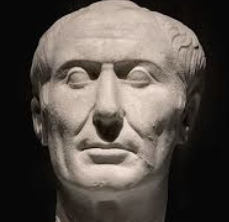
As men, we are all equal in the presence of death.
▼
Source
source
Maxim 1
1 week 1 day ago
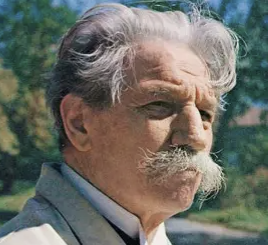
The last fact which knowledge can discover is that the world is a manifestation, and in every way a puzzling manifestation, of the universal will to live.

1 month 6 days ago
I think television has betrayed the meaning of democratic speech, adding visual chaos to the confusion of voices. What role does silence have in all this noise?
▼
Source
source
"Television"
2 months 3 weeks ago
I don't understand why we must do things in this world, why we must have friends and aspirations, hopes and dreams. Wouldn't it be better to retreat to a faraway corner of the world, where all its noise and complications would be heard no more? Then we could renounce culture and ambitions; we would lose everything and gain nothing; for what is there to be gained from this world?
1 month 3 weeks ago
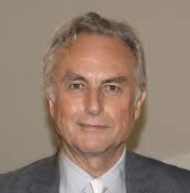
Never say, and never take seriously anyone who says, "I cannot believe that so-and-so could have evolved by gradual selection". I have dubbed this kind of fallacy "the Argument from Personal Incredulity". Time and again, it has proven the prelude to an intellectual banana-skin experience.
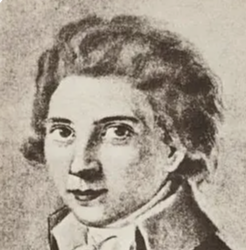
2 months 3 weeks ago
Think of something finite molded into the infinite, and you think of man.
▼
Source
source
"Selected Ideas (1799-1800)", Dialogue on Poetry and Literary Aphorisms, Ernst Behler and Roman Struc, trans. (1968) #98
2 months 3 weeks ago
Erect I make a resolution; prone I revoke it.
2 months 3 weeks ago
The more one is obsessed with God, the less one is innocent. Nobody bothered about him in paradise. The fall brought about this divine torture. It's not possible to be conscious of divinity without guilt. Thus God is rarely to be found in an innocent soul.
3 months 2 weeks ago
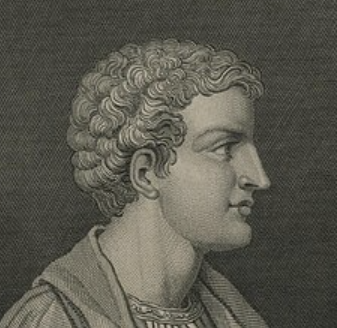
In peace, as a wise man, he should make suitable preparation for war.
▼
Source
source
Book II, satire ii, line 111

2 months 2 weeks ago
Verily I say unto you, I have not found so great faith, no, not in Israel. And I say unto you, That many shall come from the east and west, and shall sit down with Abraham, and Isaac, and Jacob, in the kingdom of heaven. But the children of the kingdom shall be cast out into outer darkness: there shall be weeping and gnashing of teeth.
▼
Source
source
8:10-12 (KJV) Said about the officer.

4 months 1 day ago
The ordinary surroundings of life which are esteemed by men (as their actions testify) to be the highest good, may be classed under the three heads - Riches, Fame, and the Pleasures of Sense: with these three the mind is so absorbed that it has little power to reflect on any different good. I, 3 Variant translation: The things which ... are esteemed as the greatest good of all ... can be reduced to these three headings, to wit : Riches, Fame, and Pleasure. With these three the mind is so engrossed that it cannot scarcely think of any other good.

1 month 3 weeks ago
Art is anything you can get away with.
3 months 4 weeks ago
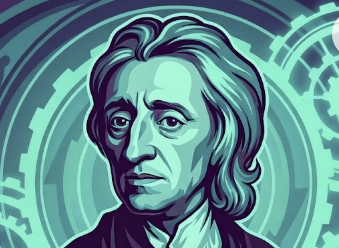
Though you give no countenance to the complaints of the querulous, yet take care to curb the insolence and ill nature of the injurious. When you observe it yourself, reprove it before the injur'd party: but if the complaint be of something really worth your notice, and prevention another time, then reprove the offender by himself alone, out of sight of him who complain'd and make him go and ask pardon, and make reparation; which ooming thus, as it were from himself, will be the more cheerfully performed, and more kindly receiv'd, the love strenghten'd between them, and a custom of civility grow familiar amongst your children.
▼
Source
source
Sec. 109
2 months 2 weeks ago
Don Quixote made himself ridiculous; but did he know the most tragic ridicule of all, the inward ridicule, the ridiculousness of a man's self to himself, in the eyes of his own soul? Imagine Don Quixote's battlefield to be his own soul; imagine him to be fighting in his soul to save the Middle Ages from the Renaissance, to preserve the treasure of his infancy; imagine him an inward Don Quixote, with a Sancho at his side, inward and heroic too - and tell me if you find anything comic in the tragedy.
1 month 3 weeks ago
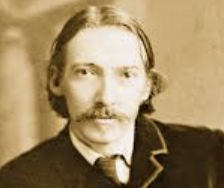
A faculty for idleness implies a catholic appetite and a strong sense of personal identity.
▼
Source
source
An Apology for Idlers.

3 months 1 day ago
In America, conscription is unknown; men are enlisted for payment. Compulsory recruitment is so alien to the ideas and so foreign to the customs of the people of the United States that I doubt whether they would ever dare to introduce it into their law.
▼
Source
source
Chapter XIII.
2 months 1 week ago
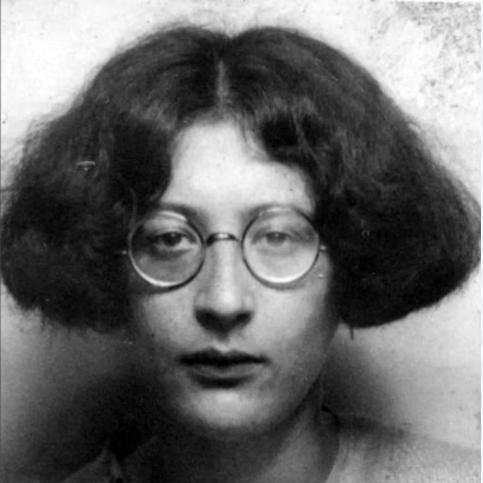
A modern factory reaches perhaps almost the limit of horror. Everybody in it is constantly harassed and kept on edge by the interference of extraneous wills while the soul is left in cold and desolate misery. What man needs is silence and warmth; what he is given is an icy pandemonium.Physical labour may be painful, but it is not degrading as such. It is not art; it is not science; it is something else, possessing an exactly equal value with art and science, for it provides an equal opportunity to reach the impersonal stage of attention.
▼
Source
source
p. 59
3 months 1 week ago
Better be mute, than dispute with the Ignorant.
3 months 3 weeks ago
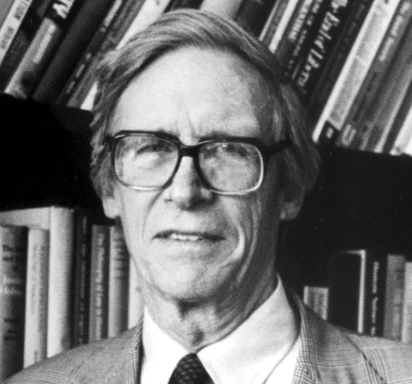
We must choose for others as we have reason to believe they would choose for themselves if they were at the age of reason and deciding rationally.
▼
Source
source
Chapter IV, Section 33, p. 209
4 months 2 weeks ago
It is better to conceal ignorance than to expose it.
4 months 4 days ago
What if he has borrowed the matter and spoiled the form, as it oft falls out?
▼
Source
source
Book III, Ch. 8. Of the Art of Conversation
3 months 2 weeks ago
Nor word for word too faithfully translate.
▼
Source
source
Line 133 (tr. John Dryden)
2 months 5 days ago
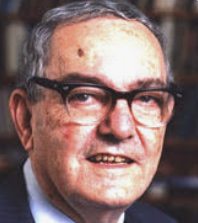
Administration is not unlike play-acting. The task of the good actor is to know and play his role, although different roles may differ greatly in content. The effectiveness of the performance will depend on the effectiveness of the play and the effectiveness with which it is played. The effectiveness of the administrative process will vary with the effectiveness of the organization and the effectiveness with which its members play their parts.
▼
Source
source
p. 252; As cited in: Herbert Simon (1996) The Sciences of the Artificial. page xii.

3 months 4 days ago
We attest that He is the Willer of all things that are, the ruler of all originated phenomena; there does not come into the visible or invisible world anything meager or plenteous, small or great, good or evil, or any advantage or disadvantage, belief or unbelief, knowledge or ignorance, success or failure, increase or decrease, obedience or disobedience, except by His will. What He wills is, and what He does not, will not; there is not a glance of the eye, nor a stray thought of the heart that is not subject to His will. He is the Creator, the Restorer, the Doer of whatsoever He wills. There is none that rescinds His command, none that supplements His decrees, none that dissuades a servant from disobeying Him, except by His help and mercy, and none has power to obey Him except by His will.
▼
Source
source
Ihyaa 'Ulum al-Deen. Beirut: Dar Ibn Hazm (2005), p. 107.
CivilSimian.com created by AxiomaticPanic, CivilSimian, Kalokagathia