


1 month 2 weeks ago
When the evolutionary process shifts from biology to software technology the body becomes the old hardware environment. The human body is now a probe, a laboratory for experiments.
▼
Source
source
(p. 180)
1 week ago
It is life that educates, and perhaps love more than anything else in life.
▼
Source
source
Ch. 2 : On Youth
1 month 4 weeks ago
The existential split in man would be unbearable could he not establish a sense of unity within himself and with the natural and human world outside.
▼
Source
source
p. 262

2 months 2 weeks ago
Neither the few nor the many have a right to act merely by their will, in any matter connected with duty, trust, engagement, or obligation.
▼
Source
source
p. 440

1 month 1 week ago
The old land is still the true love, the others are but pleasant infidelities.
▼
Source
source
Pt. I, ch. IV

2 months ago
The "passion for incredulity" can produce as much self-deception as the uncritical will to believe.
▼
Source
source
p. 209

3 months 3 weeks ago
There are and can be only two ways of searching into and discovering truth. The one flies from the senses and particulars to the most general axioms, and from these principles, the truth of which it takes for settled and immovable, proceeds to judgment and to the discovery of middle axioms. And this way is now in fashion. The other derives axioms from the senses and particulars, rising by a gradual and unbroken ascent, so that it arrives at the most general axioms last of all. This is the true way, but as yet untried.
▼
Source
source
Aphorism 19

1 month 3 days ago
The life, the fortune, and the happiness of every one of us, and, more or less, of those who are connected with us, do depend upon our knowing something of the rules of a game infinitely more difficult and complicated than chess. It is a game which has been played for untold ages, every man and woman of us being one of the two players in a game of his or her own. The chessboard is the world, the pieces are the phenomena of the universe, the rules of the game are what we call the laws of Nature. The player on the other side is hidden from us. We know that his play is always fair, just, and patient. But also we know, to our cost, that he never overlooks a mistake, or makes the smallest allowance for ignorance. To the man who plays well, the highest stakes are paid, with that sort of overflowing generosity with which the strong shows delight in strength. And one who plays ill is checkmated - without haste, but without remorse.


4 months 2 weeks ago
Let's not beat around the bush; I love life, that's my real weakness. I love it so much that I am incapable of imagining what is not life.

3 months 2 weeks ago
Four snakes gliding up and down a hollow for no purpose that I could see - not to eat, not for love, but only gliding.
▼
Source
source
April 11, 1834
1 month 3 days ago
I do not advocate burning your ship to get rid of the cockroaches.
▼
Source
source
Said in reference to those who wished to abolish all religious teaching, rather than freeing state education from Church controls, in Critiques and Addresses (1873) p. 90
3 months 2 weeks ago
The blazing evidence of immortality is our dissatisfaction with any other solution.
▼
Source
source
July 1855

2 months 3 days ago
Art is the symbol of the two noblest human efforts: to construct and to refrain from destruction.
▼
Source
source
The Pre-War Notebook (1933-1939), published in First and Last Notebooks (1970) edited by Richard Rees

3 months 2 weeks ago
England has to fulfill a double mission in India: one destructive, the other regenerating - the annihilation of old Asiatic society, and the laying the material foundations of Western society in Asia... When a great social revolution shall have mastered the results of the bourgeois epoch... and subjected them to the common control of the most advanced peoples, then only will human progress cease to resemble that hideous, pagan idol, who would not drink the nectar but from the skulls of the slain.
▼
Source
source
"The Future Results of British Rule in India," New York Daily Tribune, 08 August 1853

3 months 2 weeks ago
If the Jew did not exist, the anti-Semite would invent him.
▼
Source
source
p. 8

3 months 1 week ago
A man will be imprisoned in a room with a door that's unlocked and opens inwards; as long as it does not occur to him to pull rather than push it.
▼
Source
source
p. 42e

2 months 1 week ago
Ambition is a drug that makes its addicts potential madmen.
1 month 2 weeks ago
I have only one real message in this lecture, and that is: consciousness is a biological phenomenon, like photosynthesis, digestion, mitosis-you know all the biological phenomena-and once you accept that, most, if not all about the hard problems of consciousness simply evaporate.
3 months 1 week ago
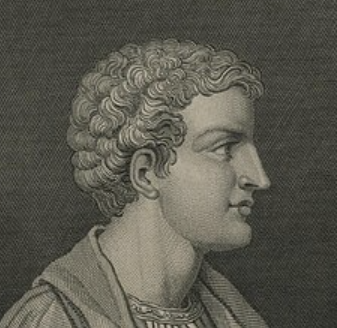
The years as they pass plunder us of one thing after another.
▼
Source
source
Book II, epistle ii, line 55
2 months 1 week ago
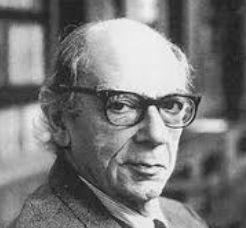
The notion that one can discover large patterns or regularities in the procession of historical events is naturally attractive to those who are impressed by the success of the natural sciences in classifying, correlating, and above all predicting.
1 week 4 days ago
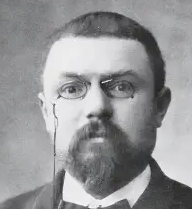
Behold... the only... rule we can follow: when a phenomenon appears... as the cause of another, we regard it as anterior. ...Therefore by cause... we define time; but...how do we recognize which is the cause and which the effect? We assume... the anterior fact, the antecedent, is the cause of the... consequent. It is then by time that we define cause. ...Shall we escape from this vicious circle?

3 months 2 weeks ago
Take the happiest man, the one most envied by the world, and in nine cases out of ten his inmost consciousness is one of failure. Either his ideals in the line of his achievements are pitched far higher than the achievements themselves, or else he has secret ideals of which the world knows nothing, and in regard to which he inwardly knows himself to be found wanting.
▼
Source
source
Lectures VI and VII, "The Sick Soul"

3 weeks 5 days ago
... our descendants may recognize that we are the sociopathic emotional primitives in the grip of an affective psychosis. Jealousy, envy, resentment, ridicule, hate, anger, disgust, spite, contempt, schadenfreude and a whole gamut of nameless but mean-spirited states we undergo each day are a toxic legacy of our Darwinian past. More commonly, perhaps, our genetic make-up ensures we simply feel indifference to the plight of all but a handful of significant others in our lives. Right now, for instance, one knows dimly at some level that there is frightful and preventable suffering in the world. Yet most of us feel no overpowering moral urgency to do anything about it.
▼
Source
source
"Utopian Pharmacology: Mental Health in the Third Millennium MDMA and Beyond", BLTC Research, last updated 2020
1 month 1 day ago
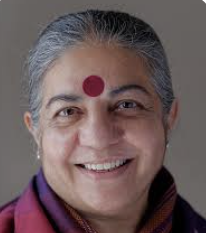
There is a strong affinity between the forces of empire and a politics of hate that justifies policies of domination and exclusion. So long as people's attention is focused on fear and hatred of foreigners or members of a particular religious group, such as Muslims, they are distracted from organizing to deal with the system of institutional domination and exploitation that is the real source of their insecurity.

4 months 2 weeks ago
One will rarely err if extreme actions be ascribed to vanity, ordinary actions to habit, and mean actions to fear.

3 months 3 weeks ago
As Christ had recommended peace during the whole of his life, mark with what anxiety he enforces it at the approach of his dissolution. Love one another, says he; as I have loved you, so love one another; and again, my peace I give unto you, my peace I leave you. Do you observe the legacy he leaves to those whom he loves? Is it a pompous retinue, a large estate, or empire? Nothing of this kind. What is it then? Peace he giveth, his peace he leaveth; peace, not only with our near connections, but with enemies and strangers!
3 months 2 weeks ago
One always dies too soon - or too late. And yet, life is there, finished: the line is drawn, and it must all be added up. You are nothing other than your life.
▼
Source
source
Inès, Act 1, sc. 5

3 months 3 weeks ago
If I had as clear an idea of ghosts, as I have of a triangle or a circle, I should not in the least hesitate to affirm that they had been created by God; but as the idea I possess of them is just like the ideas, which my imagination forms of harpies, gryphons, hydras, &c., I cannot consider them as anything but dreams, which differ from God as totally as that which is not differs from that which is.
▼
Source
source
Letter to Hugo Boxel (October 1674) The Chief Works of Benedict de Spinoza (1891) Tr. R. H. M. Elwes, Vol. 2, Letter 58 (54).


2 months 2 weeks ago
The Age of Empty Freedom ... does not know that man must first through labour, industry, and art, learn how to know; but it has a certain fixed standard for all conceptions, and an established Common Sense of Mankind always ready and at hand, innate within itself and there present without trouble on its part;-and those conceptions and this Common Sense are to it the measure of the efficient and the real. It has this great advantage over the Age of Science, that it knows all things without having learned anything; and can pass judgment upon whatever comes before it at once and without hesitation,-without needing any preliminary evidence:-'That which I do not immediately comprehend by the conceptions which dwell within me, is nothing,'-says Empty Freedom.
▼
Source
source
p. 20

3 months 2 weeks ago
Virtue is harder to be got than knowledge of the world; and, if lost in a young man, is seldom recovered.
▼
Source
source
Sec. 70

2 months 3 weeks ago
Among these widely differing families of men, the first that attracts attention, the superior in intelligence, in power, and in enjoyment, is the white, or European, the MAN pre-eminently so called, below him appear the Negro and the Indian.
▼
Source
source
Chapter XVIII.

2 months 1 week ago
You shall know the truth, and the truth shall set you free.
▼
Source
source
8:32
2 months 3 weeks ago
Pour recueillir les biens inestimables qu'assure la liberté de la presse, il faut savoir se soumettre aux maux inévitables qu'elle fait naître. Translation: In order to enjoy the inestimable benefits that the liberty of the press ensures, it is necessary to submit to the inevitable evils it creates.
▼
Source
source
Chapter XI.
3 months 5 days ago
He preferred an honest man that wooed his daughter, before a rich man. "I would rather," said Themistocles, "have a man that wants money than money that wants a man."
▼
Source
source
49 Themistocles
3 months 2 weeks ago
The Communists disdain to conceal their views and aims. They openly declare that their ends can be attained only by the forcible overthrow of all existing social conditions. Let the ruling classes tremble at a Communistic revolution. The proletarians have nothing to lose but their chains. They have a world to win. WORKING MEN OF ALL COUNTRIES, UNITE!
▼
Source
source
Section 4, paragraph 11 (last paragraph) Variant translation: Workers of the world, unite!
1 month 3 weeks ago
There's no need to fear or hope, but only to look for new weapons.
▼
Source
source
from Postscript on the Societies of Control
2 months 2 weeks ago
The Present Age, according to my view of it, stands in that Epoch which in my former lecture I named the THIRD, and which I characterized as the Epoch of Liberation-directly from the external ruling Authority, indirectly from the power of Reason as Instinct, and generally from Reason in any form; the Age of absolute indifference towards all truth, and of entire and unrestrained licentiousness:-the state of completed sinfulness.
▼
Source
source
p. 16
3 months 1 week ago
Herbert Spencer is little read now. Philosophers do not regard him as a major thinker.
▼
Source
source
Social Darwinism has long been in disrepute. Chapter 3, From Evolution To Ethics?, p. 61
1 month 4 weeks ago
I believe that none can "save" his fellow man by making a choice for him. To help him, he can indicate the possible alternatives, with sincerity and love, without being sentimental and without illusion. The knowledge and awareness of the freeing alternatives can reawaken in an individual all his hidden energies and put him on the path to choosing respect for "life" instead of for "death."
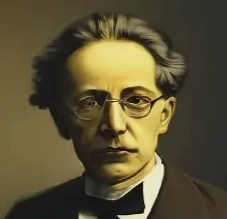
3 days ago
For the state it is indispensable that nobody have an own will; if one had, the state would have to exclude (lock up, banish, etc.) this one; if all had, they would do away with the state. (...) The own will of me is the state's destroyer; it is therefore denounced by the state as 'self-will'. Own will and the state are powers in deadly hostility, between which no 'perpetual peace' is possible. As long as the state asserts itself, it represents own will, its ever-hostile opponent, as unreasonable, evil; and the latter lets itself be talked into believing this.
▼
Source
source
Cambridge 1995, p. 174, 175
1 week 3 days ago
The social conditions that nourished and made use of this ideology can still revive; perhaps - who knows? - the virus is dormant, waiting for the next opportunity. Dreams about the perfect society belong to the enduring stock of civilization.
▼
Source
source
New Preface, p. vi
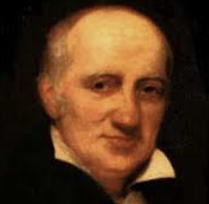
2 months 2 weeks ago
Government was intended to suppress injustice, but it offers new occasions and temptations for the commission of it.
▼
Source
source
"Summary of Principles" 2.4
3 months 2 weeks ago
The perception of the comic is a tie of sympathy with other men, a pledge of sanity, and protection from those perverse tendencies and gloomy insanities in which fine intellects sometimes lose themselves. A rogue alive to the ludicrous is still convertible.
▼
Source
source
The Comic

4 months 2 weeks ago
For the purposes of poetry a convincing impossibility is preferable to an unconvincing possibility.

3 months 2 weeks ago
Man is a credulous animal, and must believe something; in the absence of good grounds for belief, he will be satisfied with bad ones.
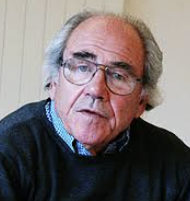
1 month 2 weeks ago
Nothing is wholly obvious without becoming enigmatic. Reality itself is too obvious to be true.
CivilSimian.com created by AxiomaticPanic, CivilSimian, Kalokagathia