


3 months 3 weeks ago
In France at least, the history of science and thought gives pride of place sciences, sciences of the necessary, all close to philosophy: one can observe in their history the almost uninterrupted emergence of truth and pure reason. The other disciplines, however - those, for example, that concern living beings, languages, or economic facts - are considered too tinged with empirical thought, too exposed to the vagaries of chance or imagery to age old traditions and external events, for it to be supposed that their history could be anything other irregular. At most, they are expected to provide evidence of a state of mind, an intellectual fashion, a mixture of archaism and bold conjecture, of intuition and blindness. But what if empirical knowledge, at a given time and in a given culture, did possess a well defined regularity.
▼
Source
source
Foreword to the English edition
1 month ago
There will not be one kind of community existing and one kind of life led in utopia. Utopia will consist of utopias, of many different and divergent communities in which people lead different kinds of lives under different institutions. Some kinds of communities will be more attractive to most than others; communities will wax and wane. People will leave some for others or spend their whole lives in one. Utopia is a framework for utopias, a place where people are at liberty to join together voluntarily to pursue and attempt to realize their own vision of the good life in the ideal community but where no one can impose his own utopian vision upon others.
▼
Source
source
Ch. 10 : A Framework for Utopia; The Framework, p. 311
2 months 3 weeks ago
He who must still exhort himself, and be exhorted, to will the good, has as yet no firm and ever-ready will, but wills a will anew every time he needs it. But he who has such a stable will, wills what he wills for ever, and cannot under any circumstances will otherwise than he always wills. For him freedom of the will is destroyed and swallowed up in necessity.
▼
Source
source
General Nature of New Eduction p 21

4 months 4 weeks ago
Socialism itself can hope to exist only for brief periods here and there, and then only through the exercise of the extremest terrorism. For this reason it is secretly preparing itself for rule through fear and is driving the word 'justice' into the heads of the half-educated masses like a nail so as to rob them of their reason... and to create in them a good conscience for the evil game they are to play.

3 months 3 weeks ago
If any philosopher had been asked for a definition of infinity, he might have produced some unintelligible rigmarole, but he would certainly not have been able to give a definition that had any meaning at all.
▼
Source
source
Ch. 5: Mathematics and the Metaphysicians
2 months 2 weeks ago
That life is worth living is the most necessary of assumptions and, were it not assumed, the most impossible of conclusions.

3 months 1 day ago
In America a woman loses her independence for ever in the bonds of matrimony. While there is less constraint on girls there than anywhere else, a wife submits to stricter obligations. For the former, her father's house is a home of freedom and pleasure; for the latter, her husband's is almost a cloister.
▼
Source
source
Book Three, Chapter X.

2 months 1 week ago
Ether is, in effect, a merely hypothetical entity, valuable only in so far as it explains that which by means of it we endeavor to explain - light, electricity, or universal gravitation - and only so far as these facts cannot be explained in any other way. In like manner the idea of God is also an hypothesis, valuable only in so far as it enables us to explain that which by means of it we endeavor to explain - the essence and existence of the Universe - and only so long as these cannot be explained in any other way. And since in reality we explain the Universe neither better nor worse with this idea than without it, the idea of God, the supreme petitio principii, is valueless.

6 days ago
The one absolutely, the Intelligible, the ever Preexisting, comprehending all the universe together within the One - nay, more, is not the whole world One living thing - all and everywhere full of life and soul, perfect and made up out of parts likewise perfect? Now of this double unity the most perfect part (I mean of the Unity in the Intelligible World that comprehends all things in One, and of the Unity encompassing the Sensible World, that brings together all things into a single and perfect nature) is the perfection of the sovereign Sun, which is central and single, and placed in the middle of the intermediate Powers.

2 weeks 3 days ago
The true University of these days is a Collection of Books.
1 month 3 weeks ago
To do two things at once is to do neither.

4 months 4 days ago
Wonder is the foundation of all philosophy, research is the means of all learning, and ignorance is the end.

3 months 3 weeks ago
One of the most difficult of the philosopher's tasks is to find out where the shoe pinches.
▼
Source
source
p. 61
4 months 2 weeks ago
If I hear the Way [of truth] in the morning, I am content even to die in that evening.
1 month 3 weeks ago
Give us grace and strength to forbear and to persevere. Give us courage and gaiety and the quiet mind, spare to us our friends, soften to us our enemies.
▼
Source
source
Prayer, inscribed on the bronze memorial to Stevenson in St. Giles Cathedral, Edinburgh, Scotland
2 months 2 weeks ago
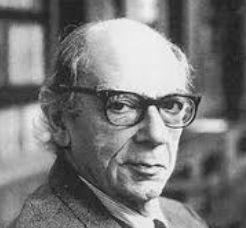
Injustice, poverty, slavery, ignorance - these may be cured by reform or revolution. But men do not live only by fighting evils. They live by positive goals, individual and collective, a vast variety of them, seldom predictable, at times incompatible.

4 months 1 week ago
Superstition is now in her turn cast down and trampled underfoot, whilst we by the victory are exalted high as heaven.
▼
Source
source
Book I, lines 78-79 (tr. W. H. D. Rouse)

4 months 3 weeks ago
We face eternity now. We have no universe left, no outside phenomena, no emotions, no passions. Nothing but ourselves and thought. We face an eternity of introspection, when all through history we have never known what to do with ourselves on a rainy Sunday.
3 months 4 weeks ago
Men being, as has been said, by nature, all free, equal and independent, no one can be put out of this estate, and subjected to the political power of another, without his own consent.
▼
Source
source
Second Treatise of Government, Ch. VIII, sec. 95

3 months 4 weeks ago
If God did not exist, it would be necessary to invent him.

1 month 3 weeks ago
For tribal man, space was the uncontrollable mystery. For technological man it is time that occupies the same role.
▼
Source
source
p. 85; "Magic that Changes Mood")
2 months 3 weeks ago
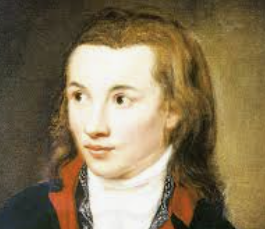
Nature is an Æolian Harp, a musical instrument; whose tones again are keys to higher strings in us.

3 months 3 weeks ago
Assembled in a crowd, people lose their powers of reasoning and their capacity for moral choice.
▼
Source
source
Chapter 5 (p. 42)

4 months 2 weeks ago
He who is not satisfied with a little, is satisfied with nothing.

3 months 3 days ago
If he is not Nature herself, he is certainly the nature of Nature, and is the soul of the Soul of the world, if he is not the soul herself.
▼
Source
source
As translated by Arthur Imerti

3 months 3 weeks ago
There are many things of which a wise man might wish to be ignorant.
▼
Source
source
Demonology
4 months 3 weeks ago
A tragedy, then, is the imitation of an action that is serious and also, as having magnitude, complete in itself; in language ... not in a narrative form; with incidents arousing pity and fear, wherewith to accomplish its catharsis of such emotions.
4 months 4 weeks ago
We often contradict an opinion for no other reason than that we do not like the tone in which it is expressed.
1 month 3 weeks ago
What worries me about religion is that it teaches people to be satisfied with not understanding the world they live in.
▼
Source
source
Heart Of The Matter: God Under The Microscope | BBC
3 months 3 weeks ago
It is a sign of wisdom to be able to use parrhesia without falling into the garrulousness of athuroglossos... One of the problems... how to distinguish that which must be said from that which should be kept silent.
4 months 3 weeks ago
I shall assume that your silence gives consent.

1 week 4 days ago
It makes a big difference whether you give something back or pay it off... The framers of the laws instituted festivals, in order that men should be publicly compelled to gaiety, as a necessary temperance for labors; We remember the great orator Pollio Asinius, who was not detained by anything beyond the tenth hour: he did not even need letters for an hour after that, so that no new concern arose, but he put the fatigue of the whole day in those two hours. Some joined in the middle of the day and put off some lighter work in the afternoon hours. Our elders also forbade a new report to be made in the senate after ten o'clock. The army divided the vigils, and the night was safe from the return of the expedition.
1 month 1 week ago
Simplicity and nonviolence are the basis of an economy of wellbeing, and such an economy must be localised.
2 months 1 week ago
To hope means to be ready at every moment for that which is not yet born, and yet not become desperate if there is no birth in our lifetime.
2 months 2 weeks ago
My path was not the normal one of professors of philosophy. I did not intend to become a doctor of philosophy by studying philosophy (I am in fact a doctor of medicine) nor did I by any means, intend originally to qualify for a professorship by a dissertation on philosophy. To decide to become a philosopher seemed as foolish to me as to decide to become a poet. Since my schooldays, however, I was guided by philosophical questions. Philosophy seemed to me the supreme, even the sole, concern of man. Yet a certain awe kept me from making it my profession.

2 months 2 weeks ago
Foxes have their dens and birds have their nests, but human beings have no place to lay down and rest.

2 months 3 weeks ago
A dream! What is a dream? And is not our life a dream? I will say more. Suppose that this paradise will never come to pass (that I understand), yet I shall go on preaching it. And yet how simple it is: in one day, in one hour everything could be arranged at once! The chief thing is to love others like yourself, that's the chief thing, and that's everything; nothing else is wanted - you will find out at once how to arrange it all. And yet it's an old truth which has been told and retold a billion times - but it has not formed part of our lives! The consciousness of life is higher than life, the knowledge of the laws of happiness is higher than happiness - that is what one must contend against. And I shall. If only everyone wants it, it can be arranged at once.
4 months 4 days ago
In order to seek truth, it is necessary once in the course of our life, to doubt, as far as possible, of all things.
▼
Source
source
Descartes, René (1644). Principles of Philosophy.
4 months 4 days ago
The entire method consists in the order and arrangement of the things to which the mind's eye must turn so that we can discover some truth.
▼
Source
source
Rules for the Direction of the Mind: X.379 As quoted in Clarke, Desmond M. (2006). Descartes : a Biography. Cambridge Press. p. 67. ISBN 978-0-521-82301-2.
4 months 1 week ago
In order to understand the Scriptures, it is absolutely necessary to know the whole, complete Christ, that is, Head and members. For sometimes Christ speaks in the name of the Head alone, sometimes in the name of His body, which is the holy Church spread over the entire earth. And we are in His body, and we hear ourselves speaking in it, for the Apostle tells us: We are members of His body (Eph. 5:30). In many places does the Apostle tell us this.
▼
Source
source
p. 419
3 months 3 weeks ago
Only in thought is man a God; in action and desire we are the slaves of circumstance.
▼
Source
source
Letter to Lucy Donnely, November 25, 1902
3 months 3 weeks ago
A fundamental economic reconstruction, bringing with it very far-reaching changes in ways of thinking and feeling, in philosophy and art and private relations, seems absolutely necessary if industrialism is to become the servant of man instead of his master. In all this, I am at one with the Bolsheviks; politically, I criticize them only when their methods seem to involve a departure from their own ideals.
▼
Source
source
Preface
3 months 3 weeks ago
A man's thinking goes on within his consciousness in a seclusion in comparison with which any physical seclusion is an exhibition to public view.
▼
Source
source
Pt II, p. 189
3 months 3 weeks ago
Wit makes its own welcome, and levels all distinctions. No dignity, no learning, and no force of character can make any stand against good wit.
▼
Source
source
The Comic
2 weeks 3 days ago
And wonderful it is to see how the Ideal or Soul, place it in what ugliest Body you may, will irradiate said Body with its own nobleness; will gradually, incessantly, mould, modify, new-form or reform said ugliest Body, and make it at last beautiful, and to a certain degree divine!

3 months 3 weeks ago
I conceive that the description so often given of a Benthamite, as a mere reasoning machine, though extremely inapplicable to most of those who have been designated by that title, was during two or three years of my life not altogether untrue of me. ...There is nothing very extraordinary in this fact: no youth of the age I then was, can be expected to be more than one thing, and this was the thing I happened to be. Ambition and desire of distinction, I had in abundance; and zeal for what I thought the good of mankind was my strongest sentiment, mixing with and colouring all others. But my zeal was as yet little else, at that period of my life, than zeal for speculative opinions. It had not its root in genuine benevolence, or sympathy with mankind; though these qualities held their due place in my ethical standard. Nor was it connected with any high enthusiasm for ideal nobleness.
▼
Source
source
(pp. 109-110)

2 months 1 week ago
The Hebrews took for their idol, not something made of metal or wood, but a race, a nation, something just as earthly. Their religion is essentially inseparable from such idolatry, because of the notion of the "chosen people".
▼
Source
source
Section 2
1 month 2 weeks ago
The advantage of pure, and the disadvantage of impure air are experienced each time we breathe, and all who understand the causes of disease know that an impure atmosphere is most unfavourable to the enjoyment of health, and an efficient cause to shorten human existence within the natural life of man. It is therefore most desirable that decisive measures should be devised and generally adopted to ensure to all a pure atmosphere, in which to live during their lives.
▼
Source
source
3rd Part
CivilSimian.com created by AxiomaticPanic, CivilSimian, Kalokagathia