


2 months 1 week ago
The sun will be darkened, and the moon will not give its light; the stars will fall from the sky, and the heavenly bodies will be shaken. They will see the Son of Man coming on the clouds of the sky, with power and great glory... I tell you the truth, this generation will certainly not pass away until all these things have happened.
▼
Source
source
24:29-34 (NIV)
3 months 1 week ago
Ill repute is a good thing and much the same as pain.
▼
Source
source
§ 5
3 months 1 week ago
If I knew that it was fated for me to be sick, I would even wish for it; for the foot also, if it had intelligence, would volunteer to get muddy.
▼
Source
source
As quoted by Epictetus, Discourses, ii. 6. 10.

2 months 1 day ago
A precise language awaits a completed metaphysics.
2 months 1 week ago
We Shall Naturally look round in vain the macrophysical world for acausal events, for the simple reason that we cannot imagine events that are connected non-causally and are capable of a non-causal explanation. But that does not mean that such events do not exist... The so-called "scientific view of the world" based on this can hardly be anything more than a psychologically biased partial view which misses out all those by no means unimportant aspects that cannot be grasped statistically.
▼
Source
source
p. 5
2 months 2 weeks ago
Here then is what we understand by these words: "the equalization of the classes." It would perhaps have been better to say suppression of the classes, the unification of society by the abolition of economic and social inequality. But we have also demanded the equalization of the individuals, and it is there especially that we attract all the thunderbolts of outraged eloquence from our adversaries. One has made use of that part of our proposition to prove in a conclusive manner that we are nothing but communists.

3 months 2 weeks ago
It is from the Bible that man has learned cruelty, rapine, and murder; for the belief of a cruel God makes a cruel man.
▼
Source
source
A Letter: Being an Answer to a Friend, on the publication of The Age of Reason" (12 May 1797), published in an 1852 edition of The Age of Reason, p. 205

1 month 2 weeks ago
If nonviolence is to make sense as an ethical and political position, it cannot simply repress aggression or do away with its reality; rather, nonviolence emerges as a meaningful concept precisely when destruction is most likely or seems most certain.
▼
Source
source
p. 39

3 months 2 weeks ago
To acquire immunity to eloquence is of the utmost importance to the citizens of a democracy.
▼
Source
source
Ch. 18: The Taming of Power

4 months 2 weeks ago
Never let your sense of morals prevent you from doing what is right.



2 months 4 weeks ago
Choose rather to be strong in soul than in body.
▼
Source
source
"Pythagorean Ethical Sentences From Stobæus" (1904) Choose rather to be strong of soul than strong of body. As quoted in Florilegium, I.22, as translated in Dictionary of Quotations (1906) by Thomas Benfield Harbottle, p. 396
3 months 1 week ago
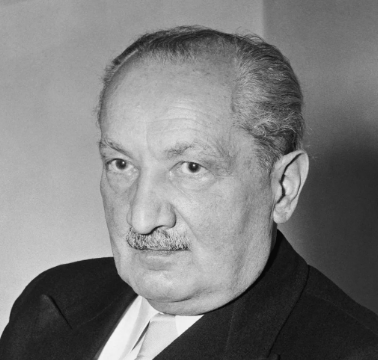
Everyone is the other, and no one is himself. The they, which supplies the answer to the who of everyday Da-sein, is the nobody to whom every Da-sein has always already surrendered itself, in its being-among-one-another.
▼
Source
source
Stambaugh translation

4 months 2 weeks ago
The advantage of a bad memory is that one can enjoy the same good things for the first time several times.

1 month 2 weeks ago
To explain all nature is too difficult a task for any one man or even for any one age. 'Tis much better to do a little with certainty, & leave the rest for others that come after you, than to explain all things by conjecture without making sure of any thing.
▼
Source
source
Statement from unpublished notes for the Preface to Opticks (1704) quoted in Never at Rest: A Biography of Isaac Newton (1983) by Richard S. Westfall, p. 643
4 months 2 weeks ago
One may certainly admire man as a mighty genius of construction, who succeeds in piling an infinitely complicated dome of concepts upon an unstable foundation, and, as it were, on running water. Of course, in order to be supported by such a foundation, his construction must be like one constructed of spiders' webs: delicate enough to be carried along by the waves, strong enough not to be blown apart by every wind.
2 months 2 weeks ago
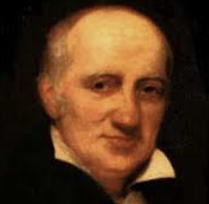
It is comparatively easy for the philosopher in his closet to invent imaginary schemes of policy, and to shew how mankind, if they were without passions and without prejudices, might best be united in the form of a political community. But, unfortunately, men in all ages are the creatures of passions, perpetually prompting them to defy the rein, and break loose from the dictates of sobriety and speculation.
▼
Source
source
History of the Commonwealth of England. From its Commencement, to the Restoration of Charles the Second. Volume the Fourth. Oliver, Lord Protector (1828), p. 579

4 months 2 weeks ago
How could one speak properly about love if you were forgotten, you God of love, source of all love in heaven and on earth; you who spared nothing but in love gave everything; you who are love, so that one who loves is what he is only by being in you.
2 months 1 week ago
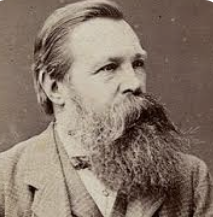
Community of women is a condition which belongs entirely to bourgeois society and which today finds its complete expression in prostitution. But prostitution is based on private property and falls with it. Thus, communist society, instead of introducing community of women, in fact abolishes it.
4 months 2 weeks ago
Writing is hard work. The fact that I love doing it doesn't make it less hard work. People who love tennis will sweat themselves to exhaustion playing it, and the love of the game doesn't stop the sweating. The casual assumption that writers are unemployed bums because they don't go to the office and don't have a boss is something every writer has to live with. I have never known a writer who hasn't suffered as a result of this, hasn't resented it, and hasn't dreamed of murdering the next person who says "Boy, you've sure got it made. You just sit there and toss off a story or something whenever you feel like it."
2 months 1 week ago
Thou shalt love the Lord thy God with all thy heart, and with all thy soul, and with all thy mind. This is the first and great commandment. And the second is like unto it, Thou shalt love thy neighbour as thyself. On these two commandments hang all the law and the prophets.
▼
Source
source
22:37-40 (KJV)

2 months 2 weeks ago
What is Europe really but a sterile trunk which owes everything to oriental grafts?
▼
Source
source
Letter of 18 December 1806 to Windischmann, quoted by Rene Gerard, L'Orient et la pensée romantique allemande, Paris 1963,, p. 213. quoted in Poliakov, L. (1974).

1 month 4 weeks ago
Perhaps even more than constituted authority, it is social uniformity and sameness that harass the individual most. His very "uniqueness," "separateness" and "differentiation" make him an alien, not only in his native place, but even in his own home. Often more so than the foreign born who generally falls in with the established. In the true sense one's native land, with its back ground of tradition, early impressions, reminiscences and other things dear to one, is not enough to make sensitive human beings feel at home. A certain atmosphere of "belonging," the consciousness of being "at one" with the people and environment, is more essential to one's feeling of home. This holds good in relation to one's family, the smaller local circle, as well as the larger phase of the life and activities commonly called one's country. The individual whose vision encompasses the whole world often feels nowhere so hedged in and out of touch with his surroundings than in his native land.

4 months 2 weeks ago
Since the science of nature is conversant with magnitudes, motion, and time, each of which must necessarily be either infinite or finite...[we] should speculate the infinite, and consider whether it is or not; and if it is what it is. ...[A]ll those who appear to have touched on a philosophy of this kind... consider it as a certain principle of beings. Some, indeed, as the Pythagoreans and Plato, consider it, per se, not as being an accident to any thing else, but as having an essential subsistence... the Pythagoreans... consider the infinite as subsisting in sensibles; for they do not make number to be separate; and they assert that what is beyond the heavens is infinite; but Plato says that beyond the heavens there is not any body, nor ideas, because these are no where: he affirms, however, that the infinite is both in sensibles, and in ideas. ...Plato establishes two infinities, viz. the great and the small.
2 months 1 week ago
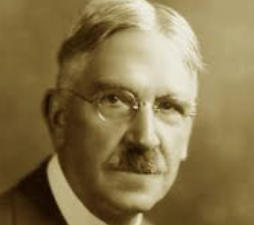
Because energy is not restrained by other elements that are at once antagonistic and cooperative, action proceeds by jerks and spasms. There is discontinuity.
▼
Source
source
p. 189

2 months 1 week ago
I know every numbskull will babble on about "black man," "maneater," "chance," and "retrospective interpretation," in order to banish something terribly inconvenient that might sully the familiar picture of childhood innocence. Ah, these good, efficient, healthy-minded people, they always remind me of those optimistic tadpoles who bask in a puddle in the sun, in the shallowest of waters, crowding together and amiably wriggling their tails, totally unaware that the next morning the puddle will have dried up and left them stranded. On a phallic dream he had as a young child.
▼
Source
source
p. 14

3 months 2 weeks ago
It is sublime as night and a breathless ocean. It contains every religious sentiment, all the grand ethics, which visit in turn each noble poetic mind .... It is of no use to put away the book if I trust myself in the woods or in a boat upon the pond. Nature makes a Brahmin of me presently: eternal compensation, unfathomable power, unbroken silence .... This is her creed. Peace, she saith to me, and purity and absolute abandonment - these panaceas expiate all sin and bring you to the beatitude of the Eight Gods.
▼
Source
source
Quoted in Nani Ardeshir Palkhivala, India's Priceless Heritage, 1st ed. (Bombay: Bharatiya Vidya Bhavan, 1980) pp. 9-24

2 months 1 week ago
Institutionalized desublimation thus appears to be an aspect of the "conquest of transcendence" achieved by the one-dimensional society. Just as this society tends to reduce, and even absorb opposition (the qualitative difference!) in the realm of politics and higher culture, so it does in the instinctual sphere. The result is the atrophy of the mental organs for grasping the contradictions and the alternatives and, in the one remaining dimension of technological rationality, the Happy Consciousness comes to prevail.
▼
Source
source
p. 79
4 months 2 weeks ago
Perhaps then we must begin with such facts as are known to us from individual experience. It is necessary therefore that the person who is to study, with any tolerable chance of profit, the principles of nobleness and justice and politics generally, should have received a good moral training.
2 months 1 week ago
Suppose ye that I am come to give peace on earth? I tell you, Nay; but rather division: For from henceforth there shall be five in one house divided, three against two, and two against three. The father shall be divided against the son, and the son against the father; the mother against the daughter, and the daughter against the mother; the mother in law against her daughter in law, and the daughter in law against her mother in law. And he said also to the people, When ye see a cloud rise out of the west, straightway ye say, There cometh a shower; and so it is. And when ye see the south wind blow, ye say, There will be heat; and it cometh to pass. Ye hypocrites, ye can discern the face of the sky and of the earth; but how is it that ye do not discern this time? Yea, and why even of yourselves judge ye not what is right?
▼
Source
source
12:51-57 (KJV) Variant translation of 12:57: Why do you not judge for yourselves what is right?

3 months 2 weeks ago
A spider conducts operations that resemble those of a weaver, and a bee puts to shame many an architect in the construction of her cells. But what distinguishes the worst of architects from the best of bees is this, that the architect raises his structure in imagination before he erects it in reality.
▼
Source
source
Vol. I, Ch. 7, pg. 198.

3 months 3 weeks ago
The ceaseless labour of your life is to build the house of death.
▼
Source
source
Book I, Ch. 20

1 week 5 days ago
Any American ally will welcome Biden as president, will be happy that he was elected, but will be a little... distrustful because the Republicans could make a come-back in 2022. They could win the presidency again in 2024. ...There's is still a good third of the American public that remain very strong Trump voters. They're very angry and... are not going to go away... Therefore the ability of the United States to resume its role as the chief defender of the liberal order... is going to be contested, both domestically and... by American friends. If this leads to more self-reliance on their part, that may not be the worst thing in the world, but it is going to mean a very different kind of world order than the one I grew up arguing with Owen Harries about.
▼
Source
source
30:41:00
3 months 3 weeks ago
Man is certainly crazy. He could not make a mite, and he makes gods by the dozen.
▼
Source
source
Ch. 12

3 months 1 week ago
He who abhors and shuns the light of the Sun, He who refuses to behold with respect the living creation of God, He who leads the good to wickedness, He who makes the meadows waterless and the pastures desolate, He who lets fly his weapon against the innocent, An enemy of my faith, a destroyer of Thy principles is he, O Lord!
▼
Source
source
Ahunuvaiti Gatha; Yasna 32, 10.

1 week 6 days ago
Material production - the production, for example, or cars, televisions, clothing, and food - creates the means of social life. ... Immaterial production, by contrast, including the production of ideas, knowledges, communication, cooperation, and affective relations, tends to create not the means of social life but social life itself. (146)
▼
Source
source
146
3 months 2 weeks ago
Science, ever since the time of the Arabs, has had two functions: (1) to enable us to know things, and (2) to enable us to do things.
3 months 6 days ago
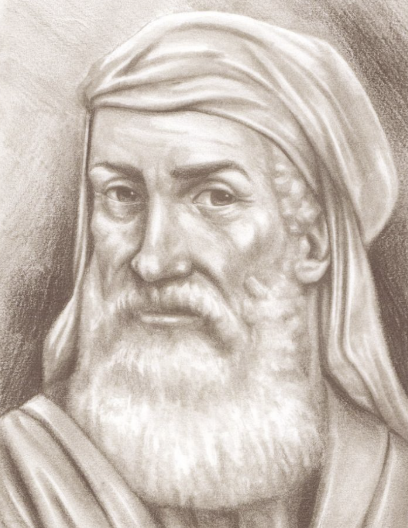
But, when the elements have been mingled in the fashion of a man and come to the light of day, or in the fashion of the race of wild beasts or plants or birds, then men say that these come into being; and when they are separated, they call that woeful death. They call it not aright; but I too follow the custom, and call it so myself.
▼
Source
source
fr. 9 As quoted by John Burnet, Early Greek philosophy (1908) p. 240

2 months 3 weeks ago
It is the common wonder of all men, how among so many million of faces there should be none alike.
▼
Source
source
Section 2
2 months 1 week ago
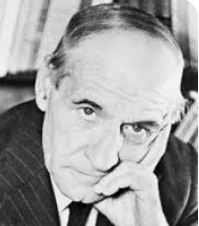
The species with eyes appears suddenly, capriciously as it were, and it is this species which changes the environment by creating its visible aspect. The eye does not come into being because it is needed. Just the contrary; because the eye appears it can henceforth be applied as a serviceable instrument. Each species builds up its stock of useful habits by selecting among, and taking advantage of, the innumerable useless actions which a living being performs out of sheer exuberance.
▼
Source
source
p. 17
2 months 1 week ago
Every archetype is capable of endless development and differentiation. It is therefore possible for it to be more developed or less. In an outward form of religion where all the emphasis is on the outward figure (hence where we are dealing with a more or less complete projection) the archetype is identical with externalized ideas but remains unconscious as a psychic factor. When an unconscious content is replaced by a projected image to that extent, it is cut off from all participation in an influence on the conscious mind. Hence it largely forfeits its own life, because prevented from exerting the formative influence on consciousness natural to it; what is more, it remains in its original form - unchanged, for nothing changes in the unconscious.
2 months 1 week ago
You read the face of the sky and of the earth, but you have not recognized the one who is before you, and you do not know how to read this moment.
3 months 1 week ago
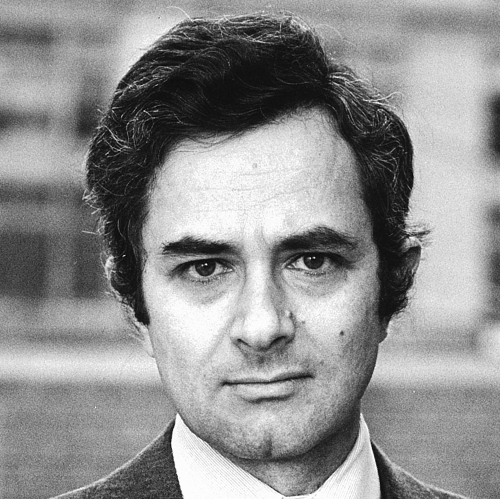
In speaking of the fear of religion, I don't mean to refer to the entirely reasonable hostility toward certain established religions and religious institutions, in virtue of their objectionable moral doctrines, social policies, and political influence. Nor am I referring to the association of many religious beliefs with superstition and the acceptance of evident empirical falsehoods. I am talking about something much deeper-namely, the fear of religion itself. I speak from experience, being strongly subject to this fear myself: I want atheism to be true and am made uneasy by the fact that some of the most intelligent and well-informed people I know are religious believers. It isn't just that I don't believe in God and, naturally, hope that I'm right in my belief. It's that I hope there is no God! I don't want there to be a God; I don't want the universe to be like that.
▼
Source
source
The Last Word, Oxford University Press, 1997, pp. 130-131.

4 months 5 days ago
The order of authority derives from God, as the Apostle says [in Romans 13:1-7]. For this reason, the duty of obedience is, for the Christian, a consequence of this derivation of authority from God, and ceases when that ceases. But, as we have already said, authority may fail to derive from God for two reasons: either because of the way in which authority has been obtained, or in consequence of the use which is made of it. There are two ways in which the first may occur. Either because of a defect in the person, if he is unworthy; or because of some defect in the way itself by which power was acquired, if, for example, through violence, or simony or some other illegal method.
▼
Source
source
in Aquinas: Selected Political Writings (Basil Blackwell: 1974), p. 183
2 months 3 weeks ago
That children dream not the first half year, that men dream not in some countries, with many more, are unto me sick men's dreams, dreams out of the Ivory gate, and visions before midnight.

3 months 2 weeks ago
Because machines could be made progressively more and more efficient, Western man came to believe that men and societies would automatically register a corresponding moral and spiritual improvement. Attention and allegiance came to be paid, not to Eternity, but to the Utopian future. External circumstances came to be regarded as more important than states of mind about external circumstances, and the end of human life was held to be action, with contemplation as a means to that end. These false and historically, aberrant and heretical doctrines are now systematically taught in our schools and repeated, day in, day out, by those anonymous writers of advertising copy who, more than any other teachers, provide European and American adults with their current philosophy of life. And so effective has been the propaganda that even professing Christians accept the heresy unquestioningly and are quite unconscious of its complete incompatibility with their own or anybody else's religion.
2 days ago
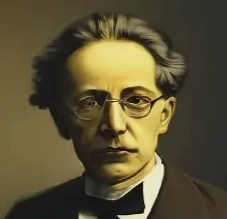
Because the Egoist is to himself the warder of the human, and has nothing to say to the state except: "Get out of my sunshine!"
▼
Source
source
Tucker 1907, p. 307

2 months ago
Often what is absent has more power than what is present.
4 months 2 weeks ago
For man to become successful, for man to establish himself as the ruler of the planet, it was necessary for him to use his brain as something more than a device to make the daily routine of getting food and evading enemies a little more efficient. Man had to learn to control his environment.
CivilSimian.com created by AxiomaticPanic, CivilSimian, Kalokagathia