


3 months 3 weeks ago
O tenderly the haughty day Fills his blue urn with fire; One morn is in the mighty heaven, And one in our desire.
▼
Source
source
Ode, st. 1
3 months 3 weeks ago
A sect or party is an elegant incognito devised to save a man from the vexation of thinking.
▼
Source
source
June 20, 1831
2 months 1 week ago
Elements of empirical language are manipulated in their rigidity, as if they were elements of a true and revealed language. The empirical usability of the sacred ceremonial words makes both the speaker and listener believe in their corporeal presence.
▼
Source
source
p. 7
4 months 3 weeks ago
Married people pledge love for each other throughout eternity. Well, now, that is easy enough but does not mean very much, for if one is finished with time one is probably finished with eternity. If, instead of saying "throughout eternity," the couple would say, "until Easter, until next May Day," then what they say would make some sense, for then they would be saying something and also something they perhaps could carry out.

3 months 4 weeks ago
And the final event to himself has been, that, as he rose like a rocket, he fell like the stick.
▼
Source
source
On Edmund Burke's reactions to the American and French revolutions.

2 months 1 week ago
When we are the victims of illusion we do not feel it to be an illusion but a reality. It is the same perhaps with evil. Evil when we are in its power is not felt as evil but as a necessity, or even a duty.
▼
Source
source
p. 64

3 months 2 days ago
There is surely a Physiognomy, which those experienced and Master Mendicants observe... For there are mystically in our faces certain Characters that carry in them the motto of our Souls, wherein he that cannot read A.B.C. may read our natures.
▼
Source
source
Section 2
2 weeks 2 days ago
Excellence is an art won by training and habituation: we do not act rightly because we have virtue or excellence, but we rather have these because we have acted rightly; 'these virtues are formed in man by his doing the actions'; we are what we repeatedly do. Excellence, then, is not an act but a habit: 'the good of man is a working of the soul in the way of excellence in a complete life... for as it is not one swallow or one fine day that makes a spring, so it is not one day or a short time that makes a man blessed and happy'.
▼
Source
source
p. 87; the quoted phrases within the quotation are from the Nicomachean Ethics, Book II, 4; Book I, 7


4 months 1 week ago
To the rational being only the irrational is unendurable, but the rational is endurable.
▼
Source
source
Variant translation: To a reasonable creature, that alone is insupportable which is unreasonable; but everything reasonable may be supported. Book I, ch. 2,1.
4 days ago
The world I believe is far too serious, and being far too serious, is it has need of a wise and merry philosophy.
▼
Source
source
Ch. I : The Awakening, p. 13
1 month 3 weeks ago
Sanity itself is a kind of convention.
▼
Source
source
The Hunter's Family
1 month 3 weeks ago
In anything fit to be called by the name of reading, the process itself should be absorbing and voluptuous; we should gloat over a book, be rapt clean out of ourselves, and rise from the perusal, our mind filled with the busiest, kaleidoscopic dance of images, incapable of sleep or of continuous thought. The words, if the book be eloquent, should run thenceforward in our ears like the noise of breakers, and the story, if it be a story, repeat itself in a thousand coloured pictures to the eye.
▼
Source
source
A Gossip on Romance, printed in Longman's Magazine (November 1882).
1 week 5 days ago
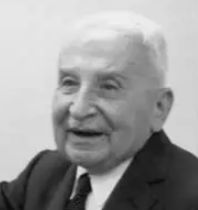
It is a double-edged makeshift to entrust an individual or a group of individuals with the authority to resort to violence. The enticement implied is too tempting for a human being. The men who are to protect the community against violent aggression easily turn into the most dangerous aggressors. They transgress their mandate. They misuse their power for the oppression of those whom they were expected to defend against oppression. The main political problem is how to prevent the police power from becoming tyrannical. This is the meaning of all the struggles for liberty.
▼
Source
source
Chapter 5: On Some Popular Errors Concerning the Scope and Method of Economics, § 10 : The Concept of a Perfect System of Government

4 months 3 weeks ago
Scientists have pushed back the horizon of time from the biblical 6,000 years to 4,600,000,000 years for the age of Earth a 760,000-fold increase.
1 month 1 week ago
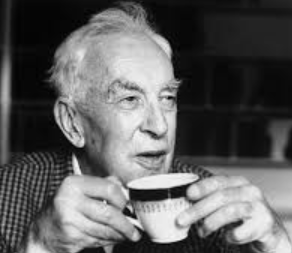
Every oasis is an island that has water inside it but not round it.
▼
Source
source
Between Niger and Nile (London: Oxford UP, 1965) 20. Cyrenaïca's Green Mountain
3 months 4 weeks ago
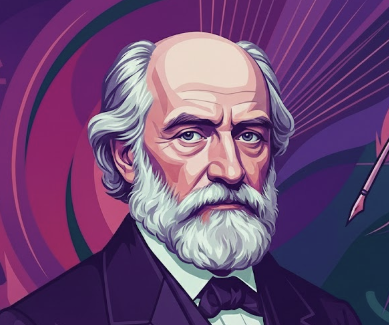
A great affliction of all Philistines is that idealities afford them no entertainment, but to escape from boredom they are always in need of realities.
▼
Source
source
E. Payne, trans. (1974) Vol. 1, p. 345

4 months ago
In reality, during the continuance of any one regulated proportion, between the respective values of the different values of the different metals in the coin, the value of the most precious metal regulates the value of the whole coin.
▼
Source
source
Chapter V, p. 50.

2 weeks 3 days ago
"No man in this fashionable London of yours," friend Sauerteig would say, "speaks a plain word to me. Every man feels bound to be something more than plain; to be pungent withal, witty, ornamental. His poor fraction of sense has to be perked into some epigrammatic shape, that it may prick into me;-perhaps (this is the commonest) to be topsyturvied, left standing on its head, that I may remember it the better! Such grinning inanity is very sad to the soul of man. Human faces should not grin on one like masks; they should look on one like faces! I love honest laughter, as I do sunlight; but not dishonest: most kinds of dancing too; but the St.-Vitus kind not at all! A fashionable wit, ach Himmel, if you ask, Which, he or a Death's- head, will be the cheerier company for me? pray send not him!"
4 months 3 weeks ago
There is no one at the Communion table who retains against you even the least of your sins, no one, unless you yourself do it. So cast them away from yourself, and the recollection of them, lest in it your retain them; and cast the recollection of your having cast your sins away, lest in it you retain them.

2 months 3 weeks ago
I have never taken myself for a being. A non-citizen, a marginal type, a nothing who exists only by the excess, by the superabundance of his nothingness.

2 months 1 week ago
People often say to me, You don't know what a wife and mother feels. No, I say, I don't and I'm very glad I don't. And they don't know what I feel. ... I am sick with indignation at what wives and mothers will do of the most egregious selfishness. And people call it all maternal or conjugal affection, and think it pretty to say so. No, no, let each person tell the truth from his own experience.
▼
Source
source
Letter to Madame Mohl

4 months 2 weeks ago
Thus, where'er the drift of hazardSeems most unrestrained to flow,Chance herself is reined and bitted,And the curb of law doth know.

4 months 3 weeks ago
Every revolutionary ends as an oppressor or a heretic.

1 month 3 weeks ago
We know very well that we are only allowed to go on eating our dinner, to finish seeing the new play, or to enjoy to the end the ball, the Christmas fete, the promenade, the races or, the hunt, thanks to the policeman's revolver or the soldier's rifle, which will shoot down the famished outcast who has been robbed of his share, and who looks round the corner with covetous eyes at our pleasures, ready to interrupt them instantly, were not policeman and soldier there prepared to run up at our first call for help.
▼
Source
source
Chapter XII, Conclusion-Repent Ye, for the Kingdom of Heaven is at Hand

3 months 3 weeks ago
In regard to propaganda the early advocates of universal literacy and a free press envisaged only two possibilities: the propaganda might be true, or it might be false. They did not foresee what in fact has happened, above all in our Western capitalist democracies-the development of a vast mass communications industry, concerned in the main neither with the true nor the false, but with the unreal, the more or less totally irrelevant. In a word, they failed to take into account man's almost infinite appetite for distraction.
▼
Source
source
Chapter 4 (pp. 35-36)

3 months 3 weeks ago
Everyone who knows anything of history also knows that great social revolutions are impossible without the feminine ferment. Social progress may be measured precisely by the social position of the fair sex (plain ones included).
▼
Source
source
Letter to Ludwig Kugelmann, dated 12 December 1868.
2 weeks 3 days ago
To a shower of gold most things are penetrable.
▼
Source
source
Pt. I, Bk. III, ch. 7.
3 months 3 weeks ago
As a beast of toil an ox is fixed capital. If he is eaten, he no longer functions as an instrument of labour, nor as fixed capital either.
▼
Source
source
Vol. II, Ch. VIII, p. 163.

3 months 3 weeks ago
Although I consider our political world to be the best of which we have any historical knowledge, we should beware of attributing this fact to democracy or to freedom. Freedom is not a supplier who delivers goods to our door. Democracy does not ensure that anything is accomplished - certainly not an economic miracle. It is wrong and dangerous to extol freedom by telling people that they will certainly be all right once they are free. How someone fares in life is largely a matter of luck or grace, and to a comparatively small degree perhaps also of competence, diligence, and other virtues. The most we can say of democracy or freedom is that they give our personal abilities a little more influence on our well-being.
1 month 3 weeks ago
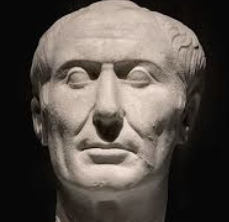
What happens to one man may happen to all.
▼
Source
source
Maxim 171
4 days ago
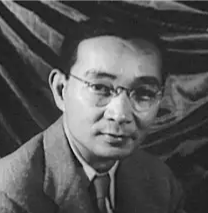
The creative imagination of the Hindus has conceived no loftier and holier character than Sita; the literature of the world has not produced a higher ideal of womanly love, womanly truth, and womanly devotion.
▼
Source
source
The Wisdom Of China And India by ) Lin Yutang
2 months 1 week ago
The family uses people, not for what they are, nor for what they are intended to be, but for what it wants them for - its own uses. It thinks of them not as what God has made them, but as the something which it has arranged that they shall be.
2 months 1 week ago
The necessity for power is obvious, because life cannot be lived without order; but the allocation of power is arbitrary because all men are alike, or very nearly. Yet power must not seem to be arbitrarily allocated, because it will not then be recognized as power. Therefore prestige, which is illusion, is of the very essence of power.
▼
Source
source
p. 235
2 months 1 week ago
What is Mysticism? Is it not the attempt to draw near to God, not by rites or ceremonies, but by inward disposition? Is it not merely a hard word for " The Kingdom of Heaven is within"? Heaven is neither a place nor a time. There might be a Heaven not only here but now. It is true that sometimes we must sacrifice not only health of body, but health of mind (or, peace) in the interest of God; that is, we must sacrifice Heaven. But "thou shalt be like God for thou shalt see Him as He is": this may be here and now, as well as there and then. And it may be for a time - then lost - then recovered - both here and there, both now and then.
3 months 3 weeks ago
There are all kinds of sources of our knowledge; but none has authority ... The fundamental mistake made by the philosophical theory of the ultimate sources of our knowledge is that it does not distinguish clearly enough between questions of origin and questions of validity.
3 months 3 weeks ago
And striving to be man, the worm Mounts through all the spires of form.
▼
Source
source
May-Day

3 months 3 weeks ago
Frazer is much more savage than most of his savages, for they are not as far removed from the understanding of spiritual matter as a twentieth-century Englishman. His explanations of primitive practices are much cruder than the meaning of these practices themselves.
▼
Source
source
Ch. 7 : Remarks on Frazer's Golden Bough, p. 131

2 months 1 week ago
Silent listening unites a people and creates community without communication.
3 months 3 weeks ago
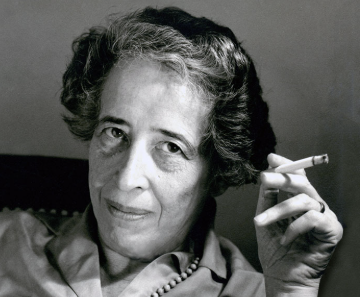
The ideal subject of totalitarian rule is not the convinced Nazi or the convinced Communist, but people for whom the distinction between fact and fiction (i.e., the reality of experience) and the distinction between true and false (i.e., the standards of thought) no longer exist.
▼
Source
source
Part 3, Ch. 13, § 3
2 weeks 3 days ago
All greatness is unconscious, or it is little and naught.

4 months 5 days ago
I need not repeat, that the most savage of the savage tribes in the forest, live among each other in amity. Lions show no fierceness to the lion race. The boar does not brandish his deadly tooth against his brother boar. The lynx lives in peace with the lynx. The serpent shews no venom in his intercourse with his fellow serpent; and the loving kindness of wolf to wolf is proverbial.
1 week ago
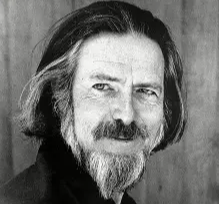
So in this idea, then, everybody is fundamentally the ultimate reality. Not God in a politically kingly sense, but God in the sense of being the self, the deep-down basic whatever there is. And you're all that, only you're pretending you're not. And it's perfectly OK to pretend you're not, to be perfectly convinced, because this is the whole notion of drama.
▼
Source
source
The Nature of Consciousness; also published as What Is Reality?

3 months 3 weeks ago
Not only must people know, they must see with their own eyes. Because they must be made to be afraid; but also because they must be the witnesses, the guarantors, of the punishment, and because they must to a certain extent take part in it.
▼
Source
source
Chapter One, pp.58

2 months 2 weeks ago
A whole dimension of human activity and passivity has been de-eroticized. The environment from which the individual could obtain pleasure-which he could cathect as gratifying almost as an extended zone of the body-has been rigidly reduced. Consequently, the "universe" of libidinous cathexis is likewise reduced. The effect is a localization and contraction of libido, the reduction of erotic to sexual experience and satisfaction.
▼
Source
source
p. 73

3 months 3 weeks ago
What I see is teeming cohesion, contained dispersal.... For him, to sculpt is to take the fat off space.
▼
Source
source
On Alberto Giacometti's work, Situations, in Braziller
3 months 3 weeks ago
Existentialism is nothing else but an attempt to draw the full conclusions from a consistently atheistic position. Its intention is not in the least that of plunging men into despair. And if by despair one means as the Christians do - any attitude of unbelief, the despair of the existentialists is something different. Existentialism is not atheist in the sense that it would exhaust itself in demonstrations of the non-existence of God. It declares, rather, that even if God existed that would make no difference from its point of view. Not that we believe God does exist, but we think that the real problem is not that of His existence; what man needs is to find himself again and to understand that nothing can save him from himself, not even a valid proof of the existence of God. In this sense existentialism is optimistic. It is a doctrine of action, and it is only by self-deception, by confining their own despair with ours that Christians can describe us as without hope.
▼
Source
source
p. 56

4 months ago
Tis certainly a kind of indignity to philosophy, whose sovereign authority ought every where to be acknowledg'd, to oblige her on every occasion to make apologies for her conclusions, and justify herself to every particular art and science, which may be offended at her.
▼
Source
source
Part 4, Section 5
CivilSimian.com created by AxiomaticPanic, CivilSimian, Kalokagathia