


3 months 3 weeks ago
These considerations did not make us overlook the folly of premature attempts to dispense with the inducements of private interest in social affairs, while no substitute for them has been or can be provided: but we regarded all existing institutions and social arrangements as being (in a phrase I once heard from Austin) "merely provisional," and we welcomed with the greatest pleasure and interest all socialistic experiments by select individuals (such as the Co-operative Societies), which, whether they succeeded or failed, could not but operate as a most useful education of those who took part in them, by cultivating their capacity of acting upon motives pointing directly to the general good, or making them aware of the defects which render them and others incapable of doing so.
▼
Source
source
(pp. 233-234)

3 months 3 weeks ago
While there are manners and compliments we do not meet, we do not teach one another the lessons of honesty and sincerity that the brutes do, or of steadiness and solidity that the rocks do. The fault is commonly mutual, however; for we do not habitually demand any more of each other.
▼
Source
source
p. 490

3 months 3 weeks ago
Not to be absolutely certain is, I think, one of the essential things in rationality.
▼
Source
source
"Don't Be Too Certain!"
2 weeks ago
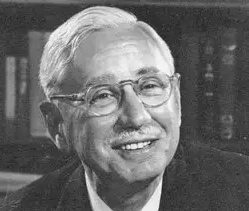
The invention and spread of contraceptives is the proximate cause of our changing morals. The old moral code restricted sexual experience to marriage, because copulation could not be effectively separated from parentage, and parentage could be made responsible only through marriage. But to-day the dissociation of sex from reproduction has created a situation unforeseen by our fathers. All the relations of men and women are being changed by this one factor; and the moral code of the future will have to take account of these new facilities which invention has placed at the service of ancient desires.
▼
Source
source
Our Changing Morals, in The Mansions of Philosophy: A Survey of Human Life and Destiny (1929), Ch. 5. p. 119

4 months 1 week ago
But if one should guide his life by true principles, man's greatest riches is to live on a little with contented mind; for a little is never lacking.
▼
Source
source
Book V, lines 1117-1119 (tr. Rouse)

2 weeks 2 days ago
Men, I say, never did believe idle songs, never risked their soul's life on allegories: men in all times, especially in early earnest times, have had an instinct for detecting quacks, for detesting quacks.
2 weeks 2 days ago
Never till now, in the history of an Earth which to this hour nowhere refuses to grow corn if you will plough it, to yield shirts if you will spin and weave in it, did the mere manual two-handed worker (however it might fare with other workers) cry in vain for such "wages" as he means by "fair wages," namely food and warmth!

1 month 1 week ago
I believe Gandhi is the only person who knew about real democracy - not democracy as the right to go and buy what you want, but democracy as the responsibility to be accountable to everyone around you. Democracy begins with freedom from hunger, freedom from unemployment, freedom from fear, and freedom from hatred. To me, those are the real freedoms on the basis of which good human societies are based.
▼
Source
source
1998
2 months 2 weeks ago
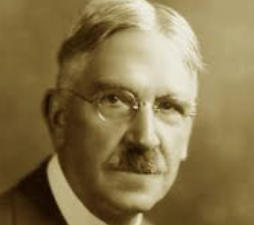
The artist in realizing his own individuality reveals potentialities hitherto unrealized. The revelation is the inspiration of other individuals to make the potentialities real, for it is not sheer revolt against things as they are which stirs human endeavor to its depth, but vision of what might be and is not. Subordination of the artists to any special cause no matter how worthy does violence not only to the artist but to the living source of a new and better future.
4 months 1 week ago
The living force of his soul gained the day: on he passed far beyond the flaming walls of the world and traversed throughout in mind and spirit the immeasurable universe.
▼
Source
source
Book I, lines 72-74 (tr. H. A. J. Munro); of Epicurus.

2 weeks 5 days ago
Be afraid of the Chinese. I mean, the Chinese shoot down satellites in space; they hack into Google's computers; the Osama bin Laden people can't make their underwear blow up.
▼
Source
source
On The Colbert Report (2 May 2011), answering the question of who Americans should be scared of now that bin Laden is dead

4 months 2 days ago
So blind is the curiosity by which mortals are possessed, that they often conduct their minds along unexplored routes, having no reason to hope for success, but merely being willing to risk the experiment of finding whether the truth they seek lies there.
▼
Source
source
Rules for the Direction of the Mind: IV
3 months 3 weeks ago
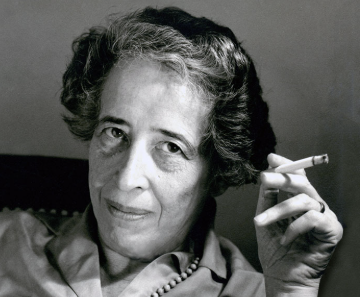
The case of the conscience of Eichmann, which is admittedly complicated but is by no means unique, is scarcely comparable to the case of the German generals, one of whom, when asked at Nuremberg, "How was it possible that all of you honorable generals could continue to serve a murderer with such unquestioning loyalty?," replied that it was "not the task of a soldier to act as judge over his supreme commander. Let history do that or God in Heaven."
▼
Source
source
Ch. VIII
1 month 3 weeks ago
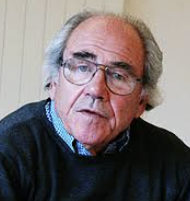
Challenge, and not desire, lies at the heart of seduction.
▼
Source
source
(p. 57)

3 months 3 weeks ago
I will take it all: tongs, molten lead, prongs, garrotes, all that burns, all that tears, I want to truly suffer. Better one hundred bites, better the whip, vitriol, than this suffering in the head, this ghost of suffering which grazes and caresses and never hurts enough.
▼
Source
source
Act 1, sc. 5
3 months 3 weeks ago
We are in hell and I will have my turn!
▼
Source
source
Inès warns Garcin and Estelle not to make love in her presence, Act 1, sc. 5
3 months 2 weeks ago
This investigation aims to analyze the type "bourgeois public sphere". Its particular approach is required, to begin with, by the difficulties specific to an object whose complexity precludes exclusive reliance on the specialized methods of a single discipline. Rather, the category. "public sphere" must be investigated within the broad field formerly reflected in the perspective of the traditional science of "politics."' When particular social-scientific discipline, this object disintegrates. The problems that result from fusing aspects of sociology and economics, of constitutional law and political science, and of social and intellectual history are obvious: given the present state of differentiation and specialization in the social sciences, scarcely anyone will be able to master several, let alone all, of these disciplines.
▼
Source
source
p.xvii
3 days ago
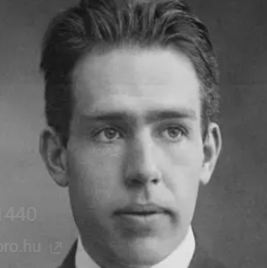
How wonderful that we have met with a paradox. Now we have some hope of making progress.
▼
Source
source
As quoted in Niels Bohr : The Man, His Science, & the World They Changed (1966) by Ruth Moore, p. 196

1 month 3 weeks ago
I had wished to visit a slaughter-house, in order to see with my own eyes the reality of the question raised when vegetarianism is discussed. But at first I felt ashamed to do so, as one is always ashamed of going to look at suffering which one knows is about to take place, but which one cannot avert; and so I kept putting off my visit. But a little while ago I met on the road a butcher ... He is not yet an experienced butcher, and his duty is to stab with a knife. I asked him whether he did not feel sorry for the animals that he killed. He gave me the usual answer: 'Why should I feel sorry? It is necessary.' But when I told him that eating flesh is not necessary, but is only a luxury, he agreed; and then he admitted that he was sorry for the animals.
▼
Source
source
Ch. IX
5 days ago
The rapid development of science... has, as it were, burst its old shell, now become too narrow.
▼
Source
source
Introduction
2 weeks ago
Wisdom, if it were young, would cherish love, nursing it with devotion, deepening it with sacrifice, vitalizing with parentage, making all things subordinate to it till the end. Even though it consumes us in its service and overwhelms us with tragedy, even though it breaks us down with separations, let it be first. How can it matter what price we pay for love?
▼
Source
source
Ch. 2 : On Youth
2 weeks 2 days ago
But deepest of all illusory Appearances, for hiding Wonder, as for many other ends, are your two grand fundamental world-enveloping Appearances, SPACE and TIME. These, as spun and woven for us from before Birth itself, to clothe our celestial ME for dwelling here, and yet to blind it, - lie all-embracing, as the universal canvas, or warp and woof, whereby all minor Illusions, in this Phantasm Existence, weave and paint themselves. In vain, while here on Earth, shall you endeavor to strip them off; you can, at best, but rend them asunder for moments, and look through.
▼
Source
source
Bk. III, ch. 8.
3 months 3 weeks ago
Criminals together. We're in hell, my little friend, and there's never any mistake there. People are not damned for nothing. Act 1, sc. 5 Variant translation: Among murderers. We are in hell, my dear, there is never a mistake and people are not damned for nothing.


2 weeks 5 days ago
If you look at the sociology of populism in the United States, it is tied most closely to population density, which... is correlated... to these types of cultural differences... to belief... in traditional cultural values, in family, in religion and the like, and conversely to... belief in immigration and diversity as strengths... This is the fundamental division that's taken hold of the United States. It has been augmented by technology because the internet has succeeded in... destroying every other source of authority that used to filter news and facts and information that... formed the basis of a democratic ability to have political discourse.
▼
Source
source
25:32

1 week 2 days ago
The old Romans had a custom which survived even into my lifetime. They would add to the opening words of a letter: "If you are well, it is well; I also am well." Persons like ourselves would do well to say. "If you are studying philosophy, it is well." For this is just what "being well" means. Without philosophy the mind is sickly.

4 months 3 weeks ago
If you're going to write a story, avoid contemporary references. They date a story and they have no staying power.

1 month 3 weeks ago
Unlike previous environmental changes, the electric media constitutes a total and near-instanteous transformation of culture, values and attitudes.
2 months 4 days ago
If people should ever start to do only what is necessary millions would die of hunger.
▼
Source
source
C 54 Variant translation: If all mankind were suddenly to practice honesty, many thousands of people would be sure to starve.
2 weeks 2 days ago
Fire is the best of servents; but what a master!
▼
Source
source
Bk. II, ch. 9.

3 months 3 weeks ago
When memory begins to decay, proper names are what go first ...[C]ommon qualities and names have contracted an infinitely greater number of associations ...than the names of most of the persons ...Their memory is better organized. ...'Organization' means numerous associations; and the more numerous the associations, the greater the number of paths of recall. For the same reason... words... which form the grammatical framework of all our speech, are the very last to decay.
▼
Source
source
Ch. 16
1 month 1 week ago
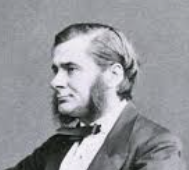
M. Comte's philosophy, in practice, might be compendiously described as Catholicism minus Christianity.
▼
Source
source
On the Physical Basis of Life
1 month 3 weeks ago
"The Precession of Simulacra,"
▼
Source
source
p. 6

2 months 3 weeks ago
Influences of various kinds conspire to increase corporate action and decrease individual action. And the change is being on all sides aided by schemers, each of whom thinks only of his pet plan and not at all of the general reorganization which his plan, joined with others such, are working out. It is said that the French Revolution devoured its own children. Here, an analogous catastrophe seems not unlikely. The numerous socialistic changes made by Act of Parliament, joined with the numerous others presently to be made, will by-and-by be all merged in State-socialism-swallowed in the vast wave which they have little by little raised."But why is this change described as 'the coming slavery'?," is a question which many will still ask. The reply is simple. All socialism involves slavery.

3 months 3 weeks ago
We will walk on our own feet; we will work with our own hands; we will speak our own minds...A nation of men will for the first time exist, because each believes himself inspired by the Divine Soul which also inspires all men.
▼
Source
source
par. 43

2 months 4 weeks ago
I cannot help fearing that men may reach a point where they look on every new theory as a danger, every innovation as a toilsome trouble, every social advance as a first step toward revolution, and that they may absolutely refuse to move at all.
▼
Source
source
Book Three, Chapter XXI.

3 months 3 weeks ago
The greatest problem for the human race, to the solution of which Nature drives man, is the achievement of a universal civic society which administers law among men.
▼
Source
source
Fifth Thesis

2 months 3 weeks ago
People will not look forward to posterity, who never look backward to their ancestors.
▼
Source
source
Volume iii, p. 274
3 months 3 weeks ago
Act as if what you do makes a difference. It does.
▼
Source
source
Correspondence with Helen Keller, 1908, in The Correspondence of William James: April 1908-August 1910, Vol. 12
2 months 3 weeks ago
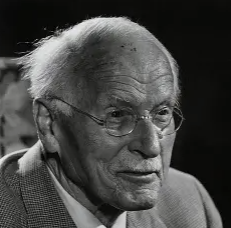
Loneliness does not come from having no people about one, but from being unable to communicate the things that seem important to oneself, or from holding certain views which others find inadmissible.
▼
Source
source
p.356
1 month 3 weeks ago
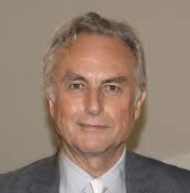
There is one particular property of living things, however, that I want to single out as explicable only by Darwinian selection. This property is the one that has been the recurring topic of this book: adaptive complexity.
▼
Source
source
Chapter 11 "Doomed Rivals" (p. 288)
1 month 3 weeks ago
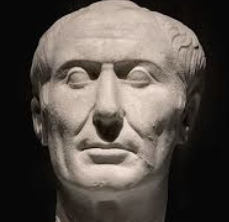
Amid a multitude of projects, no plan is devised.
▼
Source
source
Maxim 319
2 weeks 2 days ago
Battles, in these ages, are transacted by mechanism; with the slightest possible development of human individuality or spontaneity: men now even die, and kill one another, in an artificial manner.
▼
Source
source
Pt. I, Bk. VII, ch. 4.
4 months 3 weeks ago
The Law of conservation of energy tells us we can't get something for nothing, but we refuse to believe it.
3 months 3 weeks ago
Aims, principles, &c., have a place in our thoughts, in our subjective design only; but not yet in the sphere of reality. That which exists for itself only, is a possibility, a potentiality; but has not yet emerged into Existence. A second element must be introduced in order to produce actuality - viz. actuation, realization; and whose motive power is the Will - the activity of man in the widest sense.

2 months 6 days ago
I use the word nursing for want of a better. It has been limited to signify little more than the administration of medicines and the application of poultices. It ought to signify the proper use of fresh air, light, warmth, cleanliness, quiet, and the proper selection and administration of diet - all at the least expense of vital power to the patient.
▼
Source
source
Notes on Nursing
3 months 3 weeks ago
To think that because those who wield power in society wield in the end that of government, therefore it is of no use to attempt to influence the constitution of the government by acting on opinion, is to forget that opinion is itself one of the greatest active social forces. One person with a belief is a social power equal to ninety-nine who have only interests.
▼
Source
source
Ch. I: To What Extent Forms of Government Are a Matter of Choice (p. 155)
2 weeks ago
Excellence is an art won by training and habituation: we do not act rightly because we have virtue or excellence, but we rather have these because we have acted rightly; 'these virtues are formed in man by his doing the actions'; we are what we repeatedly do. Excellence, then, is not an act but a habit: 'the good of man is a working of the soul in the way of excellence in a complete life... for as it is not one swallow or one fine day that makes a spring, so it is not one day or a short time that makes a man blessed and happy'.
▼
Source
source
p. 87; the quoted phrases within the quotation are from the Nicomachean Ethics, Book II, 4; Book I, 7

4 months 2 days ago
Let us give Nature a chance; she knows her business better than we do.
▼
Source
source
Ch. 13
1 month 3 weeks ago
In many cases it is a matter for decision and not a simple matter of fact whether x understands y; and so on.
CivilSimian.com created by AxiomaticPanic, CivilSimian, Kalokagathia