


3 months 2 weeks ago
Happiness is not achieved by the conscious pursuit of happiness; it is generally the by-product of other activities.
▼
Source
source
Essay "Religion and Time" in Vedanta for the Western World (1945) edited by Christopher Isherwood
3 months 2 weeks ago
Of course I base my characters partly on the people I know-one can't escape it-but fictional characters are oversimplified; they're much less complex than the people one knows.
▼
Source
source
Interview, The Paris Review, 1960
1 month 2 weeks ago
The bow too tensely strung is easily broken.
▼
Source
source
Maxim 388
3 months 1 week ago
If it recedes one day, leaving behind its works and signs on the shores of our civilization, the structuralist invasion might become a question or the historian of ideas, or perhaps even an object. But the historian would be deceived if he came to this pass: by the very act of considering the structuralist invasion as an object he would forget its meaning and would forget that what is at stake, first of all, is an adventure of vision, a conversion of the way of putting questions to any object posed before us, to historical objects-his own- in particular. And, unexpectedly among these, the literary objects.
▼
Source
source
Force and Signification

3 months 2 weeks ago
The Indian teaching, through its clouds of legends, has yet a simple and grand religion, like a queenly countenance seen through a rich veil. It teaches to speak truth, love others, and to dispose trifles. The East is grand - and makes Europe appear the land of trifles .... all is soul and the soul is Vishnu ... cheerful and noble is the genius of this cosmogony. Hari is always gentle and serene - he translates to heaven the hunter who has accidentally shot him in his human form, he pursues his sport with boors and milkmaids at the cow pens; all his games are benevolent and he enters into flesh to relieve the burdens of the world.
▼
Source
source
Quoted in S. Londhe, A Tribute to Hinduism, New Delhi: Pragun Publication, 2008
1 day ago
He has spent all his life in letting down empty buckets into empty wells; and he is frittering away his age in trying to draw them up again.
▼
Source
source
Vol. I, ch. 9, p. 310
3 months 2 weeks ago
But genius looks forward: the eyes of men are set in his forehead, not in his hindhead: man hopes: genius creates.
▼
Source
source
par. 18
3 months 2 weeks ago
I am thus one of the very few examples, in this country, of one who has, not thrown off religious belief, but never had it...
▼
Source
source
(p. 43)
2 months 1 week ago
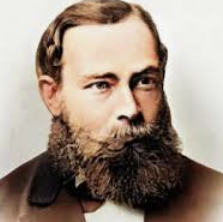
I hope I may claim in the present work to have made it probable that the laws of arithmetic are analytic judgments and consequently a priori. Arithmetic thus becomes simply a development of logic, and every proposition of arithmetic a law of logic, albeit a derivative one. To apply arithmetic in the physical sciences is to bring logic to bear on observed facts; calculation becomes deduction.
▼
Source
source
Gottlob Frege (1950 ). The Foundations of Arithmetic. p. 99.
2 months 1 week ago
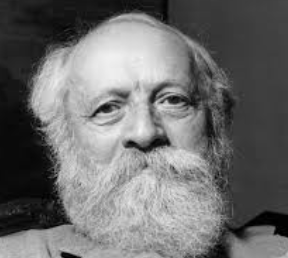
To win a truly great life for the people of Israel, a great peace is necessary, not a fictitious peace, the dwarfish peace that is no more than a feeble intermission, but a true peace with the neighboring peoples, which alone can render possible a common development of this portion of the earth as the vanguard of the awakening Near East.
▼
Source
source
"Our Reply" (September 1945), as published in A Land of Two Peoples : Martin Buber on Jews and Arabs (1983) edited by Paul Mendes-Flohr, p. 178

4 months 2 weeks ago
Just you think first, and don't bother to speak afterward, either.
1 month 1 week ago
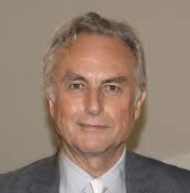
What I can't understand is why you can't see the extraordinary beauty of the idea that life started from nothing - that is such a staggering, elegant, beautiful thing, why would you want to clutter it up with something so messy as a God?
▼
Source
source
" During his conversation with the Archbishop of Canterbury, Dr. Rowan Williams, as quoted in The Telegraph, in 2012-02-24. In "Richard Dawkins: I can't be sure God does not exist"

1 week ago
Men do reverence men. Men do worship in that 'one temple of the world,' as Novalis calls it, the Presence of a Man! Hero-worship, true and blessed, or else mistaken, false and accursed, goes on everywhere and everywhen. In this world there is one godlike thing, the essence of all that was or ever will be of godlike in this world: the veneration done to Human Worth by the hearts of men. Hero-worship, in the souls of the heroic, of the clear and wise,-it is the perpetual presence of Heaven in our poor Earth: when it is not there, Heaven is veiled from us; and all is under Heaven's ban and interdict, and there is no worship, or worthship, or worth or blessedness in the Earth any more!-

3 months 2 weeks ago
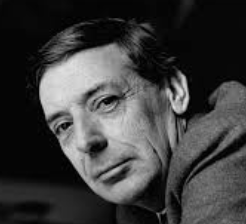
When you live alone you no longer know what it is to tell a story: the plausible disappears at the same time as the friends. You let events flow by too: you suddenly see people appear who speak and then go away; you plunge into stories of which you can't make head or tail: you'd make a terrible witness.
▼
Source
source
Diary entry of Tuesday, 30 January
2 months ago
There continue to be complex debates about what Nietzsche understood truth to be. Quite certainly, he did not think, in pragmatist spirit, that beliefs are true if they serve our interests or welfare: we have just seen some of his repeated denials of this idea. The more recently fashionable view is that he was the first of the deniers, thinking that there is no such thing as truth, or that truth is what anyone thinks it is, or that it is a boring category that we can do without. This is also wrong, and more deeply so. Nietzsche did not think that the ideal of truthfulness went into retirement when its metaphysical origins were discovered, and he did not suppose, either, that truthfulness could be detached from a concern for the truth. Truthfulness as an ideal retains its power, and so far from his seeing truth as dispensable or malleable, his main question is how it can be made bearable.
▼
Source
source
p. 16
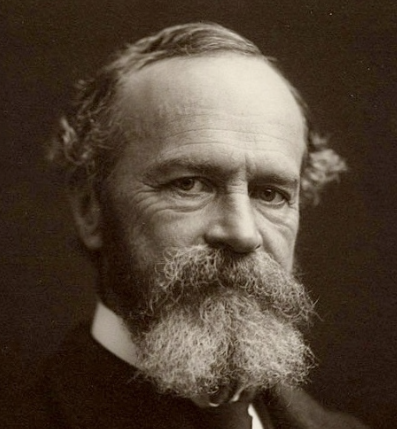
3 months 2 weeks ago
It is only by risking our persons from one hour to another that we live at all. And often enough our faith beforehand in an uncertified result is the only thing that makes the result come true.
▼
Source
source
"Is Life Worth Living?"

3 months 2 weeks ago
All's well that ends well; which is the epitaph I should put on my tombstone if I were the last man left alive.
▼
Source
source
Letter to Lucy Donnely, April 22, 1906
1 month 2 days ago
I adopt Mr. Darwin's hypothesis, therefore, subject to the production of proof that physiological species may be produced by selective breeding; just as a physical philosopher may accept the undulatory theory of light, subject to the proof of the existence of the hypothetical ether; or as the chemist adopts the atomic theory, subject to the proof of the existence of atoms; and for exactly the same reasons, namely, that it has an immense amount of primâ facie probability: that it is the only means at present within reach of reducing the chaos of observed facts to order; and lastly, that it is the most powerful instrument of investigation which has been presented to naturalists since the invention of the natural system of classification and the commencement of the systematic study of embryology.
▼
Source
source
Ch.2, p. 128
3 weeks 4 days ago
As the neurobiological basis of feeling and emotion is unravelled, and the human genome decoded and rewritten, it will become purely an issue of post-human decision whether negative modes of consciousness are generated in any form or texture whatsoever. "The Hedonistic Imperative: Heaven on Earth", BLTC Research
4 months 2 weeks ago
I don't believe in an afterlife, so I don't have to spend my whole life fearing hell, or fearing heaven even more. For whatever the tortures of hell, I think the boredom of heaven would be even worse.
1 month 2 weeks ago
The need to speak, even if one has nothing to say, becomes more pressing when one has nothing to say, just as the will to live becomes more urgent when life has lost its meaning.
▼
Source
source
(p. 30)

2 months 2 weeks ago
It is not, what a lawyer tells me I may do; but what humanity, reason, and justice, tell me I ought to do.

2 months 1 week ago
As long as one believes in philosophy, one is healthy; sickness begins when one starts to think.
3 months 2 weeks ago
But, suppose, besides, that the making of the new machinery affords employment to a greater number of mechanics, can that be called compensation to the carpet makers, thrown on the streets?
▼
Source
source
Vol. I, Ch. 15, Section 6, pg. 479.
1 month 4 weeks ago
Immature love says: "I love you because I need you." Mature love says: "I need you because I love you."
▼
Source
source
Ch. 2
1 week ago
Happy the people whose annals are blank in history books!
▼
Source
source
Life of Frederick the Great, Bk. XVI, ch. 1.
3 months 2 weeks ago
For each new class which puts itself in the place of one ruling before it, is compelled, merely in order to carry through its aim, to represent its interests the common interest of all the members of society, that is, sality, and represent them as the only rational, universally valid ones. The class making a revolution appears from the very start, if only because it is opposed to a class, not as a class but as the representative of the whole of society; it appears as the whole mass of society confronting the one ruling class.
▼
Source
source
"Concerning the production of Consciousness"

1 month 4 weeks ago
The Outsider's case against society is very clear. All men and women have these dangerous, unnamable impulses, yet they keep up a pretense, to themselves, to others; their respectability, their philosophy, their religion, are all attempts to gloss over, to make civilized and rational something that is savage, unorganized, irrational. He is an Outsider because he stands for truth.
▼
Source
source
Chapter one, The Country of the Blind
3 months 1 week ago
But what then is this confrontation below the language of reason? Where might this interrogation lead, following not reason in its horizontal becoming, but seeking to retrace in time this constant verticality, which, the length of Western culture, confronts it with what it is not, measuring it with its own extravagance?
▼
Source
source
Preface to 1961 edition
2 months 1 week ago
The office of the sovereign, be it a monarch or an assembly, consisteth in the end for which he was trusted with the sovereign power, namely the procuration of the safety of the people, to which he is obliged by the law of nature, and to render an account thereof to God, the Author of that law, and to none but Him. But by safety here is not meant a bare preservation, but also all other contentments of life, which every man by lawful industry, without danger or hurt to the Commonwealth, shall acquire to himself. And this is intended should be done, not by care applied to individuals, further than their protection from injuries when they shall complain; but by a general providence, contained in public instruction, both of doctrine and example; and in the making and executing of good laws to which individual persons may apply their own cases.
▼
Source
source
The Second Part, Chapter 30: Of the Office of the Sovereign Representative

3 months 2 weeks ago
Science may be described as the art of systematic over-simplification - the art of discerning what we may with advantage omit.
▼
Source
source
The Open Universe : An Argument for Indeterminism (1992), p. 44

4 months 2 weeks ago
We believe that we know something about the things themselves when we speak of trees, colors, snow, and flowers; and yet we possess nothing but metaphors for things, metaphors which correspond in no way to the original entities.
3 months 2 weeks ago
One Folk, One Realm, One Leader. Union with the unity of an insect swarm. Knowledgeless understanding of nonsense and diabolism. And then the newsreel camera had cut back to the serried ranks, the swastikas, the brass bands, the yelling hypnotist on the rostrum. And here once again, in the glare of his inner light, was the brown insectlike column, marching endlessly to the tunes of this rococo horror-music. Onward Nazi soldiers, onward Christian soldiers, onward Marxists and Muslims, onward every chosen People, every Crusader and Holy War-maker. Onward into misery, into all wickedness, into death!
3 months 1 week ago
A serious and good philosophical work could be written consisting entirely of jokes.
▼
Source
source
As quoted in "A View from the Asylum" in Philosophical Investigations from the Sanctity of the Press (2004), by Henry Dribble, p. 87

3 months 2 weeks ago
Actions may be laudable or blameable; but they cannot be reasonable: Laudable or blameable, therefore, are not the same with reasonable or unreasonable. The merit and demerit of actions frequently contradict, and sometimes controul our natural propensities. But reason has no such influence. Moral distinctions, therefore, are not the offspring of reason. Reason is wholly inactive, and can never be the source of so active a principle as conscience, or a sense of morals.
▼
Source
source
Part 1, Section 1
4 months 1 week ago
The most elementary form of rebellion, paradoxically, expresses an aspiration for order.
2 months 2 weeks ago
Man is a sun and his senses are the planets.
3 months 2 weeks ago
United States! the ages plead, - Present and Past in under-song, - Go put your creed into your deed, Nor speak with double tongue.
▼
Source
source
Ode, st. 5
3 months 2 weeks ago
This idea of weapons of mass extermination is utterly horrible and is something which no one with one spark of humanity can tolerate. I will not pretend to obey a government which is organising a mass massacre of mankind.
▼
Source
source
Speech in Birmingham, England encouraging civil disobedience in support of nuclear disarmament, 4/15/1961


1 month 2 days ago
It is quite true that, to the best of my judgment, the argumentation which applies to brutes holds equally good of men; and, therefore, that all states of consciousness in us, as in them, are immediately caused by molecular changes of the brain-substance. It seems to me that in men, as in brutes, there is no proof that any state of consciousness is the cause of change in the motion of the matter of the organism. If these positions are well based, it follows that our mental conditions are simply the symbols in consciousness of the changes which takes place automatically in the organism; and that, to take an extreme illustration, the feeling we call volition is not the cause of a voluntary act, but the symbol of that state of the brain which is the immediate cause of that act.
1 month 4 weeks ago
Upper middle-class upbringing has rooted out any element of what might appear to be self-assertion or egoism; good manners is to be like everyone else. So the male of the species becomes accustomed to suppress any stirring of impatience or originality. Shaw once said you can't learn to skate without making a fool of yourself; the British middle-class attitude seems to be that, in that case, you hadn't better skate at all. The result seems to be considerably more oppressive than being brought up in a Jewish ghetto or a west side slum.
▼
Source
source
p. 112, An integrity born of hope: Notes on Christopher Isherwood
3 months 2 weeks ago
Single-mindedness is all very well in cows or baboons; in an animal claiming to belong to the same species as Shakespeare it is simply disgraceful.
▼
Source
source
Do What You Will, 1929
3 months 2 weeks ago
The days .... come and go like muffled and veiled figures, sent from a distant friendly party; but they say nothing, and if we do not use the gifts they bring, they carry them as silently away.
▼
Source
source
Works and Days
3 months 6 days ago
Often must you turn your pencil to erase, if you hope to write something worth a second reading.
▼
Source
source
Book I, satire i, lines 72-3,
1 month 2 days ago
The doctrine that all men are, in any sense, or have been, at any time, free and equal, is an utterly baseless fiction.
▼
Source
source
On The Natural Inequality of Men

1 month 2 weeks ago
It is not sufficient to observe our mysteries in the seclusion of our lodge-we must act-act! We are drowsing, but we must act. (Pierre raised his notebook and began to read.) For the dissemination of pure truth and to secure the triumph of virtue," he read, "we must cleanse men from prejudice, diffuse principles in harmony with the spirit of the times, undertake the education of the young, unite ourselves in indissoluble bonds with the wisest men, boldly yet prudently overcome superstitions, infidelity, and folly, and form of those devoted to us a body linked together by unity of purpose and possessed of authority and power.
1 month 3 weeks ago
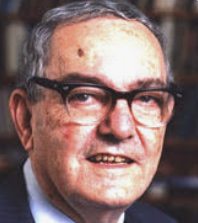
The world you perceive is drastically simplified model of the real world.
▼
Source
source
p. xxvi.
2 months 1 week ago
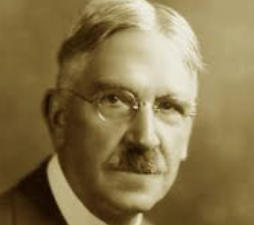
Art expresses, it does not state; it is concerned with existences in their perceived qualities, not with conceptions symbolized in terms.
▼
Source
source
p. 139
2 months 1 week ago
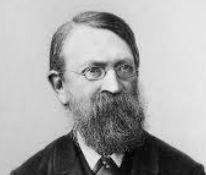
In reality, the law always contains less than the fact itself, because it does not reproduce the fact as a whole but only in that aspect of it which is important for us, the rest being intentionally or from necessity omitted.
▼
Source
source
"The Economical Nature of Physical Inquiry," in Popular Scientific Lectures (1898), p. 192
CivilSimian.com created by AxiomaticPanic, CivilSimian, Kalokagathia