


3 months 3 weeks ago
It is sometimes maintained that racial mixture is biologically undesirable. There is no evidence whatever for this view. Nor is there, apparently, any reason to think that Negroes are congenitally less intelligent than white people, but as to that it will be difficult to judge until they have equal scope and equally good social conditions.
▼
Source
source
Part II: Man and Man, Ch. 12: Racial Antagonism, p. 108

2 months 2 weeks ago
He also said to them, "You completely invalidate God's command in order to maintain your tradition! For Moses said: Honor your father and your mother; and, Whoever speaks evil of father or mother must be put to death.
▼
Source
source
7:9-10
2 months 1 week ago
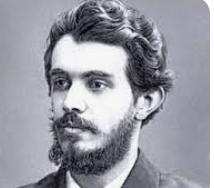
Berdyaev has been categorized as a Christian existentialist and a mystical philosopher. He never avoided the label of "mystic" since he felt it was the mystics of the world who came closest to understanding the role of spirit. Many of the philosophers he quoted were mystics - Meister Eckhart, Angelus Silesius and especially Jacob Boehme. The influence of Dostoevsky was central to his thought. Nevertheless, Berdyaev is not a naively irrational thinker; he brings an enormous fund of philosophical knowledge combined with the profundity of his own thought to support his view of existence. There are no dogmas in his writings to offend one's intellectual conscience.
▼
Source
source
Richard Schain, in In Love with Eternity : Philosophical Essays and Fragments (2005), Ch. 7 : Nikolai Alexandrovich Berdyaev - A Champion of the Spirit, p. 47
3 days ago
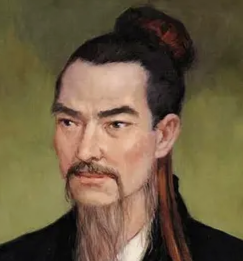
Universal love is really the way of the sage-kings. It is what gives peace to the rulers and sustenance to the people. The gentleman would do well to understand and practise universal love; then he would be gracious as a ruler, loyal as a minister, affectionate as a father, filial as a son, courteous as an elder brother, and respectful as a younger brother. So, if the gentleman desires to be a gracious ruler, a loyal minister, an affectionate father, a filial son, a courteous elder brother, and a respectful younger brother, universal love must be practised. It is the way of the sage-kings and the great blessing of the people.
▼
Source
source
Book 4; Universal Love III

4 months 1 week ago
There is another form of temptation, more complex in its peril. It originates in an appetite for knowledge. From this malady of curiosity are all those strange sights exhibited in the theatre. Hence do we proceed to search out the secret powers of nature (which is beside our end), which to know profits not, and wherein men desire nothing but to know.
▼
Source
source
X, 35
2 weeks 3 days ago
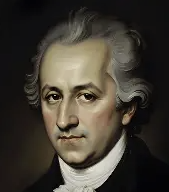
One of the most striking signs of the decay of art is the intermixing of different genres.
▼
Source
source
Propylaea (1798) Introduction
3 months 3 weeks ago
When I come to my own beliefs, I find myself quite unable to discern any purpose in the universe, and still more unable to wish to discern one.
▼
Source
source
"Is There a God?", 1952

3 months ago
I can cure the gout or stone in some, sooner than Divinity, Pride, or Avarice in others.
▼
Source
source
Section 9
2 weeks 5 days ago
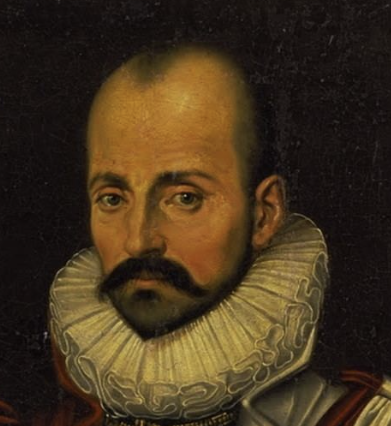
The mob has always behaved in this way-eagerly open to bribes that cannot be honorably accepted, and dissolutely callous to degradation and insult that cannot be honorably endured.
▼
Source
source
Part 2

3 months 6 days ago
He is worst of all, that is malicious against his friends.

4 months 2 days ago
There is as much difference between us and ourselves as between us and others.
▼
Source
source
Ch. 1. Of the Inconstancy of Our Actions, tr. Cotton, rev. W. Carew Hazlitt, 1877

4 months 3 days ago
My Lord St. Albans said that Nature did never put her precious jewels into a garret four stories high, and therefore that exceeding tall men had ever very empty heads.
▼
Source
source
No. 17

3 months 3 weeks ago
You don't have a soul. You are a soul. You have a body.
▼
Source
source
Commonly attributed to Mere Christianity, where it is not found. Earliest reference seems to be an unsourced attribution to George MacDonald in an 1892 issue of the Quaker periodical The British Friend.

4 months 3 weeks ago
Of things said without any combination, each signifies either substance or quantity or qualification or a relative or where or when or being-in-a-position or having or doing or being affected. To give a rough idea, examples of substance are man, horse; of quantity: four-foot, five-foot; of qualification: white, grammatical; of a relative: double, half, larger; of where: in the Lyceum, in the market-place; of when: yesterday, last-year; of being-in-a-position: is-lying, is sitting; of having: has-shoes-on, has-armour-on; of doing: cutting, burning; of being-affected: being-cut, being-burned.
3 months 3 weeks ago
This year, or this month, or, more likely, this very day, we have failed to practise ourselves the kind of behaviour we expect from other people.
▼
Source
source
Book I, Chapter 1, "The Law of Human Nature"
3 months 3 weeks ago
I don't like the spirit of socialism - I think freedom is the basis of everything.
▼
Source
source
Letter to Constance Malleson (Colette), September 29, 1916
4 months 1 week ago
What! You would convict me from my own words, and bring against me what I had said or written elsewhere. You may act in that manner with those who dispute by established rules. We live from hand to mouth, and say anything that strikes our mind with probability, so that we are the only people who are really at liberty.
▼
Source
source
Book 5 Section 11

4 months 2 weeks ago
When we have intelligence resulting from sincerity, this condition is to be ascribed to nature; when we have sincerity resulting from intelligence, this condition is to be ascribed to instruction. But given the sincerity, and there shall be the intelligence; given the intelligence, and there shall be the sincerity.
2 months 2 weeks ago
"There is no God," cry the masses more and more vociferously; and with the loss of God man loses his sense of values - is, as it were, massacred because he feels himself of no account.
3 months 2 weeks ago
In contrast to "Blessed are they who do not see and still believe," he speaks of "seeing and still not believing."
▼
Source
source
p. 30

3 months 3 weeks ago
Their worship was not paid to the demon which such a being as they imagined would really be, but to their own idea of excellence. The evil is, that such a belief keeps the ideal wretchedly low; and opposes the most obstinate resistance to all thought which has a tendency to raise it higher. Believers shrink from every train of ideas which would lead the mind to a clear conception and an elevated standard of excellence, because they feel (even when they do not distinctly see) that such a standard would conflict with many of the dispensations of nature, and with much of what they are accustomed to consider as the Christian creed.
▼
Source
source
(p. 42)
3 months 1 week ago
Rest gives relish to labour.
▼
Source
source
Of the Training of Children, 9 (Tr. Babbitt)

2 months 1 week ago
The needs of a human being are sacred. Their satisfaction cannot be subordinated either to reasons of state, or to any consideration of money, nationality, race, or colour, or to the moral or other value attributed to the human being in question, or to any consideration whatsoever. There is no legitimate limit to the satisfaction of the needs of a human being except as imposed by necessity and by the needs of other human beings. The limit is only legitimate if the needs of all human beings receive an equal degree of attention.

4 months 3 weeks ago
In an age as agitated as ours, it no longer suffices just to be advertised in the newspaper. To be advertised in this way is the same thing as being consigned to oblivion. If one is to be noticed, once must as least appear on the first page under a hand that points to and, as it were, announces or advertises the advertisement.
2 months 2 weeks ago
Suffer it to be so now: for thus it becometh us to fulfil all righteousness.
▼
Source
source
3:15 (KJV) Said to John the Baptist.

2 months 2 weeks ago
Resignation' is a keynote in Comte's writings, deriving directly from assent to invariable social laws. 'True resignation, that is, a disposition to endure necessary evils steadfastly and without any hope of compensation therefore, can result only from a profound feeling for the invariable laws that govern the variety of natural phenomena.
▼
Source
source
P. 345
2 months 2 weeks ago
Let a man once overcome his selfish terror at his own finitude, and his finitude is, in one sense, overcome.

2 months 1 week ago
The "passion for incredulity" can produce as much self-deception as the uncritical will to believe.
▼
Source
source
p. 209

3 months 3 weeks ago
Suicide evokes revulsion with horror, because everything in nature seeks to preserve itself: a damaged tree, a living body, an animal; and in man, then, is freedom, which is the highest degree of life, and constitutes the worth of it, to become now a principium for self-destruction? This is the most horrifying thing imaginable. For anyone who has already got so far as to be master, at any time, over his own life, is also master over the life of anyone else; for him, the door stands open to every crime, and before he can be seized he is ready to spirit himself away out of the world. So suicide evokes horror, in that a man thereby puts himself below the beasts. We regard a suicide as a carcase, whereas we feel pity for one who meets his end through fate.
▼
Source
source
Part II, p. 146

2 months 4 weeks ago
There is hardly a member of Congress who can make up his mind to go home without having despatched at least one speech to his constituents; nor who will endure any interruption until he has introduced into his harangue whatever useful suggestions may be made touching the four-and-twenty States of which the Union is composed, and especially the district which he represents.
▼
Source
source
Book One, Chapter XXI.

1 month 3 weeks ago
What is now happening to the people of the East as of the West is like what happens to every individual when he passes from childhood to adolescence and from youth to manhood. He loses what had hitherto guided his life and lives without direction, not having found a new standard suitable to his age, and so he invents all sorts of occupations, cares, distractions, and stupefactions to divert his attention from the misery and senselessness of his life. Such a condition may last a long time.
▼
Source
source
VI
4 months 2 days ago
I find that the best virtue I have has in it some tincture of vice.
▼
Source
source
Book II, Ch. 20. That we taste nothing pure

2 months 2 weeks ago
Everything exists; nothing exists. Either formula affords a like serenity. The man of anxiety, to his misfortune, remains between them, trembling and perplexed, forever at the mercy of a nuance, incapable of gaining a foothold in the security of being or in the absence of being.
3 days ago
The secret of contentment is knowing how to enjoy what you have, and to be able to lose all desire for things beyond your reach.
▼
Source
source
As quoted in Remarks of Famous People (1965) by Jacob Morton Braude, p. 23
4 months 3 weeks ago
The vices respectively fall short of or exceed what is right in both passions and actions, while virtue both finds and chooses that which is intermediate.
4 months 2 weeks ago
To study and not think is a waste. To think and not study is dangerous. Learning without thought is labor lost; thought without learning is perilous.
2 months 2 weeks ago
Dialectical logic undoes the abstractions of formal logic and of transcendental philosophy, but it also denies the concreteness of immediate experience. To the extent to which this experience comes to rest with the things as they appear and happen to be, it is a limited and even false experience. It attains its truth if it has freed itself from the deceptive objectivity which conceals the factors behind the facts - that is, if it understands its world as a historical universe, in which the established facts are the work of the historical practice of man.
▼
Source
source
p. 141

3 months 2 weeks ago
In Plato... or Xenophon... we never see Socrates requiring... examination of conscience or... confession of sins. [A]n account of your life, your bios, is... not to give... the historical events... but... to demonstrate whether you are able to show... a relation between the rational discourse, the logos, you... use, and the way... you live. Socrates is inquiring into the way that logos gives form to a person's style of life... whether there is a harmonic relation between the two... the degree of accord between a person's life and its principle of intelligibility or logos... [and] the true nature of the relation between the logos and bios.
3 months 2 weeks ago
With regard to the rather common general distinction between good and bad sex ..., bad sex is generally better than none at all. This should not be controversial: it seems to hold for other important matters, like food, music, literature, and society. In the end, one must choose from among the available alternatives, whether their availability depends on the environment or on one's own constitution. And the alternatives have to be fairly grim before it becomes rational to opt for nothing.
▼
Source
source
"Sexual Perversion" (1969), p. 52.


2 weeks 1 day ago
The most remarkable piece of reading that you may be recommended to take and try if you can study is a book by Goethe-one of his last books, which he wrote when he was an old man, about seventy years of age-I think one of the most beautiful he ever wrote, full of mild wisdom, and which is found to be very touching by those who have eyes to discern and hearts to feel it. It is one of the pieces in "Wilhelm Meister's Travels." I read it through many years ago; and, of course, I had to read into it very hard when I was translating it (applause), and it has always dwelt in my mind as about the most remarkable bit of writing that I have known to be executed in these late centuries. I have often said, there are ten pages of that which, if ambition had been my only rule, I would rather have written than have written all the books that have appeared since I came into the world.
2 months 2 weeks ago
I thought that the only action a man could perform without shame was to take his life; that he had no right to diminish himself in the succession of days and the inertic of misery. No elect, I kept telling myself, but those who committed suicide.
3 months 2 weeks ago
The gesture that divides madness is the constitutive one, not the science that grows up in the calm that returns after the division has been made.
▼
Source
source
Preface to 1961 edition

3 months 3 weeks ago
It seems to me certain that more people are killed out of righteous stupidity than out of wickedness.
▼
Source
source
p. 368
3 months 2 weeks ago
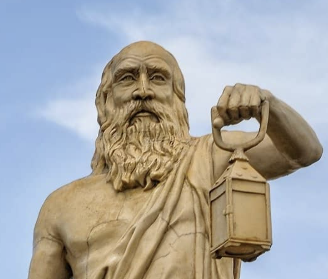
To one who asked what was the proper time for lunch, he said, "If a rich man, when you will; if a poor man, when you can." Diogenes Laërtius, vi. 40

3 months 4 weeks ago
The same good sense, that directs men in the ordinary occurrences of life, is not hearkened to in religious matters, which are supposed to be placed altogether above the cognizance of human reason.
2 months 1 week ago
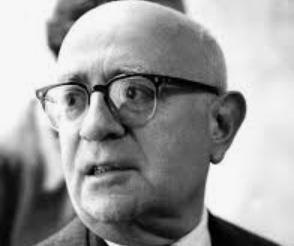
Wrong life cannot be lived rightly.
▼
Source
source
E. Jephcott, trans. (1974), § 18

2 months 1 week ago
The science of pure mathematics, in its modern developments, may claim to be the most original creation of the human spirit.
▼
Source
source
Ch. 2: "Mathematics as an Element in the History of Thought", p. 28
2 months 2 weeks ago
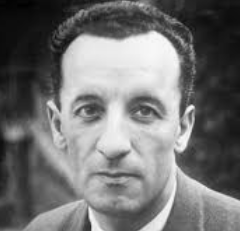
By becoming the pure subject who knows the world objectively, man ultimately realizes that absolute consciousness with respect to which the body and individual existence are no longer anything but objects; death is deprived of meaning. Reduced to the status of object of consciousness, the body could not be conceived as an intermediary between "things" and the consciousness which knows them.
▼
Source
source
p. 204

3 months 4 weeks ago
Theologian: But what is to love? Philosopher: To be delighted by the happiness of another.
▼
Source
source
Confessio philosophi, 1673
CivilSimian.com created by AxiomaticPanic, CivilSimian, Kalokagathia