


2 months 1 week ago
The essential characteristic of the first half of the twentieth century is the growing weakness, and almost the disappearance, of the idea of value.
▼
Source
source
"The responsibility of writers," p. 167

3 months 4 weeks ago
All men are liable to error; and most men are, in many points, by passion or interest, under temptation to it.
▼
Source
source
Book IV, Ch. 20, sec. 17
2 weeks 4 days ago
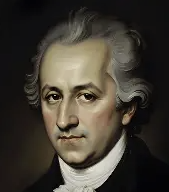
One lives but once in the world.
▼
Source
source
Clavigo, Act I, sc. i

3 months 2 weeks ago
Choose a wife who is of character, because that one is good who in the end is more respected.
▼
Source
source
(p. 60)

1 month 3 weeks ago
We now live in a technologically prepared environment that blankets the earth itself. The humanly contrived environment of electric information and power has begun to take precedence over the old environment of "nature." Nature, as it were, begins to be the content of our technology.
▼
Source
source
p. 276

2 months 3 weeks ago
Paradise was unendurable, otherwise the first man would have adapted to it; this world is no less so, since here we regret paradise or anticipate another one. What to do? Where to go? Do nothing and go nowhere, easy enough.

3 months 3 weeks ago
This remark provides the key to the problem, how much truth there is in solipsism. For what the solipsist means is quite correct; only it cannot be said, but makes itself manifest. The world is my world: this is manifest in the fact that the limits of language (of that language which alone I understand) mean the limits of my world.
▼
Source
source
-5.62

4 months 4 days ago
I am angry at the custom of forbidding children to call their father by the name of father, and to enjoin them another, as more full of respect and reverence, as if nature had not sufficiently provided for our authority. We call Almighty God Father, and disdain to have our children call us so. I have reformed this error in my family.-[As did Henry IV of France]-And 'tis also folly and injustice to deprive children, when grown up, of familiarity with their father, and to carry a scornful and austere countenance toward them, thinking by that to keep them in awe and obedience; for it is a very idle farce that, instead of producing the effect designed, renders fathers distasteful, and, which is worse, ridiculous to their own children.
▼
Source
source
Ch. 8. On the Affections of Fathers to their Children, tr. Cotton, rev. W. Carew Hazlitt, 1877

3 months 3 weeks ago
Virtue is the death of conscience because it is the habit of Good, and yet the ethic of the honest man infinitely prefers virtue to the noblest agonies of conscience. Thus, being poses nonbeing and eliminates it. There is only being.
▼
Source
source
p. 402

2 weeks 3 days ago
Happy the people whose annals are blank in history books!
▼
Source
source
Life of Frederick the Great, Bk. XVI, ch. 1.
1 week 5 days ago
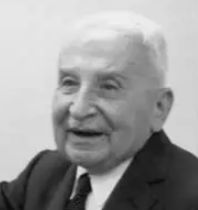
There is no means of avoiding the final collapse of a boom brought about by credit expansion. The alternative is only whether the crisis should come sooner as the result of voluntary abandonment of further credit expansion, or later as a final and total catastrophe of the currency system involved.
▼
Source
source
Chapter XX: Interest, Credit Expansion, The Trade Cycle, § 8 : The Monetary or Circulation Theory of the Trade Cycle

3 months 1 day ago
That Vulcan gave arrows unto Apollo and Diana the fourth day after their Nativities, according to Gentile Theology, may pass for no blind apprehension of the Creation of the Sun and Moon, in the work of the fourth day.
▼
Source
source
Opening lines of Ch. 1
3 months 4 weeks ago
He will better comprehend the foundations and measures of decency and justice, and have livelier, and more lasting impressions of what he ought to do, by giving his opinion on cases propos'd, and reasoning with his tutor on fit instances, than by giving a silent, negligent, sleepy audience to his tutor's lectures; and much more than by captious logical disputes, or set declamations of his own, upon any question. The one sets the thoughts upon wit and false colours, and not upon truth; the other teaches fallacy, wrangling, and opiniatry; and they are both of them things that spoil the judgment, and put a man out of the way of right and fair reasoning; and therefore carefully to be avoided by one who would improve himself, and be acceptable to others.
▼
Source
source
Sec. 98

3 months 1 week ago
There is geometry in the humming of the strings, there is music in the spacing of the spheres.
▼
Source
source
As quoted in The Mystery of Matter (1965) edited by Louise B. Young, p. 113

3 months 1 day ago
There is hardly a pioneer's hut which does not contain a few odd volumes of Shakespeare. I remember reading the feudal drama of Henry V for the first time in a log cabin.
▼
Source
source
Book One, Chapter XIII.

2 months 1 week ago
An elaborated culture has a density, complexity, and historical-semantic value that is so strong as to make politics possible... Gramsci's insight is to have recognised that subordination, fracturing, diffusion, reproducing, as much as producing, creating, forcing, guiding, are necessary aspects of elaboration.
▼
Source
source
Quoted in Richard Middleton, Studying Popular Music (Philadelphia: Open University Press, 1990, ISBN 0-335-15275-9), p. 248

2 months 2 weeks ago
The demagogues, impresarios of alteracion, who have already caused the death of several civilizations, harass men so that they shall not reflect, see to it that they are kept herded together in crowds so that they cannot reconstruct their individuality in the one place where it can be reconstructed, which is in solitude.
▼
Source
source
p. 33

2 months 3 weeks ago
In effect, to follow, not to force the public inclination; to give a direction, a form, a technical dress, and a specific sanction, to the general sense of the community, is the true end of legislature.

2 months 3 weeks ago
Every stage of education begins with childhood. That is why the most educated person on earth so much resembles a child.
▼
Source
source
"Miscellaneous Observations," Philosophical Writings, M. Stolijar, trans. (Albany: 1997) #48
5 days ago
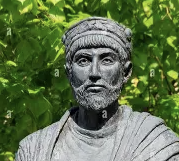
It is the season of the Kronia, during which the god allows us to make merry. But, my dear friend, as I have no talent for amusing or entertaining I must methinks take pains not to talk mere nonsense." "But, Caesar, can there be anyone so dull and stupid as to take pains over jesting? I always thought that such pleasantries were a relaxation of the mind and a relief from pains and cares." "Yes, and no doubt your view is correct, but that is not how the matter strikes me. For by nature I have no turn for raillery, or parody, or raising a laugh."
2 months 3 weeks ago
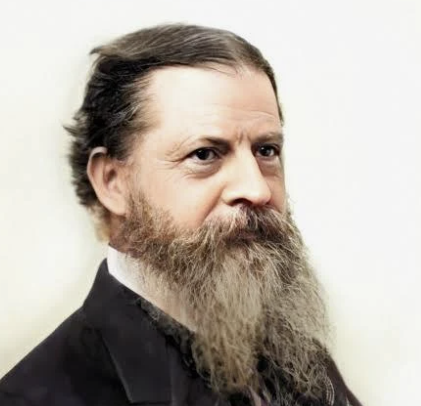
It is important to understand what I mean by semiosis. All dynamic action, or action of brute force, physical or psychical, either takes place between two subjects, - whether they react equally upon each other, or one is agent and the other patient, entirely or partially, - or at any rate is a resultant of such actions between pairs. But by "semiosis" I mean, on the contrary, an action, or influence, which is, or involves, a cooperation of three subjects, such as a sign, its object, and its interpretant, this tri-relative influence not being in any way resolvable into actions between pairs.
▼
Source
source
"Pragmatism" (1907) in The Essential Peirce : Selected Philosophical Writings (1998) edited by the Peirce Edition Project, Vol. 2, p. 411, Indiana University Press.
1 month 3 weeks ago
The telegraph press mosaic is acoustic space as much as an electric circus.

3 months 3 weeks ago
When our life ceases to be inward and private, conversation degenerates into mere gossip. We rarely meet a man who can tell us any news which he has not read in a newspaper, or been told by his neighbor; and, for the most part, the only difference between us and our fellow is, that he has seen the newspaper, or been out to tea, and we have not. In proportion as our inward life fails, we go more constantly and desperately to the post-office.
▼
Source
source
p. 491
2 months 3 weeks ago
The poor maidservant who used to say that she only believed in God when she had a toothache puts all theologians to shame.

2 months 1 week ago
There is no greater fallacy than the belief that aims and purposes are one thing, while methods and tactics are another, This conception is a potent menace to social regeneration. All human experience teaches that methods and means cannot be separated from the ultimate aim. The means employed become, through individual habit and social practice, part and parcel of the final purpose; they influence it, modify it, and presently the aims and means become identical.
2 months 2 weeks ago
All the seemingly positive valuations and judgments of ressentiment are hidden devaluations and negations.
▼
Source
source
L. Coser, trans. (1973), p. 67
4 months 1 week ago
Why, then, do we wonder any longer that, although in material things we are thoroughly experienced, nevertheless in our actions we are dejected, unseemly, worthless, cowardly, unwilling to stand the strain, utter failures one and all? .
▼
Source
source
Book II, ch. 16, 18

4 months 4 days ago
If you are a preacher of mercy, do not preach an imaginary but the true mercy. If the mercy is true, you must therefore bear the true, not an imaginary sin. God does not save those who are only imaginary sinners. Be a sinner, and let your sins be strong (sin boldly), but let your trust in Christ be stronger, and rejoice in Christ who is the victor over sin, death, and the world. We will commit sins while we are here, for this life is not a place where justice resides. We, however, says Peter (2. Peter 3:13) are looking forward to a new heaven and a new earth where justice will reign.
▼
Source
source
Letter 99, Paragraph 13. Erika Bullmann Flores, Tr. from: Dr. Martin Luther's Saemmtliche SchriftenDr. Johann Georg Walch Ed. (St. Louis: Concordia Publishing House, N.D.), Vol. 15, cols. 2585-2590.
4 months 1 week ago
Whatever you would make habitual, practice it; and if you would not make a thing habitual, do not practice it, but accustom yourself to something else.
▼
Source
source
Book II, ch. 18, 4.
2 months 3 weeks ago
Whoever finishes a revolution only halfway, digs his own grave.
▼
Source
source
Act I.

2 months 1 week ago
The truth is sum, ergo cogito - I am, therefore I think, although not everything that is thinks. Is not consciousness of thinking above all consciousness of being? Is pure thought possible, without consciousness of self, without personality? Can there exist pure knowledge without feeling, without that species of materiality which feelings lends to it? Do we not perhaps feel thought, and do we not feel ourselves in the act of knowing and willing? Could not the man in the stove [Descartes] have said: "I feel, therefore I am"? or "I will, therefore I am"? And to feel oneself, is it not perhaps to feel oneself imperishable?

3 months 3 weeks ago
No doubt, when modesty was made a virtue, it was a very advantageous thing for the fools, for everybody is expected to speak of himself as if he were one.
▼
Source
source
Vol. 1, Ch. 3, Section 2: Pride
3 months 1 day ago
I could be content that we might procreate like trees, without conjunction, or that there were any way to perpetuate the world without this trivial and vulgar act of coition; It is the foolishest act a wise man commits in all his life, nor is there anything that will more deject his cooled imagination, when he shall consider what an odd and unworthy piece of folly he hath committed.
▼
Source
source
Section 9
1 month 3 weeks ago
Avarice is as destitute of what it has, as what it has not.
▼
Source
source
Maxim 927

4 months 2 weeks ago
When the Great Dao (Tao, perfect order) prevails, the world is like a Commonwealth State shared by all, not a dictatorship.
2 months 3 weeks ago
That fear which gives birth to thoughts, and the fear of thoughts...

3 weeks ago
While Trump is not going to be president, Trumpism is going to survive. ...The Democrats need to look very very carefully at those election results because ...the Republicans did well not necessarily because people love what they represent, but because they don't like what the Democrats represent... Unless they sort out what that is, they are going to continue to lose elections.
▼
Source
source
28:52:00
3 months 3 weeks ago
I sit astride life like a bad rider on a horse. I only owe it to the horse's good nature that I am not thrown off at this very moment.
▼
Source
source
p. 36e

2 months 2 weeks ago
The Kingdom is like a wise fisherman who cast his net into the sea and drew it up from the sea full of small fish. Among them the wise fisherman found a fine large fish. He threw all the small fish back into the sea and chose the large fish without difficulty. Whoever has ears to hear, let him hear.

3 months 3 weeks ago
I met, not long ago, a young man who aspired to become a novelist. Knowing that I was in the profession, he asked me to tell him how he should set to work to realize his ambition. I did my best to explain. 'The first thing,' I said, 'is to buy quite a lot of paper, a bottle of ink, and a pen. After that you merely have to write.'
▼
Source
source
"Sermons in Cats"

1 week 4 days ago
The cause of anger is the belief that we are injured; this belief, therefore, should not be lightly entertained. We ought not to fly into a rage even when the injury appears to be open and distinct: for some false things bear the semblance of truth. We should always allow some time to elapse, for time discloses the truth.
▼
Source
source
De Ira (On Anger): Book 2, cap. 22, line 2 Alternate translation: Time discovers truth. (translator unknown).
2 months 1 week ago
One could count on one's fingers the number of scientists in the entire world who have a general idea of the history and development of their own particular science; there is not one who is really competent as regards sciences other than his own. As science forms an indivisible whole, one may say that there are no longer, strictly speaking, any scientists, but only drudges doing scientific work. . . .
▼
Source
source
p. 13 (as quoted in On Science, Necessity, and the Love of God (1968), p.1)
1 month 2 weeks ago
The strange superstition has arisen in the Western world that we can start all over again, remaking human nature, human society, and the possibilities of happiness; as though the knowledge and experience of our ancestors were now entirely irrelevant.
▼
Source
source
Gentle Regrets: Thoughts from a Life

3 weeks ago
The regeneration of the inferior or bastard races by the superior ones is consistent with God's plans for humanity. The man of the people, in our countries, is always a fallen aristocrat; his hands are made to handle the sword rather than the laborer's tools. He prefers warring to working, that is, he returns to his original calling.
▼
Source
source
93, as translated by Asselin Charles, in "Colonial Discourse Since Christopher Columbus," Journal of Black Studies, Vol. 26, No. 2 (November 1995), 147
3 months 2 weeks ago
Neither our distance from a preventable evil nor the number of other people who, in respect to that evil, are in the same situation as we are, lessens our obligation to mitigate or prevent that evil.
2 months 1 week ago
The great and inspiring aims of the Revolution became so clouded with and obscured by the methods used by the ruling political power that it was hard to distinguish what was temporary means and what final purpose. Psychologically and socially the means necessarily influence and alter the aims. The whole history of man is continuous proof of the maxim that to divest one's methods of ethical concepts means to sink into the depths of utter demoralization. In that lies the real tragedy of the Bolshevik philosophy as applied to the Russian Revolution. May this lesson not be in vain.
4 months 1 week ago
Let not that which in the case of another is contrary to nature become an evil for you; for you are born not to be humiliated along with others, nor to share in their misfortunes, but to share in their good fortune. If, however, someone is unfortunate, remember that his misfortune concerns himself. For God made all mankind to be happy, to be serene.
▼
Source
source
Book III, ch. 24, 1
2 months 1 week ago
My own long struggle to find my bearings, the disillusionments and disappointments I had experienced, had made me less dogmatic in my demands on people than I had been. They had helped me to understand the hard and lonely life of the rebel who had fought for an unpopular cause. Whatever bitterness I had felt against my old teacher had given way to deep sympathy long before his death. (about Johann Most)

3 months 4 weeks ago
Opinions have caused more ills than the plague or earthquakes on this little globe of ours.
▼
Source
source
Letter to Élie Bertrand, 5 January 1759

1 month 3 weeks ago
The activity of art is... as important as the activity of language itself, and as universal.
CivilSimian.com created by AxiomaticPanic, CivilSimian, Kalokagathia