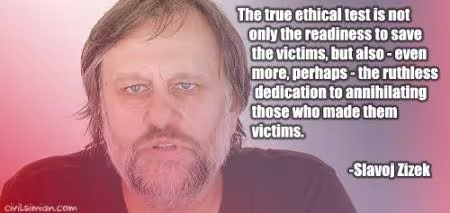
To be honest, Zizek has been saying some disappointing things lately. But, that's the reality of complex philosophy. If it's a good philosophy, if the grounding is good and it's complex, it will hit some sensitive edges.



There's no objective morality, but that's not the real point. It's not the point that morality has to somehow be a stone, or something that can be touched.
The options that are available to choose are determined to a point, and this is the objective aspect of morality, ethics, goodness, fairness, justice.
The subjective aspect can still remain subjective, but that doesn't mean goodness is relative.....at all. The measure of a man is a man.

The everyday world demands our attention, and prevents us from sinking into ourselves. As a romantic, I have always resented this: I like to sink into myself. The problems and anxieties of living make it difficult. Well, now I had an anxiety that referred to something inside of me, and it reminded me that my inner world was just as real and important as the world around me.
Big industry, competition and generally the individualistic organization of production have become a fetter which it must and will shatter.

If you look at the sociology of populism in the United States, it is tied most closely to population density, which... is correlated... to these types of cultural differences... to belief... in traditional cultural values, in family, in religion and the like, and conversely to... belief in immigration and diversity as strengths... This is the fundamental division that's taken hold of the United States. It has been augmented by technology because the internet has succeeded in... destroying every other source of authority that used to filter news and facts and information that... formed the basis of a democratic ability to have political discourse.

One often makes a remark and only later sees how true it is.
We are interested in others, when they are interested in us.

Every tax, however, is to the person who pays it a badge, not of slavery but of liberty. It denotes that he is a subject to government, indeed, but that, as he has some property, he cannot himself be the property of a master.
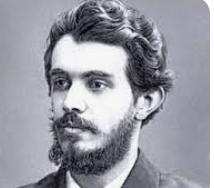
The whole economic system of Capitalism is an offshoot of a devouring and overwhelming lust, of a kind that can hold sway only in a society that has deliberately renounced the Christian asceticism and turned away from Heaven to give itself over exclusively to earthly gratifications. ... It is the result of a secularization of economic life, and by it the hierarchical subordination of the material to the spiritual is inverted. The autonomy of economics has ended in their dominating the whole life of human societies: the worship of Mammon has become the determining force of the age. And the worst of it is that this undisguised "mammonism" is regarded as a very good thing, an attainment to the knowledge of truth and a release from illusions. Economic materialism formulates this to perfection when it brands the whole spiritual life of man as a deception and a dream.

Philosophy: impersonal anxiety; refuge among anemic ideas.
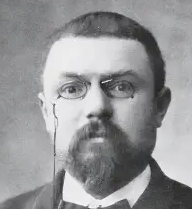
Thought is only a flash between two long nights, but this flash is everything.
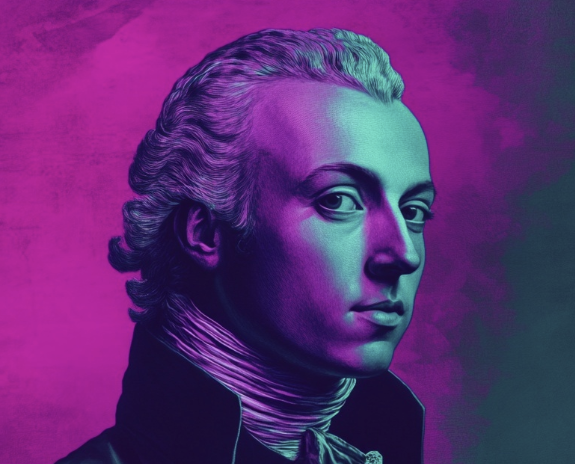
Habit... makes the endurance of evil easy (which, under the name of patience, is falsely honored as a virtue), because sensations of the same type, when continued without alteration for a long time, draw our attention away from the senses so that we are scarcely conscious of them at all. On the other hand, habit also makes the consciousness and the remembrance of good that has been received more difficult, which then gradually leads to ingratitude (a real vice). [...] Acquired habit deprives good actions of their moral value because it undermines mental freedom and, moreover, it leads to thoughtless repetitions of the same acts (monotony), and thus becomes ridiculous.

Men are qualified for civil liberty in exact proportion to their disposition to put moral chains upon their own appetites, - in proportion as their love to justice is above their rapacity, - in proportion as their soundness and sobriety of understanding is above their vanity and presumption, - in proportion as they are more disposed to listen to the counsels of the wise and good, in preference to the flattery of knaves. Society cannot exist, unless a controlling power upon will and appetite be placed somewhere; and the less of it there is within, the more there must be without. It is ordained in the eternal constitution of things, that men of intemperate minds cannot be free. Their passions forge their fetters.
I should not be surprized at seeing a French Army conveyed by a British Navy to an attack upon this Kingdom.

The Great Beast is the only object of idolatry, the only ersatz of God, the only imitation of something which is infinitely far from me and which is I myself.
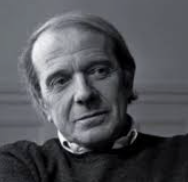
Schizophrenia is like love: there is no specifically schizophrenic phenomenon or entity; schizophrenia is the universe of productive and reproductive desiring machines, universal primary production as "the essential reality of man and nature".
Historical time knows no lasting present.
We may, to be more precise, have to relinquish the notion, explicit or implicit, that changes of paradigm carry scientists and those who learn from them closer and closer to the truth.

If there were only one religion in England there would be danger of despotism, if there were two they would cut each other's throats, but there are thirty, and they live in peace and happiness.
Monopoly of one kind or another, indeed, seems to be the sole engine of the mercantile system.
The real struggle is not between East and West, or capitalism and communism, but between education and propaganda.
Good sense is, of all things among men, the most equally distributed; for every one thinks himself so abundantly provided with it, that those even who are the most difficult to satisfy in everything else, do not usually desire a larger measure of this quality than they already possess.

I call upon you, young men, to obey your heart, and be the nobility of this land. In every age of the world, there has been a leading nation, one of a more generous sentiment, whose eminent citizens were willing to stand for the interests of general justice and humanity, at the risk of being called, by the men of the moment, chimerical and fantastic. Which should be that nation but these States? Which should lead that movement, if not New England? Who should lead the leaders, but the Young American?
Existence would be a quite impracticable enterprise if we stopped granting importance to what has none.

Environments are not just containers, but are processes that change the content totally.

The method of "postulating" what we want has many advantages; they are the same as the advantages of theft over honest toil.
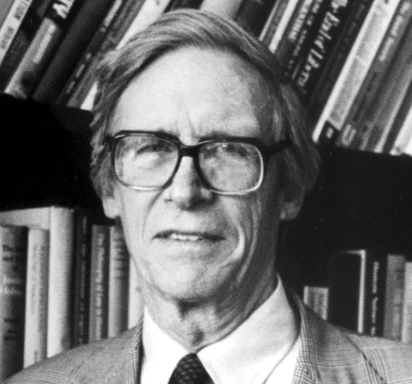
The principles of justice are chosen behind a veil of ignorance.

I can be twenty women, one hundred, if that's what you want, all women. Ride with me behind you, I weigh nothing, your horse will not feel me. I want to be your whorehouse!
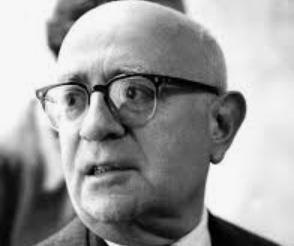
Fear and destructiveness are the major emotional sources of fascism, eros belongs mainly to democracy.

Half of the human race lives in manifest obedience to the lunar rhythm; and there is evidence to show that the psychological and therefore the spiritual life, not only of women, but of men too, mysteriously ebbs and flows with the changes of the moon. There are unreasoned joys, inexplicable miseries, laughters and remorses without a cause. Their sudden and fantastic alternations constitute the ordinary weather of our minds. These moods, of which the more gravely numinous may be hypostasized as gods, the lighter, if we will, as hobgoblins and fairies, are the children of the blood and humours. But the blood and humours obey, among many other masters, the changing moon. Touching the soul directly through the eyes and, indirectly, along the dark channels of the blood, the moon is doubly a divinity.

Political Economy regards the proletarian ... like a horse, he must receive enough to enable him to work. It does not consider him, during the time when he is not working, as a human being. It leaves this to criminal law, doctors, religion, statistical tables, politics, and the beadle. ... (1) What is the meaning, in the development of mankind, of this reduction of the greater part of mankind to abstract labor? (2) What mistakes are made by the piecemeal reformers, who either want to raise wages and thereby improve the situation of the working class, or - like Proudhon - see equality of wages as the goal of social revolution?.
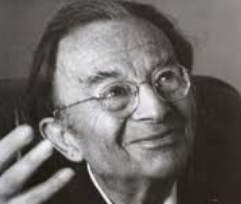
Both dreams and myths are important communications from ourselves to ourselves. If we do not understand the language in which they are written, we miss a great deal of what we know and tell ourselves in those hours when we are not busy manipulating the outside world.

And surely, he that hath taken the true Altitude of Things, and rightly calculated the degenerate state of this Age, is not like to envy those that shall live in the next, much less three or four hundred Years hence, when no Man can comfortably imagine what Face this World will carry.

A specter haunts the world and it is the specter of migration.
The pre-atomist multisensory void was an animate, pulsating, and moving vibrant interval, neither container nor contained, acoustic space penetrated by tactility.
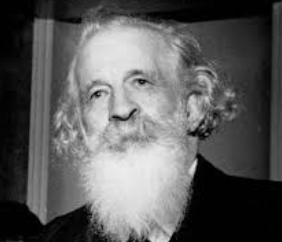
The words of the world want to make sentences.
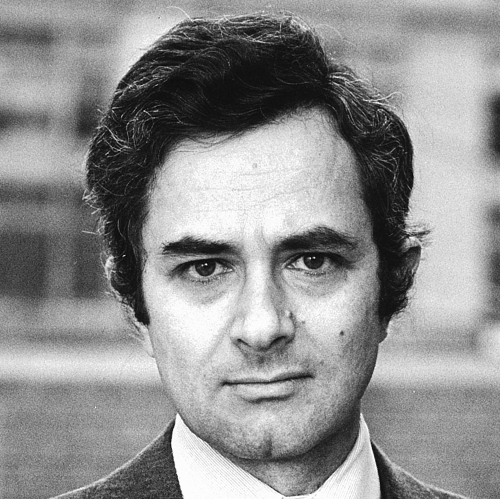
The problem is one of opposition between subjective and objective points of view. There is a tendency to seek an objective account of everything before admitting its reality. But often what appears to a more subjective point of view cannot be accounted for in this way. So either the objective conception of the world is incomplete, or the subjective involves illusions that should be rejected.
Philosophy, from the earliest times, has made greater claims, and achieved fewer results, than any other branch of learning.
The ornament of a house is the friends who frequent it.
Skepticism, like chastity, should not be relinquished too readily.
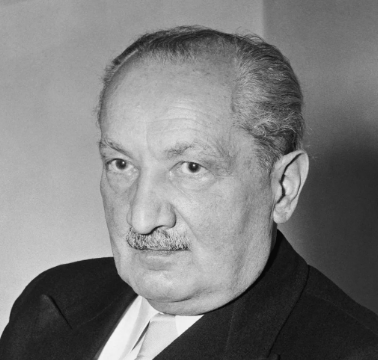
Our elucidations of the preliminary concept of phenomenology show that its essential character does not consist in its actuality as a philosophical "movement." Higher than actuality stands possibility. We can understand phenomenology solely by seizing upon it as a possibility.

Your god is too small.
He not only overflowed with learning but stood in the slops.
I cannot imagine how the clockwork of the universe can exist without a clockmaker.
A good reputation is more valuable than money.
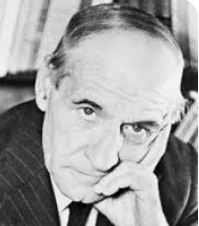
Meditation on any theme, if positive and honest, inevitably separates him who does the meditating from the opinion prevailing around him, from that which ... can be called "public" or "popular" opinion.
At electric speed, all forms are pushed to the limits of their potential.
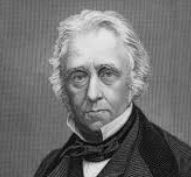
I say that where the public morality is concerned it may be the duty of the State to interfere with the contracts of individuals... It must then, I think, be admitted that, where health is concerned, and where morality is concerned, the State is justified in interfering with the contracts of individuals.
Facts do not cease to exist because they are ignored.
CivilSimian.com created by AxiomaticPanic, CivilSimian, Kalokagathia