


1 week 4 days ago
Would you really know what philosophy offers to humanity? Philosophy offers counsel.

3 months 2 weeks ago
Fortunate is he who has acquired a wealth of divine understanding, but wretched the one whose interest lies in shadowy conjectures about divinities.
▼
Source
source
fr. 132

3 months 3 weeks ago
Of all evils of war the greatest is the purely spiritual evil: the hatred, the injustice, the repudiation of truth, the artificial conflict.
▼
Source
source
Justice in War-Time (1916), p. 27
2 months 2 weeks ago
When the great religious and philosophical conceptions were alive, thinking people did not extol humility and brotherly love, justice and humanity because it was realistic to maintain such principles and odd and dangerous to deviate from them, or because these maxims were more in harmony with their supposedly free tastes than others. They held to such ideas because they saw in them elements of truth, because they connected them with the idea of logos, whether in the form of God or of a transcendental mind, or even of nature as an eternal principle.
▼
Source
source
p. 34.

2 months 1 week ago
Truths dead and forgotten long ago, conceptions of the world and its people, covered with mould, even during the times of our grandmothers, are being hammered into the heads of our young generation.

3 months 4 weeks ago
As regards the objection that possibles are independent of the decrees of God I grant it of actual decrees (although the Cartesians do not at all agree to this), but I maintain that the possible individual concepts involve certain possible free decrees; for example, if this world was only possible, the individual concept of a particular body in this world would involve certain movements as possible, it would also involve the laws of motion, which are the free decrees of God; but these, also, only as possibilities. Because, as there are an infinity of possible worlds, there are also an infinity of laws, certain ones appropriate to one; others, to another, and each possible individual of any world involves in its concept the laws of its world.
▼
Source
source
(May, 1686) as quoted in George R. Montgomery, Tr., "Correspondence between Leibniz and Arnauld," Leibniz: Discourse on metaphysics; correspondence with Arnauld, and Monadology (1916) VIII, p. 108

4 months 3 weeks ago
It will be easy for us once we receive the ball of yarn from Ariadne (love) and then go through all the mazes of the labyrinth (life) and kill the monster. But how many are there who plunge into life (the labyrinth) without taking that precaution?

2 months 2 weeks ago
Why tempt ye me, ye hypocrites? Shew me the tribute money.
▼
Source
source
22:18-19 (KJV)

4 months 3 weeks ago
The Law of conservation of energy tells us we can't get something for nothing, but we refuse to believe it.
6 days ago
We have the right to conclude from this that syndicalist violence, perpetrated in the course of strikes by proletarians who desire the overthrow of the State, must not be confused with the acts of savagery which the superstition of the State suggested to the revolutionaries of 1793, when they had power in their hands and were able to oppress the conquered - following the principles which they had received from the Church and from the monarchy.
▼
Source
source
p. 108

3 months 3 weeks ago
A purely disembodied human emotion is a nonentity.
▼
Source
source
Ch. 25
2 months 2 weeks ago
Hear, and understand: Not that which goeth into the mouth defileth a man; but that which cometh out of the mouth, this defileth a man.
▼
Source
source
15:10-11 (KJV)


3 months 3 weeks ago
Organic life, we are told, has developed gradually from the protozoon to the philosopher, and this development, we are assured, is indubitably an advance. Unfortunately it is the philosopher, not the protozoon, who gives us this assurance.
▼
Source
source
Ch. 6: On the Scientific Method in Philosophy

2 months 1 week ago
Not only are we unable to conceive of the full and living God as masculine simply, but we are unable to conceive of Him as individual simply, as the projection of a solitary I, an unsocial I, an I that is in reality an abstract I. My living I is an I that is really a We; my living personal I lives only in other, of other, and by other I's; I am sprung from a multitude of ancestors. I carry them within me in extract, and at the same time I carry within me, potentially, a multitude of descendants, and God, the projection of my I to the infinite - or rather I, the projection of God to the finite - must also be a multitude. Hence, in order to save the personality of God - that is to say, in order to save the living God - faith's need - the need of the feeling and the imagination - of conceiving Him and feeling Him as possessed of a certain internal multiplicity.

1 month 3 weeks ago
I would mind more if I could claim that The Selfish Gene had become severely outmoded and superseded. Unfortunately (from one point of view) I cannot. Details have changed and factual examples burgeoned mightily. But, with an exception that I shall discuss in a moment, there is little in the book that I would rush to take back now, or apologize for.
▼
Source
source
Arthur Cain, late Professor of Zoology at Liverpool and one of my inspiring tutors at Oxford in the sixties, described The Selfish Gene in 1976 as a 'young man's book'.
4 days ago
Although our case is different from that of ascetics who remove themselves from the world, the situation of the latest technological civilization might offer the incentive for commitments of this kind. In a large city, in mass society, among the almost unreal swarming of faceless beings, an essential sense of isolation or of detachment often occurs naturally, perhaps even more than in the solitude of moors and mountains.
▼
Source
source
p. 121

3 months 4 weeks ago
In every province, the chief occupations, in order of importance, are lovemaking, malicious gossip, and talking nonsense.

3 months 3 weeks ago
Some people talk as if meeting the gaze of absolute goodness would be fun. They need to think again. They are still only playing with religion. Goodness is either the great safety or the great danger-according to the way you react to it.
▼
Source
source
Book I, Chapter 5, "We Have Cause to Be Uneasy"
4 months 3 weeks ago
He is a dreamer of ancient times, or rather, of the myths of what ancient times used to be. Such men are harmless in themselves, but their queer lack of realism makes them fools for others.

1 month 3 weeks ago
Ads represent the main channel of intellectual and artistic effort in the modern world.
▼
Source
source
Commonweal, Vol. 58 (1953), p. 557


4 months 3 days ago
It would be better to have no laws at all than to have them in such profusion as we do.
▼
Source
source
Ch. 13

3 months 2 weeks ago
As money grows, care follows it and the hunger for more.
▼
Source
source
Book III, ode xvi, line 17

4 months 1 week ago
Incomprehensible and immutable is the love wherewith God loves. He did not begin to love us only on the day we were reconciled to Him by the blood of His Son; He loved us before the world was made, that we too might become His sons together with His Only-begotten Son, long before we had any existence.
▼
Source
source
p.435
2 months 2 weeks ago
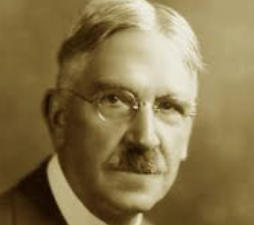
Even the eye that is artificially trained to see color as color, apart from things that colors qualify, cannot shut out the resonances and transfers of value.
▼
Source
source
p. 126

2 months 1 week ago
Eros, erotic desire, conquers depression. It delivers us from the inferno of the same to the utopia, indeed utopia, of the wholly other.
1 month 3 weeks ago
It is experience, rather than understanding, that influences behaviour.

3 months 3 weeks ago
Many Catholic mystics have affirmed that, at a certain stage of that contemplative prayer in which, according to the most authoritative theologians, the life of Christian perfection ultimately consists, it is necessary to put aside all thought of the Incarnation as distracting from the higher knowledge of that which has been incarnated. From this fact have arisen misunderstandings in plenty and a number of intellectual difficulties.
1 month 3 weeks ago
The "message" of any medium or technology is the change of scale or pace or pattern that it introduces into human affairs.
▼
Source
source
(p. 8)

2 months 3 weeks ago
They sang the praises of nature, of the sea, of the woods. They liked making songs about one another, and praised each other like children; they were the simplest songs, but they sprang from their hearts and went to one's heart. And not only in their songs but in all their lives they seemed to do nothing but admire one another. It was like being in love with each other, but an all-embracing, universal feeling.

2 months 3 weeks ago
Endless brooding over a question undermines you as much as a dull pain.
1 month 2 weeks ago
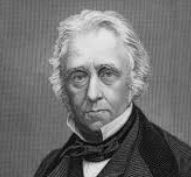
It may be that the public mind of India may expand under our system till it has outgrown that system; that by good government we may educate our subjects into a capacity for better government, that, having become instructed in European knowledge, they may, in some future age, demand European institutions. Whether such a day will ever come I know not. But never will I attempt to avert or to retard it. Whenever it comes, it will be the proudest day in English history.
▼
Source
source
Speech in the House of Commons

3 months 3 weeks ago
There is something in human history like retribution; and it is a rule of historical retribution that its instrument be forged not by the offended, but by the offender himself. The first blow dealt to the French monarchy proceeded from the nobility, not from the peasants. The Indian revolt does not commence with the ryots, tortured, dishonoured and stripped naked by the British, but with the sepoys, clad, fed and petted, fatted and pampered by them.
▼
Source
source
In an article written for the New York Daily Tribune, September 16, 1857

3 months 1 day ago
Persecution is a bad and indirect way to plant Religion.
▼
Source
source
Section 25

3 months 3 weeks ago
There is no history of mankind, there is only an indefinite number of histories of all kinds of aspects of human life. And one of these is the history of political power. This is elevated into the history of the world. But this, I hold, is an offence against every decent conception of mankind. It is hardly better than to treat the history of embezzlement or of robbery or of poisoning as the history of mankind. For the history of power politics is nothing but the history of international crime and mass murder (including it is true, some of the attempts to suppress them). This history is taught in schools, and some of the greatest criminals are extolled as heroes.
▼
Source
source
Vol 2, Ch. 25 "Has History any Meaning?" Variant: There is no history of mankind, there are only many histories of all kinds of aspects of human life. And one of these is the history of political power. This is elevated into the history of the world.

4 months ago
Extreme pride or dejection indicates extreme ignorance of self.
▼
Source
source
Part IV, Prop. LV

2 months 1 week ago
There are two atheisms of which one is a purification of the notion of God.
▼
Source
source
As quoted in The New Christianity (1967) edited by William Robert Miller

3 months 3 weeks ago
The trouble with Eichmann was precisely that so many were like him, and that the many were neither perverted nor sadistic, that they were, and still are, terribly and terrifyingly normal. From the viewpoint of our legal institutions and of our moral standards of judgment, this normality was much more terrifying than all the atrocities put together, for it implied - as had been said at Nuremberg over and over again by the defendants and their counsels - that this new type of criminal, who is in actual fact hostis generis humani, commits his crimes under circumstances that make it well-nigh impossible for him to know or to feel that he is doing wrong.
▼
Source
source
Epilogue
2 months 2 weeks ago
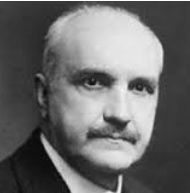
Friendship is almost always the union of a part of one mind with the part of another; people are friends in spots.
▼
Source
source
"Friendships"

3 months 3 weeks ago
Those only are happy (I thought) who have their minds fixed on some object other than their own happiness; on the happiness of others, on the improvement of mankind, even on some art or pursuit, followed not as a means, but as itself an ideal end. Aiming thus at something else, they find happiness by the way.
▼
Source
source
(p. 142)
3 months 3 weeks ago
What we principally thought of, was to alter people's opinions; to make them believe according to evidence, and know what was their real interest, which when they once knew, they would, we thought, by the instrument of opinion, enforce a regard to it upon one another. While fully recognizing the superior excellence of unselfish benevolence and love of justice, we did not expect the regeneration of mankind from any direct action on those sentiments, but from the effect of educated intellect, enlightening the selfish feelings. Although this last is prodigiously important as a means of improvement in the hands of those who are themselves impelled by nobler principles of action, I do not believe that any one of the survivors of the Benthamites or Utilitarians of that day, now relies mainly upon it for the general amendment of human conduct.
▼
Source
source
(pp. 111-112)
1 month 3 weeks ago
The printing press was at first mistaken for an engine of immortality by everybody except Shakespeare.
▼
Source
source
(p. 230)

3 months 4 weeks ago
There are three juridical attributes that inseparably belong to the citizen by right. These are: Constitutional freedom, as the right of every citizen to have to obey no other law than that to which he has given his consent or approval; Civil equality, as the right of the citizen to recognize no one as a superior among the people in relation to himself...; and Political independence, as the right to owe his existence and continuance in society not to the arbitrary will of another, but to his own rights and powers as a member of the commonwealth.
▼
Source
source
Science of Right, 1797

2 months 2 weeks ago
He felt neither guilt nor distress at the pleasure with which he was now filled by the proximity of this young creature, and when he discovered in himself even physical symptoms of his inclination he did not take fright, but continued cheerfully and serenely to see Nick whenever the ordinary run of his duties suggested it, congratulating himself upon the newly achieved solidity and rational calm of his spiritual life.
▼
Source
source
The Bell (1958) p. 91
2 months 2 weeks ago
The next day as they were leaving Bethany, Jesus was hungry. Seeing in the distance a fig tree in leaf, he went to find out if it had any fruit. When he reached it, he found nothing but leaves, because it was not the season for figs. Then he said to the tree, “May no one ever eat fruit from you again.” And his disciples heard him say it. The next day when they came out from Bethany, He was hungry. After seeing in the distance a fig tree with leaves, He went to find out if there was anything on it. When He came to it, He found nothing but leaves, because it was not the season for figs. He said to it, "May no one ever eat fruit from you again!"
▼
Source
source
Mark 11:12-14 11:12-14

3 months 2 days ago
Perchance you who pronounce my sentence are in greater fear than I who receive it.
▼
Source
source
His famous response to his judges upon his conviction as a heretic, prior to his transfer to the civil authorities for execution. (16 February 1600); as quoted by Gaspar Schopp of Breslau in a letter to Conrad Rittershausen

2 months 3 weeks ago
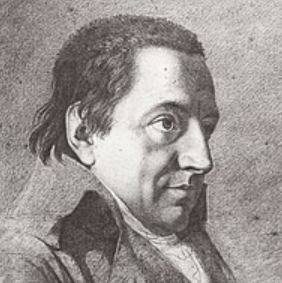
True Religion does not manifest itself outwardly, and impels man to no course of external conduct which he would not otherwise have adopted, but that it only completes his true In ward Being and Dignity. It is neither an Action, nor an incentive to Action, but a Thought:-it is LIGHT, and the One True Light, which bears within it all Life and all the forms of Life, and pervades their innermost substance. Once arisen, this Light flows on spontaneously forever, spreading itself forth without term or limit;-and it is as idle to bid it shine, as it would be to address such a command to the material sun when it stands in the noon-day heavens. It does this without our bidding; and if it shine not, then has it not arisen. At its uprising, Darkness, and the brood of spectres and phantasms which are born of Darkness, vanish of themselves.
▼
Source
source
p. 264
CivilSimian.com created by AxiomaticPanic, CivilSimian, Kalokagathia