

3 months 6 days ago
The core of ethics runs deep in our species and is common to human beings everywhere. It survives the most appalling hardships and the most ruthless attempts to deprive human beings of their humanity. Nevertheless, some people resist the idea that his core has a biological basis which we have inherited from our pre-human ancestors.
▼
Source
source
Chapter 2, The Biological Basis Of Ethics, p. 27

1 month 2 weeks ago
And therefore just as a brigand caught in broad daylight in the act cannot persuade us that he did not lift his knife in order to rob his victim of his purse, and had no thought of killing him, we too, it would seem, cannot persuade ourselves or others that the soldiers and policemen around us are not to guard us, but only for defense against foreign foes, and to regulate traffic and fetes and reviews; we cannot persuade ourselves and others that we do not know that the men do not like dying of hunger, bereft of the right to gain their subsistence from the earth on which they live; that they do not like working underground, in the water, or in the stifling heat, for ten to fourteen hours a day, at night in factories to manufacture objects for our pleasure. One would imagine it impossible to deny what is so obvious. Yet it is denied.
▼
Source
source
Chapter XII, Conclusion-Repent Ye, for the Kingdom of Heaven is at Hand

1 day ago
He that owns himself has lost nothing. But how few men are blessed with ownership of self!

4 months 2 weeks ago
...and woe betide fateful curiosity should it ever succeed in peering through a crack in the chamber of consciousness, out and down into the depths, and thus gain an intimation of the fact that humanity, in the indifference of its ignorance, rests on the pitiless, the greedy, the insatiable, the murderous clinging in dreams, as it were, to the back of a tiger.
2 months 6 days ago
What, by a word lacking even in grammar, is called amorality, is a thing that does not exist. If you are unwilling to submit to any norm, you have, nolens volens, to submit to the norm of denying all morality, and this is not amoral, but immoral. It is a negative morality which preserves the empty form of the other.
▼
Source
source
Chapter XV: We Arrive At The Real Question
2 months 1 week ago
I see philosophy as a fairly abstract activity, as concerned mainly with the analysis of criticism and concepts, and of course most usefully of scientific concepts.
▼
Source
source
As quoted in Profile of Sir Alfred Ayer (June 1971) by Euro-Television, quoted in A.J. Ayer: A Life (1999), p. 2

3 months 1 week ago
This aristocratic thesis is... the demos, the people, are the most numerous... also comprised of the most ordinary, and... even the worst, citizens. Therefore... what is best for the demos cannot be what is best for the polis... the city.



2 months 2 weeks ago
Where popular authority is absolute and unrestrained, the people have an infinitely greater, because a far better founded, confidence in their own power. They are themselves, in a great measure, their own instruments. They are nearer to their objects. Besides, they are less under responsibility to one of the greatest controlling powers on the earth, the sense of fame and estimation. The share of infamy that is likely to fall to the lot of each individual in public acts is small indeed; the operation of opinion being in the inverse ratio to the number of those who abuse power. Their own approbation of their own acts has to them the appearance of a public judgment in their favor. A perfect democracy is, therefore, the most shameless thing in the world. As it is the most shameless, it is also the most fearless. No man apprehends in his person that he can be made subject to punishment.
1 month 1 week ago
Conservatives believe that our identities and values are formed through our relations with other people, and not through our relation with the state. The state is not an end but a means. Civil society is the end, and the state is the means to protect it. The social world emerges through free association, rooted in friendship and community life. And the customs and institutions that we cherish have grown from below, by the 'invisible hand' of co-operation. They have rarely been imposed from above by the work of politics, the role of which, for a conservative, is to reconcile our many aims, and not to dictate or control them.
▼
Source
source
"Stand up for the real meaning of freedom," The Spectator

2 months ago
Those who say that all historical accounts are ideological constructs (which is one version of the idea that there is really no historical truth) rely on some story which must itself claim historical truth. They show that supposedly "objective" historians have tendentiously told their stories from some particular perspective; they describe, for example, the biasses that have gone into constructing various histories of the United States. Such an account, as a particular piece of history, may very well be true, but truth is a virtue that is embarrassingly unhelpful to a critic who wants not just to unmask past historians of America but to tell us that at the end of the line there is no historical truth. It is remarkable how complacent some "deconstructive" histories are about the status of the history that they deploy themselves.
▼
Source
source
p. 2

1 week ago
Men do reverence men. Men do worship in that 'one temple of the world,' as Novalis calls it, the Presence of a Man! Hero-worship, true and blessed, or else mistaken, false and accursed, goes on everywhere and everywhen. In this world there is one godlike thing, the essence of all that was or ever will be of godlike in this world: the veneration done to Human Worth by the hearts of men. Hero-worship, in the souls of the heroic, of the clear and wise,-it is the perpetual presence of Heaven in our poor Earth: when it is not there, Heaven is veiled from us; and all is under Heaven's ban and interdict, and there is no worship, or worthship, or worth or blessedness in the Earth any more!-

1 month 4 weeks ago
Because the book became a freak 'bestseller', because I found myself bracketed with the 'Angry Young Men' of the period, I found myself carried to 'fame' on a wave of publicity -- only to discover that this kind of fame is one of the subtlest forms of obscurity. Everybody knew who I was, and nobody knew what I stood for. The public image meant that nobody was interested in what I had to say, for everyone was convinced that they already knew. I could talk until I was blue in the face about my attempt to revise the pessimistic existentialism of Heidegger, Camus and Sartre; as far as most people were concerned, I was an autodidact who was angry about something or other.
▼
Source
source
p. 188, George Bernard Shaw: A personal view
2 months 1 week ago
The proletarian works with the instruments of production of another, for the account of this other, in exchange for a part of the product. ... The proletarian liberates himself by abolishing competition, private property, and all class differences.

4 months 2 weeks ago
Most men pursue pleasure with such breathless haste that they hurry past it.

2 months 1 week ago
Ennui is the echo in us of time tearing itself apart.

2 months 1 week ago
Do not be afraid. I am the First and the Last, and the living one, and I became dead, but look! I am living forever and ever, and I have the keys of death and of the Grave.
▼
Source
source
Revelation 1:17-18, NWT

2 months 3 days ago
Life was given to me as a favor, so I may abandon it when it is one no longer.
▼
Source
source
No. 76. (Usbek writing to Ibben)

3 months 2 weeks ago
As to [General Douglas] Macarthur, I don't feel in a position to have clear opinions about anyone I know only from newspapers. You see, whenever they deal with anyone (or anything) I know myself, I find they're always a mass of lies & misunderstandings: so I conclude they're no better in the places where I don't know.
▼
Source
source
Letter to Mrs. Mary Van Deusen, April 30, 1951. Collected Letters of C. S. Lewis, vol. 3, "Narnia, Cambridge, and Joy", 1950-1963. p. 114.

1 month 4 weeks ago
In one sense, I do believe I am "like a man," as Parthe [the writer's sister] says. But how? In having sympathy. ... Women crave for being loved, not for loving. They scream out at you for sympathy all day long, they are incapable of giving any in return, for they cannot remember your affairs long enough to do so. ... They cannot state a fact accurately to another, nor can that other attend to it accurately enough for it to become information. Now is not all this the result of want of sympathy?
▼
Source
source
Letter to Madame Mohl

1 month 1 week ago
Even sticking to the higher plane of love, is it so very obvious that you can't love more than one person? We seem to manage it with parental love (parents are reproached if they don't at least pretend to love all their children equally), love of books, of food, of wine (love of Chateau Margaux does not preclude love of a fine Hock, and we don't feel unfaithful to the red when we dally with the white), love of composers, poets, holiday beaches, friends . . . why is erotic love the one exception that everybody instantly acknowledges without even thinking about it?
▼
Source
source
Banishing the Green-Eyed Monster, November 2007.
2 months 1 week ago
Our mass media have little difficulty in selling particular interests as those of all sensible men. The political needs of society become individual needs and aspirations, their satisfaction promotes business and the commonweal, and the whole appeals to be the very embodiment of Reason.
▼
Source
source
p. xli

1 month 4 weeks ago
The history of the American kings of capital and authority is the history of repeated crimes, injustice, oppression, outrage, and abuse, all aiming at the suppression of individual liberties and the exploitation of the people. A vast country, rich enough to supply all her children with all possible comforts, and insure well-being to all, is in the hands of a few, while the nameless millions are at the mercy of ruthless wealth gatherers, unscrupulous lawmakers, and corrupt politicians.The reign of these kings is holding mankind in slavery, perpetuating poverty and disease, maintaining crime and corruption; it is fettering the spirit of liberty, throttling the voice of justice, and degrading and oppressing humanity. It is engaged in continual war and slaughter, devastating the country and destroying the best and finest qualities of man; it nurtures superstition and ignorance, sows prejudice and strife, and turns the human family into a camp of Ishmaelites.
2 months 2 weeks ago
Superstition is the religion of feeble minds.
1 month 2 weeks ago
I thought: "I am perishing of cold and hunger, and here is a man thinking only of how to clothe himself and his wife, and how to get bread for themselves. He cannot help me. When the man saw me he frowned and became still more terrible, and passed me by on the other side. I despaired, but suddenly I heard him coming back. I looked up, and did not recognize the same man: before, I had seen death in his face; but now he was alive, and I recognized in him the presence of God.

3 months 2 weeks ago
Reason is a harmonising, controlling force rather than a creative one.
▼
Source
source
Ch. 1: Mysticism and Logic
1 month 4 days ago
Free trade, one of the greatest blessings which a government can confer on a people, is in almost every country unpopular.
▼
Source
source
p. 161

2 months 4 weeks ago
But Eudoxus the Cnidian, who was somewhat junior to Leon, and the companion of Plato, first of all rendered the multitude of those theorems which are called universals more abundant; and to three proportions added three others; and things relative to a section, which received their commencement from Plato, he diffused into a richer multitude, employing also resolutions in the prosecution of these.
▼
Source
source
Ch. IV.

4 weeks ago
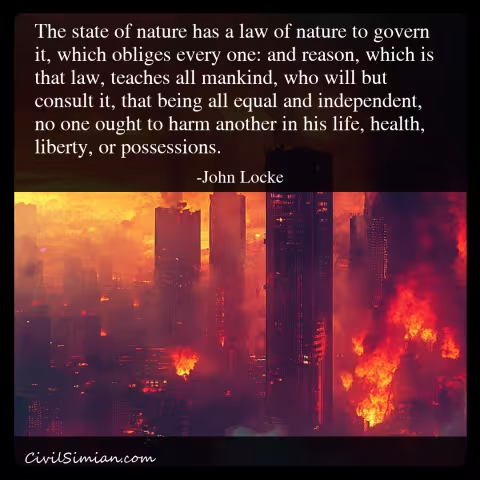
I must write it all out, at any cost. Writing is thinking. It is more than living, for it is being conscious of living.
▼
Source
source
Locked Rooms and Open Doors

4 months 1 week ago
Ten years on the moon could tell us more about the universe than a thousand years on the earth might be able to.

3 months 2 weeks ago
Scientific theories are distinguished from myths... in being criticizable, and... open to modifications... They can be neither verified nor probabilified.

2 months 2 days ago
The simultaneous existence of opposite virtues in the soul - like pincers to catch hold of God.
▼
Source
source
p. 92

3 weeks 4 days ago
True hedonic engineering, as distinct from mindless hedonism or reckless personal experimentation, can be profoundly good for our character. Character-building technologies can benefit utilitarians and non-utilitarians alike. Potentially, we can use a convergence of biotech, nanorobotics and information technology to gain control over our emotions and become better (post-)human beings, to cultivate the virtues, strength of character, decency, to become kinder, friendlier, more compassionate: to become the type of (post)human beings that we might aspire to be, but aren't, and biologically couldn't be, with the neural machinery of unenriched minds. Given our Darwinian biology, too many forms of admirable behaviour simply aren't rewarding enough for us to practise them consistently: our second-order desires to live better lives as better people are often feeble echoes of our baser passions.
▼
Source
source
Utopian Neuroscience, BLTC Research, 2019
1 month 3 weeks ago
Actual aristocracy cannot be abolished by any law: all the law can do is decree how it is to be imparted and who is to acquire it.
▼
Source
source
L 44
3 months 2 weeks ago
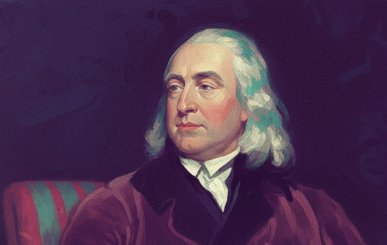
It is the principle of antipathy which leads us to speak of offences as deserving punishment. It is the corresponding principle of sympathy which leads us to speak of certain actions as meriting reward. This word merit can only lead to passion and error. It is effects good or bad which we ought alone to consider.
▼
Source
source
MSS 29, 32, University College Collection
2 months 1 week ago
Then are the children free. Notwithstanding, lest we should offend them, go thou to the sea, and cast an hook, and take up the fish that first cometh up; and when thou hast opened his mouth, thou shalt find a piece of money: that take, and give unto them for me and thee.
▼
Source
source
17:26-27 (KJV)
2 months 1 week ago
Intelligence flourishes only in the ages when belief withers.
2 months 1 week ago
Psychoanalysis will be entirely discredited one of these days, no doubt about it. Which will not keep it from destroying our last vestiges of naivete. After psychoanalysis, we can never again be innocent.
1 month 2 weeks ago
Further acquaintance with the labors of the Quakers and their works - with Fox, Penn, and especially the work of Dymond (published in 1827) - showed me not only that the impossibility of reconciling Christianity with force and war had been recognized long, long ago, but that this irreconcilability had been long ago proved so clearly and so indubitably that one could only wonder how this impossible reconciliation of Christian teaching with the use of force, which has been, and is still, preached in the churches, could have been maintained in spite of it.
▼
Source
source
Chapter I, The Doctrine of Non-resistance to Evil by Force has been Professed by a Minority of Men from the Very Foundation of Christianity

1 month 6 days ago
Statues are not about history. We don't memorialize each piece of history. We memorialize things that we want to value and things that we want our children to walk by and say "This person embodied the values that I care about." Therefore, statues are about values not about history.

3 months 2 weeks ago
Man's chief difference from the brutes lies in the exuberant excess of his subjective propensities - his preeminence over them simply and solely in the number and in the fantastic and unnecessary character of his wants, physical, moral, aesthetic, and intellectual. Had his whole life not been a quest for the superfluous, he would never have established himself as inexpugnably as he has done in the necessary.
▼
Source
source
"Reflex Action and Theism"

2 months 3 days ago
May we not imagine that possibly this earthly life of ours is to the other life what sleeping is to waking? May not all our life be a dream and death an awakening? But an awakening to what? And supposing that everything is but the dream of God and that God one day will awaken? Will He remember His dream?
2 months 1 week ago
The total victimization of the individual that takes place is encouraged for the specific benefit of the industrial and political bureaucracy. It therefore cannot be justified on the ground of the individual's true interest. National Socialist ideology simply states that true human existence consists in unconditional sacrifice, that it is of the essence of the individual's life to abbey and to serve-'service which never comes to an end because service and life coincide.'
▼
Source
source
P. 416

3 months 2 weeks ago
Marriage is encouraged in China, not by the profitableness of children, but by the liberty of destroying them.
▼
Source
source
Chapter VIII, p. 87.
1 week ago
Sarcasm I now see to be, in general, the language of the Devil; for which reason I have, long since, as good as renounced it.
▼
Source
source
Bk. II, ch. 4.
2 months 2 weeks ago
Custom reconciles us to every thing.
▼
Source
source
Part IV Section XVIII
4 months ago
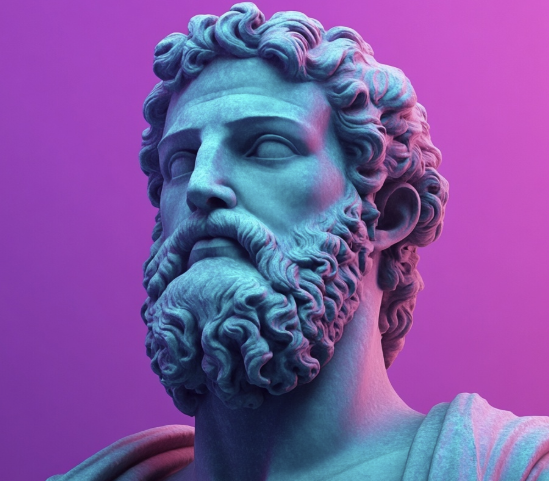
Why, what is weeping and sighing? A judgement. What is misfortune? A judgement. What are strife, disagreement, fault-finding, accusing, impiety, foolishness? They are all judgements.
▼
Source
source
Book III, ch. 3, 18, 19.
3 months 6 days ago
Truthfulness under oath is, by now, a matter of our civic religion, our relation to our fellow citizens rather than our relation to a nonhuman power.
▼
Source
source
"John Searle on Realism and Relativism." Truth and Progress: Philosophical Papers, Volume 3 (1998).
CivilSimian.com created by AxiomaticPanic, CivilSimian, Kalokagathia