


3 months 3 weeks ago
The measure of a master is his success in bringing all men round to his opinion twenty years later.
▼
Source
source
Culture
5 days ago
I must interpret the life about me as I interpret the life that is my own. My life is full of meaning to me. The life around me must be full of significance to itself. If I am to expect others to respect my life, then I must respect the other life I see, however strange it may be to mine. And not only other human life, but all kinds of life: life above mine, if there be such life; life below mine, as I know it to exist. Ethics in our Western world has hitherto been largely limited to the relations of man to man. But that is a limited ethics. We need a boundless ethics which will include the animals also.

2 months 3 weeks ago
Neither a person nor a nation can exist without some higher idea. And there is only one higher idea on earth, and it is the idea of the immortality of the human soul, for all other "higher" ideas of life by which humans might live derive from that idea alone.
▼
Source
source
A Writer's Diary, Vol. 1: 1873-1876, ed. Kenneth Lantz (1994), p. 734
2 months 2 weeks ago
Second, in the presence of this continuity of feeling, nominalistic maxims appear futile. There is no doubt about one idea affecting another, when we can directly perceive the one generally modified and shaping itself into the other. Nor can there any longer be any difficulty about one idea resembling another, when we can pass along the continuous field of quality from one to the other and back again to the point which we had marked.
3 months 3 weeks ago
Don't say things. What you are stands over you the while, and thunders so that I cannot hear what you say to the contrary.
▼
Source
source
Social Aims; sometimes condensed to "What you do speaks so loud that I cannot hear what you say."
2 months 1 week ago
There will be no mass-based feminist movement as long as feminist ideas are understood only by a well-educated few.

2 weeks 1 day ago
Can the man say, Fiat lux, Let there be light; and out of chaos make a world? Precisely as there is light in himself, will he accomplish this.

2 months 1 week ago
Once the needs of hunger are satisfied - and they are soon satisfied - the vanity, the necessity - for it is a necessity - arises of imposing ourselves upon and surviving in others. Man habitually sacrifices his life to his purse, but he sacrifices his purse to his vanity. He boasts even of his weakness and his misfortunes, for want of anything better to boast of, and is like a child who, in order to attract attention, struts about with a bandaged finger.
1 month 2 weeks ago
To teach virtue we must educate the emotions, and this means learning "what to feel" in the various circumstances that prompt them.
▼
Source
source
"Knowledge and Feeling" (p. 37)

1 month 3 weeks ago
Native societies did not think of themselves as being in the world as occupants but considered that their rituals created the world and keep it operational.
▼
Source
source
College and University Journal, Volumes 6-7, American College Public Relations Association, 1967, p. 3

3 months 3 weeks ago
Even the death of Friends will inspire us as much as their lives. They will leave consolation to the mourners, as the rich leave money to defray the expenses of their funerals, and their memories will be incrusted over with sublime and pleasing thoughts, as monuments of other men are overgrown with moss; for our Friends have no place in the graveyard.
1 month 2 weeks ago
To be what we are, and to become what we are capable of becoming, is the only end of life.
▼
Source
source
Familiar Studies of Men and Books (1882).
2 months 1 week ago
In its solitariness the spirit asks, What, in the way of value, is the attainment of life? And it can find no such value till it has merged its individual claim with that of the objective universe.
▼
Source
source
Religion is world-loyalty. Religion in the Making (February 1926), Lecture II: "Religion and Dogma".

3 months 3 weeks ago
Democracy is the process by which people choose the man who'll get the blame.
▼
Source
source
Attributed to Russell in Geary's Guide to the World's Great Aphorists (2007), p. 346

3 months 3 weeks ago
He who can buy bravery is brace, though a coward. As money is not exchanged for anyone specific quality, for any one specific thing, or for any particular human essential power, but for the entire objective world of man and nature, from the standpoint of its possessor it therefore serves to exchange every property for every other, even contradictory, property and object: it is the fraternization of impossibilities. It makes contradictions embrace.
▼
Source
source
p. 105, The Marx-Engels Reader
1 month 3 weeks ago
Privacy invasion is now one of biggest knowledge industries.
▼
Source
source
(p. 24)

4 months 3 weeks ago
All that exists that can be denied deserves to be denied; and being truthful means: to believe in an existence that can in no way be denied and which is itself true and without falsehood.
3 months 3 weeks ago
Totalitarianism in power invariably replaces all first-rate talents, regardless of their sympathies, with those crackpots and fools whose lack of intelligence and creativity is still the best guarantee of their loyalty.
▼
Source
source
Part 3, Chapter 10

2 months 4 weeks ago
Among these widely differing families of men, the first that attracts attention, the superior in intelligence, in power, and in enjoyment, is the white, or European, the MAN pre-eminently so called, below him appear the Negro and the Indian.
▼
Source
source
Chapter XVIII.
3 months 3 weeks ago
The sad truth of the matter is that most evil is done by people who never made up their minds to be or do either evil or good.
▼
Source
source
The Life of the Mind (1978), "Thinking"
2 months 3 weeks ago
Fathers and teachers, I ponder, "What is hell?" I maintain that it is the suffering of being unable to love.
▼
Source
source
Book VI, Chapter 3 (trans. Constance Garnett)

1 week 2 days ago
To no creature besides man has been given wisdom, foresight, industry, and reflection.
1 month 3 weeks ago
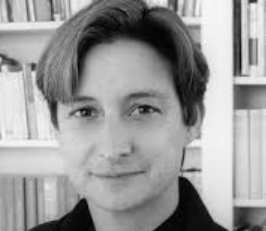
Quite apart from assiduous efforts to restrict the use of violence as means rather than an end, the actualization of violence as a means can inadvertently become its own end, producing new violence, producing violence anew, reiterating the license, and licensing further violence. Violence does not exhaust itself in the realization of a just end; rather, it renews itself in directions that exceed both deliberate intention and instrumental schemes. In other words, by acting as if the use of violence can be a means to achieve a nonviolent end, one imagines that the practice of violence does not in the act posit violence as its own end. The technē is undermined by the praxis, and the use of violence only makes the world into a more violent place, by bringing more violence into the world.
▼
Source
source
p. 20
1 month 3 weeks ago
Literacy, the visual technology, dissolved the tribal magic by means of its stress on fragmentation and specialization and created the individual.
3 months 3 weeks ago
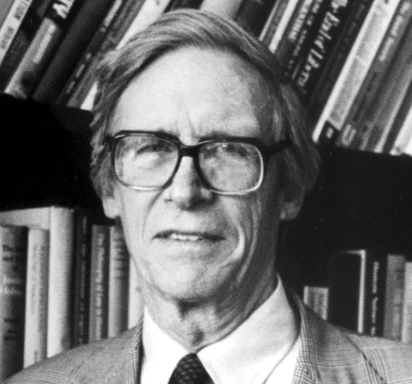
Ideal legislators do not vote their interests.
▼
Source
source
Chapter V, Section 43, p. 284

2 months ago
There are two kinds of people, killers, and everybody else.
3 months 3 weeks ago
The rich man... is always sold to the institution which makes him rich.
3 months 3 weeks ago
A world without delight and without affection is a world destitute of value.
▼
Source
source
The Scientific Outlook, 1931
1 month 3 weeks ago
In television, images are projected at you. You are the screen. The images wrap around you. You are the vanishing point.
▼
Source
source
(p. 125)
2 months 3 weeks ago
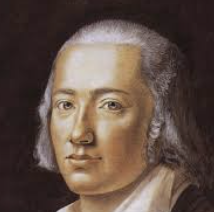
What is all that men have done and thought over thousands of years, compared with one moment of love. But in all Nature, too, it is what is nearest to perfection, what is most divinely beautiful! There all stairs lead from the threshold of life. From there we come, to there we go.
3 months 2 weeks ago
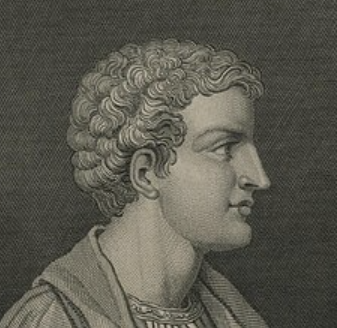
He who has begun has half done. Dare to be wise; begin!
▼
Source
source
Book I, epistle ii, lines 40-41
2 months 4 weeks ago
There are things I can't force. I must adjust. There are times when the greatest change needed is a change of my viewpoint.
▼
Source
source
As quoted in Cracking the Code of Our Physical Universe : The Key to a Whole New World of Enlightenment and Enrichment (2006) by Matthew M Radmanesh, p. 91
3 months 3 weeks ago
The beginning of religion, more precisely its content, is the concept of religion itself, that God is the absolute truth, the truth of all things, and subjectively that religion alone is the absolutely true knowledge.
2 months 1 week ago
Sensitiveness without impulse spells decadence, and impulse without sensitiveness spells brutality.
▼
Source
source
Ch. 13: "Requisites for Social Progress", p. 280
4 months 3 weeks ago
Our destiny exercises its influence over us even when, as yet, we have not learned its nature: it is our future that lays down the law of our today.
3 months 2 weeks ago
A new word is like a fresh seed sown on the ground of the discussion.

2 weeks 5 days ago
In the 1980s and 90s there was an extension of the autonomy of individual property owners in... a movement towards neoliberalism represented by Ronald Reagan, Margaret Thatcher and... by the Chicago school of economics that denigrated... the role of the state in the economy, that said the private markets would be able to solve most social distribution problems and the like. This was true in many ways. The world did become much richer in this period, but it also became much more unequal... Without adequate regulation and... effort to protect people against the excesses of market capitalism, you had people... left behind, even as their societies as a whole, grew. ...This ...became one of the triggers for the kind of populism we've seen arise in many rich countries.
▼
Source
source
14:13
2 weeks 1 day ago
The Hero as Divinity, the Hero as Prophet, are productions of old ages; not to be repeated in the new. They presuppose a certain rudeness of conception, which the progress of mere scientific knowledge puts an end to. There needs to be, as it were, a world vacant, or almost vacant of scientific forms, if men in their loving wonder are to fancy their fellow-man either a god or one speaking with the voice of a god. Divinity and Prophet are past.
2 months 2 weeks ago
Although a poem be not made by counting of syllables upon the fingers, yet "numbers" is the most poetical synonym we have for verse, and "measure" the most significant equivalent for beauty, for goodness, and perhaps even for truth. Those early and profound philosophers, the followers of Pythagoras, saw the essence of all things in number, and it was by weight, measure, and number, as we read in the Bible, that the Creator first brought Nature out of the void.
▼
Source
source
Interpretations of Poetry and Religion (1900), p. 251

3 months 3 weeks ago
Try to exclude the possibility of suffering which the order of nature and the existence of free-wills involve, and you find that you have excluded life itself.
2 months 3 weeks ago
We have not made the Revolution, the Revolution has made us.
▼
Source
source
Act II.
3 months 3 weeks ago
Homeliness is almost as great a merit in a book as in a house, if the reader would abide there. It is next to beauty, and a very high art.
▼
Source
source
Pearls of Thought (1881) p. 32
2 weeks 4 days ago
All that is not thought is pure nothingness; since we can think only thought and all the words we use to speak of things can express only thoughts, to say there is something other than thought, is therefore an affirmation which can have no meaning.And yet-strange contradiction for those who believe in time-geologic history shows us that life is only a short episode between two eternities of death, and that, even in this episode, conscious thought has lasted and will last only a moment. Thought is only a gleam in the midst of a long night. But it is this gleam which is everything.
3 months 3 weeks ago
The child must be brought up free (that he allow others to be free). He must learn to endure the restraint to which freedom subjects itself for its own preservation (experience no subordination to his command). Thus he must be disciplined. This precedes instruction. Training must continue without interruption. He must learn to do without things and to be cheerful about it. He must not be obliged to dissimulate, he must acquire immediate horror of lies, must learn so to respect the rights of men that they become an insurmountable wall for him. His instruction must be more negative. He must not learn religion before he knows morality. He must be refined, but not spoiled (pampered). He must learn to speak frankly, and must assume no false shame. Before adolescence he must not learn fine manners ; thoroughness is the chief thing. Thus he is crude longer, but earlier useful and capable.
▼
Source
source
Part III : Selection on Education from Kant's other Writings, Ch. I Pedagogical Fragments, # 3

3 months 4 weeks ago
Nature offers nothing that can be called this man's rather than another's ; but, under nature, everything belongs to all - that is, they have authority to claim it for themselves. But, under dominion, where it is by common law determined what belongs to this man, and what to that, he is called just who has a constant will to render to every man his own, but he, unjust who strives, on the contrary, to make his own that which belongs to another.
▼
Source
source
Ch. 2, Of Natural Right
2 months 2 weeks ago
The pint would call the quart a dualist, if you tried to pour the quart into him.
▼
Source
source
p. 60
1 month 3 weeks ago
One day, we shall stand up and our backsides will remain attached to our seats.
3 months 3 weeks ago
Nothing is yet in its true form.
CivilSimian.com created by AxiomaticPanic, CivilSimian, Kalokagathia