

1 month 5 days ago
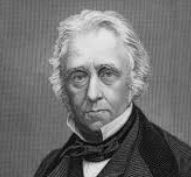
No doubt a tumult caused by local and temporary irritation ought to be suppressed with promptitude and vigour. Such disturbances, for example, as those which Lord George Gordon raised in 1780, should be instantly put down with the strong hand. But woe to the Government which cannot distinguish between a nation and a mob! Woe to the Government which thinks that a great, a steady, a long continued movement of the public mind is to be stopped like a street riot! This error has been twice fatal to the great House of Bourbon. God be praised, our rulers have been wiser. The golden opportunity which, if once suffered to escape, might never have been retrieved, has been seized. Nothing, I firmly believe, can now prevent the passing of this noble law, this second Bill of Rights.
▼
Source
source
Speech in the House of Commons on the Reform Bill (5 July 1831), quoted in Speeches of the Right Honourable T. B. Macaulay, M.P. (1854), pp. 34-35

1 week 4 days ago
The idea of universal human dignity ultimately comes out of Christianity... the view that all human beings are equal in the sight of God because they have the capacity for moral choice. As Western thought developed in the 17th-18th centuries, this took on a secular form under thinkers like Jean-Jacques Rousseau or Immanuel Kant or Georg Hegel, who argued that human equality is... based on human autonomy.
▼
Source
source
11:12

1 month 2 weeks ago
Pornography and violence are by-products of societies in which private identity has been...destroyed by sudden environmental change.
▼
Source
source
Letter to Clare Westcott, November 26 1975. Letters of Marshall McLuhan, p. 514
6 days ago
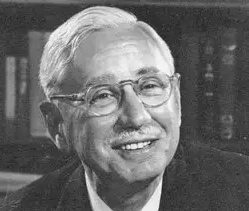
See him, the newborn, dirty but marvelous, ridiculous in actuality, infinite in possibility, capable of that ultimate miracle, growth.
▼
Source
source
Ch. 1 : Our life begins
1 month 5 days ago
We have classical associations and great names of our own which we can confidently oppose to the most splendid of ancient times. Senate has not to our ears a sound so venerable as Parliament. We respect the Great Charter more than the laws of Solon. The Capitol and the Forum impress us with less awe than our own Westminster Hall and Westminster Abbey... The list of warriors and statesmen by whom our constitution was founded or preserved, from De Montfort down to Fox, may well stand a comparison with the Fasti of Rome. The dying thanksgiving of Sydney is as noble as the libation which Thrasea poured to Liberating Jove: and we think with far less pleasure of Cato tearing out his entrails than of Russell saying, as he turned away from his wife, that the bitterness of death was past.
▼
Source
source
'History', The Edinburgh Review (May 1828), quoted in The Miscellaneous Writings of Lord Macaulay, Vol. I (1860), p. 252

4 months 2 days ago
What is love's perfection? To love our enemies, and to love them to the end that they may be our brothers.
▼
Source
source
First Homily, as translated by John Burnaby (1955), p. 266
1 month 1 week ago
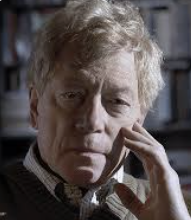
An international socialism is the stated ideal of most socialists; an international liberalism is the unstated tendency of the liberal. To neither system is it thinkable that men live, not by universal aspirations but by local attachments; not by a "solidarity" that stretches across the globe from end to end, but by obligations that are understood in terms which separate men from most of their fellows-in terms such as national history, religion, language, and the customs that provide the basis of legitimacy.
▼
Source
source
How to be a Non-Liberal, Anti-Socialist Conservative, Intercollegiate Review: A Journal of Scholarship and Opinion

2 months 4 weeks ago
Work at these things, practice them, these are the things you ought to desire; they are what will put you on the path of divine virtue - yes, by the one who entrusted our soul with the tetraktys, source of ever-flowing nature. Pray to the gods for success and get to work.
▼
Source
source
As quoted in Divine Harmony: The Life and Teachings of Pythagoras by John Strohmeier and Peter Westbrook.

2 months 3 weeks ago
The more man ascends through the past, and the more he launches into the future, the greater he will be, and all these philosophers and ministers and truth-telling men who have fallen victims to the stupidity of nations, the atrocities of priests, the fury of tyrants, what consolation was left for them in death? This: That prejudice would pass, and that posterity would pour out the vial of ignominy upon their enemies. O Posterity! Holy and sacred stay of the unhappy and the oppressed; thou who art just, thou who art incorruptible, thou who findest the good man, who unmaskest the hypocrite, who breakest down the tyrant, may thy sure faith, thy consoling faith never, never abandon me!
▼
Source
source
As quoted in "Diderot" in The Great Infidels (1881) by Robert Green Ingersoll; The Works of Robert G. Ingersoll Vol. III (1900), p. 367

1 week ago
All the gifted souls, of every rank, who are born to you in this generation. These are appointed, by the true eternal "divine right" which will never become obsolete, to be your governors and administrators; and precisely as you employ them, or neglect to employ them, will your State be favored of Heaven or disfavored. This noble young soul, you can have him on either of two conditions; and on one of them, since he is here in the world, you must have him. As your ally and coadjutor; or failing that, as your natural enemy: which shall it be? I consider that every Government convicts itself of infatuation and futility, or absolves and justifies itself before God and man, according as it answers this question.
2 months 1 week ago
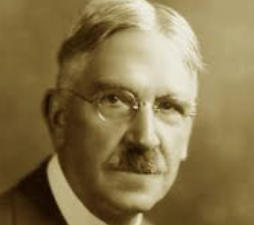
Just because emotion is essential to that act of expression which produces a work of art, it is easy for inaccurate analysis to misconceive its mode of operation and conclude that the work of art has emotion for its significant content. One may cry out with joy or even weep upon seeing a friend from whom one has been long separated. The outcome is not an expressive object -- save to the onlooker. But if the emotion leads one to gather material that is affiliated to the mood which is aroused, a poem may result. In the direct outburst, an objective situation is the stimulus, the cause, of the emotion. In the poem, objective material becomes the content and matter of the emotion, not just its evocative occasion.
▼
Source
source
pp. 71-72

4 months 2 weeks ago
Editor Preface In this book, originating in the year 1848, the requirement for being a Christian is forced up by the pseudonymous author to the supreme ideality. Yet the requirement should indeed be stated, presented, and heard. From the Christian point of view, there ought to be no scaling down of the requirement, nor suppression of it-instead of a personal admission and confession. The requirement should be heard-and I understand what is said as spoken to me alone-so that I might learn not only to resort to grace but to resort to it in relation to the use of grace.

3 months 2 weeks ago
I believe that Communism is necessary to the world, and I believe that the heroism of Russia has fired men's hopes in a way which was essential to the realization of Communism in the future. Regarded as a splendid attempt, without which ultimate success would have been very improbable, Bolshevism deserves the gratitude and admiration of all the progressive part of mankind.
▼
Source
source
Preface

3 months 2 weeks ago
As a general rule-never substitute the symbol for the thing signified, unless it is impossible to show the thing itself; for the child's attention is so taken up with the symbol that he will forget what it signifies.

3 months 4 days ago
He preferred an honest man that wooed his daughter, before a rich man. "I would rather," said Themistocles, "have a man that wants money than money that wants a man."
▼
Source
source
49 Themistocles

2 months 1 day ago
Art is the imposing of a pattern on experience, and our aesthetic enjoyment in recognition of the pattern.
▼
Source
source
Ch. 29, June 10, 1943.

4 months 2 weeks ago
Knowledge is the food of the soul; and we must take care, my friend, that the Sophist does not deceive us when he praises what he sells, like the dealers wholesale or retail who sell the food of the body; for they praise indiscriminately all their goods, without knowing what are really beneficial or hurtful.



3 months 2 weeks ago
Men are what their mothers made them.
▼
Source
source
Fate

2 months 1 week ago
God is what survives the evidence that nothing deserves to be thought.

3 months 2 weeks ago
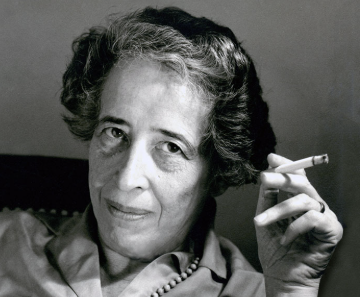
The Nazis were 'convinced that evil-doing in our time has a morbid force of attraction,' Bolshevik assurances inside and outside Russia that they do not recognize ordinary moral standards have become a mainstay of Communist propaganda, and experience has proven time and again that the propaganda value of evil deeds and general contempt for moral standards is independent of mere self-interest, supposedly the most powerful psychological factor in politics.
▼
Source
source
Part 3, Ch. 10

2 months 3 weeks ago
The one infinite is perfect, in simplicity, of itself, absolutely, nor can aught be greater or better, This is the one Whole, God, universal Nature, occupying all space, of whom naught but infinity can give the perfect image or semblance.
▼
Source
source
II 12 as translated by Dorothea Waley Singer
3 months 2 weeks ago
It seems to me now that mathematics is capable of an artistic excellence as great as that of any music, perhaps greater; not because the pleasure it gives (although very pure) is comparable, either in intensity or in the number of people who feel it, to that of music, but because it gives in absolute perfection that combination, characteristic of great art, of godlike freedom, with the sense of inevitable destiny; because, in fact, it constructs an ideal world where everything is perfect and yet true.
▼
Source
source
Letter to Gilbert Murray, April 3, 1902

3 months 2 weeks ago
Put in a nut-shell, my thesis amounts to this. The repeated attempts made by Rudolf Carnap to show that the demarcation between science and metaphysics coincides with that between sense and nonsense have failed. The reason is that the positivistic concept of 'meaning' or 'sense' (or of verifiability, or of inductive confirmability, etc.) is inappropriate for achieving this demarcation - simply because metaphysics need not be meaningless even though it is not science. In all its variations demarcation by meaninglessness has tended to be at the same time too narrow and too wide: as against all intentions and all claims, it has tended to exclude scientific theories as meaningless, while failing to exclude even that part of metaphysics which is known as 'rational theology'.
▼
Source
source
Ch 11. "The Demarcation between Science and Metaphysics." (Summary, p. 253)

2 months 2 weeks ago
It's the great mystery of human life that old grief passes gradually into quiet tender joy.

2 months 2 weeks ago
Unlike private enterprise which quickly modifies its actions to meet emergencies - unlike the shopkeeper who promptly finds the wherewith to satisfy a sudden demand - unlike the railway company which doubles its trains to carry a special influx of passengers; the law-made instrumentality lumbers on under all varieties of circumstances at its habitual rate. By its very nature it is fitted only for average requirements, and inevitably fails under unusual requirements.
▼
Source
source
Vol. 3, Ch. VII, Over-Legislation

4 months 2 weeks ago
One will rarely err if extreme actions be ascribed to vanity, ordinary actions to habit, and mean actions to fear.

1 month 2 weeks ago
Is not the reason of the confidence of the positive, critical, experimental scientists, and of the reverent attitude of the crowd towards their doctrines, still the same? At first it seems strange how the theory of evolution (which, like the redemption in theology, serves the majority as a popular expression of the whole new creed) can justify people in their injustice, and it seems as if the scientific theory dealt only with facts and did nothing but observe facts. But that only seems so. It seemed just the same in the case of theological doctrine: theology, it seemed, was only occupied with dogmas and had no relation to people's lives, and it seemed the same with regard to philosophy, which appeared to be occupied solely with transcendental reasonings. But that only seemed so. It was just the same with the Hegelian doctrine on a large scale and with the particular case of the Malthusian teaching.
2 months 1 week ago
Well both original seizure and subsequent critical discrimination have equal claims, each to its own complete development and must not be forgotten that direct and unreasoned impression comes first. There is such occasions something of the quality of the wind that bloweth where it listeth. Sometimes it comes and sometimes it does not, even in the presence of the same object. It cannot be forced and when it does not arrive it is not wise to seek to recover by direct action the first fine rapture.
▼
Source
source
p. 151

4 months 2 weeks ago
If anyone can be considered the greatest writer who ever lived, it is Shakespeare.
3 months 2 weeks ago
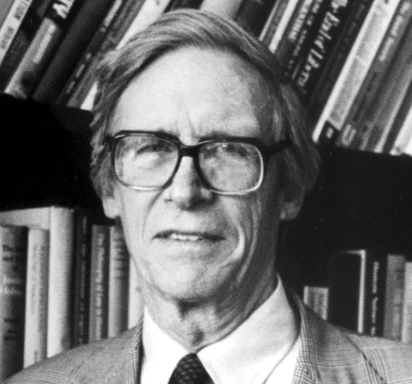
The suppression of liberty is always likely to be irrational.
▼
Source
source
Chapter IV, Section 33, p. 210

3 months 2 weeks ago
In the sphere of thought, absurdity and perversity remain the masters of the world, and their dominion is suspended only for brief periods.
▼
Source
source
"The Art of Controversy" as translated by T. Bailey Saunders

2 months 1 week ago
The conscious mind allows itself to be trained like a parrot, but the unconscious does not - which is why St. Augustine thanked God for not making him responsible for his dreams.
▼
Source
source
par. 51 p.46

3 months 2 weeks ago
Art, I suppose, is only for beginners, or else for those resolute dead-enders, who have made up their minds to be content with the ersatz of Suchness, with symbols rather than with what they signify, with the elegantly composed recipe in lieu of actual dinner.
1 month 3 weeks ago
Since my world picture approximates reality only crudely, I cannot aspire to optimize anything; at most, I can aim at satisficing. Searching for the best can only dissipate scarce cognitive resources; the best is the enemy of the good.
▼
Source
source
(p.361) p. 361; As cited in Ronald J. Baker (2010) Implementing Value Pricing: A Revolutionary Business Model for Professional Firms. p. 122.

3 months 3 weeks ago
The Clergy is the greatest hindrance to faith.
▼
Source
source
58

2 months 1 week ago
Freed from the sublimated form which was the very token of its irreconcilable dreams-a form which is the style, the language in which the story is told-sexuality turns into a vehicle for the bestsellers of oppression. ... This society turns everything it touches into a potential source of progress and of exploitation, of drudgery and satisfaction, of freedom and of oppression. Sexuality is no exception.
▼
Source
source
pp. 77-78
2 months 1 week ago
History is nothing but assisted and recorded memory. It might almost be said to be no science at all, if memory and faith in memory were not what science necessarily rest on. In order to sift evidence we must rely on some witness, and we must trust experience before we proceed to expand it. The line between what is known scientifically and what has to be assumed in order to support knowledge is impossible to draw. Memory itself is an internal rumour; and when to this hearsay within the mind we add the falsified echoes that reach us from others, we have but a shifting and unseizable basis to build upon. The picture we frame of the past changes continually and grows every day less similar to the original experience which it purports to describe.
▼
Source
source
Ch. 2 "History"
2 months 1 week ago
The human race, in its intellectual life, is organized like the bees: the masculine soul is a worker, sexually atrophied, and essentially dedicated to impersonal and universal arts; the feminine is a queen, infinitely fertile, omnipresent in its brooding industry, but passive and abounding in intuitions without method and passions without justice.
2 months 3 days ago
Useless laws weaken the necessary laws.
▼
Source
source
Book XXIX: Of the Manner of Composing Laws, Chapter 16: Things to be Observed in the Composing of Laws

2 months 2 days ago
To wish to escape from solitude is cowardice. Friendship is not to be sought, not to be dreamed, not to be desired; it is to be exercised (it is a virtue).
▼
Source
source
p. 274
1 week 2 days ago
The artist may be well advised to keep his work to himself till it is completed, because no one can readily help him or advise him with it...but the scientist is wiser not to withhold a single finding or a single conjecture from publicity.
▼
Source
source
Essay on Experimentation
3 months 2 weeks ago
The perception of the comic is a tie of sympathy with other men, a pledge of sanity, and protection from those perverse tendencies and gloomy insanities in which fine intellects sometimes lose themselves. A rogue alive to the ludicrous is still convertible.
▼
Source
source
The Comic

3 months 2 weeks ago
The most violent revolutions in an individual's beliefs leave most of his old order standing. Time and space, cause and effect, nature and history, and one's own biography remain untouched. New truth is always a go-between, a smoother-over of transitions. It marries old opinion to new fact so as ever to show a minimum of jolt, a maximum of continuity.
▼
Source
source
"What Pragmatism Means," Pragmatism, pp. 60-61 (1931); lectures delivered at the Lowell Institute, Boston, Massachusetts

3 months 1 week ago
A good guide will take you through the more important streets more often than he takes you down side streets; a bad guide will do the opposite. In philosophy I'm a rather bad guide.
▼
Source
source
As quoted in Wittgenstein and the Philosophy of Information (2008) edited by Alois Pichler and Herbert Hrachovec, p. 140

3 months 2 weeks ago
Percepts and phenomena which precedes the logical use of the intellect is called appearance, while the reflex knowledge originating from several appearances compared by the intellect is called experience.

3 months 2 weeks ago
The ancient Egyptians had a superstitious antipathy to the sea; a superstition nearly of the same kind prevails among the Indians; and the Chinese have never excelled in foreign commerce.
▼
Source
source
Chapter V, p. 402.
3 months 2 weeks ago
Our merchants and master-manufacturers complain much of the bad effects of high wages in raising the price, and thereby lessening the sale of their goods both at home and abroad. They say nothing concerning the bad effects of high profits. They are silent with regard to the pernicious effects of their own gains. They complain only of those of other people.
▼
Source
source
Chapter IX, p. 117.
CivilSimian.com created by AxiomaticPanic, CivilSimian, Kalokagathia