


2 months 1 week ago
Anxiety - or the fanaticism of the worst.

2 months 3 days ago
Underlying even the so-called problem of knowledge there is simply this human feeling, just as underlying the inquiry into the "why," the cause, there is simply the search for the "wherefore," the end. All the rest is either to deceive oneself or to wish to deceive others; and to wish to deceive others in order to deceive oneself.

4 weeks 1 day ago
The wave of the future is coming and there is no fighting it.
▼
Source
source
The Wave of the Future
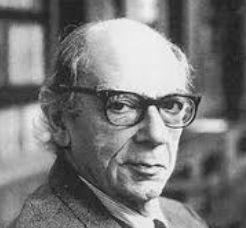
2 months 1 week ago
The very desire for guarantees that our values are eternal and secure in some objective heaven is perhaps only a craving for the certainties of childhood or the absolute values of our primitive past.

4 months 2 weeks ago
Creationists make it sound as though a "theory" is something you dreamt up after being drunk all night.

4 months 4 days ago
We know, that of all living beings man is the best formed, and, as the gods belong to this number, they must have a human form. ... I do not mean to say that the gods have body and blood in them; but I say that they seem as if they had bodies with blood in them. . . , Epicurus, for whom hidden things were as tangible as if he had touched them with his finger, teaches us that gods are not generally visible, but that they are intelligible; that they are not bodies having a certain solidity . . . but that we can recognize them by their passing images; that as there are atoms enough in the infinite space to produce such images, these are produced before us . . . and make us realize what are these happy, immortal beings.
▼
Source
source
Book I, Section 18

4 months 2 weeks ago
Art furnishes us with eyes and hands and above all the good conscience to be able to turn ourselves into such a phenomenon.

2 months 2 weeks ago
Situation seems to be the mould in which men's characters are formed.
▼
Source
source
Letter 23

3 months 2 weeks ago
Clichés, stock phrases, adherence to conventional, standardized codes of expression and conduct have the socially recognized function of protecting us against reality.
▼
Source
source
p. 4

2 months 3 weeks ago
As the past has ceased to throw its light upon the future, the mind of man wanders in obscurity. Variant translation: When the past no longer illuminates the future, the spirit walks in darkness.
▼
Source
source
Book Four, Chapter VIII
2 months 1 week ago
The only thing the young should be taught is that there is virtually nothing to be hoped for from life. One dreams of a Catalogue of Disappointments which would include all the disillusionments reserved for each and every one of us, to be posted in the schools.

3 months 2 weeks ago
If you punish him for what he sees you practise yourself, he... will be apt to interpret it the peevishness and arbitrary imperiousness of a father, who, without any ground for it, would deny his son the liberty and pleasure he takes himself.
▼
Source
source
Sec. 71



1 day ago
The mind must be indulged, and leisure must be given from time to time, which is the place of food and strength.

1 week 1 day ago
The spoken Word, the written Poem, is said to be an epitome of the man; how much more the done Work. Whatsoever of morality and of intelligence; what of patience, perseverance, faithfulness, of method, insight, ingenuity, energy; in a word, whatsoever of Strength the man had in him will lie written in the Work he does. To work: why, it is to try himself against Nature, and her everlasting unerring Laws; these will tell a true verdict as to the man.
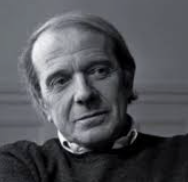
1 month 3 weeks ago
A book is a small cog in a much more complex, external machinery. Writing is a flow among others; it enjoys no special privilege and enters into relationships of current and counter-current, of back-wash with other flows - the flows of shit, sperm, speech, action, eroticism, money, politics, etc. Like Bloom, writing on the sand with one hand and masturbating with the other - two flows in what relationship?
▼
Source
source
from I have Nothing to Admit

2 months 1 week ago
You have heard that it was said to those of old, 'You shall not commit adultery.' But I say to you that whoever looks at a woman to lust for her has already committed adultery with her in his heart. If your right eye causes you to sin, pluck it out and cast it from you; for it is more profitable for you that one of your members perish, than for your whole body to be cast into hell. And if your right hand causes you to sin, cut it off and cast it from you; for it is more profitable for you that one of your members perish, than for your whole body to be cast into hell.
▼
Source
source
Exodus 20:14, Seventh Commandment Matthew 5:27-30 (NKJV)

1 month 4 weeks ago
Perhaps even more than constituted authority, it is social uniformity and sameness that harass the individual most. His very "uniqueness," "separateness" and "differentiation" make him an alien, not only in his native place, but even in his own home. Often more so than the foreign born who generally falls in with the established. In the true sense one's native land, with its back ground of tradition, early impressions, reminiscences and other things dear to one, is not enough to make sensitive human beings feel at home. A certain atmosphere of "belonging," the consciousness of being "at one" with the people and environment, is more essential to one's feeling of home. This holds good in relation to one's family, the smaller local circle, as well as the larger phase of the life and activities commonly called one's country. The individual whose vision encompasses the whole world often feels nowhere so hedged in and out of touch with his surroundings than in his native land.
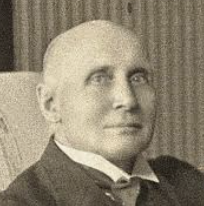
2 months 1 day ago
Epochs do not rise from the dead.... [W]hereas you can make a replica of an ancient statue, there is no possible replica of an ancient state of mind. There can be no nearer approximation than that which a masquerade bears to real life. There may be understanding of the past, but there is a difference between the modern and the ancient reactions to the same stimuli.
▼
Source
source
Ch. 9: "Science and Philosophy", p. 194

2 months 1 week ago
The consciousness of a general idea has a certain "unity of the ego" in it, which is identical when it passes from one mind to another. It is, therefore, quite analogous to a person, and indeed, a person is only a particular kind of general idea.
▼
Source
source
Man's Glassy Essence in The Monist, Vol. III, No. 1
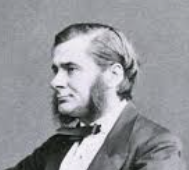
1 month 2 days ago
The only medicine for suffering, crime, and all the other woes of mankind, is wisdom.

2 months 3 weeks ago
Your god is too small.
▼
Source
source
Attributed to Bruno in episode 1 of Cosmos: A Spacetime Odyssey (2014). Earliest use of this phrase appears to be in Your God is Too Small (1961) by English priest John Bertram Phillips.

3 months 3 weeks ago
The mariner of old said to Neptune in a great tempest, "O God! thou mayest save me if thou wilt, and if thou wilt thou mayest destroy me; but whether or no, I will steer my rudder true."
▼
Source
source
Book II, Ch. 16. Of Glory
2 months 3 days ago
Martyrs create faith, faith does not create martyrs.
1 month 4 weeks ago
This perversion of the ethical values soon crystallized into the all-dominating slogan of the Communist Party: THE END JUSTIFIES ALL MEANS. Similarly in the past the Inquisition and the Jesuits adopted this motto and subordinated to it all morality. It avenged itself upon the Jesuits as it did upon the Russian Revolution. In the wake of this slogan followed lying, deceit, hypocrisy and treachery, murder, open and secret. It should be of utmost interest to students of social psychology that two movements as widely separated in time and ideas as Jesuitism and Bolshevism reached exactly similar results in the evolution of the principle that the end justifies all means. The historic parallel, almost entirely ignored so far, contains a most important lesson for all coming revolutions and for the whole future of mankind.
4 months 2 weeks ago
I accept nothing on authority. A hypothesis must be backed by reason, or else it is worthless.
2 months 1 week ago
I am the resurrection and the life. The one who exercises faith in me, even though he dies, will come to life; and everyone who is living and exercises faith in me will never die at all.
▼
Source
source
11:25-26, NWT
1 week 4 days ago
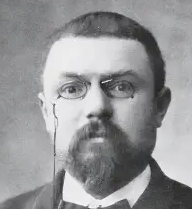
We should say: 'Causes almost identical take almost the same time to produce almost the same effects.'

2 months ago
The smartphone seems to be a playground, but it is a digital panopticon.
2 months 3 weeks ago
I am obliged to confess that I do not regard the abolition of slavery as a means of warding off the struggle of the two races in the Southern states. The Negroes may long remain slaves without complaining; but if they are once raised to the level of freemen, they will soon revolt at being deprived of almost all their civil rights; and as they cannot become the equals of the whites, they will speedily show themselves as enemies.
▼
Source
source
Chapter XVIII.
2 months 1 week ago
It is written again, Thou shalt not tempt the Lord thy God.
▼
Source
source
4:7 (KJV) Said to Satan. The reference is to Deuteronomy 6:16, "Ye shall not tempt the Lord your God, as ye tempted him in Massah." (KJV)

1 month 2 weeks ago
The Churches as Churches have always been and cannot fail to be institutions not only alien to, but directly hostile towards, Christ's teaching.
▼
Source
source
Chapter III, Christianity Misunderstood by Believers
3 months 3 weeks ago
It is the mind that maketh good or ill, That maketh wretch or happy, rich or poor.
2 months 3 days ago
If a philosopher is not a man, he is anything but a philosopher; he is above all a pedant, and a pedant is a caricature of a man. The cultivation of any branch of science - of chemistry, of physics, of geometry, of philology - may be a work of differentiated specialization, and even so, only within very narrow limits and restrictions; but philosophy, like poetry, is a work of integration and synthesis, or else it is merely pseudo-philosophical erudition.

1 month 2 weeks ago
An utterance can have Intentionality, just as a belief has Intentionality, but whereas the Intentionality of the belief is intrinsic the Intentionality of the utterance is derived.
▼
Source
source
P. 27.
2 months 1 week ago
Wherefore I say unto you, All manner of sin and blasphemy shall be forgiven unto men: but the blasphemy against the Holy Ghost shall not be forgiven unto men. And whosoever speaketh a word against the Son of man, it shall be forgiven him: but whosoever speaketh against the Holy Ghost, it shall not be forgiven him, neither in this world, neither in the world to come.
▼
Source
source
(Matthew 12:31-32) (KJV)
2 months ago
Today, tattoos lack symbolic power. All they do is point toward the uniqueness of the bearer. The body is neither a ritual stage nor a surface of projection; rather, it is an advertising space.

2 months 2 weeks ago
I have in general no very exalted opinion of the virtue of paper government.

3 months 2 weeks ago
Fanaticism is the danger of the world, and always has been, and has done untold harm. I might almost say that I was fanatical against fanaticism.
▼
Source
source
The Future of Science (1959), p. 79; also in BBC The Listener, Vol. 61 (1959), p. 505

3 months 2 weeks ago
By this means all knowledge degenerates into probability; and this probability is greater or less, according to our experience of the veracity or deceitfulness of our understanding, and according to the simplicity or intricacy of the question.
▼
Source
source
Part 4, Section 1

3 months 1 week ago
My aim is not to provide excuses for black behavior or to absolve blacks of personal responsibility. But when the new black conservatives accent black behavior and responsibility in such a way that the cultural realities of black people are ignored, they are playing a deceptive and dangerous intellectual game with the lives and fortunes of disadvantaged people. We indeed must criticize and condemn immoral acts of black people, but we must do so cognizant of the circumstances into which people are born and under which they live. By overlooking these circumstances, the new black conservatives fall into the trap of blaming black poor people for their predicament. It is imperative to steer a course between the Scylla of environmental determinism and the Charybdis of a blaming-the-victims perspective.
▼
Source
source
(p56)

3 months 2 weeks ago
The application of algebra to geometry... far more than any of his metaphysical speculations, has immortalized the name of Descartes, and constitutes the greatest single step ever made in the progress of the exact sciences.
▼
Source
source
An Examination of Sir William Hamilton's Philosophy (1865) as quoted in 5th ed. (1878) p. 617.
2 months 2 weeks ago
It is of great importance to observe that the character of every man is, in some degree, formed by his profession. A man of sense may only have a cast of countenance that wears off as you trace his individuality, whist the weak, common man has scarcely ever any character, but what belongs to the body; at least, all his opinions have been so steeped in the vat consecrated by authority, that the faint spirit which the grape of his own vine yields, cannot be distinguished.
▼
Source
source
Ch. 1

3 months 2 weeks ago
Brutes are merely brutal; men and women are capable of being devils and lunatics. They are no less capable of being fully human-even, occasionally, of being a bit more than fully human, of being saints, heroes and geniuses.
▼
Source
source
Introduction to You Are Not The Target by Laura Archera Huxley, 1963

4 months 1 week ago
All systems of morality are based on the idea that an action has consequences that legitimize or cancel it. A mind imbued with the absurd merely judges that those consequences must be considered calmly. It is ready to pay up. In other words, there may be responsible persons, but there are no guilty ones, in its opinion. At very most, such a mind will consent to use past experience as a basis for its future actions.

3 months 2 weeks ago
Language is a city to the building of which every human being brought a stone; yet he is no more to be credited with the grand result than the acaleph which adds a cell to the coral reef which is the basis of the continent.
▼
Source
source
Quotation and Originality
1 month 2 weeks ago
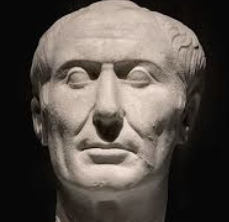
We desire nothing so much as what we ought not to have.
▼
Source
source
Maxim 559 [Mimi et aliorum sententiae 677]

1 month 2 weeks ago
Our design, not respecting arts, but philosophy, and our subject, not manual, but natural powers, we consider chiefly those things which relate to gravity, levity, elastic force, the resistance of fluids, and the like forces, whether attractive or impulsive; and therefore we offer this work as mathematical principles of philosophy; for all the difficulty of philosophy seems to consist in this - from the phenomena of motions to investigate the forces of nature, and then from these forces to demonstrate the other phenomena...
▼
Source
source
Preface
3 months 2 weeks ago
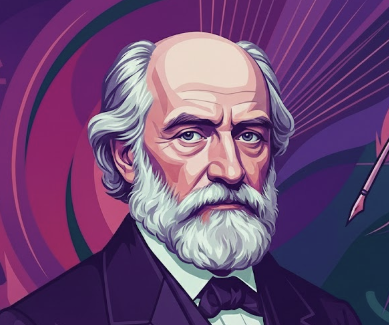
Dissimulation is innate in woman, and almost as much a quality of the stupid as of the clever.
▼
Source
source
"Of Women"

CivilSimian.com created by AxiomaticPanic, CivilSimian, Kalokagathia