

2 months 4 weeks ago
I will begin to speak when I am not going to say what were better left unsaid.
▼
Source
source
Quoted by Plutarch, Life of Cato the Younger, 4 Bernadotte Perrin, ed. Plutarch's Lives, Vol. 8, LCL 100 (1919), pp. 247, 361

3 months 1 week ago
...in order to change poverty into wealth, one must start by displaying it.
▼
Source
source
p. 420
2 months 4 weeks ago
It is difficult to speak of the universal specifically.
▼
Source
source
Line 128

3 months 2 weeks ago
For Christ is Joy and Sweetness to a broken heart. Christ is a Lover of poor sinners, and such a Lover that He gave Himself for us. Now if this is true, and it is true, then are we never justified by our own righteousness.
▼
Source
source
Chapter 3, verse 20
3 months 1 week ago
The extreme nature of dominant-end views is often concealed by the vagueness and ambiguity of the end proposed.
▼
Source
source
Chapter IX, Section 83, p. 554

3 months 3 weeks ago
If you well apprehend and keep in mind these things, nature free at once and rid of her haughty lords is seen to do all things spontaneously of herself without the meddling of the gods.
▼
Source
source
Book II, lines 1090-1092 (tr. Munro)
4 months 1 week ago
An atom blaster is a good weapon, but it can point both ways.

1 month 3 weeks ago
We believe we are rising because while keeping the same base inclinations (for instance: the desire to triumph over others) we have given them a noble object. We should, on the contrary, rise by attaching noble inclinations to lowly objects.
▼
Source
source
La pesanteur et la grâce (1948), p. 61
1 month 1 week ago
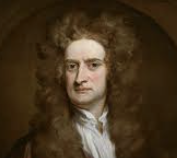
Our design, not respecting arts, but philosophy, and our subject, not manual, but natural powers, we consider chiefly those things which relate to gravity, levity, elastic force, the resistance of fluids, and the like forces, whether attractive or impulsive; and therefore we offer this work as mathematical principles of philosophy; for all the difficulty of philosophy seems to consist in this - from the phenomena of motions to investigate the forces of nature, and then from these forces to demonstrate the other phenomena...
▼
Source
source
Preface
1 month 2 weeks ago
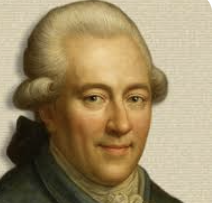
To do the opposite of something is also a form of imitation, namely an imitation of its opposite.
▼
Source
source
D 96 Variant translation: To do just the opposite is also a form of imitation.

3 months 1 week ago
There is only one way to science-or to philosophy... to meet a problem, to see its beauty and fall in love with it; to get married to it, and to live with it happily, till death do ye part-unless you should meet another... more fascinating problem, or... obtain a solution. But even if you do... you may... discover, to your delight, the... a whole family of enchanting... perhaps difficult problem children for whose welfare you may work, with a purpose, to the end of your days.
2 days ago
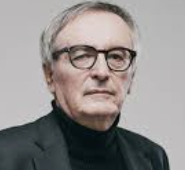
The history of utopias is no less fascinating than the history of metallurgy or of chemical engineering.
▼
Source
source
New Preface, p. vi
2 weeks 2 days ago
Echoing the Christian faith in free will, humanists hold that human beings are - or may someday become - free to choose their lives. They forget that the self that does the choosing has not itself been chosen.
▼
Source
source
Beyond the Last Thought: Freud's cigars and the long way round to Nirvana (p. 86)
1 month 3 weeks ago
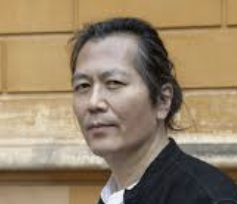
Emptiness simply prevents what is individual from insisting on itself.
1 month 2 days ago
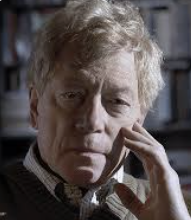
Conservatives believe that our identities and values are formed through our relations with other people, and not through our relation with the state. The state is not an end but a means. Civil society is the end, and the state is the means to protect it. The social world emerges through free association, rooted in friendship and community life. And the customs and institutions that we cherish have grown from below, by the 'invisible hand' of co-operation. They have rarely been imposed from above by the work of politics, the role of which, for a conservative, is to reconcile our many aims, and not to dictate or control them.
▼
Source
source
"Stand up for the real meaning of freedom," The Spectator
2 months 2 days ago
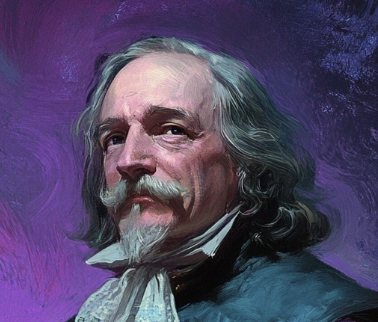
As for [...] Of all passions, that which inclineth men least to break the laws is fear.
▼
Source
source
The Second Part, Chapter 27

3 months 1 week ago
I'm afraid of losing my obscurity. Genuineness only thrives in the dark. Like celery.
▼
Source
source
Those Barren Leaves, 1925
3 weeks 4 days ago
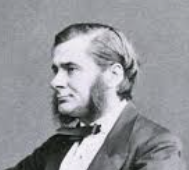
The great end of life is not knowledge but action.
▼
Source
source
"Technical Education"

3 months 1 week ago
When I come to my own beliefs, I find myself quite unable to discern any purpose in the universe, and still more unable to wish to discern one.
▼
Source
source
"Is There a God?", 1952

1 month 1 week ago
The business of art is no longer the communication of thoughts or feelings which are to be conceptually ordered, but a direct participation in an experience. The whole tendency of modern communication...is towards participation in a process, rather than apprehension of concepts.
▼
Source
source
Letter to Harold Adam Innis (14 March 1951), published in Essential McLuhan (1995), edited by Eric McLuhan and Frank Zingrone, p. 73

3 months 5 days ago
Frazer is much more savage than most of his savages, for they are not as far removed from the understanding of spiritual matter as a twentieth-century Englishman. His explanations of primitive practices are much cruder than the meaning of these practices themselves.
▼
Source
source
Ch. 7 : Remarks on Frazer's Golden Bough, p. 131
3 months 1 week ago
The past alone is truly real: the present is but a painful, struggling birth into the immutable being of what is no longer. Only the dead exist fully. The lives of the living are fragmentary, doubtful, and subject to change; but the lives of the dead are complete, free from the sway of Time, the all but omnipotent lord of the world. Their failures and successes, their hopes and fears, their joys and pains, have become eternal-our efforts cannot now abate one jot of them. Sorrows long buried in the grave, tragedies of which only a fading memory remains, loves immortalized by Death's hallowing touch these have a power, a magic, an untroubled calm, to which no present can attain. ...On the banks of the river of Time, the sad procession of human generations is marching slowly to the grave; in the quiet country of the Past, the march is ended, the tired wanderers rest, and the weeping is hushed.
▼
Source
source
On History, 1904

3 months 1 week ago
Nature is satisfied with little; and if she is, I am also.
▼
Source
source
As quoted in The Story of Philosophy (1933) by Will Durant, p. 176

2 months 5 days ago
A gifted humanity can only produce skeptics, never saints.
2 months 5 days ago
How can you know if you are in the truth? The criterion is simple enough: if others make a vacuum around you, there is not a doubt in the world that you are closer to the essential than they are.

3 months 1 week ago
There is a kind of latent omniscience not only in every man but in every particle.
▼
Source
source
p. 263

1 month 3 weeks ago
Sadism is plainly connected with the need for self-assertion. At the same time it cannot be separated from the idea of defeat. A sadist is a man, who, in some sense, has his back to the wall. Nothing is further from sadism, for example, than the cheerful, optimistic mentality of a Shaw or Wells.
▼
Source
source
p. 158

3 months 1 week ago
He [God] lends us a little of His reasoning powers and that is how we think: He puts a little of His love into us and that is how we love one another. When you teach a child writing, you hold its hand while it forms the letters: that is, it forms the letters because you are forming them. We love and reason because God loves and reasons and holds our hand while we do it.
▼
Source
source
Book II, Chapter 4, "The Perfect Penitent"

3 months 4 weeks ago
Cornered vessel without corners, strange cornered vessel, strange cornered vessel.

1 month 1 week ago
In the upper, rich, more educated classes of European society doubt arose as to the truth of that understanding of life which was expressed by Church Christianity. When, after the Crusades and the maximum development of papal power and its abuses, people of the rich classes became acquainted with the wisdom of the classics and saw, on the one hand, the reasonable lucidity of the teachings of the ancient sages, and on the other hand, the incompatibility of the Church doctrine with the teaching of Christ, they found it impossible to continue to believe the Church teaching.

2 months 1 week ago
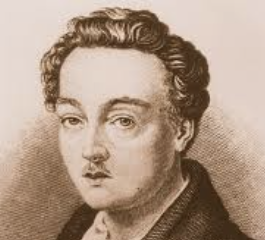
The revolution must end and the republic must begin. In our constitution, right must take the place of duty, welfare that of virtue, and self-defense that of punishment. Everyone must be able to prevail and to live according to one's own nature.
▼
Source
source
Act I.

2 months 1 week ago
I go to spread the tidings, I want to spread the tidings - of what? Of the truth, for I have seen it, have seen it with my own eyes, have seen it in all its glory.

2 months 2 days ago
It is written again, Thou shalt not tempt the Lord thy God.
▼
Source
source
4:7 (KJV) Said to Satan. The reference is to Deuteronomy 6:16, "Ye shall not tempt the Lord your God, as ye tempted him in Massah." (KJV)
3 months 1 week ago
Much of the modern resistance to chastity comes from men's belief that they "own" their bodies - those vast and perilous estates, pulsating with the energy that made the worlds, in which they find themselves without their consent and from which they are ejected at the pleasure of Another!
▼
Source
source
Letter XXI
2 months 2 weeks ago
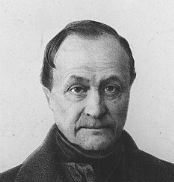
There are three successive states of morality answering to the three principal stages of human life; the personal, the domestic, and the social stage.
▼
Source
source
p. 104
2 months 4 weeks ago
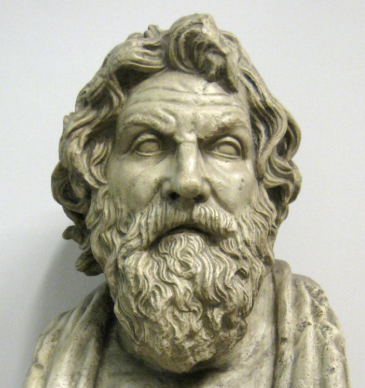
States are doomed when they are unable to distinguish good men from bad.
▼
Source
source
§ 5
1 month 3 weeks ago
Following Foucault, we may define the art of life as a practice of suicide, of giving oneself to death, of depsychologizing oneself, of playing.
1 month 3 weeks ago
It is within science itself, and not in some prior philosophy, that reality is to be identified and described.
▼
Source
source
Theories and Things, Cambridge, MA: Harvard University Press. 1981
1 month 1 week ago
After Plotinus, says Schassler, fifteen centuries passed without the slightest scientific interest for the world of beauty and art. ...In reality, nothing of the kind happened. The science of aesthetics ... neither did nor could vanish, because it never existed. ... the Greeks were so little developed that goodness and beauty seemed to coincide. On that obsolete Greek view of life the science of aesthetics was invented by men of the eighteenth century, and especially shaped and mounted in Baumgarten's theory. The Greeks (as anyone may read in Bénard's book on Aristotle and Walter's work on Plato) never had a science of aesthetics.
1 month 2 weeks ago
In the process of decision those alternatives are chosen which are considered to be appropriate means of reaching desired ends. Ends themselves, however, are often merely instrumental to more final objectives. We are thus led to the conception of a series, or hierarchy, of ends. Rationality has to do with the construction of means-ends chains of this kind.
▼
Source
source
p. 62.
3 months 1 week ago
All things living are in search of a better world.
▼
Source
source
Preface
3 days ago
I do not feel obliged to believe that the same God who has endowed us with senses, reason, and intellect has intended us to forgo their use and by some other means to give us knowledge which we can attain by them.
3 months 1 week ago
It is freedom, it is particularity, it is solitude that we are aiming at, and not Evil for its own sake.
▼
Source
source
p. 179
1 month 3 weeks ago
The history of other cultures is non-existent until it erupts in confrontation with the United States.
▼
Source
source
Chap 4, Sect 2
2 months ago
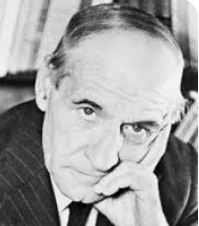
This grave dissociation of past and present is the generic fact of our time and the cause of the suspicion, more or less vague, which gives rise to the confusion characteristic of our present-day existence. We feel that we actual men have suddenly been left alone on the earth; that the dead did not die in appearance only but effectively; that they can no longer help us. Any remains of the traditional spirit have evaporated. Models, norms, standards are no use to us. We have to solve our problems without any active collaboration of the past, in full actuality, be they problems of art, science, or politics. The European stands alone, without any living ghosts by his side; like Peter Schlehmil he has lost his shadow. This is what always happens when midday comes.
▼
Source
source
"The Dehumanisation of Art"; Ortega y Gasset later used this passage in The Revolt of the Masses (1929), quoting it in Ch. III: The Height Of The Times

3 months 2 weeks ago
And to bring in a new word by the head and shoulders, they leave out the old one.
▼
Source
source
Book III, Ch. 5. Upon some Verses of Virgil

3 months 1 week ago
Nothing is so much to be feared as fear. Atheism may comparatively be popular with God himself.
▼
Source
source
September 7, 1851
3 months 1 week ago
A mother gave her children Aesop's fables to read, in the hope of educating and improving their minds; but they very soon brought the book back, and the eldest, wise beyond his years, delivered himself as follows: This is no book for us; it's much too childish and stupid. You can't make us believe that foxes and wolves and ravens are able to talk; we've got beyond stories of that kind! In these young hopefuls you have the enlightened Rationalists of the future.
▼
Source
source
"Similes, Parables and Fables" Parerga and Paralipomena

4 months 1 week ago
Christ speaks of two debtors, one of whom owed much and the other little, and who both found forgiveness. He asks: Which of these two ought to love more? The answer: The one who has forgiven much. When you love much, you are forgiven much-and when you are forgiven much, you love much. See here the blessed recurrence of salvation in love!
CivilSimian.com created by AxiomaticPanic, CivilSimian, Kalokagathia