


2 months 1 week ago
Architecture, sculpture, painting, music, and poetry, may truly be called the efflorescence of civilised life.
▼
Source
source
Education: What Knowledge Is of Most Worth?
3 weeks 3 days ago
History warns us, however, that it is the customary fate of new truths to begin as heresies and to end as superstitions; and, as matters now stand, it is hardly rash to anticipate that, in another twenty years, the new generation, educated under the influences of the present day, will be in danger of accepting the main doctrines of the 'Origin of Species' with as little reflection, and it may be with as little justification, as so many of our contemporaries, twenty years ago, rejected them. Against any such a consummation let us all devoutly pray; for the scientific spirit is of more value than its products, and irrationally held truths may be more harmful than reasoned errors.
▼
Source
source
The Coming of Age of The Origin of Species (1880); Collected Essays, vol. 2
1 day ago
Rosa Luxemburg is an outstanding example of a type of mind that is often met with in the history of Marxism and appears to be specially attracted by the Marxist outlook. It is characterized by slavish submission to authority, together with a belief that in that submission the values of scientific thought can be preserved. No doctrine was so well suited as Marxism to satisfy both these attitudes, or to provide a mystification combining extreme dogmatism with the cult of "scientific" thinking, in which the disciple could find mental and spiritual peace. Marxism thus played the part of a religion for the intelligentsia, which did not prevent some of them, like Rosa Luxemburg herself, from trying to improve the deposit of faith by reverting to first principles, thus strengthening their own belief that they were independent of dogma.
▼
Source
source
(pp. 94-5)

4 months 6 days ago
Where any answer is possible, all answers are meaningless.
3 months 1 week ago
The question here is not, "How conscience ought to be guided? For Conscience is its own General and Leader; it is therefore enough that each man have one. What we want to know is, how conscience can be her own Ariadne, and disentangle herself from the mazes even of the most raveled and complicated casuistical theology. Here is an ethical proposition that stands in need of no proof: No Action May At Any Time Be Hazarded On The Uncertainty That Perchance It May Not Be Wrong (Quod dubitas, ne feceris! Pliny - which you doubt, then neither do) Hence the Consciousness, that Any Action I am about to perform is Right, is in itself a most immediate and imperative duty. What actions are right, - what wrong - is a matter for the understanding, not for conscience.
▼
Source
source
p. 251 Book IV, Part 2, Section 4

3 months 1 week ago
It is impossible to pursue this nonsense any further.
▼
Source
source
(Bastiat and Carey), p. 813 (last text page, second last line).


2 months 4 days ago
As art sinks into paralysis, artists multiply. This anomaly ceases to be one if we realize that art, on its way to exhaustion, has become both impossible and easy.

3 months 1 week ago
Look for yourself, and you will find in the long run only hatred, loneliness, despair, rage, ruin, and decay. But look for Christ and you will find Him, and with Him everything else thrown in.
▼
Source
source
Book IV, Chapter 10, "The New Men"
3 months 1 week ago
I did not know the way in which, among the ordinary English, the absence of interest in things of an unselfish kind, except occasionally in a special thing here and there, and the habit of not speaking to others, nor much even to themselves, about the things in which they do feel interest, causes both their feelings and their intellectual faculties to remain undeveloped, or to develope themselves only in some single and very limited direction; reducing them, considered as spiritual beings, to a kind of negative existence.
▼
Source
source
(p. 59)
3 months 3 days ago
No one gets angry at a mathematician or a physicist whom he or she doesn't understand at all, or at someone who speaks a foreign language, but rather at someone who tampers with your own language, with this 'relation,' precisely, which is yours.
▼
Source
source
Derrida Jacques, Elisabeth Weber (1995), Points...: Interviews, 1974-1994. p. 115

1 month 1 week ago
Seize the moments of happiness, love and be loved! That is the only reality in the world, all else is folly. It is the one thing we are interested in here.
▼
Source
source
Book IV, Ch. 11
1 month 3 weeks ago
Some philosophers fail to distinguish propositions from judgments; ... But in the real world it is more important that a proposition be interesting than that it be true. The importance of truth is that it adds to interest.
▼
Source
source
p. 259.
1 month 2 days ago
What ideas individuals may attach to the term "Millennium" I know not; but I know that society may be formed so as to exist without crime, without poverty, with health greatly improved, with little, if any misery, and with intelligence and happiness increased a hundredfold; and no obstacle whatsoever intervenes at this moment except ignorance to prevent such a state of society from becoming universal.
2 weeks 3 days ago
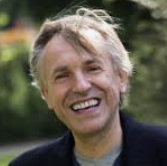
Our present-day neurochemical cocktail, we are asked to believe, is the medium through which alien realms of consciousness can be grasped and neutrally appraised from a third-person perspective. Empirical research suggests this optimism is at best naïve.
▼
Source
source
Storming Heaven: LSD and the American Dream, BLTC Research

3 months 1 week ago
Catherine: Why commit Evil? Goetz: Because Good has already been done. Catherine: Who has done it? Goetz: God the Father. I, on the other hand, am improvising.
▼
Source
source
Act 3, sc. 4
2 months 4 days ago
One would have to be as unenlightened as an angel or an idiot to imagine that the human escapade could turn out well.
3 months 1 week ago
I live in the Managerial Age, in a world of "Admin." The greatest evil is not now done in those sordid "dens of crime" that Dickens loved to paint. It is not done even in concentration camps and labour camps. In those we see its final result. But it is conceived and ordered (moved, seconded, carried, and minuted) in clean, carpeted, warmed, and well-lighted offices, by quiet men with white collars and cut fingernails and smooth-shaven cheeks who do not need to raise their voice. Hence, naturally enough, my symbol for Hell is something like the bureaucracy of a police state or the offices of a thoroughly nasty business concern.
▼
Source
source
1961 Preface
2 months 3 weeks ago
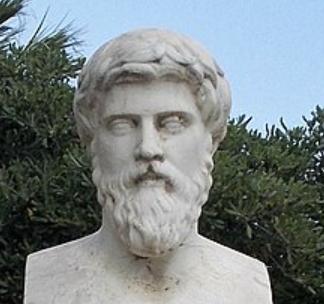
For many, as Cranton tells us, and those very wise men, not now but long ago, have deplored the condition of human nature, esteeming life a punishment, and to be born a man the highest pitch of calamity; this, Aristotle tells us, Silenus declared when he was brought captive to Midas.
2 months 4 days ago
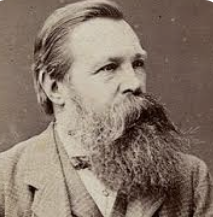
The abolition of private property is, doubtless, the shortest and most significant way to characterize the revolution in the whole social order which has been made necessary by the development of industry - and for this reason it is rightly advanced by communists as their main demand.

3 months 2 weeks ago
Do not be guilty of possessing a library of learned books while lacking learning yourself.
▼
Source
source
Letter to Christian Northoff (1497), as translated in Collected Works of Erasmus (1974), p. 115
2 months 5 days ago
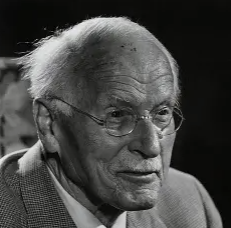
When animus and anima meet, the animus draws his sword of power and the anima ejects her poison of illusion and seduction. The outcome need not always be negative, since the two are equally likely to fall in love (a special instance of love at first sight).
▼
Source
source
Aion (1951). CW 9, Part II: P.338.30
3 weeks 3 days ago
So far as cerebral structure goes... it is clear that Man differs less from the Chimpanzee or the Orang, than these do even from the Monkeys, and that the difference between the brains of the Chimpanzee and of Man is almost insignificant, when compared with that between the Chimpanzee brain and that of a Lemur.
▼
Source
source
Ch.2, p. 120

3 months 1 week ago
If you're certain, you're certainly wrong, because nothing deserves certainty.
▼
Source
source
Bertrand Russell Speaks His Mind (1960), p. 14 (video)

3 months 1 week ago
I mean, a genuinely productive society. I mean you could produce plenty of goods without much freedom, but I think the whole sort of creative life of man is ultimately impossible without a considerable measure of individual freedom, of initiative, creation, all these things which we value, and I think value properly, are impossible without a large measure of freedom.

3 months 4 days ago
Never stay up on the barren heights of cleverness, but come down into the green valleys of silliness.
▼
Source
source
p. 76e
2 months 5 days ago
The dream is the small hidden door in the deepest and most intimate sanctum of the soul, which opens to that primeval cosmic night that was soul long before there was conscious ego and will be soul far beyond what a conscious ego could ever reach.
▼
Source
source
The Meaning of Psychology for Modern Man
2 months 1 day ago
My atheism, like that of Spinoza, is true piety towards the universe and denies only gods fashioned by men in their own image, to be servants of their human interests.
▼
Source
source
"On My Friendly Critics"

2 months 4 weeks ago
A life without a holiday is like a long journey without an inn to rest at.
2 months 1 day ago
The transition from Hegel to Marx is, in all respects, a transition to an essentially different order of truth, no to be interpreted in terms of philosophy. We shall see that all the philosophical concepts of Marxian theory are social and economic categories, whereas Hegel's social and economic categories are all philosophical concepts.
▼
Source
source
P. 258
1 month 2 days ago
It is therefore, the interest of all, that every one, from birth, should be well educated, physically and mentally, that society may be improved in its character, - that everyone should be beneficially employed, physically and mentally, that the greatest amount of wealth may be created, and knowledge attained, - that everyone should be placed in the midst of those external circumstances that will produce the greatest number of pleasurable sensations, through the longest life, that man may be made truly intelligent, moral and happy, and be thus prepared to enter upon the coming Millennium.
▼
Source
source
A Development of the Principles & Plans on which to establish self-supporting Home Colonies
3 months 1 week ago
Better to have beasts that let themselves be killed than men who run away.
▼
Source
source
Act 11, sc. 2
1 month 2 weeks ago
Most of the propositions that make up the body of administrative theory today share, unfortunately, this defect of proverbs. For almost every principle one can find an equally plausible and acceptable contradictory principle.
▼
Source
source
Simon, Herbert A. "The proverbs of administration." Public Administration Review 6.1 (1946): 53-67.
3 months 1 week ago
I am ashamed of belonging to the species Homo Sapiens...You & I may be thankful to have lived in happier times - you more than I, because you have no children.
▼
Source
source
Letter to Lucy Donnelly, 6/23/1946
2 months 6 days ago
Every state, like every theology, assumes man to be fundamentally bad and wicked.
▼
Source
source
As quoted in Michael Bakunin (1937), E.H. Carr, p. 453

3 months 1 week ago
Indeed, history is nothing more than a tableau of crimes and misfortunes.
▼
Source
source
L'Ingénu, ch.10 (1767) Quoted in The End, part 13 of A Series of Unfortunate Events
1 month 2 weeks ago
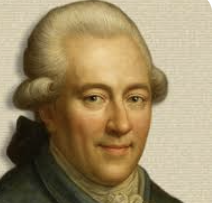
It is we who are the measure of what is strange and miraculous: if we sought a universal measure the strange and miraculous would not occur and all things would be equal.
▼
Source
source
A 26
1 month 4 days ago
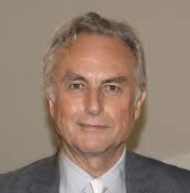
Faith is the great cop-out, the great excuse to evade the need to think and evaluate evidence. Faith is belief in spite of, even perhaps because of, the lack of evidence.
▼
Source
source
From speech at the Edinburgh International Science Festival, 1992-04-15.

3 months 1 week ago
It would be too ridiculous to go about seriously to prove that wealth does not consist in money, or in gold and silver; but in what money purchases, and is valuable only for purchasing. Money no doubt, makes always a part of the national capital; but it has already been shown that it generally makes but a small part, and always the most unprofitable part of it.
▼
Source
source
Chapter I, p. 470.
4 months 6 days ago
Start with a planet like the earth, with a complement of simple compounds bound to exist upon it, add the energy of a nearby sun, and you are bound to end with nucleic acids. You can't avoid it.

1 month 6 days ago
I heard what you were saying. You - you know nothing of my work. You mean my whole fallacy is wrong. How you ever got to teach a course in anything is totally amazing.
▼
Source
source
Cameo appearance as himself in Woody Allen's 1977 film Annie Hall

1 month 3 weeks ago
The state of conformity is an imitation of grace. By a strange mystery - which is connected with the power of the social element - a profession can confer on quite ordinary men in their exercise of it, virtues which, if they were extended to all circumstances of life, would make of them heroes or saints. But the power of the social element makes these virtues natural.
▼
Source
source
Accordingly they need a compensation. p. 124

4 months 5 days ago
Outside of that single fatality of death, everything, joy or happiness, is liberty.

2 months 1 week ago
Not only does democracy make every man forget his ancestors, but also clouds their view of their descendants and isolates them from their contemporaries. Each man is for ever thrown back on himself alone, and there is danger that he may be shut up in the solitude of his own heart.
▼
Source
source
Book Two, Chapter II.
2 months 5 days ago
It is only natural that I should constantly have revolved in my mind the question of the relationship of the symbolism of the unconscious to Christianity as well as to other religions. Not only do I leave the door open for the Christian message, but I consider it of central importance for Western man. It needs, however, to be seen in a new light, in accordance with the changes wrought by the contemporary spirit.
2 months 1 day ago
Fanaticism consists in redoubling your efforts when you have forgotten your aim.
2 months 1 day ago
Because the peculiarity of man is that his machinery for reaction on external things has involved an imaginative transcript of these things, which is preserved and suspended in his fancy; and the interest and beauty of this inward landscape, rather than any fortunes that may await his body in the outer world, constitute his proper happiness. By their mind, its scope, quality, and temper, we estimate men, for by the mind only do we exist as men, and are more than so many storage-batteries for material energy. Let us therefore be frankly human. Let us be content to live in the mind.
▼
Source
source
p. 64

4 months 1 week ago
May I really say it! All truths are bloody truths to me, take a look at my previous writings.
3 months 2 weeks ago
All the passages in the Holy Scriptures that mention assistance are they that do away with "free-will", and these are countless...For grace is needed, and the help of grace is given, because "free-will" can do nothing.
▼
Source
source
p. 270
1 month 3 weeks ago
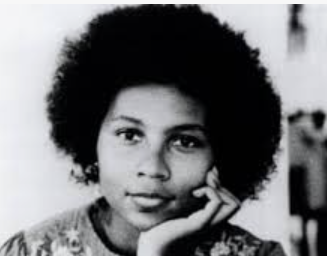
Feminism in the United States has never emerged from the women who are most victimized by sexist oppression; women who are daily beaten down, mentally, physically, and spiritually-women who are powerless to change their condition in life. They are a silent majority. A mark of their victimization is that they accept their lot in life without visible question, without organized protest, without collective anger or rage.
▼
Source
source
p. 1.
CivilSimian.com created by AxiomaticPanic, CivilSimian, Kalokagathia