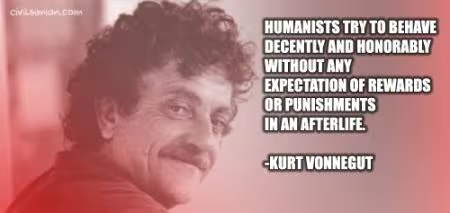
Caring about others....all you need to know....



I have been taught that the land should belong to those who till the soil. With all of his deep-seated sympathies with the Arabs, our comrade cannot possibly deny that the Jews in Palestine have tilled the soil. Tens of thousands of them, young and deeply devout idealists, have flocked to Palestine, there to till the soil under the most trying pioneer conditions. They have reclaimed wastelands and have turned them into fertile fields and blooming gardens. Now I do not say that therefore Jews are entitled to more rights than the Arabs, but for an ardent socialist to say that the Jews have no business in Palestine seems to me rather a strange kind of socialism.

Those who have been once intoxicated with power, and have derived any kind of emolument from it, even though but for one year, never can willingly abandon it. They may be distressed in the midst of all their power; but they will never look to any thing but power for their relief.

There is less trouble and trauma involved in writing a new piece than in trying to salvage an unsatisfactory old one.

The secret of happiness is to face the fact that the world is horrible, horrible, horrible.
The moment we choose to love we begin to move against domination, against oppression. The moment we choose to love we begin to move towards freedom, to act in ways that liberate ourselves and others.

As if there could be true stories: things happen in one way, and we retell them in the opposite way.

Whether, then, all ought not immediately to discontinue and renounce it, with grief and abhorrence? Should not every society bear testimony against it, and account obstinate persisters in it bad men, enemies to their country, and exclude them from fellowship; as they often do for much lesser faults?

Talking nonsense is man's only privilege that distinguishes him from all other organisms.

Patience cometh by the grace of the Soul.

"What's wrong - what's the matter with you?" Nothing, nothing's the matter, I've merely taken a leap outside my fate, and now I don't know where to turn, what to run for...
I do wish I believed in the life eternal, for it makes me quite miserable to think man is merely a kind of machine endowed, unhappily for himself, with consciousness.

We may become the makers of our fate when we have ceased to pose as its prophets.
A single observation that is inconsistent with some generalization points to the falsehood of the generalization, and thereby 'points to itself'.
By necrophilia is meant love for all that is violence and destruction; the desire to kill; the worship of force; attraction to death, to suicide, to sadism; the desire to transform the organic into the inorganic by means of "order." The necrophile, lacking the necessary qualities to create, in his impotence finds it easy to destroy because for him it serves only one quality: force.

I can die when I wish to: that is my elixir of life.

Opinions differ as to the reasons why he became the futile laborer of the underworld. To begin with, he is accused of a certain levity in regard to the gods. He stole their secrets.

You're either excluding the right people or including the wrong people.

We carry with us the wonders, we seek without us: There is all Africa, and her prodigies in us; we are that bold and adventurous piece of nature, which he that studies, wisely learns in a compendium, what others labour at in a divided piece and endless volume.

In order to correctly define art, it is necessary, first of all, to cease to consider it as a means to pleasure and consider it as one of the conditions of human life. ...Reflecting on it in this way, we cannot fail to observe that art is one of the means of affective communication between people.

You have heard that it was said, "Eye for eye, and tooth for tooth." But I tell you, do not resist an evil person. If someone strikes you on the right cheek, turn to him the other also. And if someone wants to sue you and take your tunic, let him have your cloak as well. If someone forces you to go one mile, go with him two miles.
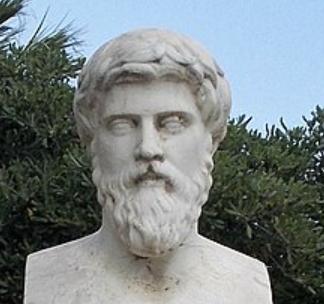
Valour, however unfortunate, commands great respect even from enemies: but the Romans despise cowardice, even though it be prosperous.

Every faculty in one man is the measure by which he judges of the like faculty in another. I judge of your sight by my sight, of your ear by my ear, of your reason by my reason, of your resentment by my resentment, of your love by my love. I neither have, nor can have, any other way of judging about them.
Fascism is not defined by the number of its victims, but by the way it kills them.

Thus parents, by humouring and cockering them when little, corrupt the principles of nature in their children, and wonder afterwards to taste the bitter waters, when they themselves have poison'd the fountain.


Men can be provincial in time, as well as in place.
When I was a boy, I had a clock with a pendulum that could be lifted off. I found that the clock went very much faster without the pendulum. If the main purpose of a clock is to go, the clock was the better for losing its pendulum. True, it could no longer tell the time, but that did not matter if one could teach oneself to be indifferent to the passage of time. The linguistic philosophy which cares only about language and not about the world, is like the boy who preferred the clock without the pendulum because, although it no longer told the time, it went more easily than before and at a more exhilarating pace.
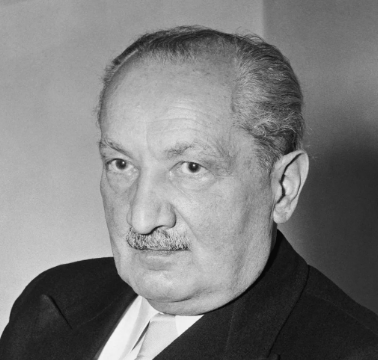
Enjoyment of the work consists in participation in the creative state of the artist.

The evidence of science and history is that humans are only ever partly and intermittently rational, but for modern humanists the solution is simple: human beings must in future be more reasonable. These enthusiasts for reason have not noticed that the idea that humans may one day be more rational requires a greater leap of faith than anything in religion. Since it requires a miraculous breach in the order of things, the idea that Jesus returned from the dead is not as contrary to reason as the notion that human beings will in future be different from how they have always been.

"I never believed in God before." - that I understand. But not: "I never really believed in Him before."
If you would be a good reader, read; if a writer, write.
Strange incongruities must ever perplex those, who confound the unhappiness of civil dissensions with the crime of treason.
The actor's realm is that of the fleeting.
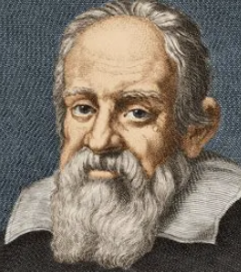
I cannot sufficiently admire the eminence of those men's wits, that have received and held it to be true, and with the sprightliness of their judgments offered such violence to their own senses, as that they have been able to prefer that which their reason dictated to them, to that which sensible experiments represented most manifestly to the contrary. ...I cannot find any bounds for my admiration, how that reason was able in Aristarchus and Copernicus, to commit such a rape on their senses, as in despite thereof to make herself mistress of their credulity.

Half of the human race lives in manifest obedience to the lunar rhythm; and there is evidence to show that the psychological and therefore the spiritual life, not only of women, but of men too, mysteriously ebbs and flows with the changes of the moon. There are unreasoned joys, inexplicable miseries, laughters and remorses without a cause. Their sudden and fantastic alternations constitute the ordinary weather of our minds. These moods, of which the more gravely numinous may be hypostasized as gods, the lighter, if we will, as hobgoblins and fairies, are the children of the blood and humours. But the blood and humours obey, among many other masters, the changing moon. Touching the soul directly through the eyes and, indirectly, along the dark channels of the blood, the moon is doubly a divinity.
In the course of my fight with the school, I couldn't help but notice that I became a pariah. [...] Once, however, a fellow faculty member, making sure we were unobserved, said to me, "Isaac, the faculty is proud of you for your courage in fighting the administration for academic freedom."I said, "There's no courage involved in it. Don't you know my definition of academic freedom?""No. What's your definition of academic freedom?"I said, "Independent income."

Not till then did his controllers allow him to suspect that death itself might not after all cure the illusion of being a soul-nay, might prove the entry into a world where that illusion raged infinite and unchecked. Escape for the soul, if not for the body, was offered him. He became able to know (and simultaneously refused the knowledge) that he had been wrong from the beginning, that souls and personal responsibility existed. He half saw: he wholly hated. The physical torture of the burning was not fiercer than his hatred of that.
In argument about moral problems, relativism is the first refuge of the scoundrel.

[H]ere we come to the nub of the issue: the alleged moral force of the term "natural". If any creature, by its very nature, causes terrible suffering, albeit unwittingly, is it morally wrong to change that nature? If a civilised human were to come to believe s/he had been committing acts that caused grievous pain for no good reason, then s/he would stop - and want other moral agents to prevent the recurrence of such behaviour. May we assume that the same would be true of a lion, if the lion were morally and cognitively "uplifted" so as to understand the ramifications of what (s)he was doing? Or a house cat tormenting a mouse? Or indeed a human sociopath?

The future masters of technology will have to be lighthearted and intelligent. The machine easily masters the grim and the dumb.
The capacity of the human mind for formulating and solving complex problems is very small compared with the size of the problems whose solution is required for objectively rational behavior in the real world-or even for a reasonable approximation to such objective rationality.

What are novels? What is the secret of the charm of every romance that ever was written? The first thing in a good novel is to place the persons together in circumstances which naturally call out the high feelings and thoughts of the character, which afford food for sympathy between them on these points - romantic events they are called. The second is that the heroine has generally no family ties (almost invariably no mother), or, if she has, these do not interfere with her entire independence. These two things constitute the main charm of reading novels.

People do not deserve to have good writing, they are so pleased with bad.

The career a young man should choose should be] one that is most consonant with our dignity, one that is based on ideas of whose truth we are wholly convinced, one that offers us largest scope in working for humanity and approaching that general goal towards which each profession offers only one of the means: the goal of perfection ... If he works only for himself he can become a famous scholar, a great sage, an excellent imaginative writer [Dichter], but never a perfected, a truly great man.

The power of the periodical press is second only to that of the people.
Ah! Do not judge the gods, young man, they have painful secrets.
God is not needed to create guilt or to punish. Our fellow men suffice, aided by ourselves.
Four snakes gliding up and down a hollow for no purpose that I could see - not to eat, not for love, but only gliding.
CivilSimian.com created by AxiomaticPanic, CivilSimian, Kalokagathia