

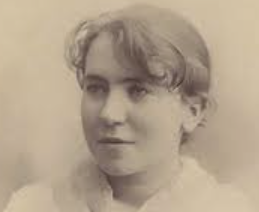
2 months 1 week ago
The real pioneers in ideas, in art and in literature have remained aliens to their time, misunderstood and repudiated.

4 months 1 week ago
Careful thought about this will reveal how few there are who are truly converted from evil habits, especially among those who have prolonged their lives of sin right up to the end. The path down to evil is quick, slippery, and easy. But to turn and "to go forth to the upper air . . . this is effort, this is toil." Think of Aesop's goat before you descend and remember that climbing out is not easy.
▼
Source
source
p. 147
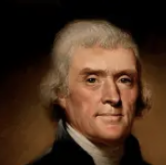
Just now
I say, the earth belongs to each of these generations during its course, fully and in its own right. The second generation receives it clear of the debts and incumbrances of the first, the third of the second, and so on. For if the first could charge it with a debt, then the earth would belong to the dead and not to the living generation. Then, no generation can contract debts greater than may be paid during the course of its own existence.
▼
Source
source
Letter to James Madison (6 September 1789) ME 7:455, Papers 15:393

3 weeks ago
I care little about the sword: I will allow a thing to struggle for itself in this world, with any sword or tongue or implement it has, or can lay hold of. We will let it preach, and pamphleteer, and fight, and to the uttermost bestir itself, and do, beak and claws, whatsoever is in it; very sure that it will, in the long-run, conquer nothing which does not deserve to be conquered. What is better than itself, it cannot put away, but only what is worse. In this great Duel, Nature herself is umpire, and can do no wrong: the thing which is deepest-rooted in Nature, what we call truest, that thing and not the other will be found growing at last.

4 months 1 week ago
It would be better to have no laws at all than to have them in such profusion as we do.
▼
Source
source
Ch. 13
5 months ago
[B]ecause that which is finite is always bounded with reference to something... it is necessary that there should be no end... [N]umber also appears to be infinite, and mathematical magnitudes, and that which is beyond the heavens. And since that which is beyond is infinite, body also appears to be infinite, and it would seem that there are infinite worlds; for why is there rather void here than there? ...If also there is a vacuum, and an infinite place, it is necessary that there should be an infinite body: for in things which have a perpetual subsistence, capacity differs nothing from being. The speculation of the infinite is, however, attended with doubt: for many impossibilities happen both to those who do not admit that it has a subsistence, and to those who do. ...It is ...especially the province of a natural philosopher to consider if there be a sensible infinite magnitude.
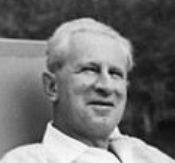
2 months 3 weeks ago
In the Platonic dialectic, ... the terms "Being" "Non-being" "Movement," "the One and the Many" "Identity" and "Contradiction" are methodically kept open, ambiguous, not fully defined. They have an open horizon, an entire universe of meaning which is gradually structured in the process of communication itself, but which is never closed. The propositions are submitted, developed, and tested in a dialogue, in which the partner is led to question the normally unquestioned universe of experience and speech, and to enter a new dimension of discourse - otherwise he is free and the discourse is addressed to his freedom. He is supposed to go beyond that which is given to him - as the speaker, in his proposition, goes beyond the initial setting of the terms. These terms have many meanings because the conditions to which they refer have many sides, implications, and effects which cannot be insulated and stabilized.
▼
Source
source
p. 131
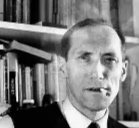
3 weeks 1 day ago
The concept of original sin gives us a penetrating insight into human destiny.
▼
Source
source
On the Dilemmas of the Christian Legacy

4 months 1 day ago
Philosophy, from the earliest times, has made greater claims, and achieved fewer results, than any other branch of learning.
▼
Source
source
Lecture I, Current Tendencies, p. 11, New American Library edition, 1960
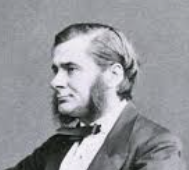
1 month 2 weeks ago
Whatever part of the animal fabric-whatever series of muscles, whatever viscera might be selected for comparison-the result would be the same-the lower Apes and the Gorilla would differ more than the Gorilla and the Man.
▼
Source
source
Ch.2, p. 101
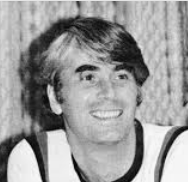
1 month 3 days ago
Some anarchists have claimed not merely that we would be better off without a state, but that any state necessarily violates people's moral rights and hence is intrinsically immoral. Our starting point then, though nonpolitical, is by intention far from nonmoral. Moral philosophy sets the background for, and boundaries of, political philosophy. What persons may and may not do to one another limits what they may do through the apparatus of a state, or do to establish such an apparatus.
▼
Source
source
Ch. 1 : Why State of Nature Theory?; Political Philosophy, p. 6
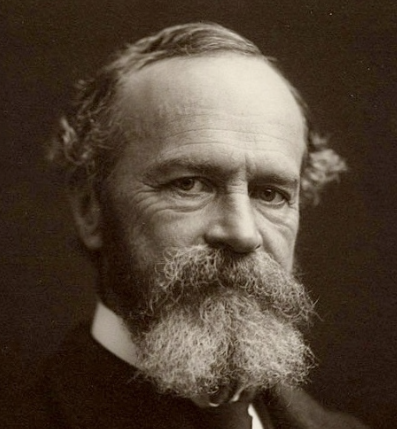
4 months ago
There must be something solemn, serious, and tender about any attitude which we denominate religious. If glad, it must not grin or snicker; if sad, it must not scream or curse. It is precisely as being solemn experiences that I wish to interest you in religious experiences. ... The divine shall mean for us only such a primal reality as the individual feels impelled to respond to solemnly and gravely, and neither by a curse nor a jest.
▼
Source
source
Lecture II, "Circumscription of the Topic"

4 months ago
Of course, he who has put forth his total strength in fit actions, has the richest return of wisdom.
▼
Source
source
par. 28
4 months ago
Let me never fall into the vulgar mistake of dreaming that I am persecuted whenever I am contradicted.
▼
Source
source
November 8, 1838
Just now
Pride costs us more than hunger, thirst and cold.

4 months ago
Love is a severe critic. Hate can pardon more than love.
▼
Source
source
Pearls of Thought (1881) p. 159

3 months 1 week ago
We ought so to behave to one another as to avoid making enemies of our friends, and at the same time to make friends of our enemies. As quoted in Diogenes Laërtius, Lives and Opinions of Eminent Philosophers, "Pythagoras", Sect. 23, as translated in Dictionary of Quotations (1906) by Thomas Benfield Harbottle, p. 320

2 months 2 weeks ago
In the past human life was lived in a bullock cart; in the future it will be lived in an aeroplane; and the change of speed amounts to a difference in quality.
▼
Source
source
Ch. 6: "The Nineteenth Century", p. 137

5 months 1 day ago
Dogmatics must be designed in this way. Above all, every science must vigorously lay hold of its own beginning and not live in complicated relations with other sciences. If dogmatics begins by wanting to explain sinfulness or by wanting to prove its actuality, no dogmatics will come out of it, but the entire existence of dogmatics will become problematic and vague.

4 months 3 weeks ago
Generals are usually a conservative force who can be relied on to oppose social change.

4 months 4 days ago
If I had as clear an idea of ghosts, as I have of a triangle or a circle, I should not in the least hesitate to affirm that they had been created by God; but as the idea I possess of them is just like the ideas, which my imagination forms of harpies, gryphons, hydras, &c., I cannot consider them as anything but dreams, which differ from God as totally as that which is not differs from that which is.
▼
Source
source
Letter to Hugo Boxel (October 1674) The Chief Works of Benedict de Spinoza (1891) Tr. R. H. M. Elwes, Vol. 2, Letter 58 (54).
2 months 1 week ago
Power is not opposed to freedom. It is precisely freedom that distinguishes power from violence or coercion.
4 months 1 day ago
The philosophy of nature must not be unduly terrestrial; for it, the earth is merely one of the smaller planets of one of the smaller stars of the Milky Way. It would be ridiculous to warp the philosophy of nature in order to bring out results that are pleasing to the tiny parasites of this insignificant planet. Vitalism as a philosophy, and evolutionism, show, in this respect, a lack of sense of proportion and logical relevance. They regard the facts of life, which are personally interesting to us, as having a cosmic significance, not a significance confined to the earth's surface. Optimism and pessimism, as cosmic philosophies, show the same naive humanism; the great world, so far as we know it from the philosophy of nature, is neither good nor bad, and is not concerned to make us happy or unhappy. All such philosophies spring from self-importance and are best corrected by a little astronomy.
3 weeks ago
The fine arts once divorcing themselves from truth are quite certain to fall mad, if they do not die.
▼
Source
source
Latter Day Pamphlet, No. 8.
4 months ago
The poor, short lone fact dies at birth. Memory catches it up into her heaven and bathes it in immortal waters.
▼
Source
source
"Memory", p. 66
2 months 2 weeks ago
The prospects of revolution seem therefore quite restricted. For can a revolution avoid war? It is, however, on this feeble chance that we must stake everything or abandon all hope. An advanced country will not encounter, in the case of revolution, the difficulties which in backward Russia served as a base for the barbarous regime of Stalin. But a war of any scope will give rise to others as formidable.
▼
Source
source
Reflections on War (1933); also in Formative Writings

4 months 2 days ago
All styles are good except the boring kind.
▼
Source
source
L'Enfant prodigue: comédie en vers dissillabes (1736), Preface
4 months 2 weeks ago
My mother spoke of Christ to my father, by her feminine and childlike virtues, and, after having borne his violence without a murmur or complaint, gained him at the close of his life to Christ.
▼
Source
source
Reported in Josiah Hotchkiss Gilbert, Dictionary of Burning Words of Brilliant Writers (1895), p. 351
4 months 1 week ago
There is no pleasure to me without communication: there is not so much as a sprightly thought comes into my mind that it does not grieve me to have produced alone, and that I have no one to tell it to.
3 weeks 4 days ago
Resolve to serve no more, and you are at once freed. I do not ask that you place hands upon the tyrant to topple him over, but simply that you support him no longer; then you will behold him, like a great Colossus whose pedestal has been pulled away, fall of his own weight and break in pieces.

2 months 3 weeks ago
Verily I say unto you, If ye have faith, and doubt not, ye shall not only do this which is done to the fig tree, but also if ye shall say unto this mountain, Be thou removed, and be thou cast into the sea; it shall be done.
3 months 3 weeks ago
It has no sense and cannot just unless it comes to terms with death. Mine as (well as) that of the other. Between life and death, then, this is indeed the place of a sententious injunction that always feigns to speak the just.
▼
Source
source
Exordium

4 months ago
If it be said, that an Omnipotent Creator, though under no necessity of employing contrivances such as man must use, thought fit to use them in order to leave traces that would enable man to recognize his creative hand, the answer is that this equally implies a limit to his omnipotence. For if he wanted men to know that they themselves and the world are his work, he, being omnipotent, had only to will that they should be aware of it.
▼
Source
source
pages 177-178;Early Modern Texts page 16
2 months 3 weeks ago
Tell me to what you pay attention and I will tell you who you are.
▼
Source
source
p. 94.

4 months 1 week ago
"You err, not knowing the Scriptures nor the power of God" This canon is the mother of all canons against heresy; the causes of error are two; the ignorance of the will of God, and the ignorance or not sufficient consideration of his power.
▼
Source
source
Of Heresies
4 months 1 week ago
The things that we can see with our physical eyes are mere shadows of reality. If they appear ugly and ill formed, then what must be the ugliness of the soul in sin, deprived of all light? The soul, like the body, can undergo transformation in appearance. In sin it appears as completely ugly to the beholder. In virtue it shines resplendently before God.
4 months 1 week ago
Nothing prints more lively in our minds than something we wish to forget.
▼
Source
source
Book II, Ch. 12
3 months 4 days ago
Gaiety - a quality of ordinary men. Genius always presupposes some disorder in the machine.
▼
Source
source
"Diseases"

2 months 1 week ago
What so impressed me on that first reading was the self-containedness of Tolkien's world. I suppose there are a few novelists who have created worlds that are uniquely their own -- Faulkner, for example, or Dickens. But since their world is fairly close to the actual world, it cannot really be called a unique creation. The only parallel that occurs to me is the Wagner Ring cycle, that one can only enter as if taking a holiday on a strange planet.
▼
Source
source
pp. 8-9
4 months 1 day ago
Certain forms of sex which do not lead to children are at present punished by the criminal law: this is purely superstitious, since the matter is one which affects no one except the parties directly concerned... The peculiar importance attached, at present, to adultery is quite irrational... Moral rules ought not to be such as to make instinctive happiness impossible.

2 months 3 weeks ago
Obviously God was a solution, and obviously none so satisfactory that will ever be found again.
4 months ago
The faith that stands on authority is not faith.
▼
Source
source
The Over-soul

3 months 5 days ago
No natural boundary seems to be set to the efforts of man; and what is not yet done is only what he has not yet attempted to do. Variant: What is not yet done is only what we have not yet attempted to do.
▼
Source
source
Chapter XVIII.
2 months 3 weeks ago
The very desire for guarantees that our values are eternal and secure in some objective heaven is perhaps only a craving for the certainties of childhood or the absolute values of our primitive past.
4 months 2 days ago
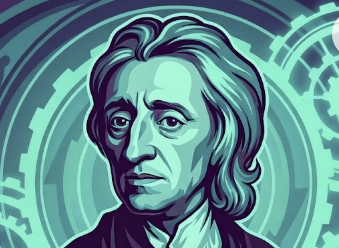
The state of nature has a law of nature to govern it, which obliges every one: and reason, which is that law, teaches all mankind, who will but consult it, that being all equal and independent, no one ought to harm another in his life, health, liberty, or possessions.
▼
Source
source
Second Treatise of Government, Ch. II, sec. 6

4 months ago
It might otherwise appear paradoxical that money can be replaced by worthless paper; but that the slightest alloying of its metallic content depreciates it.
▼
Source
source
Notebook VII, The Chapter on Capital, p. 734.
1 month 2 weeks ago
For every man the world is as fresh as it was at the first day, and as full of untold novelties for him who has the eyes to see them.

1 month 3 weeks ago
A beautiful face is a silent commendation.
▼
Source
source
Maxim 283
4 months 1 week ago
I believe that it is possible for one to praise, without concern, any man after he is dead since every reason and supervision for adulation is lacking.
▼
Source
source
Book 1

4 months 4 days ago
Custom, then, is the great guide of human life. It is that principle alone which renders our experience useful to us, and makes us expect, for the future, a similar train of events with those which have appeared in the past. Without the influence of custom, we should be entirely ignorant of every matter of fact beyond what is immediately present to the memory and senses. We should never know how to adjust means to ends, or to employ our natural powers in the production of any effect. There would be an end at once of all action, as well as of the chief part of speculation. Variant (perhaps a paraphrase of this passage): It is not reason which is the guide of life, but custom.
CivilSimian.com created by AxiomaticPanic, CivilSimian, Kalokagathia