


3 months 3 weeks ago
If everything must have a cause, then God must have a cause. If there can be anything without a cause, it may just as well be the world as God, so that there cannot be any validity in that argument. It is exactly of the same nature as the Hindu's view, that the world rested upon an elephant and the elephant rested upon a tortoise; and when they said, "How about the tortoise?" the Indian said, "Suppose we change the subject." The argument is really no better than that.
▼
Source
source
"The First-cause Argument"

3 months 4 weeks ago
It is difficult for the isolated individual to work himself out of the immaturity which has become almost natural for him. He has even become fond of it and for the time being is incapable of employing his own intelligence, because he has never been allowed to make the attempt. Statutes and formulas, these mechanical tools of a serviceable use, or rather misuse, of his natural faculties, are the ankle-chains of a continuous immaturity. Whoever threw it off would make an uncertain jump over the smallest trench because he is not accustomed to such free movement. Therefore there are only a few who have pursued a firm path and have succeeded in escaping from immaturity by their own cultivation of the mind.
4 months 1 week ago
If we are not stupid or insincere when we say that the good or ill of man lies within his own will, and that all beside is nothing to us, why are we still troubled?
▼
Source
source
Book I, ch. 25, § 1.

4 months 3 weeks ago
O light! This is the cry of all the characters of ancient drama brought face to face with their fate. This last resort was ours, too, and I knew it now. In the middle of winter I at last discovered that there was in me an invincible summer. Return to Tipasa (1954) Variant translation: In the depths of winter, I finally learned that within me there lay an invincible summer.

3 weeks ago
To write well is to think well; there is no art of style distinct from the culture of the mind. The good writer is a complete mind, gifted with judgment, passion, imagination, and at the same time well trained. The inner qualities of rectitude, of brilliant geniality, are not given; instruction, wealth of information, fulness of knowledge, are acquired. Thus good training of the mind is the only school of good style. Wanting that, you have merely rhetoric and bad taste.
▼
Source
source
As quoted in The Art of Authorship (1890) by George Bainton

2 weeks 3 days ago
Under all speech that is good for anything there lies a silence that is better.
▼
Source
source
Silence is deep as Eternity; speech is shallow as Time.

2 months 1 week ago
He who does not realize to what extent shifting fortune and necessity hold in subjection every human spirit, cannot regard as fellow-creatures nor love as he loves himself those whom chance separated from him by an abyss. The variety of constraints pressing upon man give rise to the illusion of several distinct species that cannot communicate.
▼
Source
source
p. 192

3 months 3 weeks ago
Life is not so short but that there is always time enough for courtesy.
▼
Source
source
Social Aims
2 months 3 weeks ago
Nature is an Æolian Harp, a musical instrument; whose tones again are keys to higher strings in us.
1 month 2 weeks ago
I never yet touched a fig leaf that didn't turn into a price tag.
▼
Source
source
Humboldt's Gift (1975), p. 159
2 months 1 week ago
It is only by entering the transcendental, the supernatural, the authentically spiritual order that man rises above the social. Until then, whatever he may do, the social is transcendent in relation to him.
▼
Source
source
p. 123

2 months 3 weeks ago
The same feeling of not belonging, of futility, wherever I go: I pretend interest in what matters nothing to me, I bestir myself mechanically or out of charity, without ever being caught up, without ever being somewhere. What attracts me is elsewhere, and I don't know where that elsewhere is.

2 months 1 week ago
The Outsider may be an artist, but the artist is not necessarily an Outsider.
▼
Source
source
Chapter one, The Country of the Blind

1 month 3 weeks ago
One might think that it must be quite clear to people not deprived of reason, that violence breeds violence; that the only means of deliverance from violence lies in not taking part in it. This method, one would think, is quite obvious. It is evident that a great majority of men can be enslaved by a small minority only if the enslaved themselves take part in their own enslavement. If people are enslaved, it is only because they either fight violence with violence or participate in violence for their own personal profit. Those who neither struggle against violence nor take part in it can no more be enslaved than water can be cut. They can be robbed, prevented from moving about, wounded or killed, but they cannot be enslaved: that is, made to act against their own reasonable will.
▼
Source
source
The Meaning of the Russian Revolution

3 months 3 weeks ago
One might say: art shows us the miracles of nature. It is based on the concept of the miracles of nature.
3 months 2 weeks ago
The problem is one of opposition between subjective and objective points of view. There is a tendency to seek an objective account of everything before admitting its reality. But often what appears to a more subjective point of view cannot be accounted for in this way. So either the objective conception of the world is incomplete, or the subjective involves illusions that should be rejected.
▼
Source
source
"Subjective and Objective" (1979), p. 196.
3 months 1 day ago
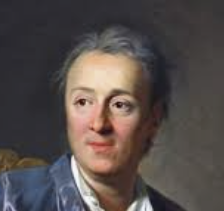
When superstition is allowed to perform the task of old age in dulling the human temperament, we can say goodbye to all excellence in poetry, in painting, and in music.
▼
Source
source
Ch. 3, as quoted in Selected Writings (1966) edited by Lester G. Crocker


1 week 4 days ago
As our acts and our thoughts are, so will our lives be.

3 months 1 day ago
It is almost never when a state of things is the most detestable that it is smashed, but when, beginning to improve, it permits men to breathe, to reflect, to communicate their thoughts with each other, and to gauge by what they already have the extent of their rights and their grievances. The weight, although less heavy, seems then all the more unbearable.
▼
Source
source
Letter to Pierre Freslon, 23 September 1853 Selected Letters, p. 296 as cited in Toqueville's Road Map p. 103
2 weeks 6 days ago
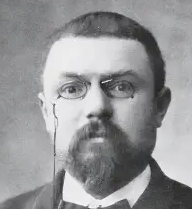
Mathematicians do not study objects, but the relations between objects; to them it is a matter of indifference if these objects are replaced by others, provided that the relations do not change. Matter does not engage their attention, they are interested in form alone.
▼
Source
source
Ch. II: Dover abridged edition (1952), p. 20
3 months 3 weeks ago
A religious creed differs from a scientific theory in claiming to embody eternal and absolutely certain truth, whereas science is always tentative, expecting that modification in its present theories will sooner or later be found necessary, and aware that its method is one which is logically incapable of arriving at a complete and final demonstration.
▼
Source
source
Religion and Science (1935), Ch. I: Ground of Conflict

4 months 4 days ago
If you are a preacher of mercy, do not preach an imaginary but the true mercy. If the mercy is true, you must therefore bear the true, not an imaginary sin. God does not save those who are only imaginary sinners. Be a sinner, and let your sins be strong (sin boldly), but let your trust in Christ be stronger, and rejoice in Christ who is the victor over sin, death, and the world. We will commit sins while we are here, for this life is not a place where justice resides. We, however, says Peter (2. Peter 3:13) are looking forward to a new heaven and a new earth where justice will reign.
▼
Source
source
Letter 99, Paragraph 13. Erika Bullmann Flores, Tr. from: Dr. Martin Luther's Saemmtliche SchriftenDr. Johann Georg Walch Ed. (St. Louis: Concordia Publishing House, N.D.), Vol. 15, cols. 2585-2590.

3 months 2 weeks ago
Education is an ornament for the prosperous, a refuge for the unfortunate.
▼
Source
source
Freeman (1948), p. 161
1 month 2 weeks ago
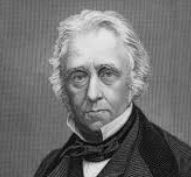
I hold agitation to be essential, not only to the obtaining of good and just measures, but to the existence of a free Government itself. If you choose to adopt the principle of Bishop Horsley, that the people have nothing to do with the laws but to obey them, then, indeed, you may deprecate agitation; but, while we live in a free country, and under a free Government, your deprecation is vain and untenable... I say that the slave-trade would never have been abolished without agitation. I say that slavery would never have been abolished without agitation... What is agitation when it is examined, but the mode in which the people in the great outer assembly debate?
▼
Source
source
Speech in the House of Commons, 29 January 1840
2 weeks 2 days ago
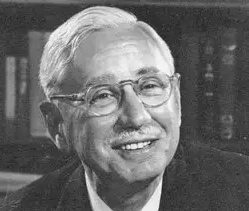
Excellence is an art won by training and habituation: we do not act rightly because we have virtue or excellence, but we rather have these because we have acted rightly; 'these virtues are formed in man by his doing the actions'; we are what we repeatedly do. Excellence, then, is not an act but a habit: 'the good of man is a working of the soul in the way of excellence in a complete life... for as it is not one swallow or one fine day that makes a spring, so it is not one day or a short time that makes a man blessed and happy'.
▼
Source
source
p. 87; the quoted phrases within the quotation are from the Nicomachean Ethics, Book II, 4; Book I, 7
3 months 3 weeks ago
Why in any case, this glorification of man? How about lions and tigers? They destroy fewer animals or human lives than we do, and they are much more beautiful than we are. How about ants? They manage the Corporate State much better than any Fascist. Would not a world of nightingales and larks and deer be better than our human world of cruelty and injustice and war? The believers in Cosmic Purpose make much of our supposed intelligence, but their writings make one doubt it. If I were granted omnipotence, and millions of years to experiment in, I should not think Man much to boast of as the final result of all my efforts.
▼
Source
source
Religion and Science, 1935
3 months 3 weeks ago
Someone who knows too much finds it hard not to lie.
▼
Source
source
p. 64e
2 months 5 days ago
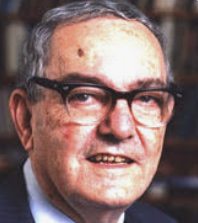
If we accept values as given and consistent, if we postulate an objective description of the world as it really is, and if we assume that the decision maker's computational powers are unlimited, then two important consequences follow. First, we do not need to distinguish between the real world and the decision maker's perception of it: he or she perceives the world as it really is. Second, we can predict the choices that will be made by a rational decision maker entirely from our knowledge of the real world and without a knowledge of the decision maker's perceptions or modes of calculation. (We do, of course, have to know his or her utility function.)

3 months 3 weeks ago
When communist workmen associate with one another, theory, propaganda, etc., is their first end. But at the same time, as a result of this association, they acquire a new need - the need for society - and what appears as a means becomes an end. You can observe this practical processing its most splendid results whenever you see French socialist workers together. Such things as smoking, drinking, eating, etc., are no longer means of contact or means that bring together. Company, association, and conversation, which again has society as its end, are enough for them; the brotherhood of man is on mere phase with them, but a fact of life, and the nobility of man shines upon us from their work-hardened bodies.
▼
Source
source
"The Meaning of Human Requirements" p.99-100,The Marx-Engels Reader

3 months 3 weeks ago
And all the time - such is the tragi-comedy of our situation - we continue to clamor for those very qualities we are rendering impossible. You can hardly open a periodical without coming across the statement that what our civilization needs is more "drive", or dynamism, or self-sacrifice, or "creativity". In a sort of ghastly simplicity we remove the organ and demand the function. We make men without chests and expect of them virtue and enterprise. We laugh at honour and are shocked to find traitors in our midst. We castrate and bid the geldings be fruitful.
4 months 3 weeks ago
The evil that is in the world always comes of ignorance, and good intentions may do as much harm as malevolence, if they lack understanding. On the whole men are more good than bad; that, however, isn't the real point. But they are more or less ignorant, and it is this that we call vice or virtue; the most incorrigible vice being that of an ignorance which fancies it knows everything and therefore claims for itself the right to kill. There can be no true goodness, nor true love, without the utmost clear-sightedness.
3 months 4 weeks ago
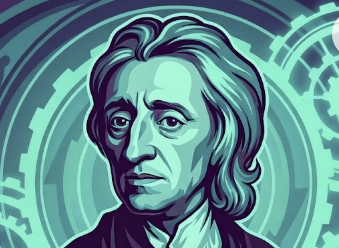
And because it may be too great a temptation to human frailty, apt to grasp at power, for the same persons, who have the power of making laws, to have also in their hands the power to execute them, whereby they may exempt themselves from obedience to the laws they make, and suit the law, both in its making, and execution, to their own private advantage...
▼
Source
source
Second Treatise of Civil Government, Ch. XII, sec. 143
2 months 3 weeks ago
To Live signifies to believe and hope - to lie and to lie to oneself.
3 months 2 weeks ago
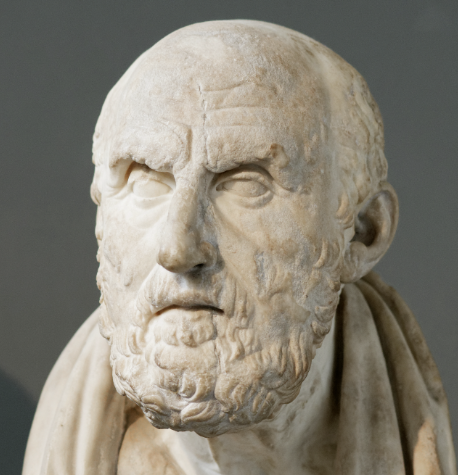
He who is running a race ought to endeavor and strive to the utmost of his ability to come off victor; but it is utterly wrong for him to trip up his competitor, or to push him aside. So in life it is not unfair for one to seek for himself what may accrue to his benefit; but it is not right to take it from another.
▼
Source
source
As quoted in De Officiis by Cicero, iii. 10.
2 months 2 weeks ago
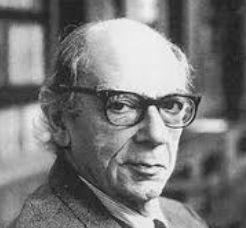
Philosophers are adults who persist in asking childish questions.
▼
Source
source
As quoted in The Listener
1 month 5 days ago
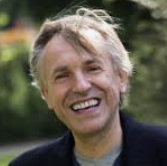
[H]uman nature as encoded in our DNA isn't immutable. Mankind's barbaric track-record to date is an unreliable guide to the future. If Homo sapiens' nastier alleles and their more sinister combinations can be silenced or edited out of the genome, and new improved code-sequences inserted instead, then the pessimists will be confounded. A major discontinuity in the development of life lies ahead. Providentially, we've learned that the DNA-driven world isn't written in God-given proprietary code it would be hubris to tamper with, but in bug-ridden open source amenable to improvement.
▼
Source
source
Utopian Pharmacology: Mental Health in the Third Millennium MDMA and Beyond, BLTC Research, last updated 2020

3 months 3 weeks ago
As for the square at Meknes, where I used to go every day, it's even simpler: I do not see it at all anymore. All that remains is the vague feeling that it was charming, and these five words that are indivisibly bound together: a charming square at Meknes. ... I don't see anything any more: I can search the past in vain, I can only find these scraps of images and I am not sure what they represent, whether they are memories or just fiction.
▼
Source
source
Diary entry of Friday 3:00pm (9 February?)
3 months 3 weeks ago
The process is so complicated that it offers ever so many occasions for running abnormally.
▼
Source
source
Vol. II, Ch. XXI, p. 500.
2 months 1 week ago
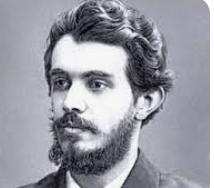
We live in a nightmare of falsehoods, and there are few who are sufficiently awake and aware to see things as they are. Our first duty is to clear away illusions and recover a sense of reality. If war should come, it will do so on account of our delusions, for which our hag-ridden conscience attempts to find moral excuses. To recover a sense of reality is to recover the truth about ourselves and the world in which we live, and thereby to gain the power of keeping this world from flying asunder.
▼
Source
source
p. 80
3 months 3 weeks ago
There was once a millionaire who bought an infinite number of pairs of shoes and, whenever he bought a pair of shoes, he also bought a pair of socks. We can make a selection choosing one out of each pair of shoes, because we can choose always the right shoe or always the left shoe. Thus, so far as the shoes are concerned, selections exist. But, as regards the socks, where there is no distinction of right and left, we cannot use this rule of selection.
▼
Source
source
pp. 93-93
1 week ago
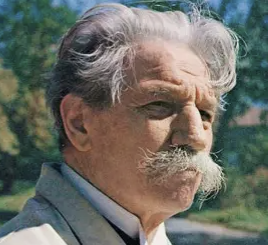
The ethic of Reverence for Life is the ethic of Love widened into universality.
▼
Source
source
Epilogue, p. 235
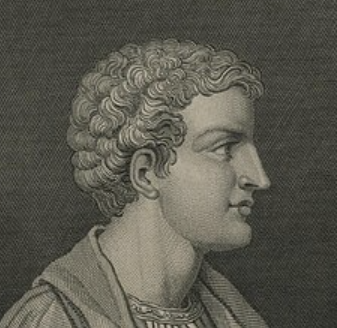
3 months 2 weeks ago
To have good sense, is the first principle and fountain of writing well.
▼
Source
source
Line 309
1 month 4 weeks ago
The Intentionality of the mind not only creates the possibility of meaning, but limits its forms.
▼
Source
source
P. 166.

3 months 1 week ago
He is not rich, that enjoyeth not his own goods.

2 months 1 week ago
And He is the God of the humble, for in the words of the Apostle, God chose the foolish things of the world to confound the wise and the weak things of the world to confound the things which are mighty (I Cor. i. 27) And God is in each of us in the measure in which one feels Him and loves Him. "If of two men," says Kierkegaard, "one prays to the true God without sincerity of heart, and the other prays to the an idol with all the passion of an infinite yearning, it is the first who really prays to the idol, while the second really prays to God." It would be better to say that the true God is He to whom man truly prays and whom man truly desires. And there may even be a truer revelation in superstition itself than in theology.

2 months 2 weeks ago
Let him who seeks continue seeking until he finds. When he finds, he will become troubled. When he becomes troubled, he will be astonished, and he will rule over the All.
▼
Source
source
-2
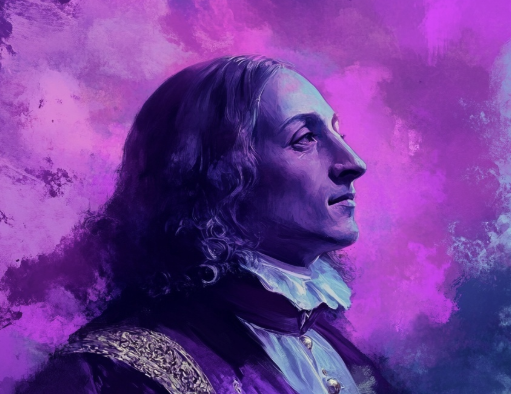
4 months 1 week ago
Rules necessary for definitions. Not to leave any terms at all obscure or ambiguous without definition; Not to employ in definitions any but terms perfectly known or already explained.

4 months ago
In every country it always is and must be the interest of the great body of the people to buy whatever they want of those who sell it cheapest. The proposition is so very manifest that it seems ridiculous to take any pains to prove it; nor could it ever have been called in question had not the interested sophistry of merchants and manufacturers confounded the common sense of mankind. Their interest is, in this respect, directly opposite to that of the great body of the people.
▼
Source
source
Chapter III, Part II, p. 531.
4 days ago
Physics is to be regarded not so much as the study of something a priori given, but rather as the development of methods of ordering and surveying human experience. In this respect our task must be to account for such experience in a manner independent of individual subjective judgement and therefore objective in the sense that it can be unambiguously communicated in ordinary human language.
▼
Source
source
The Unity of Human Knowledge
CivilSimian.com created by AxiomaticPanic, CivilSimian, Kalokagathia