

2 months 3 weeks ago
Most observers of the French Revolution, especially the clever and noble ones, have explained it as a life-threatening and contagious illness. They have remained standing with the symptoms and have interpreted these in manifold and contrary ways. Some have regarded it as a merely local ill. The most ingenious opponents have pressed for castration. They well noticed that this alleged illness is nothing other than the crisis of beginning puberty.
▼
Source
source
Fragment No. 105
3 months 3 weeks ago
Aims, principles, &c., have a place in our thoughts, in our subjective design only; but not yet in the sphere of reality. That which exists for itself only, is a possibility, a potentiality; but has not yet emerged into Existence. A second element must be introduced in order to produce actuality - viz. actuation, realization; and whose motive power is the Will - the activity of man in the widest sense.

3 months ago
The principle of equality does not destroy the imagination, but lowers its flight to the level of the earth.
▼
Source
source
Book Three, Chapter XI.

4 months 4 days ago
To say that the cross emblazoned with the papal coat of arms, and set up by the indulgence preachers, is equal in worth to the cross of Christ is blasphemy.
▼
Source
source
Thesis 79

2 months 1 week ago
Just as a vagrant accused of stealing a carrot from a field stands before a comfortably seated judge who keeps up an elegant flow of queries, comments and witticisms while the accused is unable to stammer a word, so truth stands before an intelligence which is concerned with the elegant manipulation of opinions.
▼
Source
source
p. 68
1 month 3 weeks ago
But the more he is alone with nature, the greater man and his doings bulk in the consideration of his fellow-men.
▼
Source
source
Toils And Pleasures.
2 months 1 week ago
Logos is powerless without the force of eros.

3 weeks ago
One of the problems... both on the left and the right is that the... individual autonomy protected by liberalism tends to take more and more extreme versions... and... becomes self-undermining.
▼
Source
source
13:24

2 months 1 week ago
Jung believed that alchemy is about the transmutation of the mind and the discovery of the self. Inevitably, he saw the male and female elements of the prima materia -- the king and queen of alchemy -- as the animus and anima; this seemed to indicate the (sic) alchemy is about psychological processes.
▼
Source
source
p. 103

1 month 2 weeks ago
All the measures now proposed are only a compromise with the errors of the present systems; but as these errors now almost universally exist, and must be overcome solely by the force of reason; and as reason, to effect the most beneficial purposes, makes her advance by slow degrees, and progressively substantiates one truth of high import after another, it will be evident, to minds of comprehensive and accurate thought, that by these and similar compromises alone can success be rationally expected in practice. For such compromises bring truth and error before the public; and whenever they are fairly exhibited together, truth must ultimately prevail.

2 months 2 weeks ago
All natures, all formed things, all creatures exist in and with one another and will again be resolved into their own roots, because the nature of matter is dissolved into the roots of its nature alone. He who has ears to hear, let him hear.

4 months 5 days ago
The two ways of contemplation are not unlike the two ways of action commonly spoken of by the ancients: the one plain and smooth in the beginning, and in the end impassable; the other rough and troublesome in the entrance, but after a while fair and even. So it is in contemplation: If a man will begin with certainties, he shall end in doubts; but if he will be content to begin with doubts he shall end in certainties.
▼
Source
source
Book I, v, 8
2 months 3 weeks ago
We exhort the compromisers to open their hearts to truth, to free themselves of their wretched and blind circumspection, of their intellectual arrogance, and of the servile fear which dries up their souls and paralyzes their movements. Let us therefore trust the eternal Spirit which destroys and annihilates only because it is the unfathomable and eternal source of all life. The passion for destruction is a creative passion, too!
▼
Source
source
"The Reaction in Germany" (1842) Often paraphrased as, "The urge to destroy is also a creative urge"

4 months 3 weeks ago
Artistic creation is a demand for unity and a rejection of the world.
3 months 3 weeks ago
An individual who finds that he enjoys seeing others in positions of lesser liberty understands that he has no claim whatever to this enjoyment.
▼
Source
source
Chapter I, Section 6, pg. 31
4 months 2 weeks ago
To those whose talents are above mediocrity, the highest subjects may be announced. To those who are below mediocrity, the highest subjects may not be announced.

3 months 3 weeks ago
A truer image of the world, I think, is obtained by picturing things as entering into the stream of time from an eternal world outside, than from a view which regards time as the devouring tyrant of all that is.
▼
Source
source
Ch. 1: Mysticism and Logic


3 months 3 weeks ago
Nothing contributes more to nourish elevation of sentiments in a people, than the large and free character of their habitations.
▼
Source
source
(p. 55)
1 week ago
The only way out of today's misery is for people to become worthy of each other's trust.

3 months 3 weeks ago
Give me health and a day, and I will make the pomp of emperors ridiculous.
▼
Source
source
Beauty
4 months 3 weeks ago
Anxiety and nothing always correspond to each other. As soon as the actuality of freedom and of spirit is posited, anxiety is canceled. But what then does the nothing of anxiety signify more particularly in paganism. This is fate. Fate is a relation to spirit as external. It is the relation between spirit and something else that is not spirit and to which fate nevertheless stands in a spiritual relation. Fate may also signify exactly the opposite, because it is the unity of necessity and accidental. ... A necessity that is not conscious of itself is eo ipso the accidental in relation to the next moment. Fate, then, is the nothing of anxiety.
1 month 3 weeks ago
The anger of lovers renews the strength of love.
▼
Source
source
Maxim 24
2 months 1 week ago
The jargon of authenticity ... is a trademark of societalized chosenness, ... sub-language as superior language.
▼
Source
source
pp. 5-6
4 months 3 weeks ago
Magister Adler was deeply moved by something higher, but now when he wants to express his thoughts in words, wants to communicate, he confuses the subjective with the objective, his altered subjective state with an external event, the dawning of a light upon him with the coming into existence of something new outside him, the falling of the veil from his eyes with his having had a revelation. Subjectively his emotion is carried to the extreme; he wants to select the most powerful expression to describe it and by means of a mental deception grasps the objective qualification: having had a revelation.
1 month 2 weeks ago
In discussing tradition, we are not discussing arbitrary rules and conventions. We are discussing answers that have been discovered to enduring questions.
▼
Source
source
(p. 21)
2 months 2 weeks ago
A philosophy has no private store of knowledge or methods for attaining truth, so it has no private access to good. As it accepts knowledge and principles from those competent in science and inquiry, it accepts the goods that are diffused in human experience. It has no Mosaic or Pauline authority of revelation entrusted to it. But it has the authority of intelligence, of criticism of these common and natural goods.

4 months ago
Thus there is nothing waste, nothing dead in the universe; no chaos, no confusions, save in appearence. We might compare this to the appearence of a pond in the distance, where we can see the confused movement and swarming of the fish, without distinguishing the fish themselves.Thus we are that each living body has a dominante entelechy, which in case of an animal is the soul, but the members of this living body are full of other living things, plants and animals, of which each has in turn ita dominant entelechy or soul.
▼
Source
source
Monadology (69-70).
3 months ago
I am obliged to confess that I do not regard the abolition of slavery as a means of warding off the struggle of the two races in the Southern states. The Negroes may long remain slaves without complaining; but if they are once raised to the level of freemen, they will soon revolt at being deprived of almost all their civil rights; and as they cannot become the equals of the whites, they will speedily show themselves as enemies.
▼
Source
source
Chapter XVIII.

3 months 3 weeks ago
What do you think of the aspect of the money market? ... This time, by the by, the thing has assumed European dimensions such as have never been seen before, and I don't suppose we'll be able to spend much longer here merely as spectators. The very fact that I've at last got round to setting up house again and sending for my books seems to me to prove that the 'mobilisation' of our persons is AT HAND.
▼
Source
source
Letter to Friedrich Engels (26 September 1856), quoted in The Collected Works of Karl Marx and Friedrich Engels: Volume 40. Letters 1856-59 (2010), pp. 71-72
4 months 5 days ago
Again, we should notice the force, effect, and consequences of inventions, which are nowhere more conspicuous than in those three which were unknown to the ancients; namely, printing, gunpowder, and the compass. For these three have changed the appearance and state of the whole world; first in literature, then in warfare, and lastly in navigation: and innumerable changes have been thence derived, so that no empire, sect, or star, appears to have exercised a greater power and influence on human affairs than these mechanical discoveries.
▼
Source
source
Aphorism 129
2 months 5 days ago
It is hardly to be believed how spiritual reflections when mixed with a little physics can hold people's attention and give them a livelier idea of God than do the often ill-applied examples of his wrath.
▼
Source
source
A 11
4 months 3 weeks ago
The division between human and robot is perhaps not as significant as that between intelligence and nonintelligence.
2 months 2 weeks ago
At present, when the prevailing forms of society have become hindrances to the free expression of human powers, it is precisely the abstract branches of science, mathematics and theoretical physics, which ... offer a less distorted form of knowledge than other branches of science which are interwoven with the pattern of daily life, and the practicality of which seemingly testifies to their realistic character.
▼
Source
source
p. 133.

1 month 4 weeks ago
To subdue destruction is one of the most important affirmations of which we are capable in this world. It is the affirmation of this life, bound up with yours, and with the realm of the living: an affirmation caught up with a potential for destruction and its countervailing force.
▼
Source
source
p. 65
4 months 3 weeks ago
One sticks one's finger into the soil to tell by the smell in what land one is: I stick my finger in existence - it smells of nothing. Where am I? Who am I? How came I here? What is this thing called the world? What does this world mean? Who is it that has lured me into the world? Why was I not consulted, why not made acquainted with its manners and customs instead of throwing me into the ranks, as if I had been bought by a kidnapper, a dealer in souls? How did I obtain an interest in this big enterprise they call reality? Why should I have an interest in it? Is it not a voluntary concern? And if I am to be compelled to take part in it, where is the director? I should like to make a remark to him. Is there no director? Whither shall I turn with my complaint?

4 months 5 days ago
This world, the whole of the planet called earth, is the common country of all who live and breathe upon it.
2 months 3 weeks ago
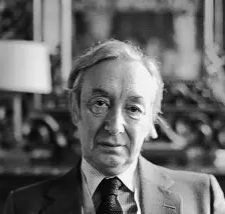
I see philosophy as a fairly abstract activity, as concerned mainly with the analysis of criticism and concepts, and of course most usefully of scientific concepts.
▼
Source
source
As quoted in Profile of Sir Alfred Ayer (June 1971) by Euro-Television, quoted in A.J. Ayer: A Life (1999), p. 2
2 months 1 week ago
Enlightenment is an awakening to the everyday.
4 months 3 weeks ago
Korell is that frequent phenomenon in history: the republic whose ruler has every attribute of the absolute monarch but the name. It therefore enjoyed the usual despotism unrestrained even by those two moderating influences in the legitimate monarchies: regal, honor and court etiquette.
1 month 1 week ago
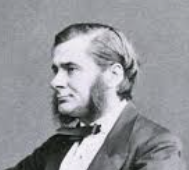
These examples... show that, in whatever proportion of its limbs the Gorilla differs from Man, the other Apes depart still more widely from the Gorilla and that, consequently, such differences of proportion can have no ordinal value.
▼
Source
source
Ch.2, p. 89
2 months 2 weeks ago
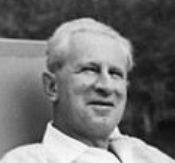
We are again confronted with one of the most vexing aspects of advanced industrial civilization: the rational character of its irrationality. Its productivity and efficiency, its capacity to increase and spread comforts, ... the extent to which this civilization transforms the object world into an extension of man's mind and body makes the very notion of alienation questionable. The people recognize themselves in their commodities; they find their soul in their automobile, hi-fi set, split-level home, kitchen equipment. The very mechanism which ties the individual to his society has changed, and social control is anchored in the new needs which it has produced.
▼
Source
source
p. 9

4 months 2 weeks ago
The highest manifestation of life consists in this: that a being governs its own actions. A being that is always subject to the direction of another is somewhat of a dead thing. Variant translation: Now slavery has a certain likeness to death, hence it is also called civil death. For life is most evident in a thing's moving itself, while what can only be moved by another, seems to be as if dead. But it is manifest that a slave is not moved by himself, but only at his master's command.
▼
Source
source
Chapter 14
1 week 3 days ago
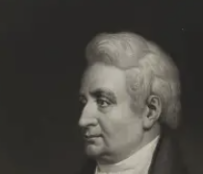
Never give way to melancholy; resist it steadily, for the habit will encroach.
▼
Source
source
Vol. I, ch. 10, p. 372

2 months 3 weeks ago
All the concessions we make to Eros are holes in our desire for the absolute.

4 months 3 days ago
To call out for the hand of the enemy is a rather extreme measure, yet a better one, I think, than to remain in continual fever over an accident that has no remedy. But since all the precautions that a man can take are full of uneasiness and uncertainty, it is better to prepare with fine assurance for the worst that can happen, and derive some consolation from the fact that we are not sure that it will happen.
▼
Source
source
Ch. 25

2 weeks 3 days ago
O thou who art able to write a Book, which once in the two centuries or oftener there is a man gifted to do, envy not him whom they name City-builder, and inexpressibly pity him whom they name Conqueror or City-burner! Thou too art a Conqueror and Victor; but of the true sort, namely over the Devil: thou too hast built what will outlast all marble and metal, and be a wonder-bringing City of the Mind, a Temple and Seminary and Prophetic Mount, whereto all kindreds of the Earth will pilgrim.
▼
Source
source
Bk. II, ch. 8.
CivilSimian.com created by AxiomaticPanic, CivilSimian, Kalokagathia